Strata Cleaning Meaning: What It Covers and Excludes
Strata cleaning means the regular cleaning of shared common areas inside and around a strata building, not the inside of privately owned apartments or units. It covers spaces that every resident uses, such as lobbies, hallways, lifts, stairwells, bin rooms and car parks, and it is arranged and paid for by the owners corporation rather than by individual lot owners.
That distinction between common property and private lots is the single most useful thing to understand about strata cleaning, because it decides who pays, who arranges the work, and who to contact when something is not being cleaned properly.
Strata Cleaning Covers Common Property, Not Private Lots
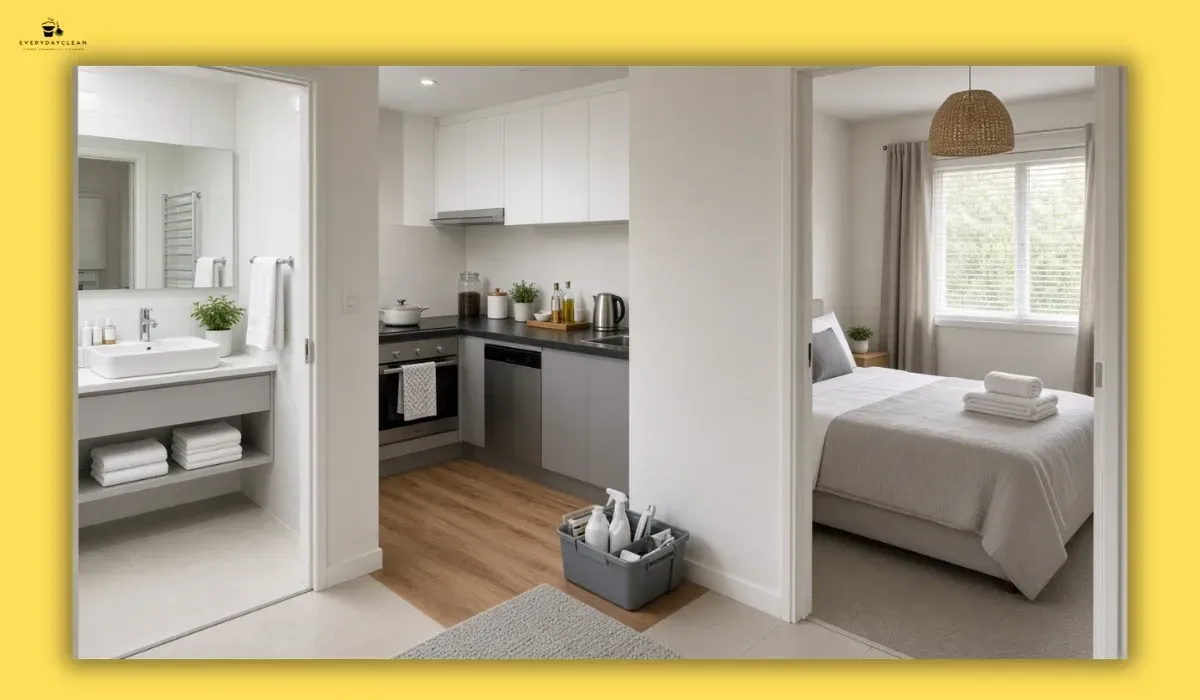
A strata scheme splits a building into two parts. Individual lots are the apartments, units, townhouses or offices that people own outright. Common property is everything shared: the entry, the corridors, the lift car, the fire stairs, the shared bathrooms, the bin room, the car park, the shared laundry and the outdoor entry areas.
Strata cleaning applies only to the second group. A cleaner attending a residential block will service the shared circulation spaces and shared amenities on a set schedule, then leave. They do not enter apartments, and residents cannot direct them to clean inside a private lot as part of the building contract.
Some grey areas exist and are worth checking against the scheme's own by-laws and plan of subdivision:
- Balconies are usually part of the lot, but the external face of the balustrade may be common property
- Front doors are often common property on the outside face and lot property on the inside
- Courtyards may be common property with exclusive use granted to one lot
- Storage cages in a car park are often lot property sitting on common land
Where a boundary is unclear, the strata manager or the registered plan is the reference point, not the cleaner.
What is the difference between strata cleaning and general commercial cleaning?
Commercial cleaning usually serves one occupier with one point of contact. Strata cleaning serves a shared building where dozens of residents use the same spaces at different hours, nobody personally owns the mess, and the instructing party is a committee rather than an individual. The work is scheduled around resident traffic, and the standard is judged by how the space looks between visits rather than immediately after one.
Typical Strata Cleaning Scope Covers Circulation, Amenities and Waste Areas
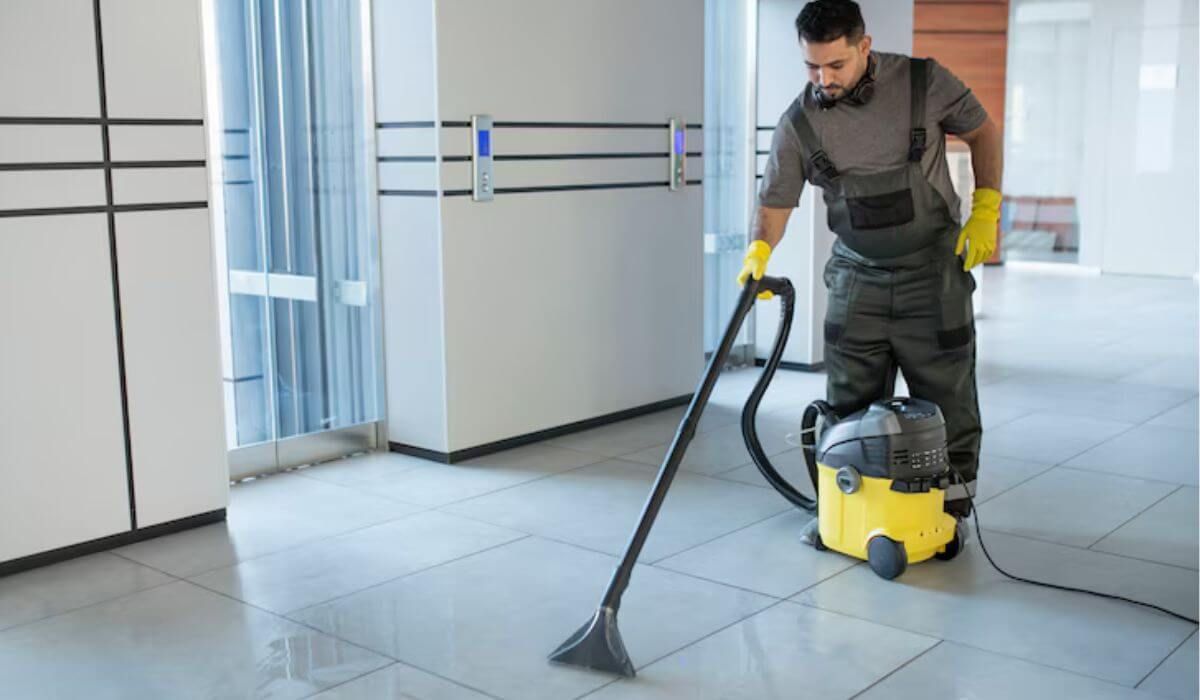
Scope varies with building size, height, amenity level and budget, but most residential strata contracts in Sydney cover a similar set of areas.
- Entry and lobby Glass doors and side panels, entry mats, intercom panels, letterbox banks, floors, and any seating or planter surfaces in the foyer.
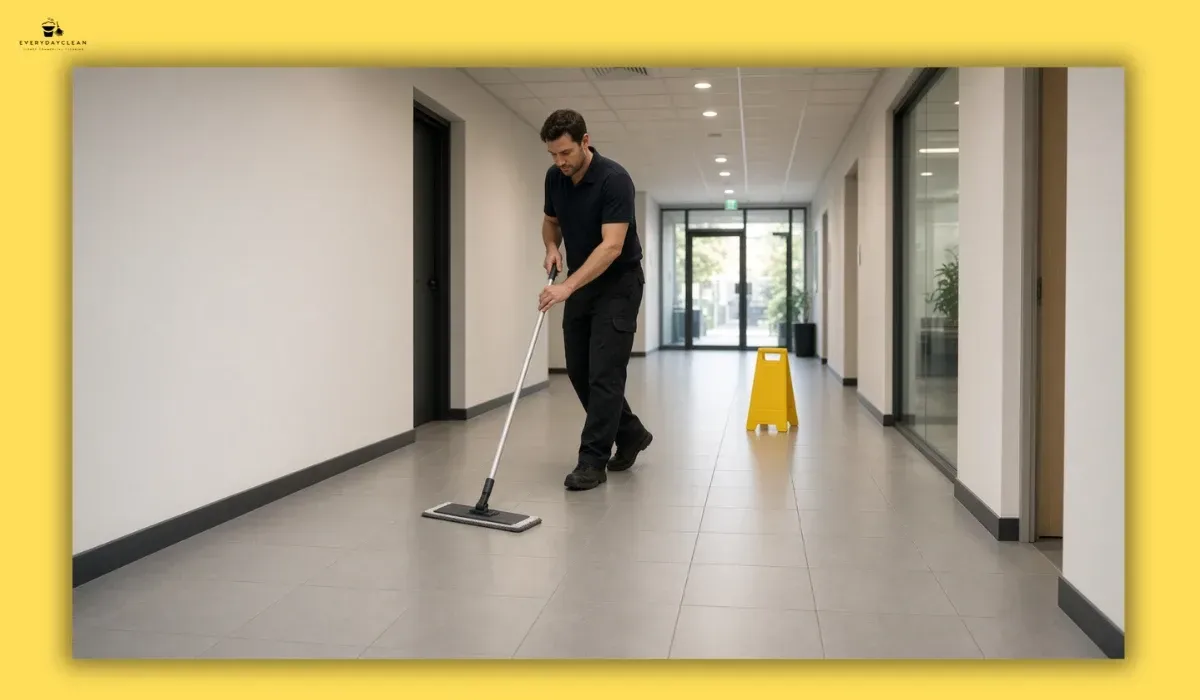
- Hallways and corridors Vacuuming or mopping depending on floor finish, spot cleaning marks on walls, skirting boards, and clearing items left outside doors where by-laws allow removal. Corridor presentation carries a lot of weight with buyers and tenants, which is why regular hallway cleaning in strata buildings often sits at a higher frequency than other areas.
- Lifts Floors, door tracks, stainless panels, mirrors, handrails and the button panel. Lift interiors show fingerprints and scuffing faster than almost any other shared surface.
- Stairwells and fire stairs Sweeping or vacuuming treads and landings, wiping handrails, and reporting any obstruction to fire egress rather than moving hazardous items unassisted.
- Shared bathrooms and amenities Where a building has a shared bathroom, gym, pool area, meeting room, rooftop terrace or shared laundry, these are typically included with a defined task list per visit.
- Bin rooms and waste areas Floor cleaning, bin surrounds, wiping chute doors, deodorising where appropriate, and reporting overflow or dumped items to the strata manager.
- Car parks and driveways Sweeping, spot cleaning oil marks where practical, clearing leaf litter from entries, and periodic pressure washing arranged separately in most contracts.
- Outdoor entries and paths Cobweb removal, sweeping paths and steps, clearing debris from grates, and cleaning glass at entry points.
How often is each area usually cleaned?
Frequency is set in the contract rather than by any national standard. Small walk-up blocks are often serviced weekly or fortnightly, while larger buildings with lifts and shared amenities commonly run two to five visits a week, sometimes with a daily presence in high-traffic towers. High-touch points and bin rooms tend to be scheduled more often than car parks or external areas.
Common Strata Cleaning Duties Focus on Presentation, Hygiene and Reporting
The task list inside a strata contract usually breaks into three groups.
Routine cleaning
- Vacuuming carpeted corridors and lift interiors
- Mopping hard floors in lobbies, hallways and shared amenities
- Wiping high-touch points such as handrails, door handles, intercom panels, lift buttons and light switches
- Cleaning glass, mirrors and stainless steel in entries and lifts
- Emptying and relining common area bins
- Cleaning shared bathrooms and shower areas where present
- Bin room floors, surrounds and chute doors
Periodic work
- Cobweb removal at height where safe access allows
- Edge vacuuming and detail work along skirtings
- Carpet or hard floor restorative treatments arranged separately
- Car park sweeping or washdowns on a set cycle
- Window cleaning at accessible levels, with higher levels handled by an abseil or elevated work platform contractor
Spot response and reporting
- Attending spills, broken glass or dumped rubbish between scheduled visits where the contract allows
- Reporting damage, graffiti, leaks, lighting faults and pest activity to the strata manager
That reporting role is easy to underestimate. A cleaner is often the only contractor in the building several times a week, so the notes they pass on frequently become the first record of a maintenance problem.
Wiping high-touch surfaces regularly may help reduce the transfer of soil and grime through shared spaces, but no cleaning schedule removes all germs, and buildings should not be presented to residents as sanitised.
Strata Cleaning Excludes Private Lots and Most Specialist Trades
A standard strata cleaning contract does not include:
| Not included in standard scope | Usually handled by |
|---|---|
| Cleaning inside apartments or units | The owner, tenant or a private cleaner |
| Repairs to lifts, doors, plumbing or lighting | Licensed trades engaged by the owners corporation |
| Pest control treatments | A licensed pest management technician |
| Gardening, mowing and hedge work | A grounds maintenance contractor |
| Water damage or fire restoration | A specialist restoration company |
| High-level window cleaning above safe reach | An abseil or EWP window cleaning contractor |
| Graffiti removal on rendered or painted surfaces | A specialist removal contractor |
| Mould remediation beyond routine surface cleaning | A qualified remediation provider |
Several of these can be added to a cleaning contract or booked as separate scheduled works, which is common for pressure washing, car park washdowns, carpet treatments and periodic window cleaning. What matters is that they are quoted and scoped separately rather than assumed to sit inside the weekly rate.
Can residents ask the building cleaner to clean inside their apartment?
Not as part of the strata contract. The owners corporation pays for common property work only, and using contracted hours on a private lot takes time away from shared areas. Some cleaning companies will accept a separate private booking from a resident, arranged and paid for directly, but that sits outside the building agreement.
Responsibility for Strata Cleaning Sits With Four Different Parties
Understanding who does what removes most of the friction that shows up in strata cleaning complaints.
The owners corporation is generally responsible for maintaining common property and approves the cleaning budget, the contract and the scope of works. Decisions are usually made through the strata committee.
The strata manager administers the contract on behalf of the owners corporation, handles tendering and renewals, passes on complaints, and coordinates between the committee and the contractor. They usually do not supervise cleaners on site day to day.
The cleaning contractor delivers the agreed scope, maintains the schedule, supplies equipment and consumables where specified, manages its own staff and insurances, and reports issues found on site. A contractor works to the documented scope of works, so anything outside it needs a variation rather than a verbal request in the lobby.
Residents and owners keep common areas clear, follow by-laws on waste and storage, and report problems through the correct channel. Reports go to the strata manager or building manager rather than directly to the cleaner, which keeps a record and lets the committee see recurring issues.
Where a building also has an on-site building manager or caretaker, they often become the day-to-day point of contact and quality check for cleaning performance.
Who should be contacted when common area cleaning is not up to standard?
The strata manager, in writing, with dates and photographs where possible. Individual complaints made to a cleaner on site rarely reach the committee and do not create a record. A pattern of documented reports is what allows the owners corporation to raise performance formally with the contractor or reconsider the scope at renewal.
Cleaning and Maintenance Are Related but Separately Scoped
Cleaning keeps common property presentable and hygienic. Maintenance keeps it functional and safe. The two often get grouped together in strata budgets, which is where confusion starts.
The practical difference is who performs the work and why. Cleaning runs on a scheduled cycle and is delivered by a cleaning contractor. Maintenance is inspection driven or reactive, and is delivered by licensed trades covering lifts, plumbing, electrical and fire equipment. Cleaners often flag faults early, which is where the two overlap. Buildings planning both together will find the wider picture covered in the strata maintenance guide, and committees comparing quotes can review what strata cleaning and maintenance typically costs before going to tender.
What a Clear Scope of Works Should Specify
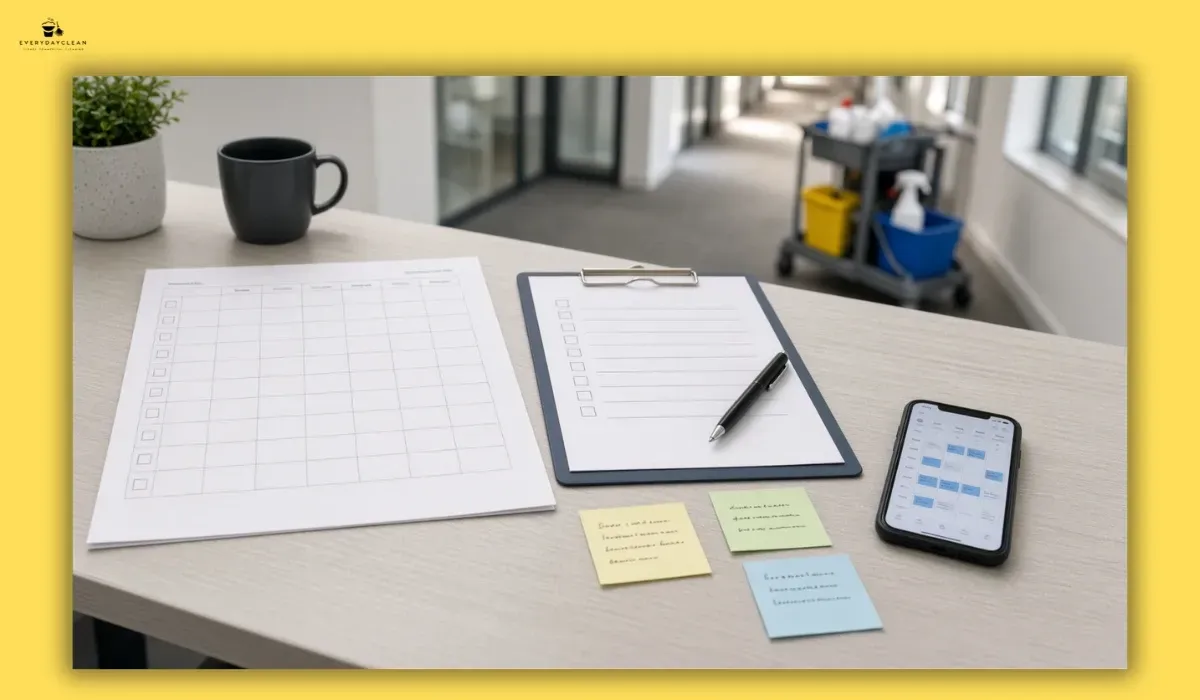
Most disputes about strata cleaning trace back to a vague scope document rather than poor work. A usable scope of works sets out:
- Every area included, named specifically, with any excluded areas listed
- The task list for each area
- Frequency per task, not just per visit
- Periodic works and their cycle
- What is supplied by the contractor and what is supplied by the building
- Access arrangements, key or fob handling, and service hours
- Reporting method for defects and incidents
- How variations and additional works are quoted
Vague wording such as "clean common areas as required" gives the committee nothing to measure against at review time. Naming the areas and setting frequencies per task is what makes performance assessable.
What should a strata committee check before signing a cleaning contract?
Confirm the scope names every area and sets frequencies per task, check that insurances and worker compensation cover are current, ask how the contractor handles staff turnover and site inductions, and confirm the reporting method for issues. It is also worth checking whether periodic works such as car park washdowns or window cleaning are included or quoted separately.
Frequently Asked Questions
Is strata cleaning the same as commercial cleaning?
Not quite. Both are contracted, scheduled services, but strata cleaning deals with shared residential spaces used by many households, works to a committee rather than a single occupier, and includes a reporting role for defects in common property. The task lists overlap, though the operating context is different.
Does strata cleaning include the car park?
Usually yes for sweeping and general tidiness, though pressure washing and oil stain treatment are commonly quoted as periodic or separate works. Check the scope document, as car parks are one of the most frequently under-specified areas in strata contracts.
Who pays for strata cleaning?
The owners corporation pays through the administrative fund, which is funded by levies from all lot owners. Individual owners do not pay the cleaner directly, and cleaning costs are shared according to unit entitlements rather than by how much any household uses the common areas.
Can the cleaning schedule be changed during the contract?
Generally yes, by agreement between the owners corporation and the contractor. Committees often adjust frequency after seeing how a building actually performs, for example increasing bin room attention or reducing car park visits. Changes to scope normally require a documented variation and may affect the contract rate.
What happens to cleaning during building works?
Construction and renovation traffic creates dust and debris that sit outside normal scope. Most contracts treat builders clean and post-works cleaning as separate arrangements, and it is worth agreeing on responsibility before major works begin rather than after corridors have been affected.
Getting the Definition Right Makes Everything Else Easier
Strata cleaning is a narrower service than most residents assume. It covers shared property, follows a documented scope, sits under the owners corporation, and stops at the door of every private lot. Committees that write scope clearly, set frequency per task and use one reporting channel tend to have far fewer complaints than those working from a one line description.
For buildings reviewing their current arrangement or preparing a tender, Everyday Clean can work through areas, frequency and access requirements before preparing a scoped strata cleaning quote for your building.
Blog