How to Clean Concrete Floors: Sealed, Polished and Bare
How to clean concrete floors comes down to five steps: clear loose dust and grit, apply a dilute pH-neutral cleaner, agitate with a soft-bristle brush or microfibre mop, rinse with clean water, and allow the floor to dry thoroughly. The method then changes slightly depending on whether the concrete is polished, sealed or bare.
That finish matters more than most people expect. A cleaner that is safe on bare concrete in a basement can dull a polished retail floor, and too much water on unsealed concrete can leave white residue as it dries. This guide covers routine cleaning, mopping, washing and everyday stain removal for commercial buildings, retail spaces, basements and car parks.
How to Clean Concrete Floors Depends on the Finish
Before choosing a product or mop, identify the finish. A quick check is to place a few drops of water on the floor: if it beads or sits on top, the surface is likely sealed or polished; if it darkens the concrete and soaks in within a few minutes, the concrete is likely bare or the sealer has worn through.
| Concrete finish | What it is like | Best cleaning approach | Main things to avoid |
|---|---|---|---|
| Polished concrete | Mechanically ground and densified, often with a high gloss | pH-neutral cleaner, microfibre dust mop and flat mop, minimal water | Acidic or citrus cleaners, vinegar, harsh alkaline degreasers, abrasive pads |
| Sealed or epoxy-coated concrete | Protective coating sits on top of the slab | pH-neutral cleaner, soft mop or soft brush, prompt spill clean-up | Abrasive scouring pads, wire brushes, solvents that may soften some coatings |
| Bare unsealed concrete | Porous, absorbs liquids and stains quickly | Sweep thoroughly, controlled amount of water, soft to medium brush, good drying | Flooding with water, leaving puddles to dry, letting spills sit |
Bare concrete is the most absorbent finish. Using a controlled volume of water and drying the floor well helps limit staining, and may reduce the risk of efflorescence (white mineral deposits drawn to the surface as moisture evaporates).
pH-Neutral Cleaners Protect Most Concrete Finishes
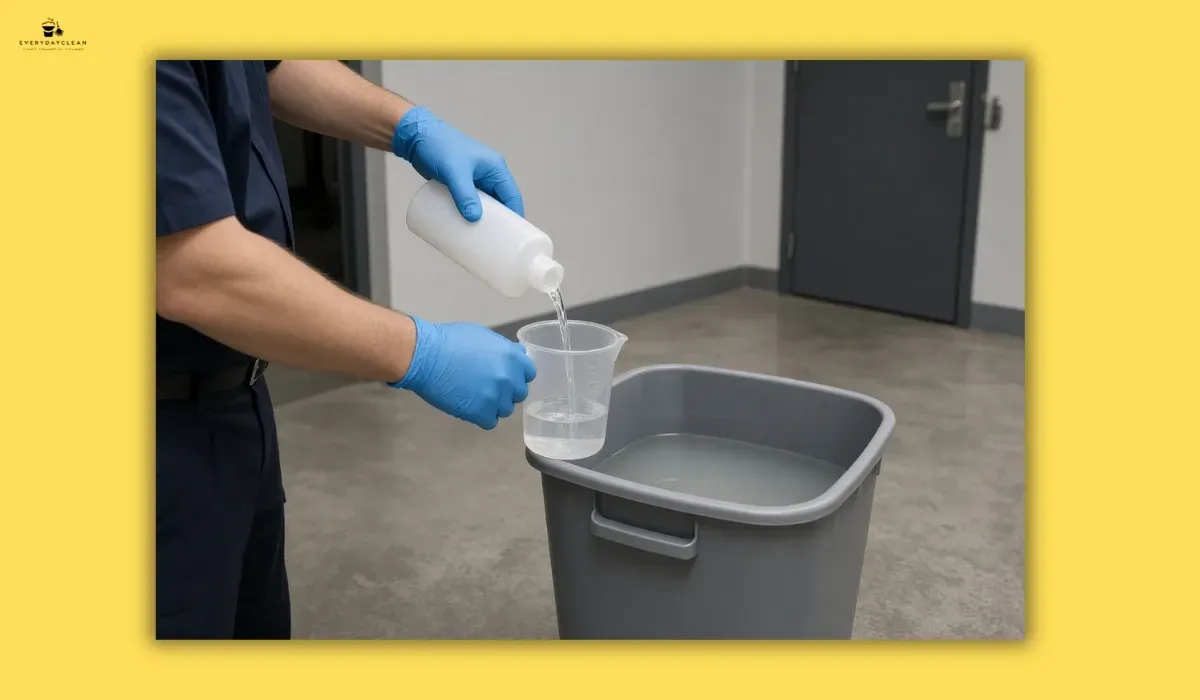
For routine cleaning, a dilute pH-neutral floor cleaner is usually the safest choice across all three finishes. It lifts everyday soil without attacking the concrete, the polish or the sealer.
Which cleaning solutions suit concrete floors?
- pH-neutral floor cleaners: suitable for daily and weekly cleaning on polished, sealed and bare concrete.
- Cleaners labelled for polished concrete: some include conditioners intended to help maintain gloss.
- Mild alkaline cleaners: sometimes used on bare concrete for heavier soil, but they can leave residue and may dull polished or sealed finishes, so check the label first.
Always follow the manufacturer's dilution rate. Using more product than recommended often leaves a sticky film that attracts dirt faster.
Surface Etching Caution: Avoid acidic cleaners, citrus-based solvents and plain vinegar on polished or sealed concrete floors. Acids react with the calcium compounds in concrete and can cause dulling, micro-pitting and surface etching, which may need mechanical diamond re-polishing to correct.
When does a stain need more than a neutral cleaner?
Oil, grease and fuel stains need degreasing products and methods suited to the finish, which sit outside routine cleaning. These should be treated promptly with absorbents, then assessed separately rather than scrubbed with stronger and stronger chemicals.
How to Mop Concrete Floors Without Leaving Streaks
Learning how to mop concrete floors properly makes the biggest difference to how clean the floor looks. Most streaks and dull patches come from grit left on the floor or from dirty water being spread around.
Why should concrete be swept before mopping?
Remove loose dust, sand and grit before any water goes down. Grit acts like sandpaper under mops and foot traffic, and can scratch polished and sealed finishes. A microfibre dust mop suits polished floors, while a soft broom or vacuum works well on bare concrete.
How does the two-bucket mopping procedure work?
- Fill one bucket with the diluted pH-neutral cleaning solution.
- Fill a second bucket with clean rinse water, or use it as the wringing bucket for dirty water.
- Dip the mop in the solution, wring it out well and mop a small section.
- Rinse and wring the mop in the second bucket before returning to the solution.
- Change the water in both buckets as soon as it looks cloudy, and more often on dirty floors.
Work in sections, moving backwards towards the exit so freshly cleaned areas are not walked over.
Facility Pro-Tip (The Two-Bucket Mopping Rule): Mopping concrete with a single bucket can redeposit dirty water into open concrete pores. Use a dual-bucket mopping system (one for fresh neutral detergent solution, one for wringing out dirty rinse water) or a commercial microfibre flat-mop system to help keep the floor streak-free.
Does a concrete floor need rinsing after mopping?
On polished and sealed concrete, a well-diluted neutral cleaner often does not need rinsing. On bare concrete, or where a stronger cleaner has been used, a light clean-water rinse helps remove residue.
How should water be picked up after washing a concrete floor?
Do not leave dirty water sitting on the floor. As it evaporates, it leaves dirt and minerals behind as rings and patches.
- Small areas: wring the mop well and make a final pass with a nearly dry mop.
- Large commercial areas: use a floor squeegee to move water to a drain or wet vacuum, or an auto-scrubber that washes and recovers water in one pass.
- Drying: keep traffic off the floor and use slip warning signs until it is fully dry.
How Do You Clean Concrete Floors With Everyday Stains?
Most everyday marks on concrete respond to prompt cleaning with a neutral cleaner and gentle agitation. Speed matters, especially on bare concrete, where liquids soak in quickly.
How do you clean coffee, tea and beverage spills from concrete?
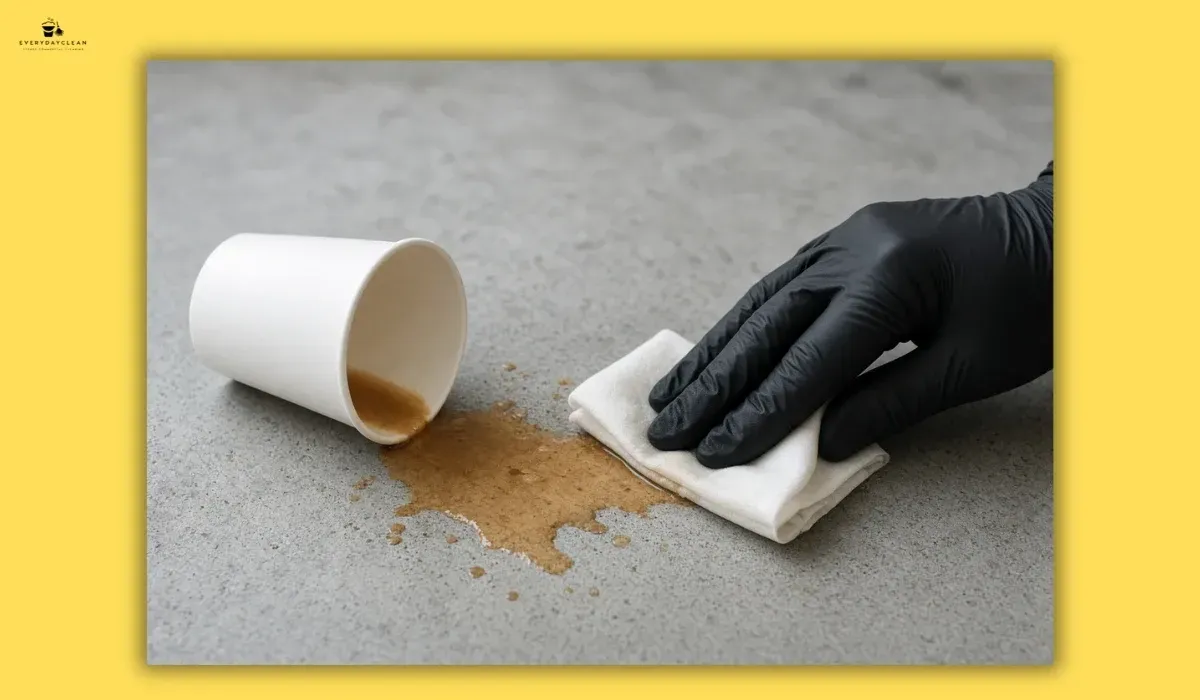
Blot the spill with absorbent cloths rather than wiping, which spreads it. Clean the area with a pH-neutral solution and a soft brush or microfibre cloth, then rinse lightly and dry. On bare concrete, a second treatment may be needed if the liquid has started to soak in.
How do you remove muddy footprints from a concrete floor?
Let mud dry, then sweep or vacuum up as much as possible before adding water. Wet mopping fresh mud tends to spread it into a thin film. Clean the remaining marks with a neutral solution and change the mop water often.
How are light scuffs and surface marks removed?
Many scuffs lift with a damp microfibre cloth or a soft white pad and a neutral cleaner. Test any pad on a small, low-visibility area first, particularly on polished or coated floors.
Which products should be avoided on concrete stains?
Bleach and acid-based products are not recommended for general stain removal on concrete. Bleach can discolour some finishes and coatings, and acids can etch the surface. If a stain does not lift with neutral cleaning, it may need a product designed for that specific stain and finish, applied according to the label.
What Never to Do on Concrete Floors
Most damage to concrete floors during cleaning comes from a handful of avoidable habits:
- Using acidic or etching products such as vinegar, citrus solvents or descalers on polished or sealed concrete.
- Scrubbing with wire brushes or steel wool, which can scratch polished and coated surfaces and leave metal particles that may rust-stain bare concrete.
- Letting dirty wash water pool and evaporate, which leaves rings, dull patches and mineral residue.
- Flooding bare concrete with water, which increases absorption and may contribute to efflorescence.
- Overdosing cleaning products, which leaves a sticky film that attracts dirt.
- Mopping before sweeping, which turns grit into a grinding paste.
Basements and car parks often need heavier washing than a mop can deliver. These areas are usually better handled through commercial carpark cleaning services, with equipment suited to larger open areas and drainage.
When Concrete Floors Need Professional Restoration
Routine cleaning maintains appearance and can slow wear, but it cannot reverse surface damage. Signs that a floor needs more than cleaning include:
- polished concrete that stays dull or patchy even after correct cleaning
- visible etch marks or rings from acid spills
- a sealer or coating that is peeling, worn through or no longer repels water
- deep scratches in walkways and high-traffic zones
- staining that has soaked deep into bare concrete
These issues usually need assessment for resealing, recoating or diamond pad polishing. Professional floor polishing services can assess whether a polished floor can be refreshed or needs mechanical restoration. Structural cracking and slab movement need assessment by a concrete or building specialist rather than a cleaner.
Concrete Floor Cleaning FAQs
How often should commercial concrete floors be cleaned?
Most commercial concrete floors benefit from daily dust mopping or sweeping in high-traffic areas and wet mopping several times a week. Retail entries, lobbies and food areas may need daily wet cleaning, while basements and storage areas may suit weekly cleaning. Adjust frequency for traffic, weather and how much grit is tracked in.
Can vinegar be used to clean concrete floors?
Vinegar is acidic and is not recommended for polished or sealed concrete, as it can dull and etch the surface over time. Even on bare concrete, repeated use may weaken the surface paste. A dilute pH-neutral floor cleaner is the safer choice for routine cleaning across all concrete finishes.
How do you remove stains from concrete floors without damaging them?
Act quickly, blot liquids rather than wiping, and clean with a pH-neutral solution and a soft brush or microfibre cloth. Rinse lightly and dry the area. Avoid bleach, acids and wire brushes. Stains that do not respond may need a stain-specific product suited to the finish, tested first on a small area.
Is it better to mop or use an auto-scrubber on concrete?
Mopping works well for smaller rooms, corridors and spot cleaning. For large retail floors, warehouses and open commercial areas, an auto-scrubber is usually faster and leaves less water behind because it washes and recovers dirty water in one pass. Many sites use both, with mops for edges and small zones.
Why does a concrete floor look streaky after mopping?
Streaks usually come from dirty mop water, too much cleaning product, or water left to dry on the surface. Sweeping first, using a two-bucket system, following the dilution rate and picking up excess water usually solves the problem. Persistent dullness on polished concrete may point to surface wear rather than a cleaning issue.
Routine Preventative Maintenance Keeps Concrete Floors Looking Their Best
The most effective concrete floor care is consistent, gentle and preventative. A simple routine limits grit damage, keeps finishes looking even and helps catch problems early.
- Daily: dust mop or sweep high-traffic areas and entries, and clean spills as they happen.
- Several times weekly to weekly: damp mop with a dilute pH-neutral cleaner using a two-bucket or flat-mop system.
- Entry protection: use quality entrance matting inside and outside doorways to trap grit before it reaches the floor.
- Periodic checks: look for worn sealer, dull traffic lanes and etch marks so they can be addressed before damage spreads.
- Larger sites: coordinate floor care with other building services through facilities management cleaning, so that entries, basements and internal floors follow one plan.
Routine cleaning helps maintain appearance and slow wear, but it cannot reverse deep mechanical etching, worn-through coatings or structural concrete cracking. Those issues are best assessed by flooring or concrete specialists.
About Everyday Clean
Everyday Clean is a Sydney-based cleaning company supporting commercial, office, strata, education, healthcare, hospitality, property and facility cleaning needs. Everyday Clean content is written to help Australian readers make practical cleaning decisions, compare options, and understand when professional cleaning support may be appropriate.
Blog