Asphalt Sweeping and Pressure Washing: Car Park Guide
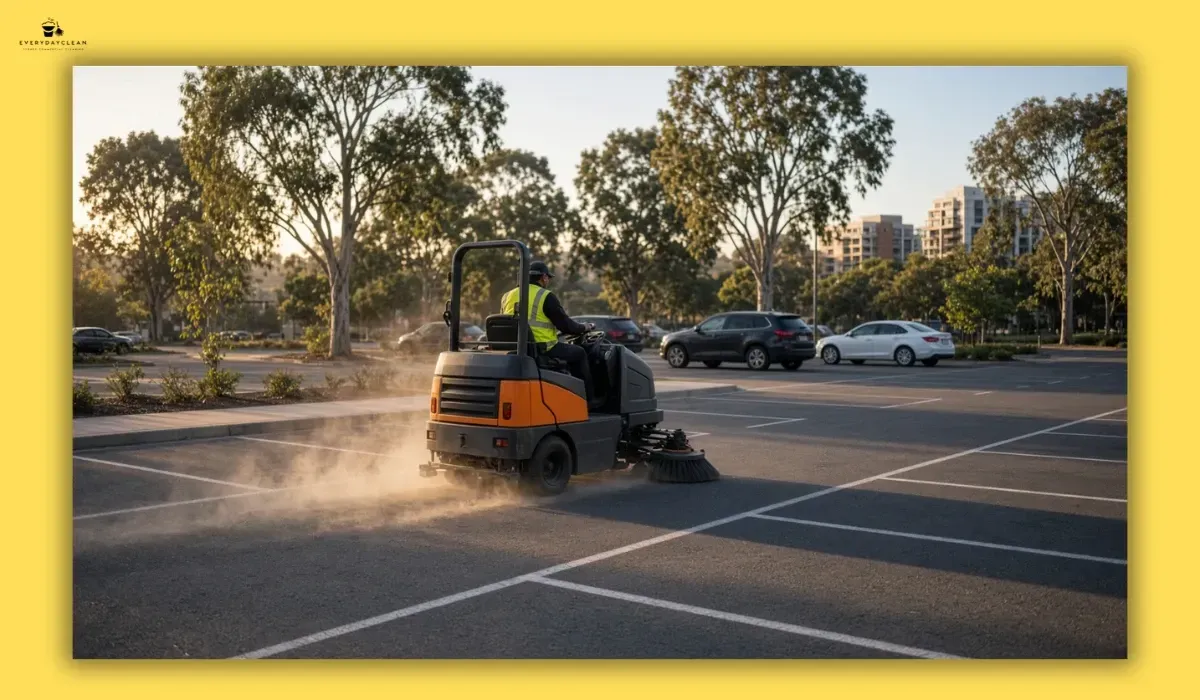
Asphalt sweeping works best as the first stage of a two-stage process: a poly-bristle asphalt sweeper clears loose gravel, grit and leaf litter, then a low-pressure fan rinse or mild spot degreasing handles grime and stains without stripping the bitumen binder. Done gently and regularly, this approach helps maintain asphalt car parks, shared commercial driveways and access aprons, and may slow surface wear.
The key difference from concrete is the binder. Asphalt holds its stones together with a petroleum-based bitumen that softens in heat and reacts badly to aggressive pressure, stiff steel brushes and petroleum solvents. Methods that suit a concrete loading dock can loosen aggregate on asphalt in a single clean.
This guide covers surface-specific sweeping and washing for Australian facility managers and strata committees. It does not cover resurfacing, sealing or pothole repairs, which belong with a pavement contractor.
Asphalt Sweeping Needs a Different Approach to Concrete
Asphalt and concrete look similar from a car window, but they respond very differently to cleaning. Concrete is a rigid, cement-bound slab. Asphalt is a flexible mix of stone aggregate held together by bitumen, and that bitumen is the part cleaning can damage.
What makes asphalt softer than concrete?
Bitumen is a thick petroleum product that acts as glue around the stones and sand in the mix. It stays slightly flexible so the pavement can move with loads and temperature changes.
In Australian summers, dark asphalt surfaces can become much hotter than the air temperature. As the surface heats up, the binder softens, so stones sit less firmly and the surface is more vulnerable to scouring, tyre scuffing and chemical attack.
Practical tip: schedule sweeping and washing for early morning or cooler days where possible, especially on exposed rooftop and open-air car parks.
Why do high pressure and harsh solvents damage the bitumen binder?
High-pressure water acts like a blade. On asphalt it can cut into softened binder, flush out fine aggregate and expose larger stones, leaving a rough, pitted surface that wears faster.
Petroleum-based solvents, such as some degreasers, fuel-based cleaners and kerosene, can dissolve bitumen because they are chemically similar to it. Acid etching products and concrete-strength degreasers designed for cement surfaces are also unsuitable. Always check the product label and Safety Data Sheet to confirm a cleaner is suitable for asphalt or bitumen surfaces before use.
Asphalt Sweeping Best Practices for Car Parks and Access Aprons
Regular asphalt sweeping is the lowest-risk, highest-value maintenance task for most asphalt areas. It removes the loose material that grinds into the surface and keeps drains and gutters clearer. For larger sites, sweeping is often managed as part of broader facilities management cleaning so that car parks, entries and external areas follow one schedule.
Which asphalt sweeper bristles are safest for the surface?
Poly-bristle brushes are generally the safer choice for asphalt. Polypropylene or similar synthetic bristles flex over the surface, lifting grit and debris without biting into the binder.
Stiff steel wire brooms and wire-wound sweeper brushes can scour the surface, scratch line markings and dislodge exposed stones, particularly on older or weathered asphalt. If a mechanical asphalt sweeper is used, check:
- the brush type is suitable for bitumen surfaces
- brush down-pressure is set to the lightest effective level
- side brushes are not worn to sharp, stiff stubs
- the sweeper is not left stationary with brushes spinning in one spot
- dust suppression or vacuum collection is working to limit airborne fines
Why does loose grit and leaf litter wear asphalt faster?
Loose grit acts like sandpaper under tyres. Every vehicle movement presses sharp particles into the surface and drags them across it, slowly grinding away the fine binder layer.
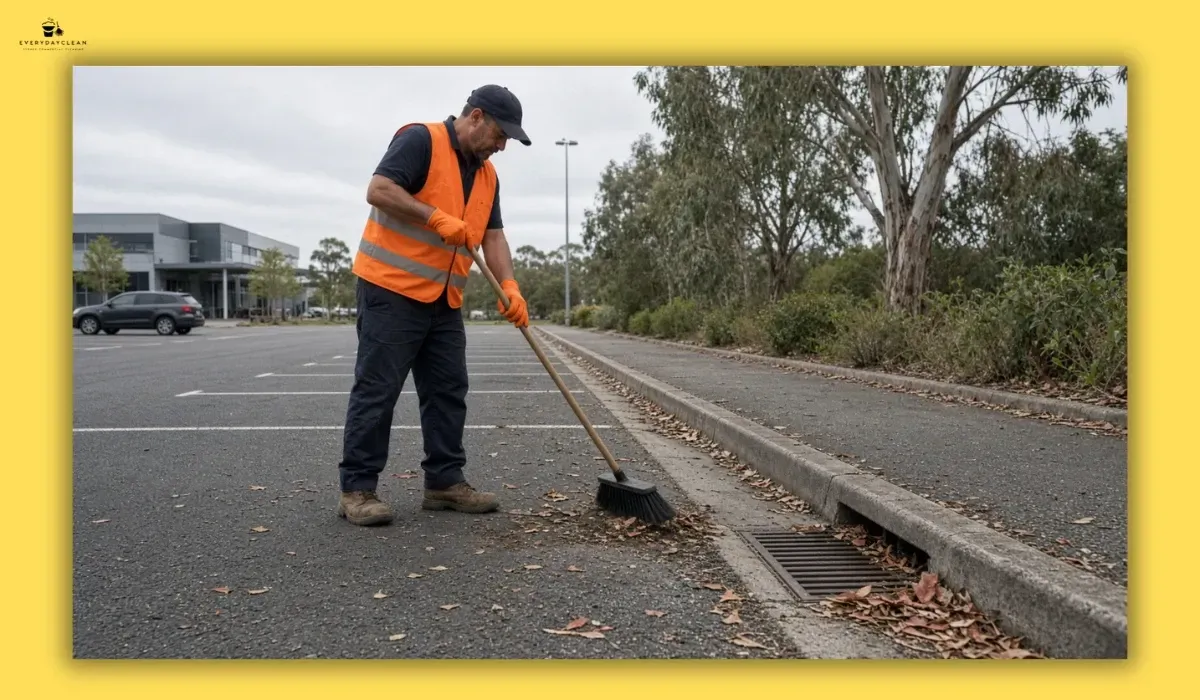
Leaf litter causes a different problem. Wet leaves hold moisture against the surface, stain it, and can block drainage points so water pools. Pooled water and organic matter may speed up surface breakdown over time.
A practical sweeping routine usually focuses on:
- turning circles, ramps and entry points where tyres scrub hardest
- kerb lines and wheel stop edges where grit collects
- drainage grates and gutter inlets
- areas under or near trees, especially in autumn
- loading bays where packaging, pallet splinters and spilled product build up
Pressure Washing Asphalt Is Safe Only at Controlled Pressure
Pressure washing asphalt can be done safely, but only with lower pressure, wide fan tips and careful technique. It is a cleaning step for grime, dust film and light staining, not a way to strip the surface back to look new.
Can you pressure wash asphalt?
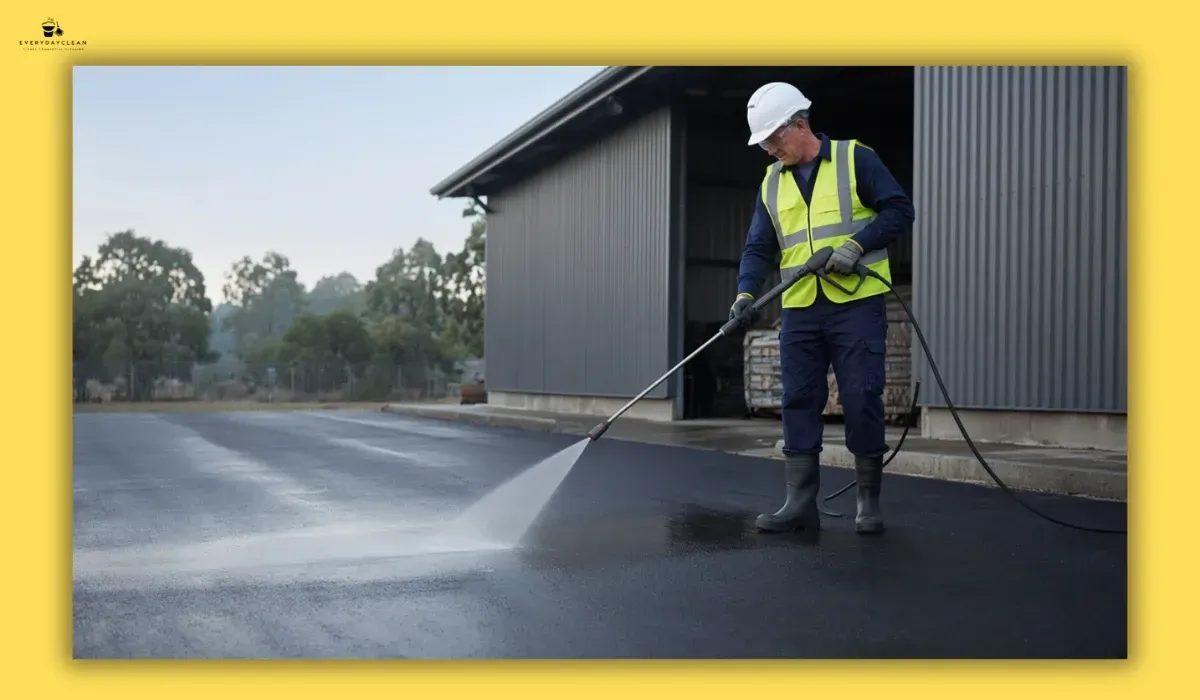
Yes, asphalt pressure washing is possible when pressure, nozzle choice, and distance are controlled. Sweep thoroughly first so the water is not pushing grit across the surface. Then rinse with a wide fan pattern, working in steady overlapping passes and testing a small, low-visibility area before cleaning the whole surface.
What pressure and nozzle settings suit asphalt?
A common conservative approach used for pressure washing asphalt is to stay below roughly 1,500 to 1,800 PSI and use a wide fan tip. The right setting depends on the age and condition of the surface, the machine and the type of grime, so equipment manufacturer guidance and a test patch should always come first.
| Setting | Safer for asphalt | Higher risk for asphalt |
|---|---|---|
| Pressure | Low to moderate, roughly under 1,500-1,800 PSI | High pressure aimed at stripping grime fast |
| Nozzle | Wide 25 to 40 degree fan tip | 0 or 15 degree tips, rotary turbo nozzles |
| Distance | Consistent distance, wand kept moving | Wand held close or stopped in one spot |
| Water | Cool or ambient water | Hot water on already hot surfaces |
| Timing | Cooler part of the day | Hot afternoons when binder is soft |
Why do turbo nozzles and extreme pressure create potholes?
Rotary turbo nozzles concentrate the water into a spinning, pinpoint jet. On asphalt, that jet can blast out fine aggregate and binder in small circles, leaving pits that hold water.
Once water sits in those pits, vehicle loads and weather can widen them. Over time, small surface defects may develop into loose patches and potholes. High pressure can also lift line marking paint and erode edges around cracks.
For larger car parks, ramps and shared driveways, commercial pressure washing with surface-appropriate equipment can help reduce the risk of uneven cleaning and binder damage.
Runoff note: wash water carrying oil, detergent and sediment should not be allowed to flow into stormwater drains. Check local council and NSW EPA guidance on wash water management before washing a car park or shared driveway.
How to Clean Asphalt Driveway Oil and Fuel Stains Safely
The safest way to clean oil and fuel from an asphalt driveway or car park is to absorb it quickly, then spot treat the remaining mark with a bitumen-safe, biodegradable degreaser. Speed matters more than strength.
Why do oil and fuel eat into bitumen?
Engine oil, diesel and petrol are petroleum products, just like the bitumen binder. When they sit on asphalt, they can soften and partly dissolve the binder, leaving a dark, tacky patch that may crumble under tyres later.
Fuel spills are usually the most aggressive because they are thin and penetrate quickly. Slow drips from parked vehicles can also build up into soft spots in the same bay over months.
What is the safest spot treatment sequence?
- Contain the spill. Stop it spreading towards drains using absorbent socks or booms if available.
- Absorb immediately. Cover the spill with dry absorbent clay, kitty litter style absorbent or a commercial spill absorbent.
- Let it sit. Leave the absorbent long enough to draw oil out of the surface, then sweep it up with a poly broom.
- Spot treat lightly. Apply a bitumen-safe, biodegradable degreaser only to the stain, following the label dilution and dwell time.
- Agitate gently. Use a soft poly brush, not a wire brush.
- Rinse at low pressure. Use a wide fan rinse and collect wash water where practical.
- Dispose of waste correctly. Used absorbent and collected wash water should be handled according to the product label and local disposal requirements.
Never use petroleum-based solvents, kerosene, thinners or fuel to "cut" an oil stain on asphalt. They can dissolve more binder than the stain itself.
When is staining beyond surface cleaning?
Spot treatment may lighten a stain, but it cannot reverse deep oil penetration that has already softened the binder. Signs that damage goes beyond cleaning include:
- the patch feels soft or sticky underfoot
- stones lift out easily when brushed
- the area is crumbling or depressed below the surrounding surface
- the same bay keeps staining from a vehicle leak
These areas usually need assessment by a pavement contractor rather than more aggressive cleaning.
Commercial Car Parks and Strata Asphalt Driveways Need Different Routines
The cleaning method stays the same, but traffic levels, access and responsibility change how often and when the work happens.
How should commercial car parks and loading bays be handled?
Commercial car parks and loading bays usually carry heavier, more frequent traffic, including delivery trucks and forklifts. That means faster grit build-up, more fluid drips and more tyre scuffing in turning areas.
Practical considerations include:
- Timing: sweep and wash outside trading hours or in sections, with cones and signage to manage pedestrian and vehicle movement.
- Loading bays: check daily for spilled product, packaging and pallet debris, and keep spill kits nearby.
- Hydraulic and fuel leaks: treat promptly, as these can soften asphalt quickly in loading zones.
- Drains: keep grates clear so washdown water and rain do not pool on the surface.
For sites that need a regular schedule across levels, ramps and access ways, professional car park cleaning services can be scoped around operating hours and traffic patterns.
How should strata committees manage shared asphalt driveways?
Shared asphalt driveways in strata schemes are usually lighter traffic but have more people relying on access at all hours. Cleaning needs to be planned so residents can still get in and out.
Useful steps for strata committees and building managers:
- give residents notice of washing dates and any temporary access limits
- clean one lane or half the driveway at a time where possible
- confirm whether the driveway is common property before arranging work
- note recurring oil drips by bay so owners can be asked to check for vehicle leaks
- include leaf and grit removal from gutters and grates near the driveway entry

Common Asphalt Cleaning Mistakes to Avoid
Most asphalt damage from cleaning comes from using concrete methods on a bitumen surface. Watch for these mistakes:
- using steel wire brooms or wire sweeper brushes on weathered asphalt
- pressure washing without sweeping first, which drives grit across the surface
- using turbo nozzles or narrow tips to "blast" stains
- holding the wand close to one spot for too long
- washing with hot water in the heat of the day
- using petroleum solvents, acid etching products or concrete-strength degreasers
- letting oily wash water run straight into stormwater drains
- expecting cleaning to fix cracking, ravelling, or existing pothole damage
| Task | Commercial car parks and loading bays | Strata asphalt driveways |
|---|---|---|
| Litter and debris pick-up | Daily | Weekly |
| Poly-bristle sweeping | Daily to weekly, depending on traffic | Weekly to fortnightly |
| Drain and grate check | Weekly | Monthly |
| Oil and fuel spill response | Same day | As soon as noticed |
| Low-pressure washing | Quarterly or as needed | Once or twice a year |
| Surface condition check | Monthly | Quarterly |
These frequencies are a starting point only. Tree cover, weather, vehicle types, and site use can all justify more or less frequent cleaning.
Gentle sweeping and controlled pressure washing help maintain pavement condition and may slow deterioration, but they cannot reverse existing aggregate loss, cracking or deep oil damage. When condition checks show soft patches, widening cracks or loose stone, those findings are best passed on to a pavement contractor for assessment.
About Everyday Clean
Everyday Clean is a Sydney-based cleaning company supporting commercial, office, strata, education, healthcare, hospitality, property and facility cleaning needs. Everyday Clean content is written to help Australian readers make practical cleaning decisions, compare options, and understand when professional cleaning support may be appropriate.
Blog