Hygiene in the Workplace: Policy and SOP Guide
Hygiene in the workplace is a combined system of personal hygiene, clean workstations, sanitised shared amenities and routine professional cleaning that together help reduce the spread of illness at work. Under Australian work health and safety (WHS) guidelines, keeping a workplace clean and healthy is a shared duty between the employer and workers, supported by clear procedures everyone follows.
This guide sets out practical workplace hygiene procedures for Australian offices and commercial facilities, including the four core procedures, personal hygiene standards and a copyable policy and checklist template you can save or export as a workplace hygiene procedures PDF. Good hygiene practices can reduce illness transmission and absenteeism, but they cannot guarantee a completely germ-free environment.
Workplace hygiene procedures encompass five practical areas
Workplace hygiene procedures encompass more than wiping desks. A complete approach covers the full range of ways germs and waste move through a shared space.
- Personal hygiene: hand washing, cough etiquette, grooming and staying home when unwell
- Touchpoint sanitising: disinfecting high-touch surfaces such as handles, switches, keyboards and shared equipment
- Food and kitchen hygiene: safe food handling, fridge clean-outs and wiping food-contact surfaces
- Waste disposal: regular bin emptying, lined bins and prompt removal of food waste
- Ventilation: fresh air flow and well-maintained air systems to support indoor air quality
Treating hygiene and cleanliness in the workplace as a connected system, rather than a set of one-off tasks, is what keeps it consistent across a busy week.
The 4 workplace hygiene procedures every business should set
Most workplace hygiene practices fall under four core procedures. Setting a clear standard for each gives staff a simple framework to follow.
1. Hand hygiene and personal cleanliness
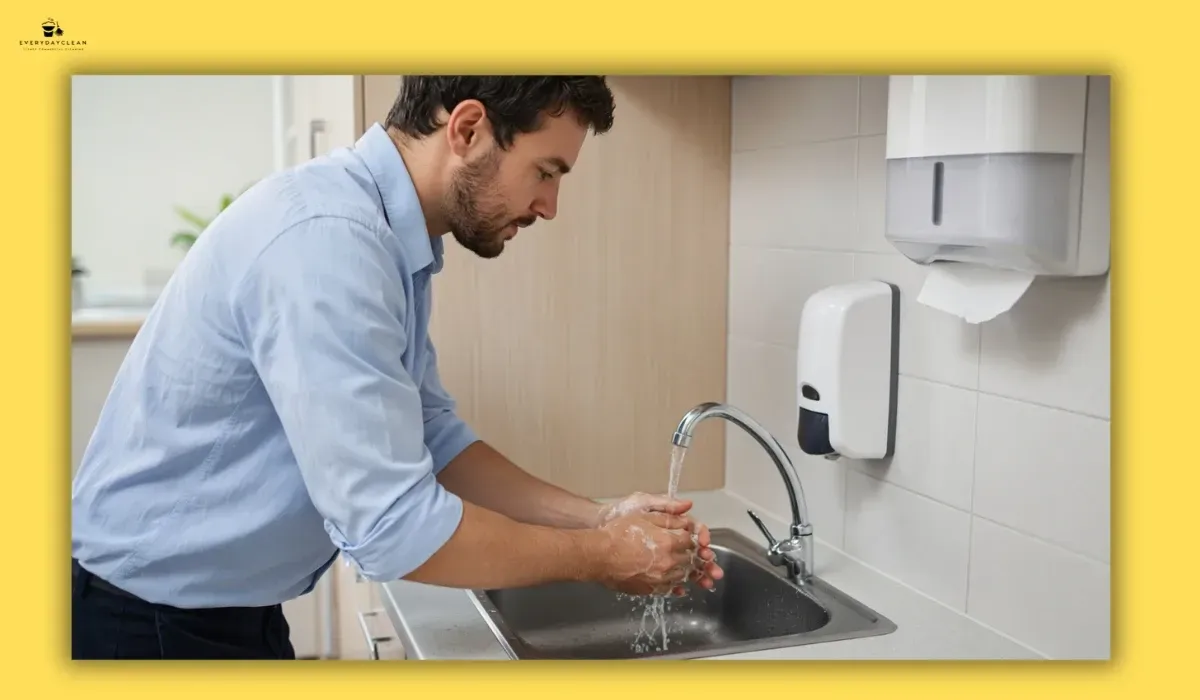
Hand hygiene is the single most effective daily habit. Set clear expectations and make it easy to follow.
- Wash hands with soap and water for at least 20 seconds, especially after the bathroom, before eating and after coughing or sneezing
- Provide hand sanitiser stations at entries, kitchens and shared areas
- Follow cough and sneeze etiquette, covering with an elbow or tissue and binning tissues straight away
- Encourage staff to stay home when unwell rather than bringing illness into the workplace
2. Workstation and desk hygiene
Desks and personal devices are high-touch zones that are easy to overlook. Regular attention keeps them from becoming germ hot spots.
- Disinfect high-touch items such as keyboards, mice, phones and desk surfaces regularly
- Keep a clean-desk habit so surfaces can actually be wiped down
- Avoid eating over keyboards, and clear food debris promptly
- Wipe shared devices such as printers and touch screens between users
3. Communal kitchen and breakroom protocols
Shared kitchens are a common source of complaints and contamination. Simple protocols keep them usable and hygienic.
- Run a scheduled fridge clean-out and label-and-toss routine each week
- Replace or sanitise sponges and cloths regularly, as these harbour bacteria
- Wipe food-contact surfaces, benches and tables after use
- Keep a roster so kitchen upkeep does not fall to whoever happens to notice
4. Restroom sanitation and waste management
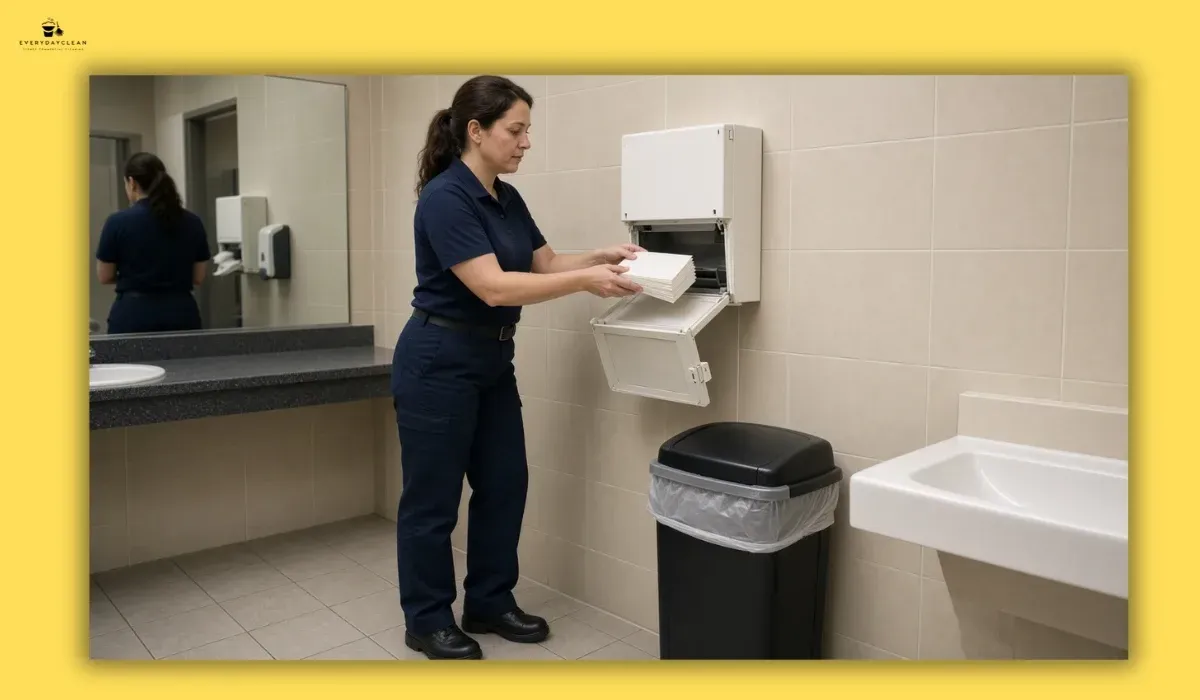
Restrooms and waste points need frequent, reliable attention. This is often where professional cleaning adds the most value.
- Empty bins regularly and keep them lined, with hands-free lids where possible
- Keep touchless soap and towel dispensers stocked and working
- Clean and sanitise high-touch restroom surfaces often throughout the day
- Separate and remove general and food waste promptly to control odour and pests
Personal hygiene at work sets a shared baseline for staff
Personal hygiene in the workplace is about a respectful, practical baseline that keeps shared spaces pleasant and healthy, not about policing people. Clear, calm guidance helps staff know what is expected.
- Dress and grooming: arrive clean and presentable, following any uniform or role-specific standards
- Illness reporting: tell a manager and stay home when unwell, and follow any return-to-work guidance
- Hot-desk etiquette: wipe the desk and shared equipment before and after use, and clear personal items and rubbish
- Shared equipment: clean up after using kitchens, meeting rooms and communal tools so the next person starts fresh
Framing personal hygiene at work as shared courtesy, backed by a written policy, keeps it consistent without singling anyone out.
Copyable workplace hygiene policy and checklist template
The template below is a starting point you can copy, adapt and save or export as a workplace hygiene procedures PDF. Adjust it to your workplace, and confirm specific obligations with a WHS adviser.
Workplace hygiene policy (template)
| Section | Content to complete |
|---|---|
| Purpose | To maintain a clean, healthy workplace and reduce the spread of illness |
| Scope | Applies to all staff, contractors and visitors at [business name] |
| Employer commitments | Provide cleaning, supplies, sanitiser, ventilation and scheduled professional cleaning |
| Worker responsibilities | Follow hand, desk, kitchen and restroom procedures and report hazards |
| Illness policy | Stay home when unwell and report per [procedure] |
| Review date | Policy reviewed every [6 or 12 months] by [role] |
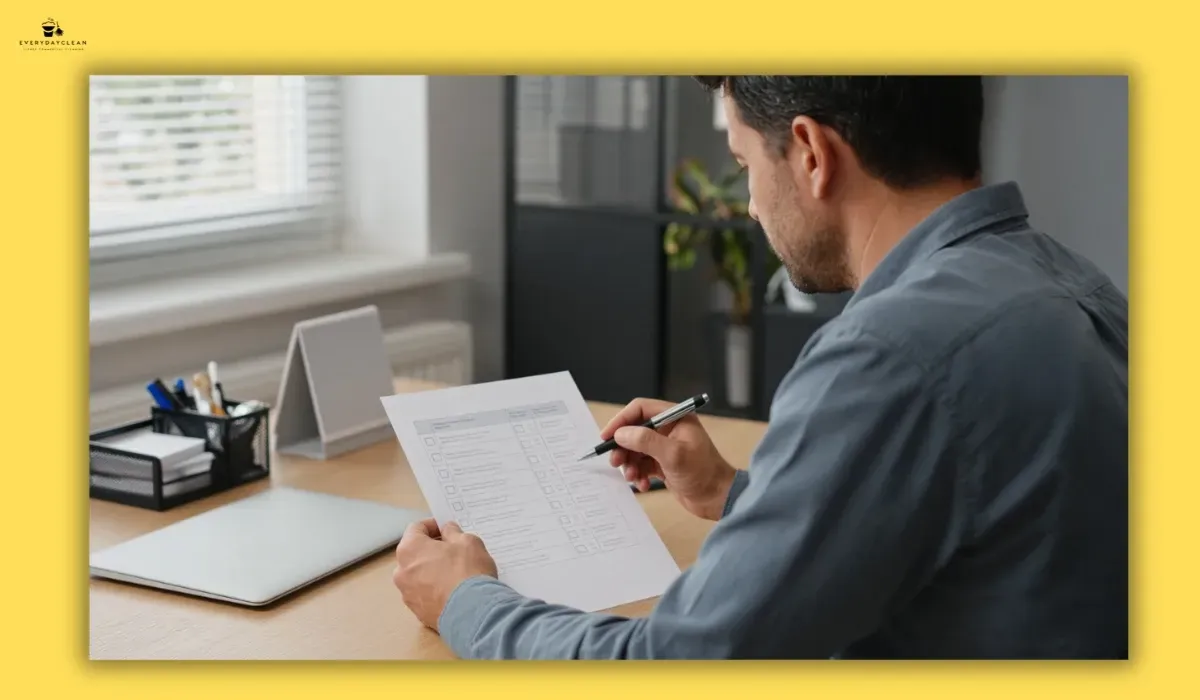
Daily and weekly hygiene checklist (template)
| Task | Frequency |
|---|---|
| Wipe high-touch points (handles, switches, shared devices) | Daily |
| Disinfect own desk, keyboard, mouse and phone | Daily |
| Restock soap, sanitiser and paper towel | Daily |
| Empty and reline bins | Daily |
| Wipe kitchen benches and food-contact surfaces | Daily |
| Clean and sanitise restrooms | Daily (more in high traffic) |
| Fridge clean-out and label-and-toss | Weekly |
| Replace or sanitise kitchen sponges and cloths | Weekly |
| Check ventilation and air vents are clear | Weekly |
| Review hygiene supplies and reorder | Weekly |
For the deeper, scheduled work behind this checklist, an office cleaning standard operating procedure sets out how recurring cleaning tasks are carried out to a consistent standard.
Employer obligations and worker responsibilities share the load
Under Safe Work Australia model WHS principles, hygiene is a shared duty, with the employer and workers each holding a part. This is general guidance, not legal advice, and it does not guarantee any compliance outcome, so confirm your specific duties with a WHS adviser or your state regulator.
| mployer obligations (so far as reasonably practicable) | Worker responsibilities |
|---|---|
| Provide a clean, healthy workplace and adequate amenities | Follow the hygiene procedures and policy |
| Supply soap, sanitiser, cleaning products and lined bins | Keep own workstation and shared areas clean |
| Arrange routine and professional cleaning | Report hazards, spills and supply shortages |
| Maintain ventilation and shared facilities | Stay home when unwell and follow illness reporting |
| Set, communicate and review the hygiene policy | Take reasonable care for own and others' health and safety |
Many businesses meet the employer side with a mix of staff routines and scheduled commercial cleaning, so day-to-day upkeep and deeper periodic cleaning are both covered.
Hygiene in the workplace: common questions
What does workplace hygiene include?
Workplace hygiene includes personal hygiene (hand washing and cough etiquette), clean and disinfected workstations, sanitised shared amenities such as kitchens and restrooms, waste management, and good ventilation. It combines daily staff habits with routine and professional cleaning. Together, these practices help reduce the spread of illness, though they cannot remove all risk.
What are the 4 workplace hygiene procedures?
The four core procedures are hand hygiene and personal cleanliness, workstation and desk hygiene, communal kitchen and breakroom protocols, and restroom sanitation and waste management. Setting a clear standard for each gives staff a simple framework, and pairing it with scheduled cleaning keeps shared spaces consistently clean across a busy week.
Who is responsible for hygiene in the workplace?
Responsibility is shared. Under WHS principles, employers must provide a clean, healthy workplace, amenities and supplies so far as reasonably practicable, while workers take reasonable care by following hygiene procedures, keeping their areas clean and reporting issues. A written policy makes these expectations clear for everyone and easier to apply day to day.
How often should an office be cleaned for good hygiene?
High-touch surfaces, restrooms and kitchens generally need daily attention, with desks and personal devices wiped regularly by staff. Weekly tasks include fridge clean-outs and sponge replacement, and periodic deep cleaning handles the rest. Exact frequency depends on staff numbers, foot traffic and whether routine office cleaning is in place.
Can workplace hygiene stop staff getting sick?
Not completely. Good workplace hygiene can reduce illness transmission and absenteeism, but it cannot guarantee a germ-free environment or stop every illness. It works best alongside staff staying home when unwell, good ventilation and consistent cleaning. The aim is to lower risk and keep shared spaces healthier, not to promise perfect protection.
Keeping hygiene standards current with routine audits and policy reviews
Workplace hygiene holds up when it is reviewed regularly, not set once and filed away. The strongest workplaces run short, routine hygiene audits and revisit the policy on a set schedule.
A practical rhythm is a quick weekly walkthrough against the checklist, a monthly review of supplies and problem spots, and a policy review every 6 to 12 months or whenever the workplace, team size or layout changes. Pair that with clear staff habits and scheduled cleaning, and hygiene in the workplace stays consistent, visible and easy to keep up.
About Everyday Clean
Everyday Clean is a Sydney-based cleaning company supporting offices, commercial sites and businesses with routine and periodic cleaning. Workplace hygiene policies and WHS obligations remain the responsibility of the employer, guided by Safe Work Australia principles and professional advice.
Blog