Office Cleaning SOP: Template, Duties and Procedures
Standard Operating Procedure for Office Cleaning: A Practical Guide
A standard operating procedure for office cleaning is a documented process that sets out who is responsible for each cleaning task, how it should be carried out, what supplies and safety precautions are required, and how often it happens. It exists to remove ambiguity, whether cleaning is handled by internal staff, a rostered team, or an outsourced contractor.
An SOP is different to a task checklist. A checklist tells someone what to do today. An SOP explains the full process behind that checklist: responsibilities, safety documentation, quality control, and what happens when something goes wrong. Facilities managers and admin teams typically need both, but they serve different purposes and shouldn't be treated as interchangeable documents.
If your office already has a task checklist but cleaning quality is still inconsistent, the gap is usually in responsibility, supplies, or quality control, not the task list itself. An SOP addresses that gap by documenting the full process, not just what needs cleaning.
Office Cleaning SOP Template
A practical SOP for office cleaning covers ten core sections. Each one answers a specific question that a checklist alone doesn't address.
| SOP section | What to include | Why it matters |
|---|---|---|
| Purpose | Why the SOP exists and what outcome it's meant to achieve | Gives the document a clear reason to be followed, not just filed away |
| Scope | Which areas, staff, and contractors the SOP applies to | Prevents confusion about what falls inside or outside the process |
| Cleaning areas | Bathrooms, kitchens, desks, floors, high-touch points, waste areas | Ensures no area is assumed to be someone else's responsibility |
| Responsibilities | Who owns each task: staff, in-house team, or contractor | The most common point of failure when this is left vague |
| Supplies and PPE | Required products, equipment, and protective gear per task | Prevents incorrect product use and supports consistent quality |
| Step-by-step procedures | The actual method for each task, in order | Reduces variation between different people doing the same task |
| Frequency | How often each task happens | Turns a one-off clean into a repeatable schedule |
| Safety notes | Chemical handling, signage, wet floor precautions | Reduces risk to staff, cleaners, and visitors |
| Quality checks | How cleaning standards are verified | Catches inconsistency before it becomes a recurring complaint |
| Incident and reporting process | What to do when something is missed, damaged, or unsafe | Gives staff a clear path instead of an ad hoc response |
| Review schedule | When the SOP itself gets revisited and updated | Keeps the document accurate as the office or provider changes |
A working SOP doesn't need to be long. A few clear sentences per section, backed by a simple table for tasks and frequency, is usually more effective than a lengthy document nobody reads in full.
Office Cleaning Duties and Responsibilities
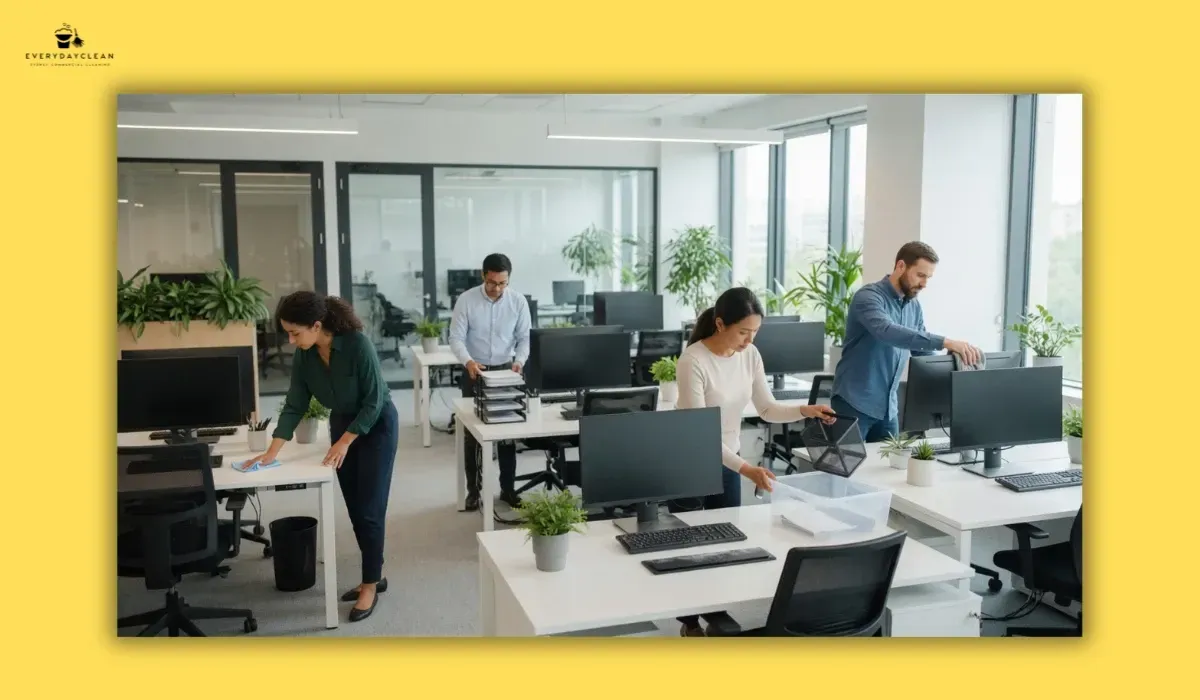
Unclear responsibility is the single most common reason office cleaning falls short of expectations, more often than lack of effort or poor products. An SOP should name, specifically, who is responsible for each category of task.
Staff are typically responsible for their own immediate mess: desk clutter, dishes, and reporting hazards like spills. This is personal responsibility, not deep cleaning.
In-house cleaning staff or a rostered team usually handle daily hygiene tasks: bins, bathroom cleaning, kitchen wipe-downs, and high-touch point disinfection, where no formal contractor is engaged.
An outsourced cleaning contractor typically takes on the bulk of scheduled cleaning, including weekly and periodic deep tasks, under a documented scope of work.
A common failure pattern is a task falling between two of these groups, such as a shared kitchen fridge that staff assume the cleaner handles and the cleaner assumes staff handle. Naming the owner explicitly in the SOP, rather than leaving it implied, is what prevents this. For a detailed breakdown of how daily and weekly tasks typically split across these groups, see this office cleaning duties list.
Office Cleaning Policies and Procedures
Policies and procedures sit above individual task instructions. They set the rules that apply across all cleaning activity in the office, regardless of which specific task is being performed.
Practical policy areas an SOP should address:
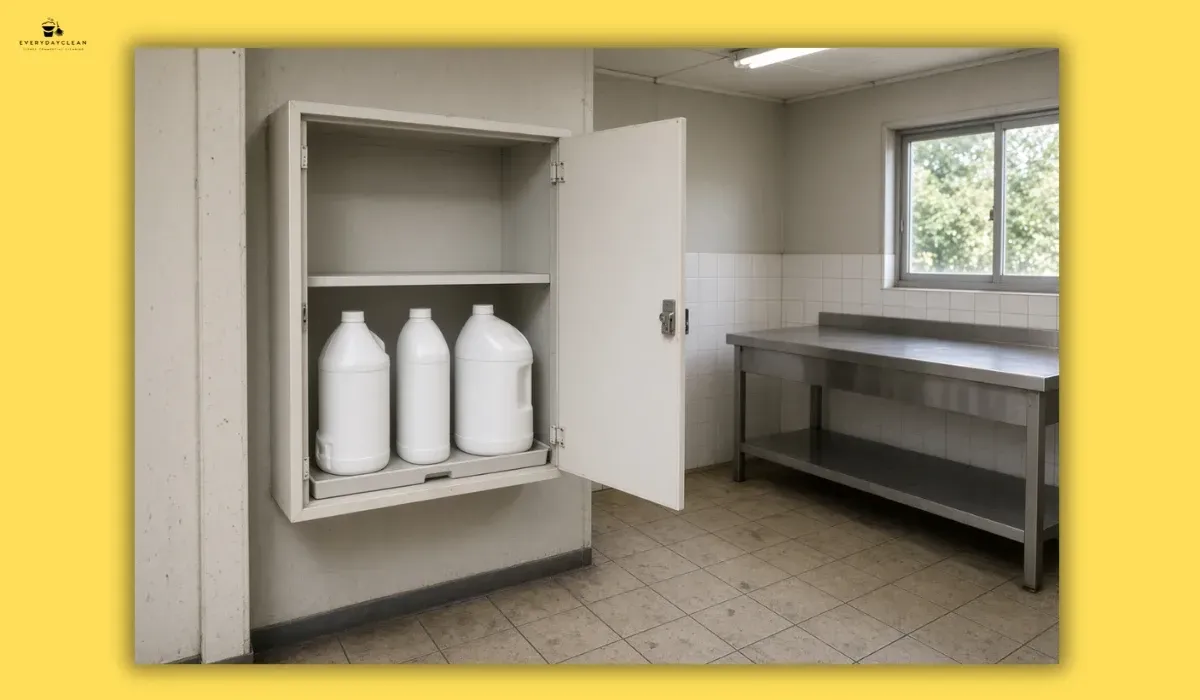
- Chemical storage and handling, including never mixing products and always following the product label
- Access control for cleaning staff or contractors, particularly outside business hours
- Reporting requirements for damage, missed areas, or safety hazards discovered during cleaning
- Product and equipment standards, including which supplies are approved for use on specific surfaces
- Confidentiality expectations where cleaning staff have access to desks, screens, or documents
Procedures translate policy into action: the actual steps someone follows to comply with the policy. A policy might state that chemicals must be stored securely; the procedure explains where, how, and who checks it. For guidance on choosing and managing supplies that fit into this structure, see this office cleaning supplies guide.
Safe Work Method Statement vs Office Cleaning SOP
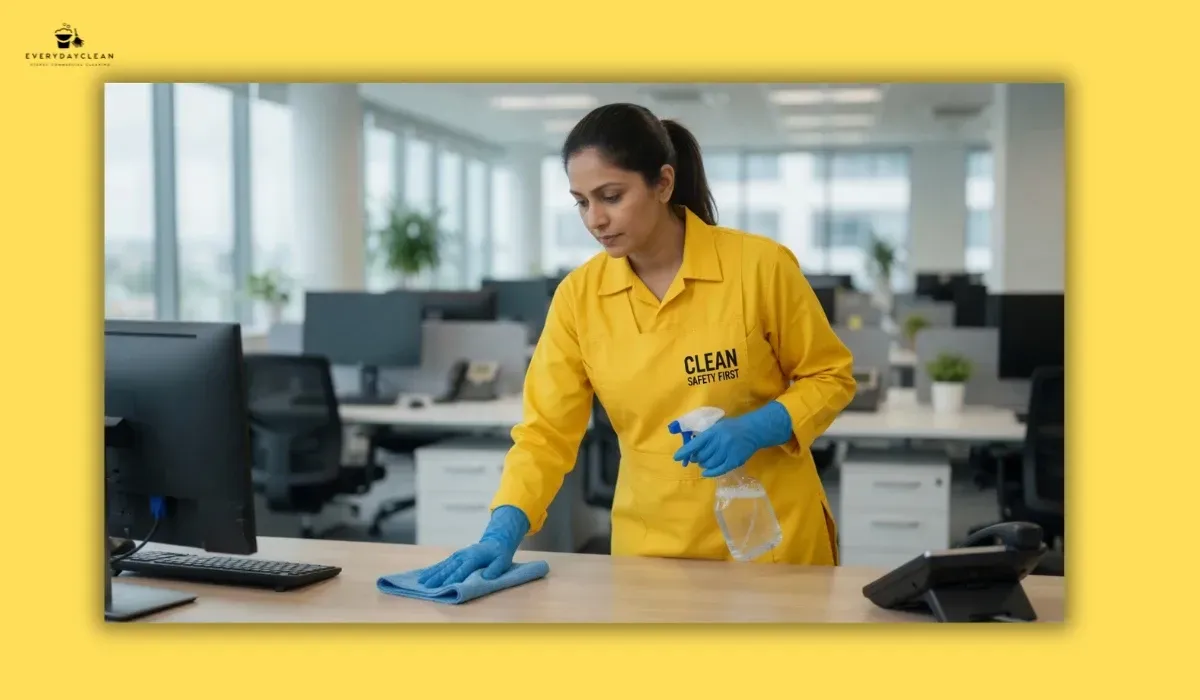
A Safe Work Method Statement (SWMS) and an office cleaning SOP serve different purposes and shouldn't be treated as the same document.
An SOP documents the general process for routine office cleaning: responsibilities, steps, frequency, and quality control. A SWMS is a specific safety document typically associated with higher-risk work, identifying hazards, control measures, and safety steps for that particular activity.
Most routine office cleaning tasks, such as desk wiping, vacuuming, or bathroom cleaning, are unlikely to require a formal SWMS on their own. However, higher-risk activities that sometimes fall under a broader cleaning scope, such as working at height, using specific machinery, or handling certain chemicals, may require additional safety documentation depending on the specific risk and the site.
Whether a SWMS or other safety documentation is required depends on the nature of the task, the site, and current Australian workplace safety guidance. This varies by activity and jurisdiction, so it's worth checking current requirements through Safe Work Australia or a qualified WHS advisor rather than assuming routine cleaning is automatically exempt or automatically covered.
Quality Checks for Office Cleaning SOPs
An SOP without a way to verify it's being followed tends to drift over time, even with good intentions. Quality checks close that gap.
Practical quality-check methods include:
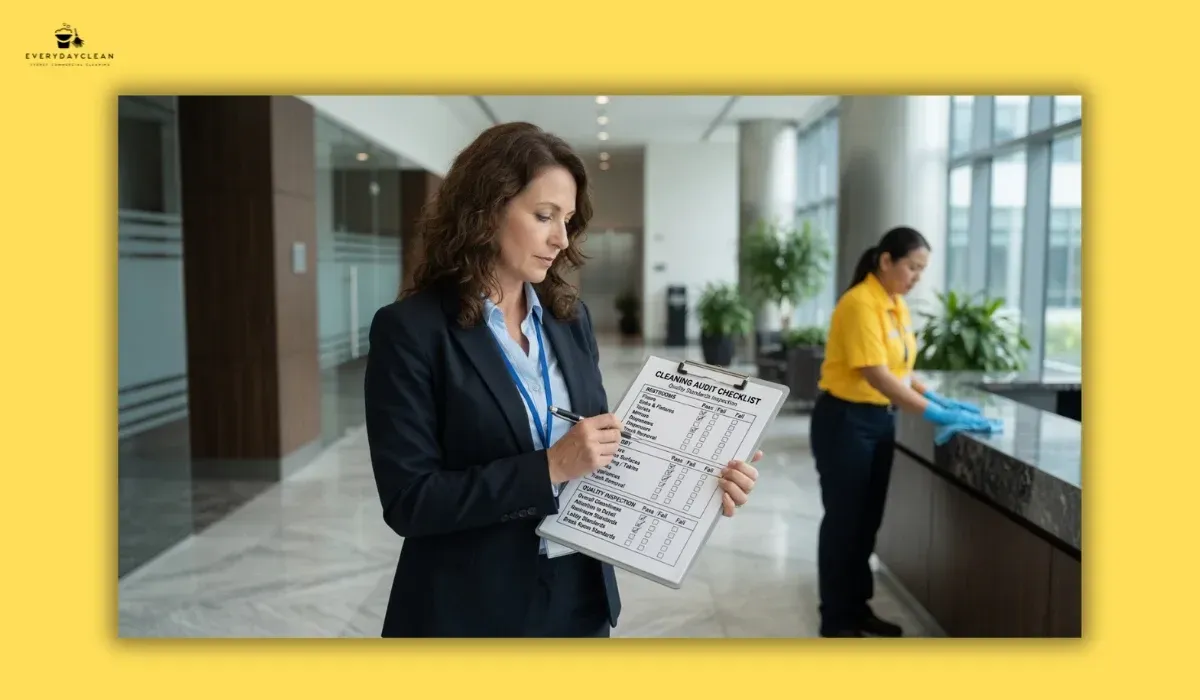
- A simple sign-off sheet completed after each clean, noting date, tasks completed, and any issues
- Periodic spot checks by an office manager or admin lead against the SOP's task list
- A basic photo log for non-sensitive high-priority areas, where appropriate, taken at set intervals
- A feedback channel for staff to report missed areas or recurring issues without it becoming informal complaints
- Reviewing the incident and reporting log periodically to spot patterns, such as the same area being missed repeatedly
Quality checks work best when they're lightweight enough to actually get used. A detailed audit process that takes longer than the clean itself tends to get abandoned within a few weeks.
Practical Examples By Area
Bathrooms. The SOP should specify disinfection of toilets, sinks and high-touch fittings, restocking of consumables, and a frequency that reflects actual usage, not a generic default. High-traffic bathrooms often need more than once-daily attention.
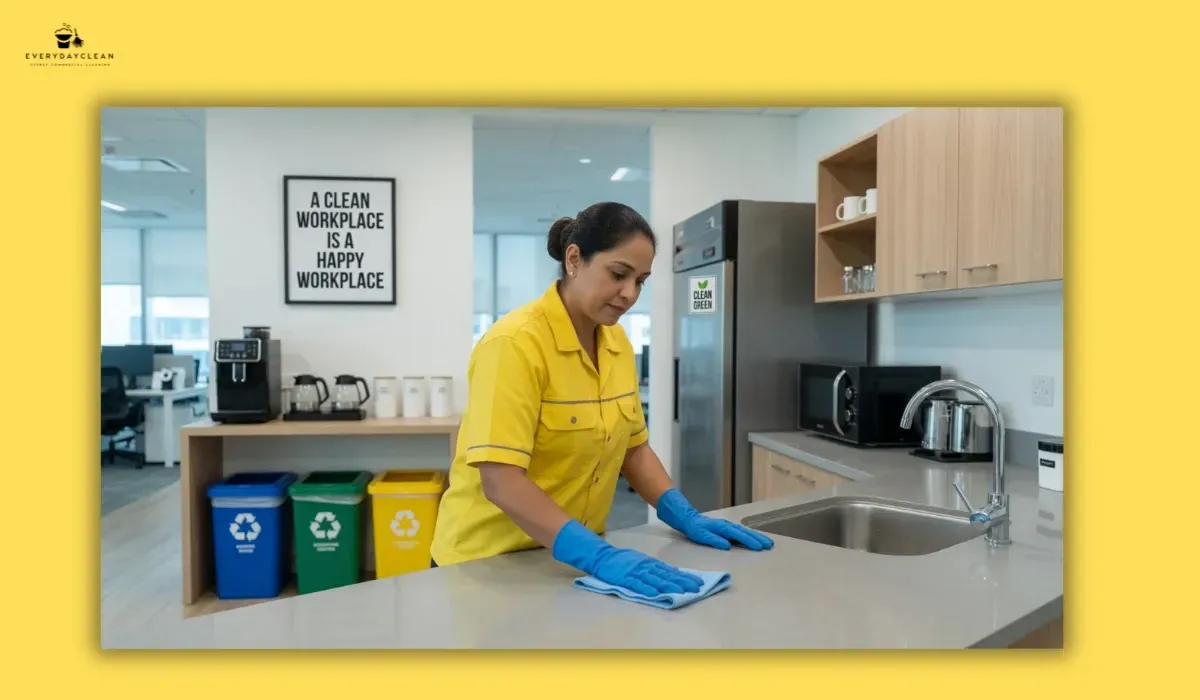
Kitchens and breakrooms. Responsibilities here are often the most contested, since personal use overlaps with shared space. The SOP should separate what staff are expected to do themselves (dishes, spills they cause) from what the cleaning team or contractor covers (bins, sinks, shared appliance wipe-downs).
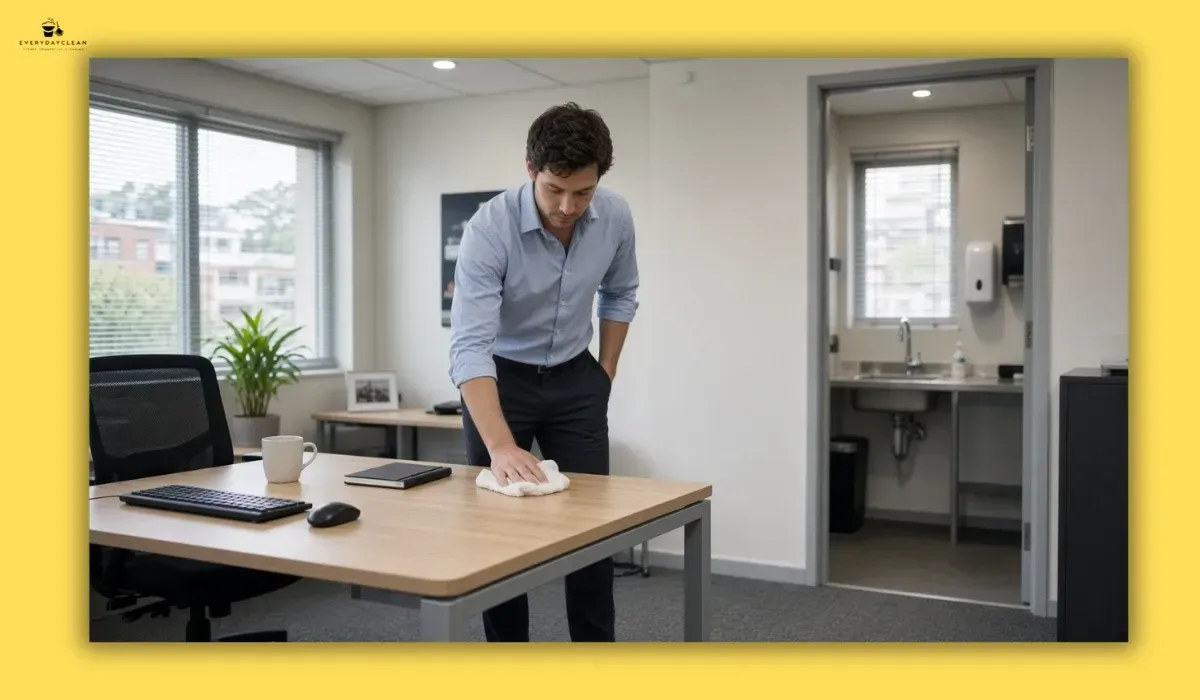
Desks and workstations. Desk cleaning often depends on staff cooperation, since cleaners can't always move personal items. The SOP should note what's cleaned around versus what requires staff to clear the desk first.
Floors. Frequency should reflect traffic levels, not a blanket weekly rule across the whole office. Entrances and high-traffic corridors typically need more frequent attention than quiet back offices.
High-touch points. Door handles, light switches, lift buttons and shared equipment benefit from a higher disinfection frequency than general surfaces, given how often they're touched throughout the day.
Waste handling. The SOP should specify separation of general and recyclable waste where applicable, frequency of removal, and who is responsible for larger waste events such as post-event cleanup.
When To Formalise Cleaning Through A Professional Service
Internal SOPs work well when there's a consistent person or team accountable for following them. As offices grow, staff turnover increases, or cleaning responsibilities become harder to track internally, many businesses choose to formalise the process by engaging an office cleaning service in Sydney provider that can work within an agreed SOP, scope, and quality-check process, rather than relying on an internal SOP that depends on staff consistently following it without oversight.
If your current process is more of a task list than a documented procedure, it may also be worth reviewing this guide on how to create an office cleaning checklist alongside the SOP structure above, since the two documents work best together rather than as substitutes for one another.
FAQs
What is an office cleaning SOP?
An office cleaning SOP is a documented process outlining who is responsible for office cleaning tasks, how each task should be carried out, required supplies and safety precautions, and how often cleaning happens. It goes beyond a simple task list to cover process, responsibility, and quality control.
What should be included in an office cleaning SOP?
A practical SOP includes purpose, scope, cleaning areas, responsibilities, required supplies and PPE, step-by-step procedures, frequency, safety notes, quality checks, an incident and reporting process, and a review schedule. Each section addresses a different gap that a task checklist alone doesn't cover.
Who is responsible for following an office cleaning SOP?
Responsibility typically splits between staff for their own immediate mess, an in-house team or rostered staff for daily hygiene tasks, and an outsourced contractor for the bulk of scheduled cleaning. The SOP should name these owners explicitly rather than leaving responsibility implied.
Is an office cleaning SOP the same as a checklist?
No, a checklist lists the tasks and how often they're done, while an SOP documents the full process behind those tasks, including responsibility, safety, supplies, and quality control. Most offices benefit from having both, used together rather than as substitutes.
Does office cleaning need a safe work method statement?
Most routine office cleaning tasks are unlikely to require a formal SWMS on their own, but higher-risk activities sometimes included in a cleaning scope, such as working at height or handling certain chemicals, may need additional safety documentation depending on the task and site. Checking current Australian workplace safety guidance or a qualified WHS advisor is the appropriate way to confirm requirements for a specific situation.
How often should an office cleaning SOP be reviewed?
An SOP should be reviewed whenever the office layout, staff numbers, or cleaning provider changes, and at a minimum on a periodic basis, such as annually, even without a specific trigger. A review schedule built into the SOP itself helps ensure this happens rather than being forgotten.
When should a business use a professional office cleaner?
A professional cleaner becomes a practical option when internal SOPs are hard to maintain consistently, when the office grows beyond what informal rostering can manage, or when accountability for cleaning quality needs to sit with a dedicated provider rather than internal staff. This is a common point at which businesses move from an internal SOP to an outsourced, contracted scope of work.
Blog