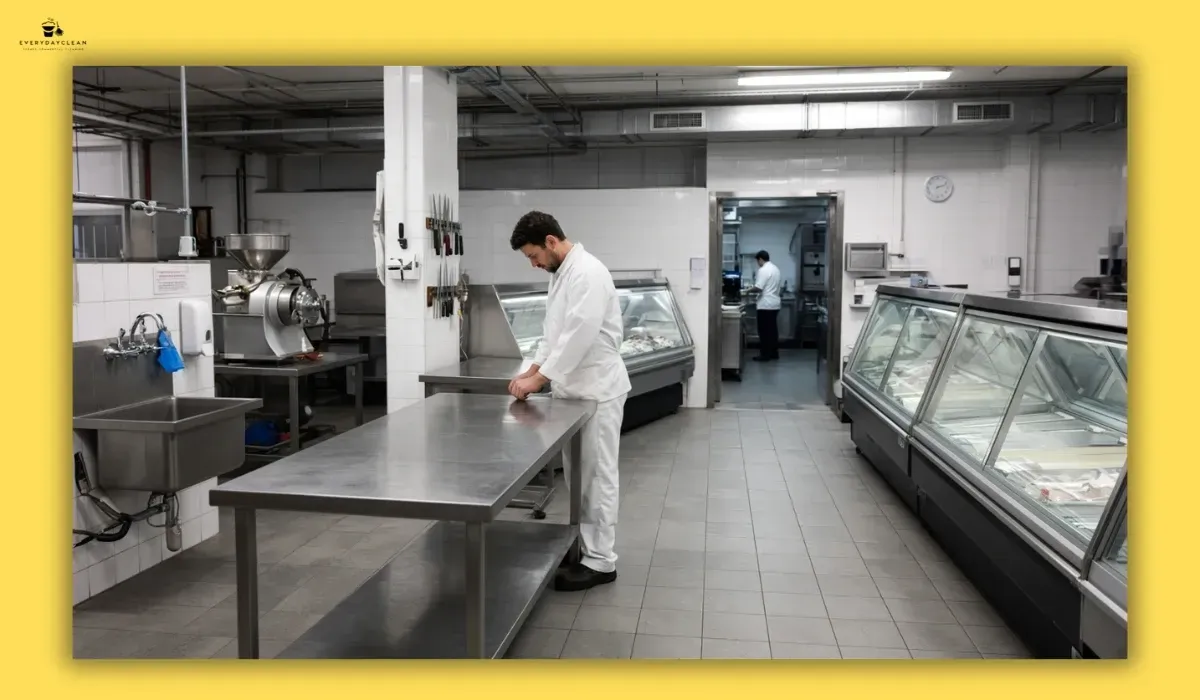
Office Cleaning Duties List: Daily, Weekly and Monthly Tasks
Office cleaning duties fall into three groups: daily tasks that keep the space usable, weekly tasks that stop grime building up, and monthly tasks that handle the areas nobody thinks about until they're visibly dirty. A clear office cleaning duties list matters because vague instructions like "keep the office tidy" are exactly why bins overflow and kitchens turn into a mystery smell by Thursday.
This office cleaning duties list is built for Sydney offices deciding what to handle in-house, what to hand to an office cleaning services Sydney provider, and how to stop tasks falling through the cracks between the two.
| Daily duties | Weekly duties | Monthly duties |
|---|---|---|
| Bins, desks, kitchen benchtops, bathrooms, high-touch points | Deep vacuum, glass, fridge and appliances, furniture dusting, meeting rooms | Light fittings, vents, blinds, upholstery, storage and cupboards |
If you manage a small office with light foot traffic, you may only need the daily basics covered internally, with a professional service handling weekly and monthly work. Busier workplaces with client visits, shared kitchens, or multiple bathrooms usually need daily professional attention. Understanding what office cleaning standards actually require is a useful starting point before you assign any of the tasks below.
If a task takes under two minutes and touches something people use constantly (bins, desks, door handles), it belongs on the daily list. If it takes longer or needs equipment most offices don't have, push it to weekly or monthly instead of trying to do it every day.
Daily Office Cleaning Duties
Daily duties cover the tasks that directly affect hygiene and how the office looks by the end of each working day. Skipping these for even one day is usually noticeable.
Reception and shared areas
- Empty and wipe down bins in common areas
- Wipe reception desk and any glass or laminate surfaces
- Vacuum or sweep high-traffic floor zones
- Clear visible clutter from waiting areas
Workstations and desks
- Wipe down desks, especially shared hot desks
- Spot-clean visible marks on monitors and shared equipment
- Empty desk-side bins into central waste points
Kitchen or break room
- Wipe benchtops and the outside of the microwave
- Sanitise the sink and taps
- Empty food waste bins, which need daily attention regardless of overall bin frequency
- Wash or run the dishwasher on any communal dishes
Bathrooms
- Clean and disinfect toilets, sinks and basins
- Restock soap, paper towel and toilet paper
- Wipe down mirrors and fittings
- Mop bathroom floors
High-touch points
- Disinfect door handles, light switches, lift buttons and shared equipment such as printers and phones
Kitchen food bins and high-touch points get overlooked most often because they aren't visually obvious the way a dirty floor is. Build these into the daily checklist by name rather than lumping them under "general tidy up".

Weekly Office Cleaning Duties
Weekly duties remove the build-up that daily surface cleaning doesn't reach. This is where most of the actual dirt removal happens, not just the visible tidying.
| Area | Weekly task |
|---|---|
| Floors | Deep vacuum with furniture moved, mop hard floors thoroughly |
| Glass | Clean interior windows and glass partitions |
| Kitchen | Deep clean fridge interior, descale kettle, clean inside microwave |
| Furniture | Dust and wipe down all furniture surfaces, including under monitors and behind equipment |
| Carpets and mats | Vacuum entry mats and treat any visible stains |
| Bathrooms | Scrub tiles and grout, disinfect waste bins |
| Meeting rooms | Wipe tables, chairs and any shared remote controls or AV equipment |
Meeting rooms are worth calling out separately. They often look clean because nobody eats at the table daily, but shared remotes, whiteboards and chair arms accumulate grime from constant hand contact between meetings.
Weekly cleaning is enough for many small to medium Sydney offices with light to moderate foot traffic, but customer-facing spaces, busy kitchens or shared workspaces with multiple tenants often need daily attention on top of the weekly deep clean. Office cleaning also affects staff comfort and daily routines in ways that go beyond visible dirt, which is part of why consistency matters more than any single deep clean.
Monthly Office Cleaning Duties
Monthly duties target the areas that don't need constant attention but become obvious once neglected for too long.
- Clean light fittings and dust ceiling fans
- Vacuum air vents and check for dust buildup around them
- Spot-clean walls and baseboards
- Clean blinds and window coverings
- Deep clean upholstered chairs and fabric surfaces
- Organise and declutter storage areas, cupboards and shared drawers
- Wipe down the inside of cabinets and shelving
- Check and clean behind or under large furniture
If a task hasn't been done in over a month and nobody has noticed, it's a genuine monthly task. If people start commenting on it within a week or two of being missed, it likely belongs on the weekly list instead.
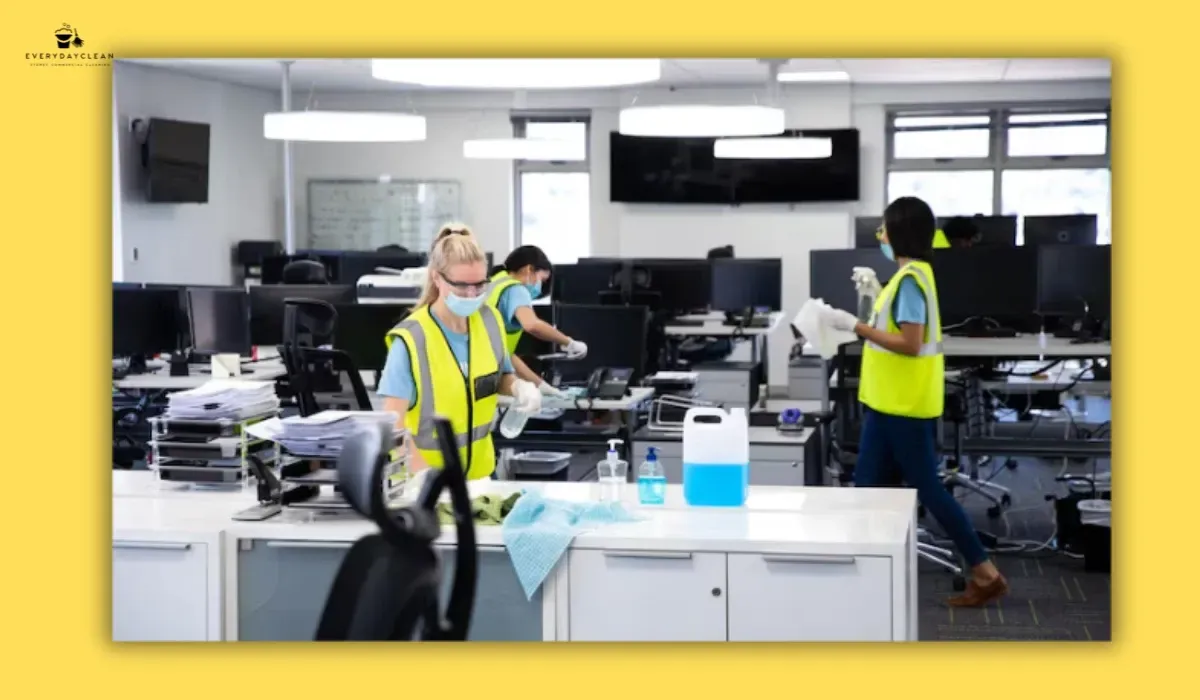
Who Is Usually Responsible For Each Duty
Office cleaning duties typically split across three groups, and confusion usually happens when nobody has agreed which group owns what.
Staff are usually responsible for keeping their own desk tidy, clearing dishes after use, and reporting spills or hazards. This is about personal responsibility, not deep cleaning.
In-house cleaning staff or a rostered team typically handle daily tasks: bins, kitchen wipe-downs, bathroom hygiene and high-touch point disinfection.
A professional cleaning service is generally the more practical option for weekly deep cleaning and monthly tasks, since these require equipment, time, and consistency that's hard to maintain with internal staff juggling other jobs. This is also where following correct safety practices around chemicals and equipment becomes more important, since deeper cleaning tasks carry more risk than daily wiping.
Pricing for outsourced office cleaning in Sydney varies by office size, frequency, and scope, and most providers frame it as a range tied to square metreage and visit frequency rather than a flat rate. A direct quote based on your specific office is the only reliable way to get an accurate figure.
Common Mistakes In Office Cleaning Duty Lists
- Treating tidying and cleaning as the same task. Clearing a desk of papers is tidying. Wiping and disinfecting the surface is cleaning. Both matter, but only one removes germs.
- No clear owner for shared spaces. Kitchens and meeting rooms are the first areas to slip when everyone assumes someone else is responsible.
- Ignoring frequency mismatches. A high-traffic customer-facing office running a weekly-only schedule will look worn well before the next clean.
- Skipping documentation. Without a written or digital checklist, cleaning becomes inconsistent and hard to audit if something is missed.
- Overloading the daily list. Cramming monthly-level tasks into a daily routine burns out staff and leads to shortcuts on the tasks that actually matter every day.
When To Bring In A Professional Cleaner
Internal routines work well for small teams with light use and cooperative staff. It's worth considering a professional service when foot traffic increases, when the office has multiple bathrooms or a shared kitchen, when client visits are frequent, or when internal staff consistently fall behind on weekly and monthly tasks. Businesses handling commercial or multi-tenant cleaning needs in particular tend to benefit from a structured external schedule rather than relying on ad hoc internal effort.
If your office has grown or changed layout since duties were last assigned, it's worth revisiting the list rather than assuming the old split of responsibilities still works.
FAQs
What is included in office cleaning duties?
Office cleaning duties generally cover bin removal, desk and surface wiping, kitchen and bathroom hygiene, floor care, and disinfection of high-touch points, split across daily, weekly and monthly frequencies. What's included can also extend to glass cleaning, furniture dusting, and periodic deep cleaning of vents, blinds and upholstery, depending on the scope agreed with staff or a cleaning provider.
What are the main daily office cleaning duties?
Daily duties usually cover bins, desk and surface wiping, kitchen benchtop cleaning, bathroom hygiene, and disinfecting high-touch points like door handles and shared equipment. These tasks address the areas that accumulate grime and germs fastest through regular use.
How often should office bathrooms be cleaned?
Office bathrooms generally need daily cleaning and disinfection, with high-traffic offices sometimes requiring more than one clean per day. Restocking supplies like soap and paper towel should also happen daily to avoid running out during business hours.
Who is responsible for kitchen cleaning in a shared office?
Responsibility usually splits between staff clearing their own dishes and mess, and a cleaning team or service handling benchtop sanitising, bin emptying, and appliance cleaning. Without a clear split, kitchens are one of the first areas to become inconsistent.
Is a weekly clean enough for a small office?
A weekly clean can be enough for small offices with light foot traffic and staff who keep shared areas reasonably tidy between visits. Busier workplaces with client-facing areas or shared kitchens usually need daily attention alongside the weekly deep clean.
What tasks should never be skipped, even in a quick clean?
Bathroom hygiene, kitchen food waste bins, and high-touch points such as door handles and shared equipment should never be skipped, since these affect hygiene most directly. Cosmetic tasks like dusting or blind cleaning can wait longer without the same impact.
Blog