Office Cleaning Standards: How to Set and Check Them
Office cleaning standards are the documented expectations that set out what gets cleaned, how often, to what level, and how quality is checked. A clear standard names the tasks for each area, the frequency behind each one, the high-touch points that need regular attention, and the review process that confirms the work is actually being done. Without that documentation, cleaning is judged on how a space looks on the day rather than on an agreed benchmark, which is where most workplace cleaning disputes start.
For an Australian business, defining these standards is less about a single national rulebook and more about setting expectations that suit the workplace, then writing them into a scope or service agreement that both the business and the cleaner can measure against. Done well, it turns cleaning from a vague expectation into something you can review objectively.
Office Cleaning Standards Should Cover Scope, Frequency and Checks
Good office cleaning standards answer three questions for every part of the workplace: what is cleaned, how often, and how it is verified. Getting all three documented is what separates a real standard from a general expectation.
The areas that standards should address include:
- Workstations and desks: surfaces, shared equipment and high-touch points
- Floors: vacuuming, mopping and spot cleaning by floor type and traffic
- Bathrooms: fixtures, high-touch surfaces, restocking and floor hygiene
- Kitchens and break areas: benches, sinks, appliances, tables and waste
- High-touch points: door handles, light switches, lift buttons, shared devices and rails
- Waste: general, recycling and organic bins, plus liners and collection
- Consumables: soap, paper products and sanitiser, and who restocks them
- Common and meeting areas: reception, breakout spaces and shared rooms
- Glass and internal surfaces: entry glass, partitions and mirrors
Regular cleaning of high-touch points and shared surfaces may help reduce the transfer of grime through a workplace, though no cleaning standard removes all germs, and standards are best framed around consistency and presentation rather than health guarantees.
What is the difference between a cleaning standard and a cleaning checklist?
A checklist lists the tasks to be done. A standard adds the frequency, the expected quality level and the way performance is verified. A checklist tells a cleaner to clean the kitchen; a standard defines how often, to what result, and how a manager confirms it was met. Both are useful, but the standard is what makes cleaning measurable rather than just a to-do list.
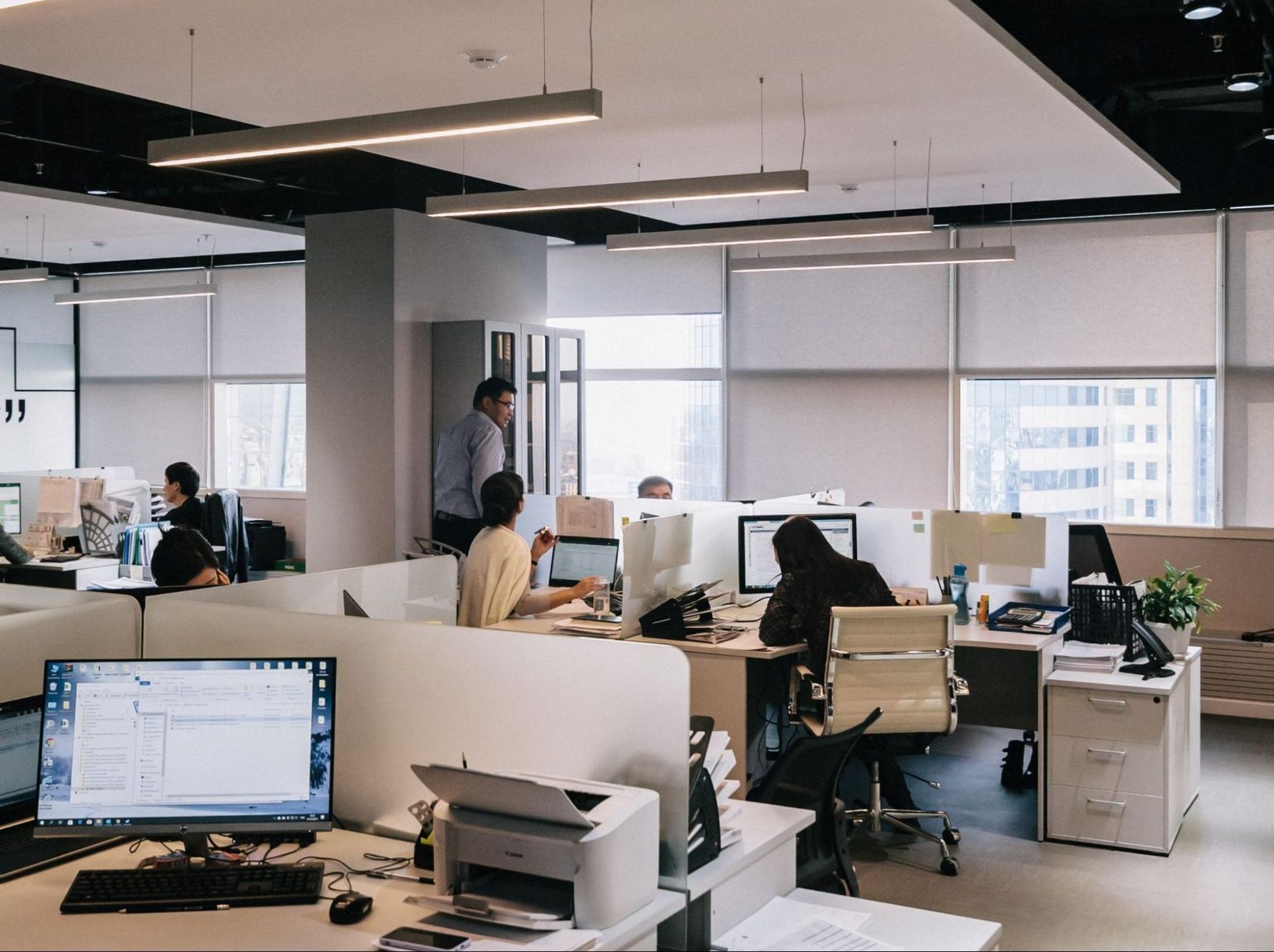
A Practical Framework for Setting Standards by Area and Frequency
The most workable way to set office cleaning standards is to map each area to a task list and a frequency, based on how heavily it is used rather than applying one blanket schedule.
A simple way to think about frequency:
- Daily: bathrooms, kitchens, high-touch points, waste, and main floor areas in busy offices
- Several times a week: desks and workstations, breakout areas and mid-traffic floors
- Weekly: detailed floor care, glass and partitions, and lower-traffic rooms
- Periodic: carpet cleaning, hard floor treatment, high dusting, vents and deep kitchen or bathroom work
Traffic and risk should drive the frequency. A shared kitchen used by eighty people needs daily attention, while a rarely used meeting room may only need weekly cleaning. High-touch and hygiene-sensitive areas justify more frequent cleaning than presentation-only surfaces. Matching frequency to actual use keeps the standard realistic and the cost sensible, and it stops businesses paying for daily cleaning of spaces that barely get used.
What to Put in a Cleaning Scope or Service Agreement
Most cleaning problems trace back to a vague scope rather than poor work. A clear office cleaning scope or service level agreement should set out:
- Every area covered, named specifically, with any exclusions listed
- The task list for each area
- Frequency per task, not just visits per week
- Periodic works and their cycle
- Who supplies consumables and equipment
- Service hours and access arrangements
- The quality standard expected for each task
- How performance is measured and reported
- How additional or one-off works are quoted
The detail is what makes the agreement easier to review and manage. Wording like "keep the office clean" gives a manager nothing to measure against, while "wipe all desk surfaces and high-touch points daily, vacuum main floors daily, deep clean carpets quarterly" can be checked and reviewed. When standards and scope are documented this clearly, bringing in managed office cleaning support becomes a matter of matching a provider to a defined brief rather than hoping expectations are understood.
Auditing office cleaning quality
A useful audit is a short, repeatable walkthrough covering consistent points. Covering the same items each time means patterns emerge: a single miss is an off day, the same miss in the same place three visits in a row is a scope, time or process issue.
What to check in a standard office cleaning audit:
- Entry glass and matting: visible marks, cleanliness at arm height
- Kitchen: benchtop and sink clear, bins emptied, floor edges
- Bathrooms: odour on entry, consumables stocked, floor behind toilet pans, touchpoints clean to touch
- Meeting rooms: reset properly, surfaces clear and clean
- Floors: edges, corners and under accessible furniture
- Touchpoints: handles and switches, tested by feel not just by eye
- Glass and partitions: checked at an angle to catch streaks
- Faults noted: damage, maintenance issues, supply shortages
Every point that is checked should be the same point checked last time. A rotating spot check produces a less useful picture than a fixed walkthrough because the pattern information is lost.
Documentation. A simple written record of the walkthrough, noting what passed and what was found, serves two purposes: it allows the cleaning provider to address specific misses rather than guessing, and it creates a record if the cleaning standard is disputed.
Escalation. A standard should set out how recurring misses are escalated. One missed item is feedback. The same miss repeated across multiple visits requires a scope or process conversation, not more feedback.
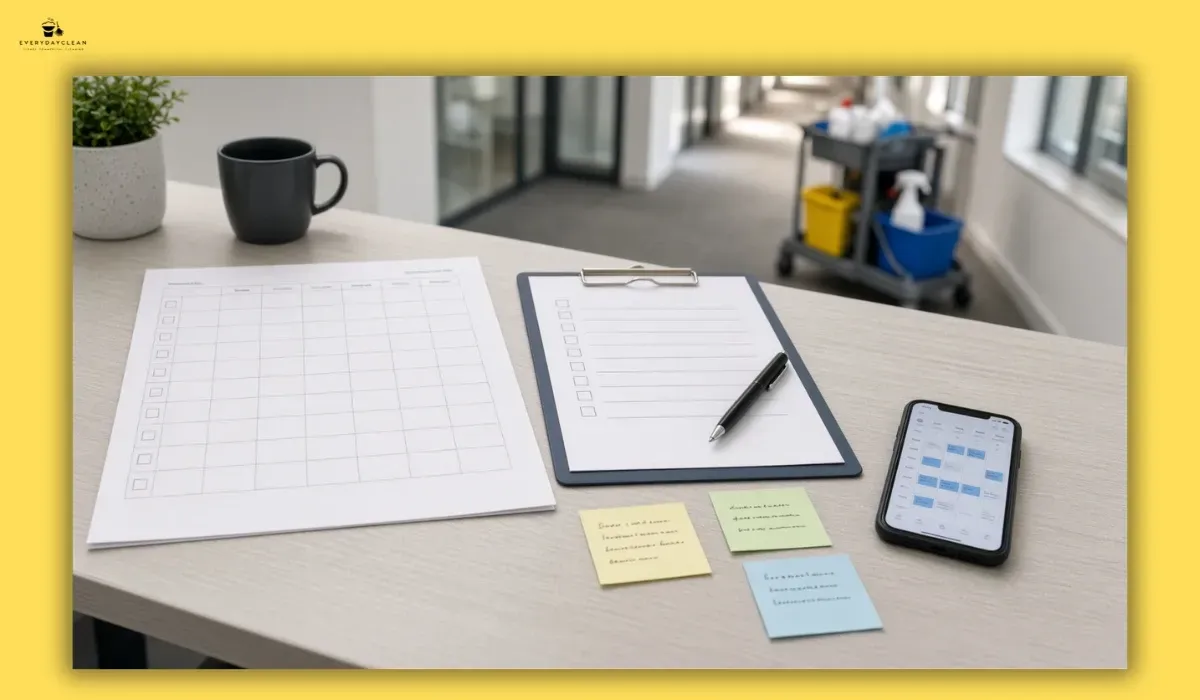
An office cleaning inspection checklist formalises this walkthrough into a repeatable document for facility managers who want a structured record.
Safety basics that apply to office cleaning
Office cleaning is a workplace activity, and whoever is doing it is subject to WHS obligations. A cleaning standard should reflect this rather than treating safety as a separate document.
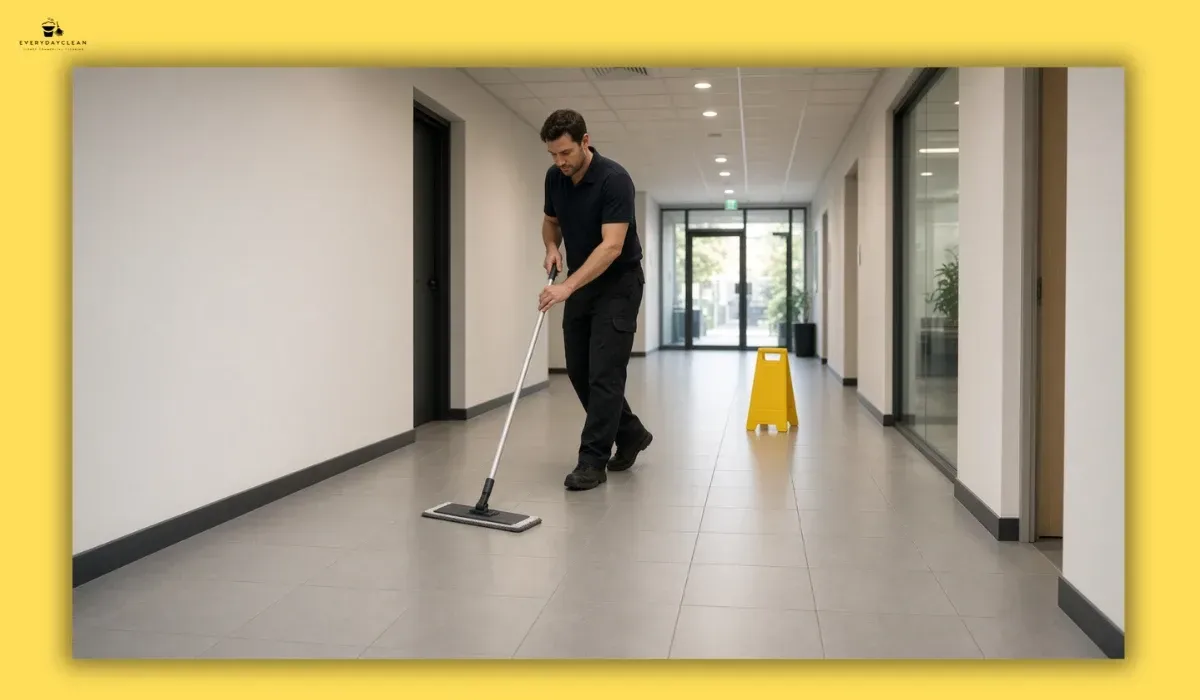
Wet floor signage. Placed before mopping starts, not after. Removed only when the surface is dry enough that the risk has passed.
Product labels and Safety Data Sheets. Every cleaning product has a label with instructions for dilution, contact time, surface compatibility and required PPE. A standard should require staff to follow label directions rather than habit. Products classified as hazardous chemicals should have accessible SDS documents, and staff should be able to refer to them for any product used.
PPE. Gloves appropriate to the products in use, eye protection where the label requires it, and appropriate footwear. PPE requirements vary by product and task; the label is the reference, not assumption.
Colour-coded equipment. Cloths and mop pads used in bathrooms must not be used in kitchens or on general office surfaces. A standard should assign colours to zones and require separate storage.
Cleaning before disinfecting. Most disinfectants are designed to be used on pre-cleaned surfaces. Applying a disinfectant over visible soil can reduce its effectiveness. Where a product label specifies cleaning first, that step should be completed before the disinfectant is applied and the contact time observed.
Ventilation. Products applied in enclosed spaces can accumulate. Adequate ventilation during and after cleaning is a product safety requirement for many commercial cleaners, not a preference.
These are practical requirements, not additions to the standard for compliance optics. An office cleaning standard that includes them reduces risk and produces more consistent results.
Setting the standard before the cleaning starts
The most useful moment to define a cleaning standard is before a contract is signed or a new cleaning arrangement starts. Trying to introduce a standard mid-contract when something has gone wrong is harder than building it into the scope from the beginning.
The standard sits alongside the cleaning scope and schedule: the scope says what is cleaned, the schedule says when, and the standard says to what result and how quality is assessed. All three should be documented clearly so expectations can be managed consistently.
An office cleaning checklist is a practical starting point for defining tasks and frequency by area. Combined with the quality descriptions and audit method above, it forms the basis of a cleaning standard a business can actually use to manage a contractor or an in-house team.
A Compact Office Cleaning Standards Checklist
| Area | Core tasks | Typical frequency |
|---|---|---|
| Bathrooms | Fixtures, high-touch points, restock, floors | Daily |
| Kitchen and break areas | Benches, sinks, appliances, tables, waste | Daily |
| High-touch points | Handles, switches, lift buttons, shared devices | Daily |
| Waste | Empty and reline general, recycling, organic bins | Daily |
| Desks and workstations | Surfaces and shared equipment | Daily to several times weekly |
| Floors | Vacuum, mop, spot clean by floor type | Daily to weekly |
| Glass and partitions | Entry glass, internal glass, mirrors | Weekly |
| Periodic works | Carpets, hard floors, high dusting, vents | Scheduled cycle |
A business building its own version in more detail may find it useful to work through how to create an office cleaning checklist before finalising the standard, since the checklist feeds directly into the scope.
How to Audit Cleaning Standards Without Over-Complicating It
A standard is only worth as much as the checks behind it, but auditing does not need to be heavy or constant. The aim is a light, regular quality review process that confirms the agreed standard is being met and catches slippage early.
Practical ways to audit include a brief walkthrough against the agreed task list, focusing on the areas that matter most: bathrooms, kitchens, high-touch points and floors. Many businesses use a simple periodic sign-off, spot checks at different times of day rather than only after cleaning, and a shared way for staff to report issues so problems reach the right person rather than being mentioned in passing. Photographs of recurring issues help make feedback specific.
The goal is a pattern of evidence rather than a one-off inspection. A single good or bad day tells you little, whereas regular light checks show whether the standard holds consistently. When issues do come up, raising them against the documented scope keeps the conversation objective and gives the cleaner something concrete to act on, rather than a general complaint that the office "feels" less clean.
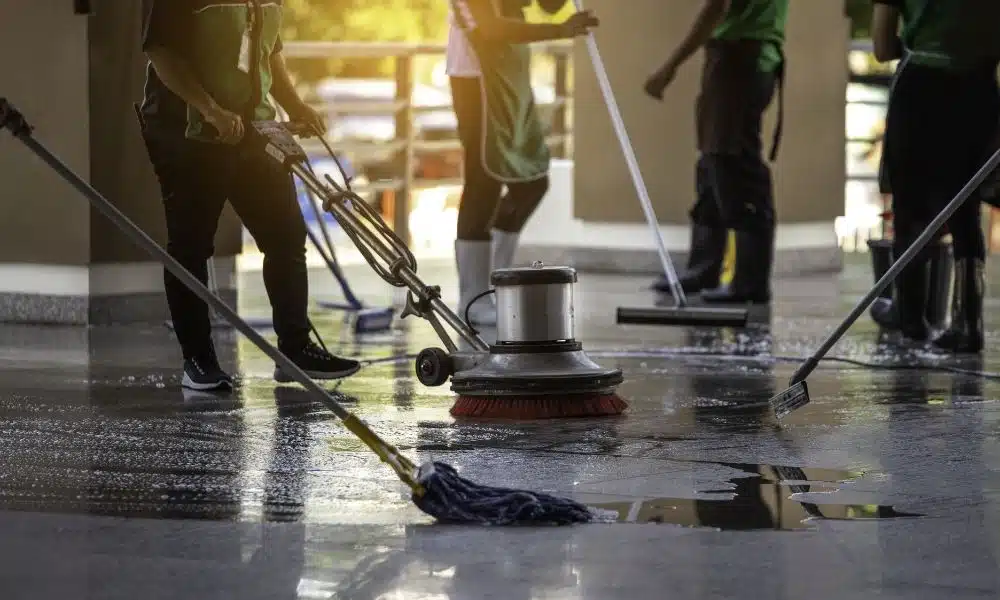
Frequently Asked Questions
What are office cleaning standards?
They are the documented expectations for workplace cleaning: the tasks for each area, how often each is done, the quality level expected, and how performance is checked. Standards turn cleaning into something measurable rather than a vague expectation, which makes it easier to review provider performance and resolve issues, and to review the arrangement objectively over time.
How often should an office be cleaned?
It depends on use. Bathrooms, kitchens, high-touch points and busy floors usually need daily attention, while desks and mid-traffic areas may be cleaned daily or several times a week, and detailed floor and glass work weekly. Periodic tasks like carpet cleaning run on a longer cycle. Frequency should match how heavily each area is actually used.
What should be included in an office cleaning scope?
Every area covered, the task list for each, frequency per task, periodic works and their cycle, who supplies consumables, service hours, access, the expected quality standard, and how performance is measured. A detailed scope is what makes cleaning enforceable and comparable between providers, and it prevents most disputes about what was or was not agreed.
How do you audit office cleaning standards?
With light, regular checks against the documented task list rather than one-off inspections. Brief walkthroughs focused on bathrooms, kitchens, high-touch points and floors, spot checks at different times, and a clear way for staff to report issues all help. A pattern of evidence over time shows whether the standard holds consistently.
Do office cleaning standards guarantee a healthier workplace?
Consistent cleaning of high-touch points and shared areas may help reduce the transfer of grime and support a more presentable workplace, but standards are best framed around consistency and presentation rather than health guarantees. No cleaning routine removes all germs, so standards set expectations for the work done rather than promising a specific health outcome.
Turning Expectations Into a Standard You Can Measure
Office cleaning standards work when they are written down, matched to how each area is actually used, and checked with light regular reviews. Define the tasks and frequency by area, put them into a clear scope or service agreement, and audit against that document rather than a general impression, and cleaning becomes something a business can manage objectively. Whether an office keeps cleaning in-house or brings in a provider, a documented standard is what makes the result consistent rather than a matter of chance.
Blog