How to Clean Oil From Concrete: Fresh Spills and Old Stains
How to clean oil from concrete depends on the age of the stain: absorb fresh wet oil immediately with dry clay or spill compound, and treat old stains with a solvent poultice or heavy-duty commercial degreaser that draws the oil back out of the pores before a hot-water rinse. Water alone, even at high pressure, rarely shifts motor oil because oil and water do not mix.
This guide is a troubleshooting reference for car park bays, shared commercial parking areas and residential garage slabs. It covers why oil stains are stubborn, how to diagnose the stain, the two removal workflows, where pressure washing fits and when a mark is likely to stay. For general mopping and routine care, see the routine concrete floor cleaning guidance instead.
Oil Stains Are Stubborn Because Concrete Works Like a Sponge
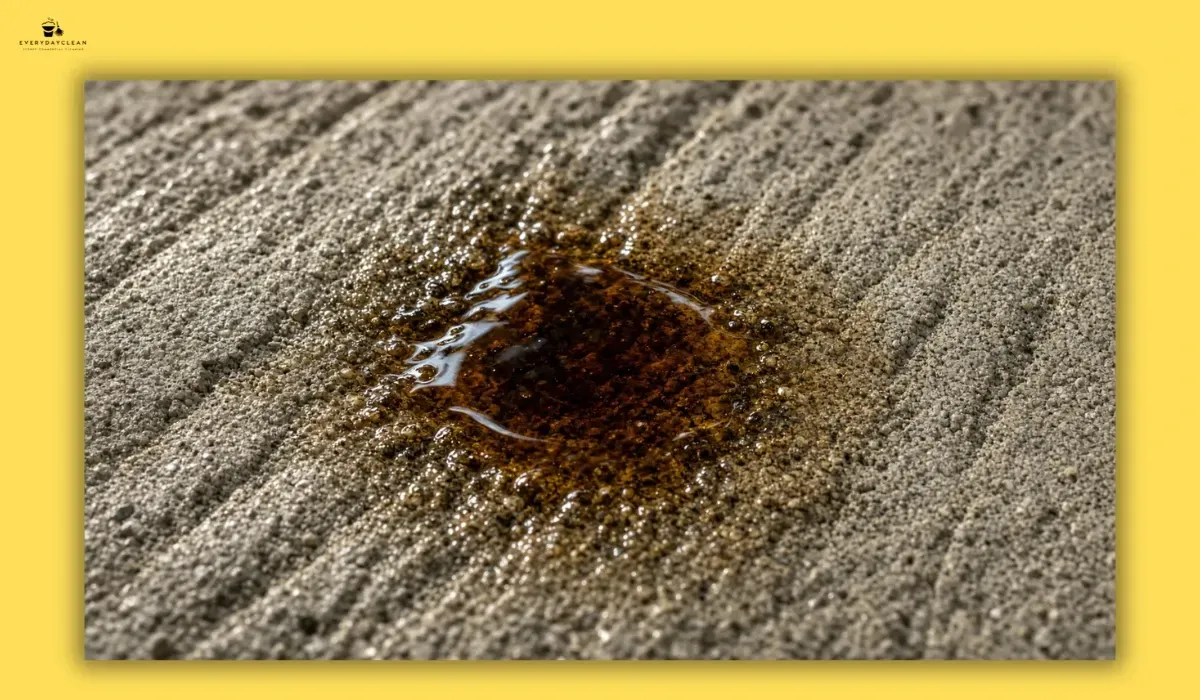
Concrete looks solid, but it is full of tiny interconnected pores and capillaries. Motor oil is hydrophobic (it repels water) and has low surface tension, so it spreads into those pores rather than sitting on top.
Why does oil soak so deeply into concrete?
Capillary action pulls liquid into narrow channels. When oil lands on concrete, the pores draw it downwards and sideways, so a small drip often spreads into a wider dark patch below the surface. Heat speeds this up, which is why stains in sunny outdoor bays and warm basements can set quickly.
Because oil repels water, rain and normal mopping do little to lift it. The oil has to be broken down (emulsified) or drawn back out before water can rinse it away.
Which concrete surfaces stain the worst?
- Old unsealed concrete: the most porous, behaving almost like a stone sponge.
- Broom-finished or textured concrete: extra surface area traps oil in grooves.
- Sealed or epoxy-coated concrete: usually far more resistant, as long as the coating is intact.
A quick water drop test helps. If water darkens the concrete and soaks in, the surface is unsealed or the sealer has worn, and oil will penetrate easily.
How do you diagnose the stain before treating it?
Check three things first:
- Is it still wet or tacky? Fresh oil gets the absorb-first workflow.
- Is it dry, dark and set into the surface? Old stains need extraction, usually with a poultice.
- Is it actually oil? Rust marks, tyre marks, battery acid damage and coolant stains look similar but need different approaches.
How to Get Oil Spots Off Concrete While the Spill Is Fresh
The best way to remove oil stains from concrete is to stop them becoming old stains. The first minutes after a spill matter most, because the longer oil sits, the deeper it travels.
What is the fresh spill workflow?
- Contain: stop the spill spreading towards drains, other bays or walkways using absorbent socks, booms or a ring of absorbent.
- Absorb: cover the spill generously with dry spill clay, oil absorbent granules or clay-based cat litter.
- Dwell: leave the absorbent in place, often for several hours or as directed on the product, so it can draw oil out of the surface.
- Grind in lightly: working the absorbent with a boot or stiff broom can help it contact more of the oil.
- Sweep dry: sweep up the saturated absorbent and bag it for correct disposal. Do not wash it into drains.
- Degrease: apply an alkaline or emulsifying degreaser suited to concrete, following the label dilution and dwell time, and scrub with a stiff nylon brush.
- Rinse and collect: rinse with warm or hot water where possible, collecting the wash water rather than letting it run to stormwater.
Repeat the degreasing step if a shadow remains. Fresh spills treated this way often lift substantially or completely, particularly on sealed concrete.
Which products should be avoided on fresh oil?
Avoid spreading the oil with water before absorbing it, and avoid petrol, kerosene or thinners as cleaning agents. These can spread the stain, create fire and fume hazards and make the waste harder to handle. Always check the Safety Data Sheet and label for any degreaser before use, and ventilate enclosed basements and garages.
Removing Old Oil Stains From Concrete Garage and Car Park Floors
Old oil stains have already travelled into the slab, so surface scrubbing alone rarely reaches them. The aim is extraction: re-liquefying the oil and drawing it back to the surface.
How does the poultice method work?
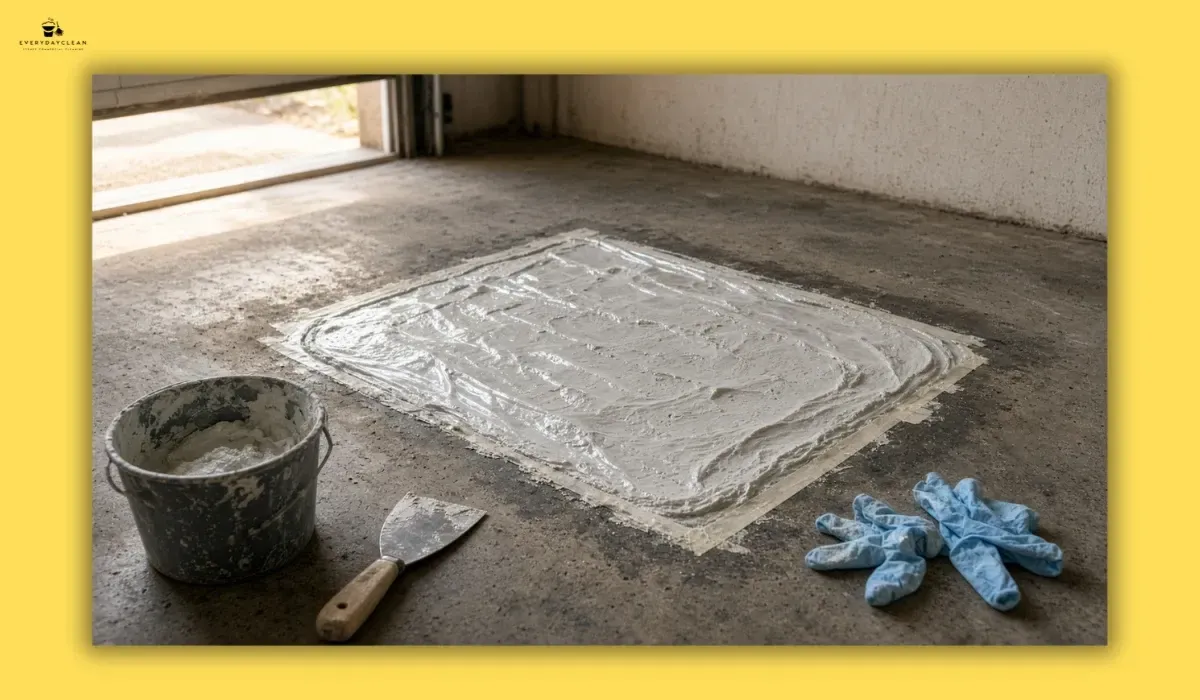
A poultice is a paste made from an absorbent powder mixed with a solvent or degreaser. Common absorbents include clay, diatomaceous earth and talc. The process is usually:
- Clean the surface: sweep and degrease the top layer so the poultice contacts the stained concrete directly.
- Mix the poultice: combine the absorbent powder with a degreaser or solvent suited to oil, to a thick paste similar to peanut butter, following product guidance.
- Apply: spread it over the stain, roughly 5 to 10 mm thick, extending a little past the stain edges.
- Cover: place plastic sheeting over the poultice and tape the edges. This slows drying so the solvent has more time to dissolve the oil.
- Wait: leave it for around 24 hours, or as directed. Some sites remove the plastic for the final hours so the poultice can dry out.
- Remove and assess: scrape off the dry poultice, bag it for disposal, and rinse the area. Repeat if the stain is lighter but still visible.
Facility Pro-Tip (The Capillary Action Rule): Old oil sits deep inside concrete capillaries. A poultice works in reverse: as the liquid solvent evaporates upwards into the absorbent powder (clay, diatomaceous earth or talc), it can draw dissolved oil out of the slab like a wick.
How many poultice treatments are needed?
Deep or years-old stains often need two or three applications, and each one may lighten the mark rather than remove it fully. Proper treatment can lift most motor oil and noticeably lighten dark spots, but long-term petroleum saturation may still leave faint shadow rings.
What safety precautions apply to solvent poultices?
Many solvents are flammable and give off vapours. Work with good ventilation, keep ignition sources away, wear gloves and eye protection, and follow the Safety Data Sheet. In shared or enclosed car parks, cordon off the bay and use signage while the poultice is in place.
Can You Pressure Wash Oil Stains Off Concrete?
Pressure washing oil stains on concrete works only as the final rinse step, not as the treatment itself. Without degreasing first, pressure alone usually fails to lift oil and can make the problem larger.
Pressure Washing Myth: Blasting an un-degreased oil stain with cold high-pressure water rarely removes it. Because oil and water do not mix, high pressure can drive petroleum hydrocarbons deeper into the concrete pores and spray oily mist across surrounding bays and walls.
When does pressure washing help with oil stains?
Pressure washing becomes effective after chemical emulsification. Once a degreaser has broken the oil into a form water can carry, hot water and controlled pressure can flush it from the pores. Commercial set-ups often use:
- hot-water pressure washers, which help keep emulsified oil mobile
- rotary surface cleaners, which give an even clean and reduce striping across bays
- wash water recovery or vacuum systems to collect oily runoff
For larger car parks or repeated staining across many bays, hot-water pressure cleaning with wash water recovery is usually more practical than treating each bay by hand.
Oily Wash Water Must Stay Out of Stormwater Drains
Oily wastewater should never be washed directly into stormwater drains. In NSW, stormwater generally flows untreated to creeks, rivers and the ocean, and polluting it can breach environmental laws.
Practical containment steps include:
- covering or blocking nearby stormwater grates before washing
- using absorbent booms around the work area
- collecting wash water with a wet vacuum or recovery system
- disposing of collected water and used absorbents through approved waste channels, or to sewer only where permitted by the local water authority
Requirements can vary by council and site, so check NSW EPA guidance and local council rules before any washing in a car park, loading area or shared driveway.
When an Oil Stain Is Likely to Be Permanent
Not every mark can be fully removed. Recognising the limits saves time and avoids damaging the concrete with ever-stronger chemicals or aggressive scrubbing.
What causes faint shadow marks?
After repeated treatment, a lighter grey shadow may remain where oil has saturated the slab deeply or reacted with the concrete over years. These shadows often fade slightly over time but may not disappear.
What does battery acid damage look like?
Battery acid leaks can etch concrete, leaving a rough, pale or pitted patch rather than a dark stain. This is surface damage, not staining, so degreasers and poultices will not fix it. The area may need neutralising and repair, assessed by a concrete specialist.
When should a bay be sealed or coated instead of scrubbed?
If the same bays keep staining, or old stains stay visible after several poultice rounds, the better long-term answer is often surface protection rather than more scrubbing. Options can include penetrating concrete sealers or epoxy coatings applied by a flooring specialist after the concrete has been cleaned and prepared.

Oil Stain Removal FAQs
What is the best way to remove oil stains from concrete?
The best approach depends on the stain's age. Fresh oil should be absorbed straight away with spill clay or granules, then degreased and rinsed. Old, set-in stains usually need a poultice to draw oil out of the pores, followed by a hot-water rinse. Pressure washing works only after degreasing.
Does cat litter really work on oil stains?
Clay-based cat litter can absorb fresh oil effectively, especially when ground in lightly and left to dwell. It works best on wet spills and has limited effect on old, dry stains. Purpose-made spill absorbents and oil granules are usually more consistent, particularly for larger spills.
How long does it take to remove an old oil stain from concrete?
A single poultice treatment usually needs around 24 hours to work, and deep stains often need two or three treatments. That means older stains can take several days to lighten noticeably. Very old or heavily saturated stains may only fade rather than disappear completely.
Can you pressure wash oil stains off concrete without chemicals?
Usually not. Oil repels water, so pressure alone tends to spread the stain or push it deeper. A degreaser or emulsifier is needed first to break down the oil, after which hot-water pressure washing can rinse it out. Wash water should be collected rather than sent to stormwater.
How do you get oil stains off a garage floor that has been there for years?
Start by degreasing the surface, then apply a poultice of absorbent powder and solvent or degreaser, cover it with plastic and leave it for around 24 hours. Repeat as needed. Years-old stains may leave a faint shadow even after several treatments, and sealing the floor afterwards can help prevent new stains.
Preventative Bay Maintenance and Vehicle Leak Management
The most effective oil stain strategy is preventing oil from reaching bare concrete in the first place. A few simple habits can reduce how often bays need intensive treatment.
- Spot leaks early: regular walk-throughs help identify bays with fresh drips before they spread.
- Address the source: in strata and commercial car parks, notify owners or fleet managers of repeated leaks so vehicles can be checked.
- Use drip trays or mats: for known leaking vehicles, fleet bays or loading areas, absorbent mats or trays catch oil before it reaches the slab.
- Keep spill kits accessible: absorbent, gloves, bags and brooms stored near parking areas allow fast response.
- Seal vulnerable bays: sealing or coating high-risk bays can make future spills much easier to clean.
- Schedule periodic degreasing: treating light staining before it builds up keeps bays looking more even.
For larger sites, oil spot treatment is often built into professional carpark cleaning services alongside sweeping and periodic washing.
Proper treatment can lift most motor oil and lighten dark spots, but old, deep petroleum saturation may still leave faint shadow rings, and etching or structural damage needs specialist assessment rather than more cleaning.
About Everyday Clean
Everyday Clean is a Sydney-based cleaning company supporting commercial, office, strata, education, healthcare, hospitality, property and facility cleaning needs. Everyday Clean content is written to help Australian readers make practical cleaning decisions, compare options, and understand when professional cleaning support may be appropriate.
Blog