Industrial Sweeping: Machines, Dust Control and Schedules
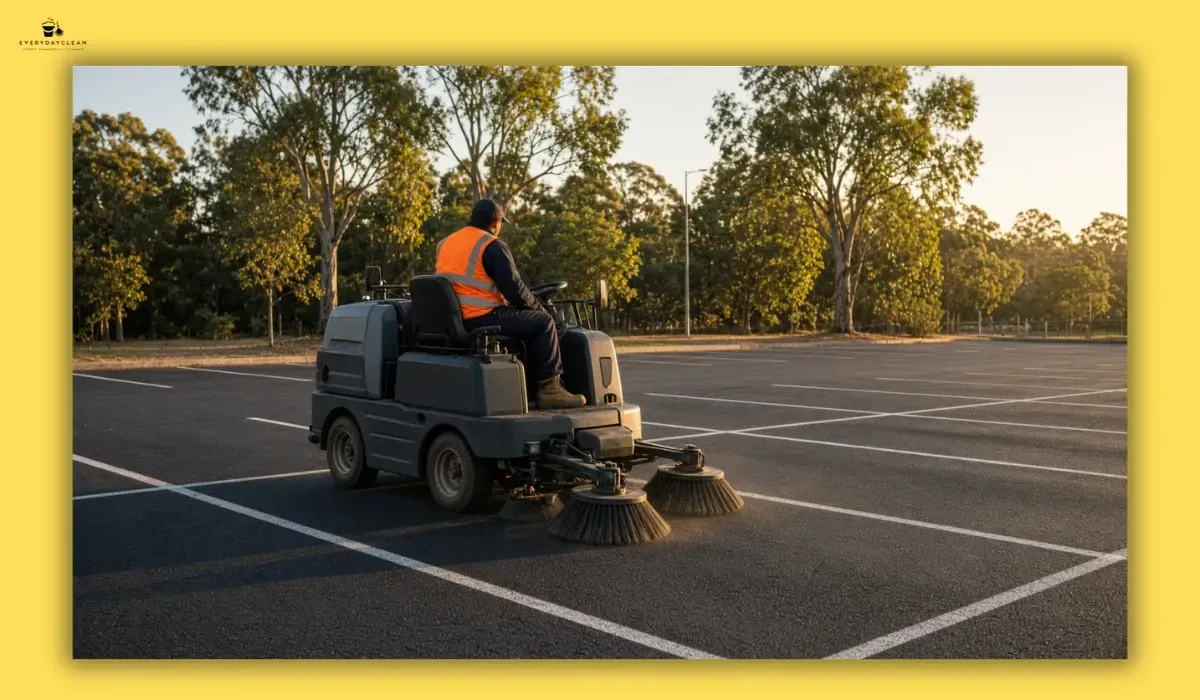
Industrial sweeping is heavy-duty mechanical sweeping that uses industrial sweeper machinery with vacuum filtration to clear pallet splinters, metal swarf, gravel and bulk dust across large floor areas and hardstands. Facilities usually move to it from push brooms when floor area, debris weight or airborne dust makes manual sweeping slow, inconsistent or a WHS concern.
The harder questions for facility managers are operational: which hazards a sweeper can actually contain, how dust is kept out of the breathing zone, and how sweeping fits around live production, forklift traffic and 24/7 shifts. This guide focuses on those industrial angles rather than machine shopping.
Industrial Sweeping Starts When Push Brooms Stop Keeping Up
Most sites do not switch to mechanical commercial sweeping in one decision. The change usually follows a pattern of warning signs on the floor:
- Scale: open floor or hardstand passes roughly 1,000 to 2,000 sqm, and broom crews cannot cover it within the available cleaning window.
- Debris weight: straps, pallet chips, swarf and gravel stay behind after brooming or need several passes.
- Visible dust: brooming leaves a haze in the air or a fresh film on racking, machinery and finished goods.
- Labour drift: sweeping hours keep rising while the floor still looks the same at the end of each shift.
These thresholds are a rule of thumb, not a fixed line. A compact plant with heavy machining debris may need mechanical factory sweeping well before a large but lightly used storage floor does.
Industrial Debris and Filtration Matrix
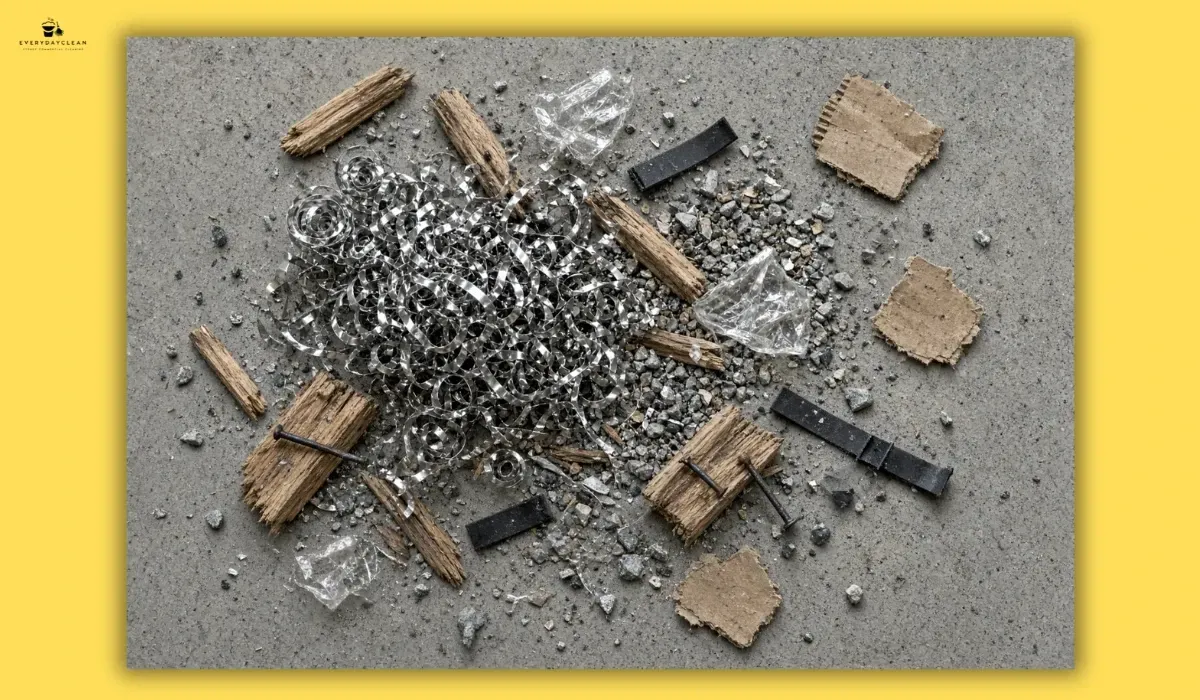
Industrial debris is not one material. Each type behaves differently under a broom, inside a hopper and in the air, so sweeper set-up and site controls need to match the hazard.
| Factory hazard | Why it is a problem | How a mechanical sweeper handles it | Site controls that still apply |
|---|---|---|---|
| Metal swarf and turnings | Sharp, springy, can carry cutting fluid, tangles in brush cores | Main broom throws swarf into the hopper; some sites use magnetic attachments or sweepers suited to metal debris | Gloves for emptying, swarf segregation for recycling, cutting fluid managed separately |
| Broken pallet timber and nails | Splinters and loose nails can puncture tyres and injure feet | Heavy-duty hoppers collect timber chips; side brooms pull debris from rack bases and dock edges | Pallet inspection and repair areas, regular nail pick-up, tyre checks on forklifts |
| Plastic and steel strapping | Long lengths wrap around brushes and drive shafts, stalling machines | Short offcuts can be swept; long lengths should be removed by hand first | Strap bins at unpacking points, pre-sweep manual pick-up |
| Respirable dust and silica | Fine particles stay airborne and can be inhaled deep into the lungs | Enclosed brush chamber under negative pressure draws dust into filters instead of lifting it into the air | Site risk assessment, suitable filter class, wet methods, ventilation and air monitoring where required |
| Gravel, grit and road dust | Abrasive, wears floors and tyres, collects along kerbs and drains | Ride-on and outdoor-rated sweepers handle heavier aggregate and wider areas | Drain and pit inspection, wheel wash or grit control at yard entries |
| Packaging film and cardboard | Light, windblown, builds up at docks and fence lines | Picked up easily by main and side brooms when dry | Waste stations near unpacking areas, wind barriers on external stockpiles |
Facility Pro-Tip (Brush Drive Protection): Enforce a quick manual pick-up of loose plastic and steel packaging strapping before dispatching ride-on sweepers. Long strapping wrapped around cylindrical brush shafts is a common cause of sweeper motor strain and preventable maintenance downtime.
A sweeper controls bulk dry debris. It does not remove embedded fluid spills, oil films or hydraulic leaks, which need spill response, absorbents and suitable scrubbing or degreasing methods.
Airborne Dust and Silica Control Relies on Negative-Pressure Filtration
WHS Compliance Note: Safe Work Australia guidance discourages dry push-brooming of respirable crystalline silica (RCS) and fine concrete dust. Mechanical industrial sweepers used in these areas should have suitable negative-pressure filtration and sealed brush skirts to help keep dust out of the breathing zone, but they work alongside site risk assessments and do not replace engineered source extraction.
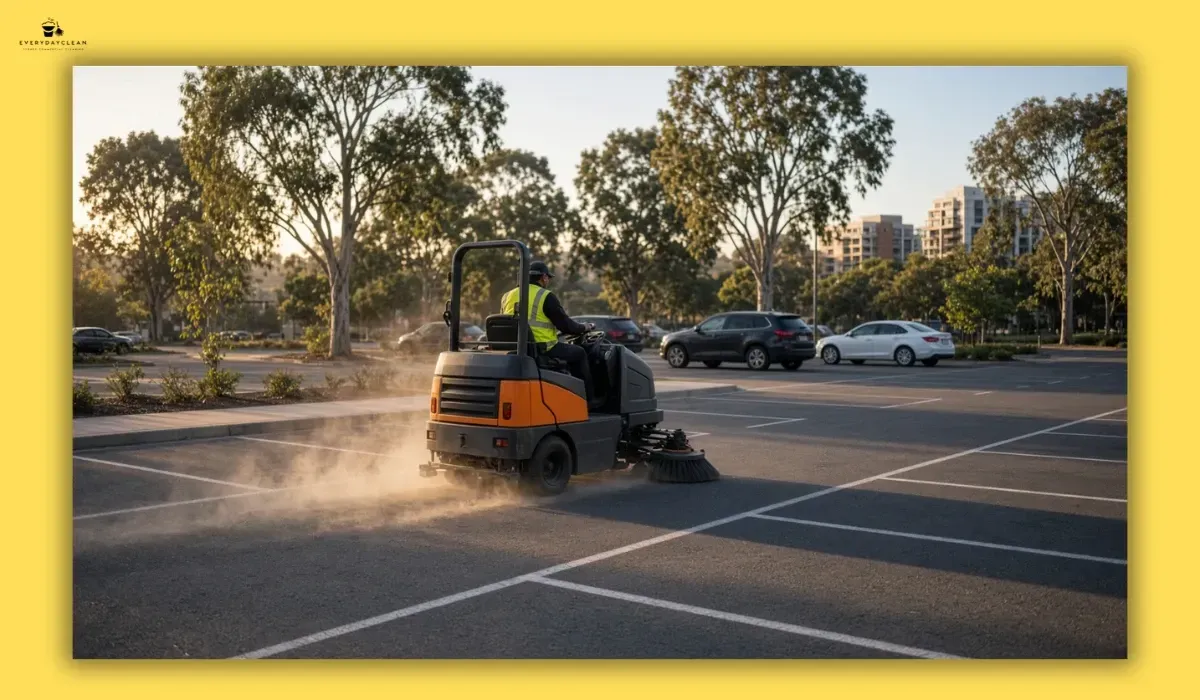
Airborne dust is often the strongest reason to move away from dry brooming in factories. Push brooms flick fine particles into the breathing zone, where they can settle on equipment and stock or be inhaled by workers nearby.
Why does respirable silica change the way a factory is swept?
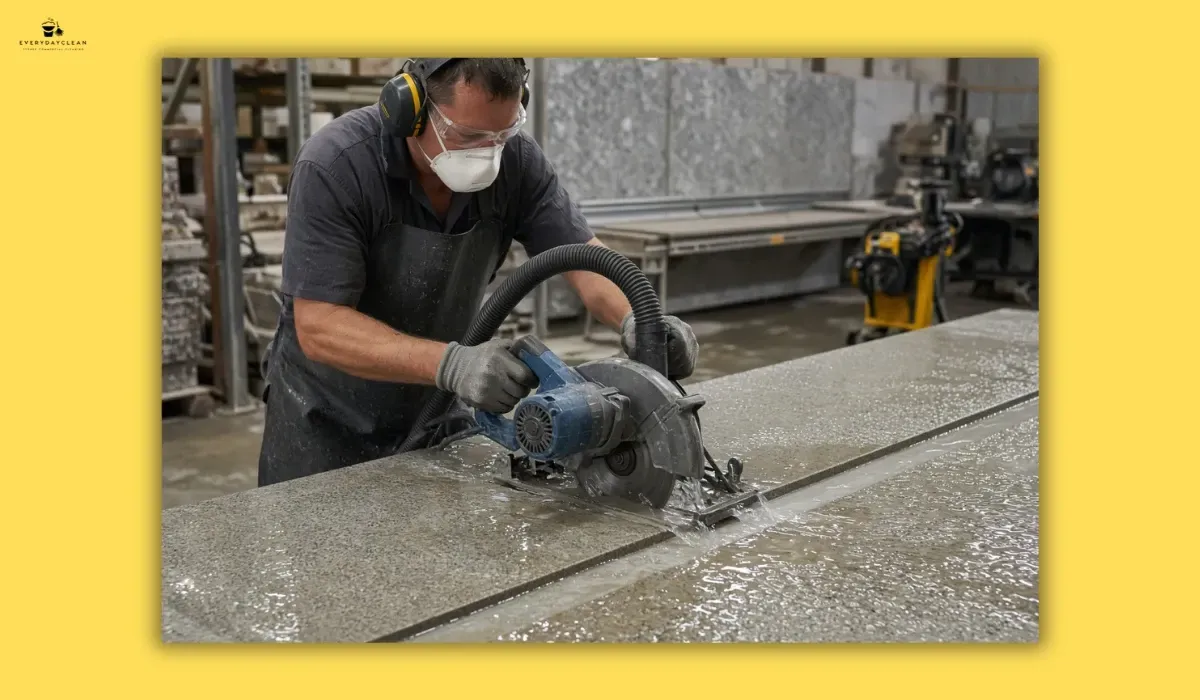
Respirable crystalline silica can be generated when materials such as stone, concrete, brick, tiles and some engineered products are cut, ground or handled. Safe Work Australia identifies silica dust as a serious workplace health hazard, and Australian WHS laws include specific duties for processes involving crystalline silica, including risk assessments and exposure controls.
Safe Work Australia guidance generally discourages dry sweeping and compressed air for cleaning up silica dust, favouring wet methods or vacuum systems with suitable filtration instead. Requirements change over time and differ between processes, so facilities should check current guidance from Safe Work Australia and their state WHS regulator rather than relying on a cleaning method alone.
How does negative-pressure hopper filtration contain fine dust?
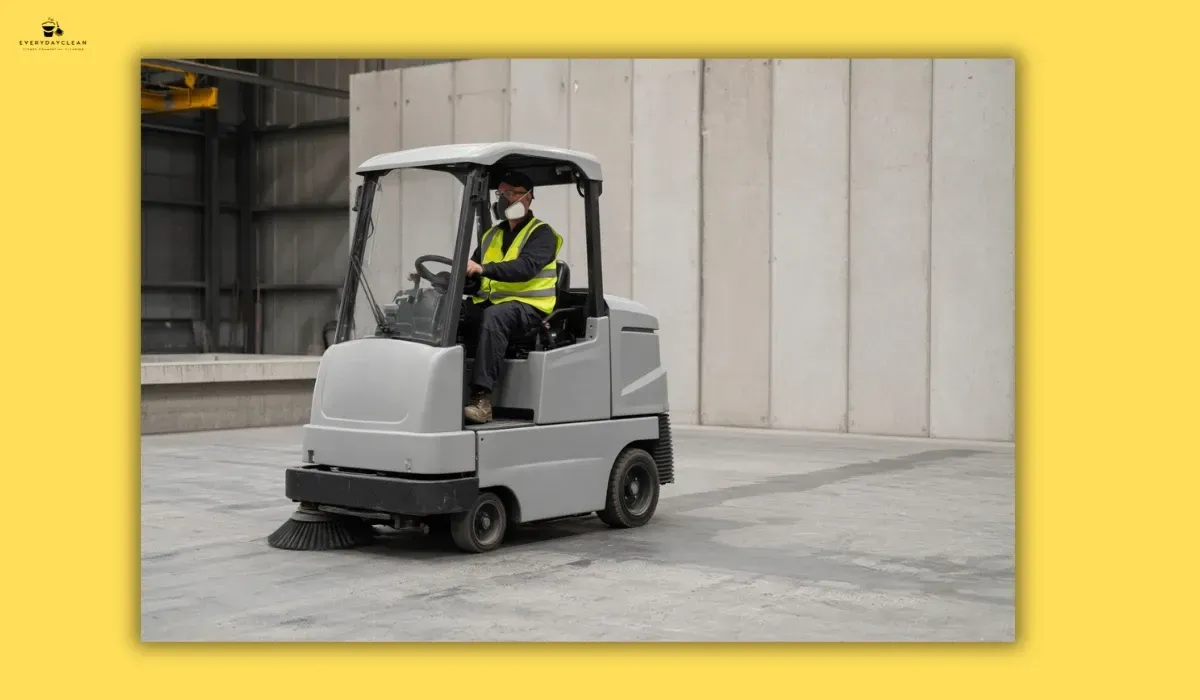
Enclosed industrial sweepers use a vacuum fan to pull air through the brush chamber and hopper. That negative pressure means dust lifted by the brooms is drawn inwards, through the filter, rather than escaping around the machine.
Containment depends on several parts working together:
- Sealed brush chamber: skirts and flaps close the gap between the machine and the floor.
- Filter type and class: panel, pocket or cartridge filters capture fine particles; hazardous dusts may need a higher filter class, as specified by the manufacturer and site risk assessment.
- Filter cleaning: shaker or pulse systems keep filters from clogging, so suction stays effective through long runs.
- Hopper emptying: dumping a full hopper can release dust again, so emptying points, wetting and PPE need to be planned.
A clogged or damaged filter can undo most of the benefit. Filter inspection, cleaning and replacement belong in the operator's routine, following the equipment manufacturer's instructions.
What WHS controls sit alongside mechanical sweeping?
Mechanical sweeping can reduce airborne dust during cleaning, but it is one control within a site's wider dust management plan. Other controls commonly include:
- dust extraction at the source, such as on saws, grinders and mixers
- wet cutting or wet suppression where processes allow
- ventilation and air monitoring against workplace exposure standards
- respiratory protective equipment where the risk assessment requires it
- health monitoring for workers exposed to hazardous dusts, where required under WHS laws
Industrial Sweeping Around 24/7 Shifts and Forklift Traffic
In many plants and distribution centres, the floor never fully closes. Sweeping has to fit into live operations without creating new collision or slip risks.
How is sweeping scheduled around continuous shifts?
Sites running around the clock usually work sweeping into the shift structure instead of waiting for a full shutdown:
- Shift changeovers: a short window when traffic drops and incoming crews can start on a clear floor.
- Zone rotation: dividing the floor into zones and sweeping one or two per shift, so every area is covered across the day.
- Planned maintenance stops: using scheduled machine downtime for deeper sweeps around production lines.
- Weekend or low-volume periods: reserving heavier pre-scrub sweeps for quieter windows.
For zero-downtime manufacturing, sweeping is often staged around the line rather than across it, keeping pedestrian walkways and forklift routes clear while production continues.
How is forklift interaction managed while a sweeper runs?
A sweeper sharing the floor with forklifts, reach trucks and pedestrians needs the same traffic discipline as any other mobile plant. Common measures include:
- exclusion zones or temporary barriers around the sweeping area
- beacons, lights and reversing alarms on the sweeper
- sweeping with the direction of traffic flow, not against it
- radio or supervisor coordination when entering busy aisles
- trained and authorised operators familiar with the site's traffic management plan
Ride-on sweepers are mobile plant, so their use should sit inside the site's existing traffic management plan and induction process.
Operational Scenario Framework for Industrial Sweeping
Rather than one schedule for every site, it helps to start from the type of operation. These three scenarios cover the most common industrial settings.
How does a high-turnover three-shift manufacturing plant approach sweeping?
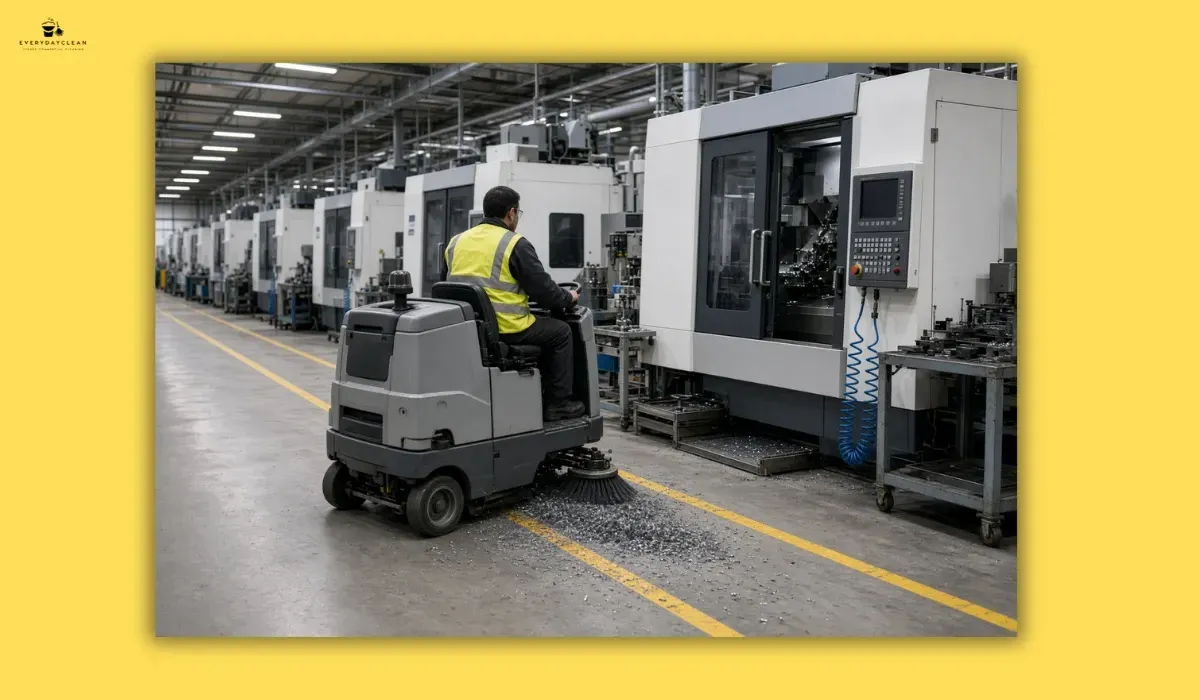
- Debris profile: swarf, offcuts, process dust and packaging from inbound materials.
- Sweeping windows: shift changeovers and planned maintenance stops, with zone rotation during production.
- Equipment focus: compact sweepers that work between machinery, strong filtration for fine dust, and brush set-ups suited to metal debris.
- Watch points: dust around cutting and grinding stations, swarf near walkways, and fluid leaks that need separate spill response.
How does a distribution and logistics hub approach sweeping?
- Debris profile: pallet timber, nails, strapping, shrink wrap, cardboard and tyre rubber.
- Sweeping windows: between inbound and outbound waves, with docks and cross-dock lanes swept more often than storage aisles.
- Equipment focus: larger hoppers and wider sweep paths for long aisles, plus side brooms for rack bases and dock edges.
- Watch points: strapping that tangles brushes, debris under dock levellers, and pallet repair areas.
For hubs that also need scrubbing, high-level dusting or amenities cleaning, sweeping is often scoped as part of warehouse cleaning services.
How are external container hardstands and yards approached?
- Debris profile: road grit, gravel, windblown litter, leaf matter and debris dropped from trucks and containers.
- Sweeping windows: low-traffic periods, often early mornings or between scheduled vehicle movements.
- Equipment focus: outdoor-rated ride-on sweepers with larger hoppers and dust suppression for dry conditions.
- Watch points: stormwater pits and grates, heavy vehicle turning circles, and fence lines where litter collects.
Staff and visitor parking areas are usually treated separately from operational hardstands, and are often covered under dedicated carpark cleaning services.
Industrial Sweeping FAQs
Can an industrial sweeper safely pick up metal swarf?
Many industrial sweepers can collect swarf, but long, springy turnings can wrap around brushes and sharp fragments can damage hoppers and filters. Sites with heavy metal debris often use sweepers suited to that material, sometimes with magnetic attachments. Emptying should follow site procedures for sharp waste, and cutting fluid residue may need separate cleaning.
Is mechanical sweeping enough to meet silica dust obligations?
No single cleaning method meets silica obligations on its own. Enclosed sweepers with suitable filtration can reduce airborne dust compared with dry brooming, but sites working with silica-containing materials still need a risk assessment, exposure controls, air monitoring where required and other measures set out in WHS laws. Current Safe Work Australia and state regulator guidance should be checked directly.
How can sweeping run in a facility that never shuts down?
Continuous sites usually sweep in rotating zones, use shift changeovers and planned maintenance stops, and keep heavier sweeps for low-volume periods. The sweeper operates under the site's traffic management plan, with exclusion zones and coordination in busy aisles. This keeps walkways and forklift routes clear without stopping production.
Should strapping and pallet debris be removed before sweeping?
Yes, in most cases. Long strapping lengths can wrap around brush cores and drive components, and large timber pieces can block hopper intakes. A quick manual pick-up of long or bulky items before the sweeper runs usually protects the machine and gives a cleaner result, with the sweeper then handling chips, nails and fine debris.
Industrial Sweeping as Preventative Facility Maintenance
Regular industrial sweeping works best as a preventative routine rather than a reaction to visible mess. Keeping debris loads low protects forklift tyres and floor surfaces, keeps walkways and vehicle routes clearer, and reduces the amount of dust that resettles on equipment and stock.
Dry sweeping should also come before any scrubbing pass, since removing loose grit and swarf first helps prevent slurry build-up and sediment entering industrial floor drains.
Mechanical sweeping controls bulk debris and can reduce airborne dust risks, but it works alongside site-specific WHS controls and does not remove embedded fluid spills. For larger sites, sweeping is often coordinated within facilities management cleaning so that production floors, docks, yards and amenities follow one maintenance plan.
About Everyday Clean
Everyday Clean is a Sydney-based cleaning company supporting commercial, office, strata, education, healthcare, hospitality, property and facility cleaning needs. Everyday Clean content is written to help Australian readers make practical cleaning decisions, compare options, and understand when professional cleaning support may be appropriate.
Blog