Car Park Sweeping: Methods, Machines and Frequency
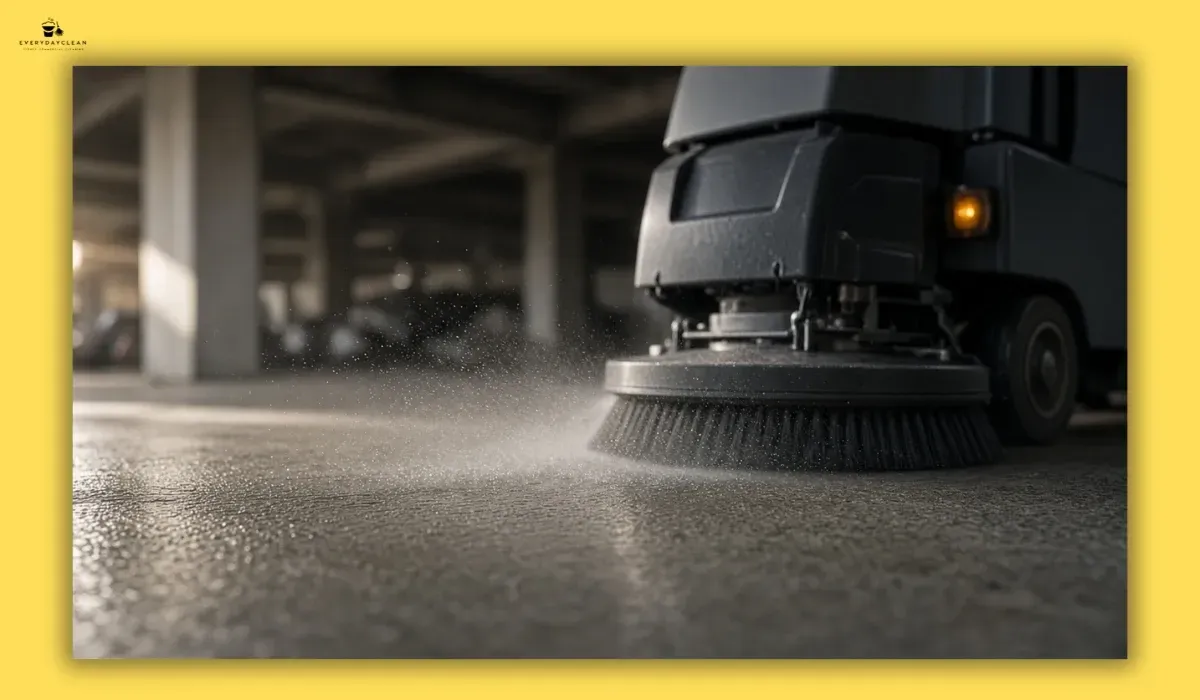
Car park sweeping is the mechanical removal of grit, leaf litter, gravel and tyre rubber using ride-on or walk-behind sweepers, with dust suppression, to clear loose debris before surfaces are washed or sealed. It is the first step in keeping a carpark safe and presentable, and it works best on a regular schedule matched to how busy the site is.
This guide covers sweeping methods, machine selection and frequency for Australian facility managers, strata bodies and retail centres. It focuses on dry mechanical sweeping, not pressure washing or oil degreasing, which are separate tasks linked below.
Regular car park sweeping protects the surface and the people on it
Regular sweeping does more than tidy a car park. Loose debris creates real risks and slowly damages the surface, so clearing it often pays off across safety, drainage and asset life.
- Slip and trip hazards: loose gravel, grit and wet leaf litter reduce traction for vehicles and pedestrians
- Storm drain blockages: leaves and debris wash into grates and pits, causing pooling and drainage faults
- Surface life: grit grinds into asphalt and concrete, and clearing it helps extend sealant and surface life
- Tracked dust: fine tyre dust and dirt get walked into lobbies, retail shops and lifts, raising indoor cleaning loads
Sweeping significantly reduces surface debris and drain hazards, but it does not remove embedded oil or fluid stains and cannot guarantee zero slip incidents, so it works alongside washing and good site upkeep.
Car park sweeper equipment should match the facility
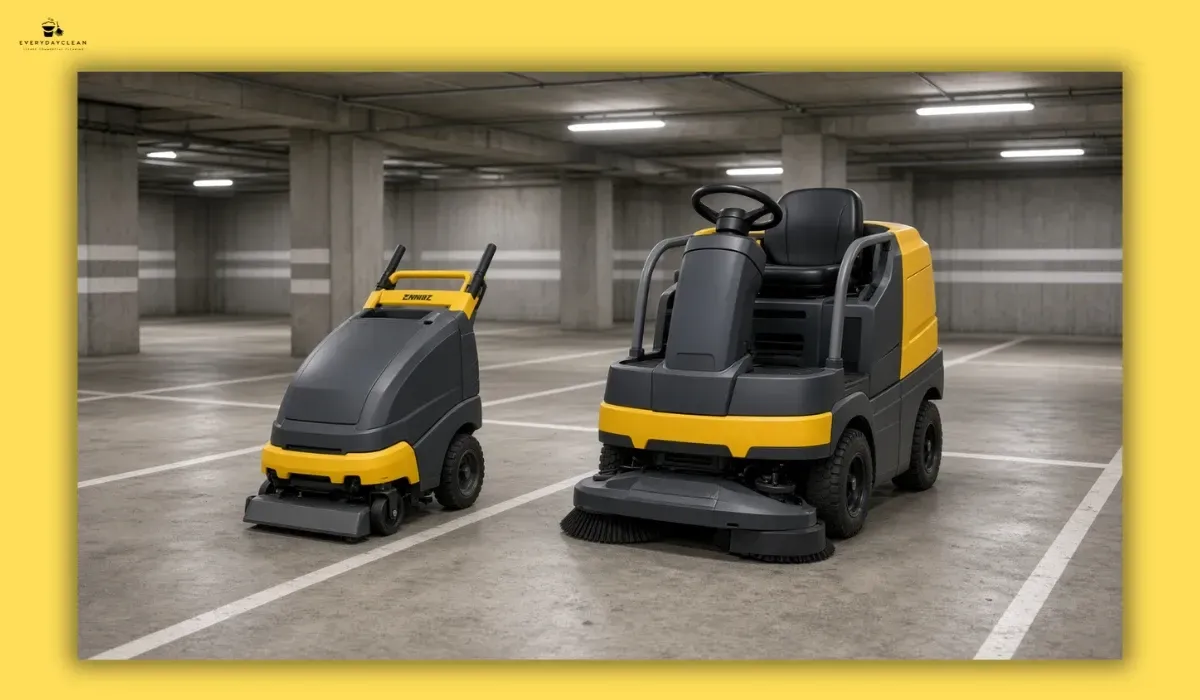
Choosing the right car park sweeper comes down to the size, layout, and enclosure of the site. The wrong machine either cannot reach tight areas or is too small to be efficient.
Walk-behind mechanical sweepers
Walk-behind sweepers suit tight corners, ramps, small strata carparks and pedestrian walkways. They are manoeuvrable in confined spaces and around parked cars, making them practical for smaller or awkward sites where a ride-on cannot work effectively.
Ride-on suction and brush sweepers
Ride-on sweepers suit medium to large multi-deck car parks, shopping centres and commercial parking lots. They cover large areas quickly with brushes and suction, which makes parking lot sweeping across big open decks far more efficient than manual methods.
Dust control and filtration systems
Dust suppression is essential, especially in enclosed sites. HEPA-style filtration or water-misting dust control helps contain the fine tyre dust that sweeping lifts, and is effectively mandatory for enclosed underground carparks where airborne dust has nowhere to escape and can affect air quality.
Surface and environment change how a carpark is swept
The same machine behaves differently underground versus outdoors, so the environment shapes the approach as much as the equipment.
Underground and basement car parks
Basement carparks bring low ceiling clearance, so sweeper height and headroom limits must be checked before machinery is brought in. The enclosed space also means exhaust and dust need managing carefully, and fine tyre dust is the main debris, so filtration and dust suppression matter more than raw brushing power.
Open-air outdoor asphalt parking lots
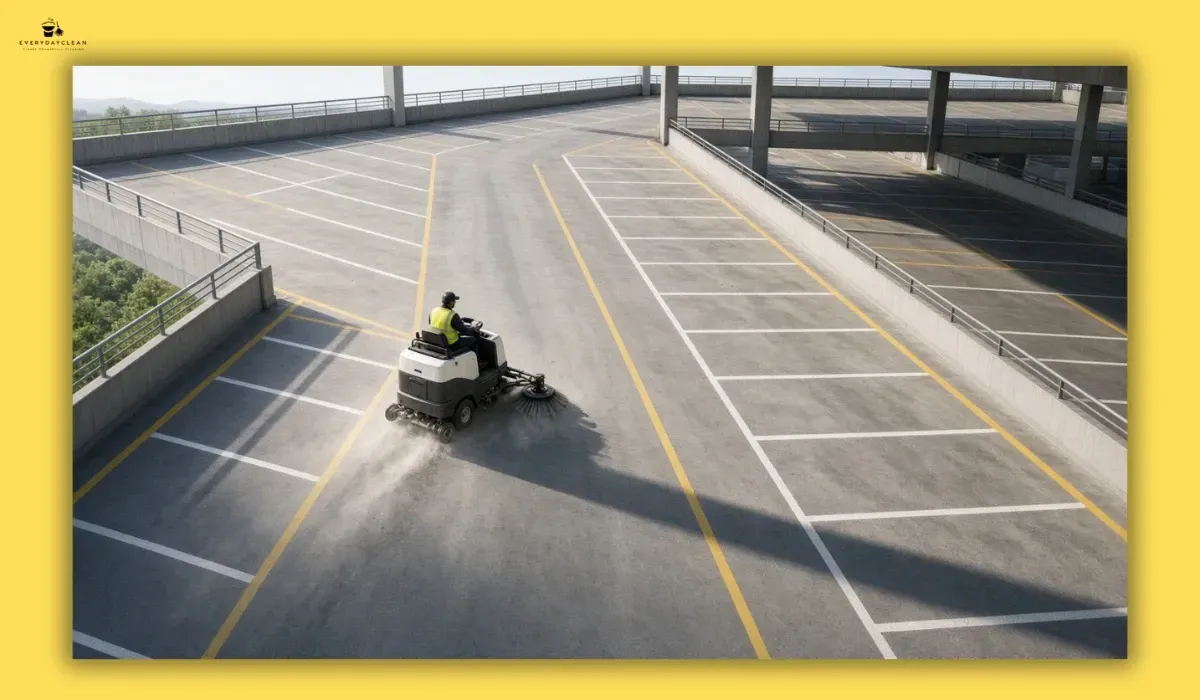
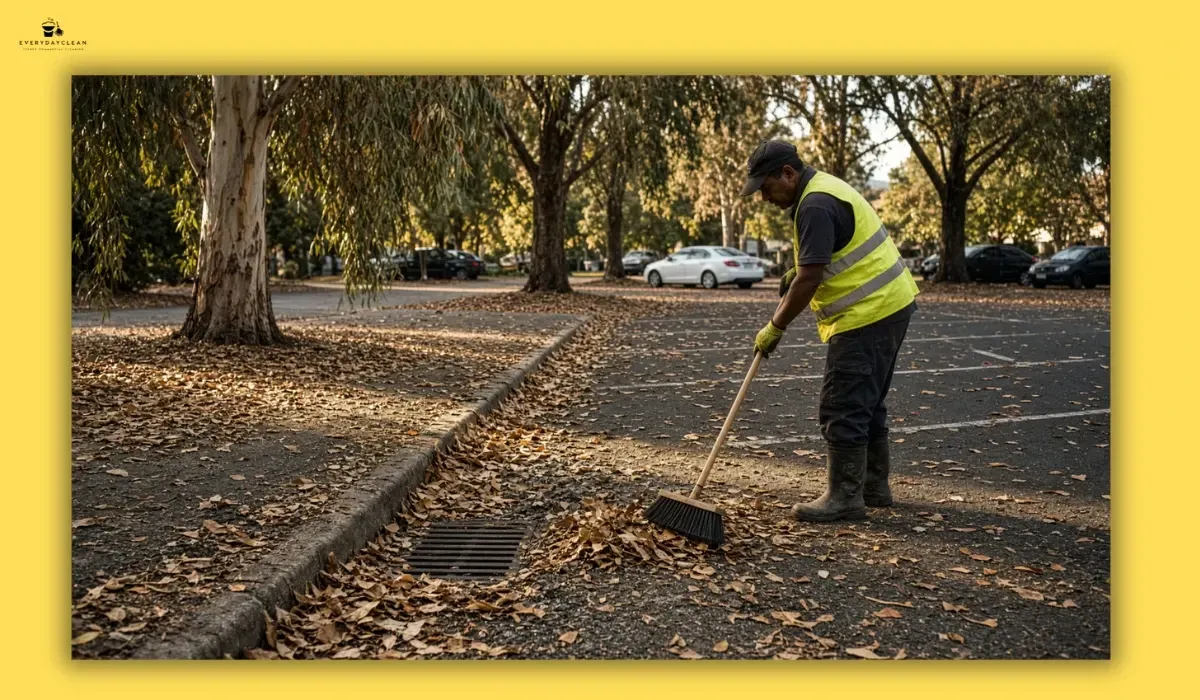
Outdoor asphalt parking lots deal with heavier, coarser debris: leaf litter, gravel accumulation, and storm debris after wind and rain. Drainage gutters, kerb lines and grates need clearing as part of the sweep, since these are where debris collects and where blockages start.
Car park sweeping frequency depends on how busy the site is
How often to sweep depends on traffic and debris load. Busy, high-turnover sites need frequent sweeping, while quieter residential car parks need less.
- High-turnover retail, shopping centres and medical centres: daily to weekly, as constant traffic brings steady grit, litter and tracked dust
- Commercial offices and mixed-use sites: weekly to fortnightly, adjusted for foot and vehicle traffic
- Residential strata carparks: monthly to quarterly, with more frequent sweeping where there are nearby trees or exposed entries
- Seasonal and weather triggers: increase frequency during heavy leaf fall, storms or nearby construction
These are starting points. Sites with trees, open entries or nearby works usually need more frequent sweeping than the baseline suggests.
Sweeping and full carpark scrubbing do different jobs
Sweeping and scrubbing are two different steps, and a well-maintained carpark usually needs both. Sweeping comes first.
Dry mechanical sweeping removes loose debris: grit, gravel, leaves, litter and surface dust. It is the essential first pass, because washing over loose debris just spreads it and clogs drains. Deep scrubbing and degreasing then handle what sweeping cannot, such as ingrained oil stains, tyre marks and ground-in grime, usually with water and detergents. For that wash stage, car park cleaning and scrubbing support and commercial pressure cleaning cover the heavier degreasing and washing work that follows a sweep.
Car park sweeping: common questions
What does car park sweeping involve?
Car park sweeping is the mechanical removal of loose debris such as grit, gravel, leaf litter, and tyre dust using walk-behind or ride-on sweepers, with dust suppression. It is a dry process that clears surface debris before any washing. It improves safety and appearance and helps protect drains and the surface, but it does not remove embedded oil stains.
How often should a car park be swept?
Frequency depends on traffic. High-turnover retail, shopping centres and medical centres often need daily to weekly sweeping, commercial offices weekly to fortnightly, and residential strata carparks monthly to quarterly. Sites with nearby trees, open entries, storms or construction usually need more frequent sweeping than the baseline, so adjust to the actual debris load.
What is the difference between sweeping and scrubbing a car park?
Sweeping is dry removal of loose debris and is always the first step. Scrubbing and degreasing use water and detergents to lift ingrained oil, tyre marks and ground-in grime that sweeping cannot. Washing over an unswept surface just spreads debris and clogs drains, so a car park is usually swept first, then scrubbed or pressure washed as needed.
Can car parks be swept underground?
Yes, but headroom and enclosure matter. Sweeper height must suit the ceiling clearance, and dust suppression or HEPA-style filtration is important because fine tyre dust cannot escape an enclosed basement. Machine selection and dust control are the main considerations underground, where airborne dust affects air quality more than in open-air lots.
Does sweeping remove oil stains from a car park?
No. Sweeping removes loose, dry debris but does not lift embedded oil, fluid stains or tyre marks. Those need scrubbing, degreasing or pressure washing. Sweeping is the first step that clears the surface so later washing is effective, and it significantly reduces debris and drain hazards without guaranteeing a stain-free or slip-free surface.
Keeping car parks safe with a routine preventative sweeping schedule
Car park sweeping works best as a routine, not a reaction to a complaint or a blocked drain. A preventative schedule matched to the site keeps debris, dust and drainage under control before they become hazards or damage.
A practical approach is to set a baseline frequency by site type, increase it during heavy leaf fall, storms or nearby works, and pair sweeping with periodic washing and drain checks. Integrated facilities management cleaning can coordinate sweeping, washing and scheduling across a site, so the carpark stays safe, presentable and easier to maintain over time.
About Everyday Clean
Everyday Clean is a Sydney-based cleaning company supporting facility managers, strata bodies and commercial sites with car park and external cleaning. Sweeping method, machinery and frequency should be matched to each site, with scope confirmed on assessment.
Blog