Concrete Degreaser Guide: Types, Dilution and Safe Use
A concrete degreaser is a specialised chemical formulation that breaks down hydrocarbon oils and grease into a solution that can be rinsed away. The right one is chosen by matching the chemical type to the concrete's porosity and how sensitive its coating or finish is, then using it at the correct dilution and dwell time.
Choosing well matters because the same product that clears a workshop slab can cloud an epoxy coating or dull polished concrete. This guide compares the main degreaser categories, matches them to common Australian facility scenarios, and covers dilution, dwell time, agitation, SDS checks and wash water control. It does not name brands, since product formulations and availability change.
Can You Use Degreaser on Concrete?
Yes, degreaser can be used on concrete, but how safe it is depends on the finish. Bare concrete generally tolerates strong alkaline degreasers, while polished and sealed slabs usually need pH-safe or specialty formulations that will not attack the polish, sealer or coating.
Before choosing a degreaser for concrete, identify the surface:
- Bare unsealed concrete: porous and absorbent; handles stronger alkaline products but drinks up chemicals quickly.
- Sealed concrete (acrylic or penetrating sealers): has a protective layer that some solvents and strong alkalis can soften or strip.
- Epoxy or polyurethane coated concrete: resistant to oil, but some solvents can soften, blister or haze the coating, especially if it is new.
- Polished concrete: densified and ground; sensitive to acids, citrus solvents and harsh alkalis, which can dull the gloss.
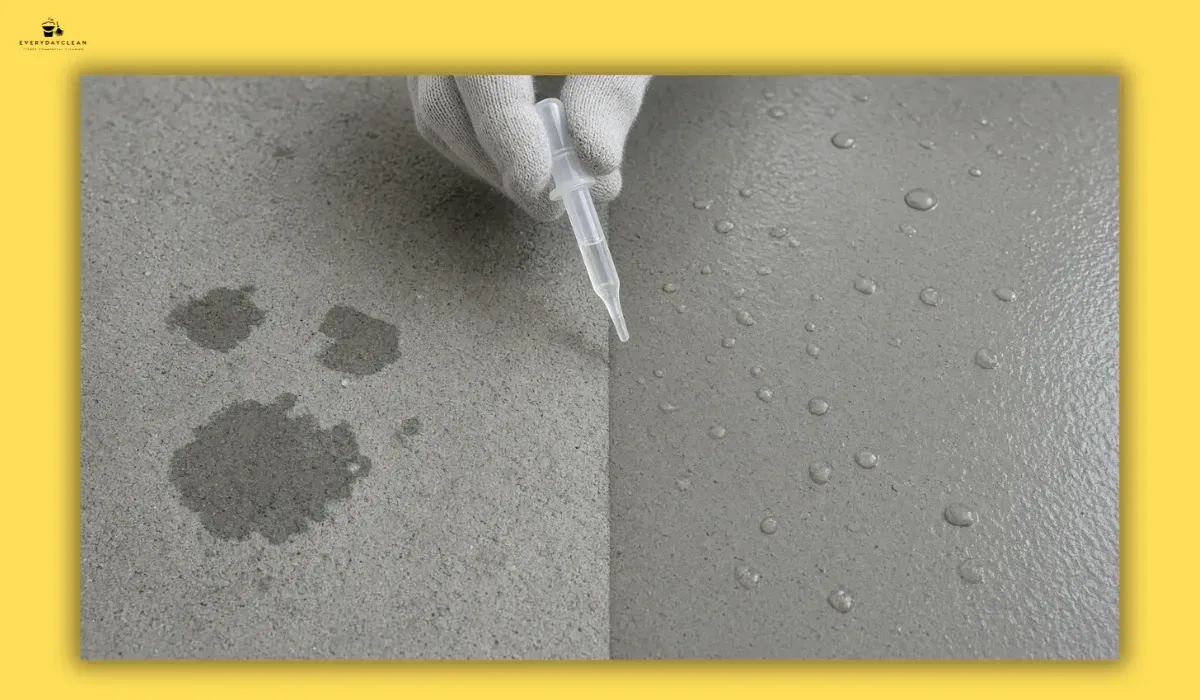
A water drop test helps. If water darkens the slab and soaks in, treat it as bare concrete. If it beads, a sealer or coating is present and product choice needs more care.
Concrete Degreaser Types Compared
Most products sold as a concrete cleaner and degreaser fall into three broad chemical categories. Each works differently and suits different surfaces and soil types.
| Degreaser type | How it works | Best suited to | Main cautions |
|---|---|---|---|
| Alkaline and butyl-based degreasers | High pH and surfactants emulsify petroleum oils and break down fats, lifting them into a rinsable solution; butyl glycol ethers add solvency | Bare concrete, heavy industrial workshops, car parks, loading docks | Can dull polished concrete and damage some sealers and coatings; corrosive at high concentration; skin and eye protection needed |
| Bio-enzymatic and microbial degreasers | Enzymes and surfactants loosen grease, and microbial products contain bacteria that gradually break down hydrocarbons in the pores | Bare concrete with ongoing staining, sites wanting lower-chemical options, areas where gentler products are preferred | Work more slowly; need moisture, temperature and time to be effective; still not to be washed into stormwater |
| Solvent and citrus (d-limonene) degreasers | Dissolve heavy oils, tar, bitumen and adhesive residues directly | Thick tar, asphalt and adhesive residue on bare concrete, small spot work | Higher VOC and fume levels; often flammable; can soften coatings and dull polished or sealed floors; may irritate skin |
Which is the best concrete degreaser?
There is no single best concrete degreaser for every site. For most car parks, workshops and garages with bare concrete, an alkaline degreaser is the usual starting point. Microbial products suit ongoing, lower-intensity staining where time is available. Solvent and citrus products are better kept for specific residues such as tar or adhesive, rather than general floor cleaning.
| Surface | Generally suitable | Use with caution | Generally avoid |
|---|---|---|---|
| Bare concrete | Alkaline, butyl-based, microbial | Solvent and citrus (spot use only) | Acidic products used as degreasers |
| Sealed concrete | pH-neutral or mild cleaners labelled for sealed floors | Diluted alkalines, after a test patch | Concentrated solvents and butyl products |
| Epoxy or polyurethane coated | Coating-compatible cleaners recommended by the coating supplier | Mild alkalines, well diluted | Strong solvents, especially on new coatings |
| Polished concrete | pH-neutral cleaners labelled for polished concrete | Mild specialty degreasers labelled as polished-safe | Strong alkalines, citrus solvents, acids |
Coating and Sealant Risk: Avoid heavy solvent-based degreasers or concentrated butyl-based cleaners on acrylic-sealed or freshly epoxy-coated concrete floors. Aggressive degreasers can soften, blister or dissolve the resin, which can turn a clear protective coat cloudy and tacky.
Always test a new product on a small, low-visibility area first, and check the coating or sealer manufacturer's cleaning recommendations where they are available.
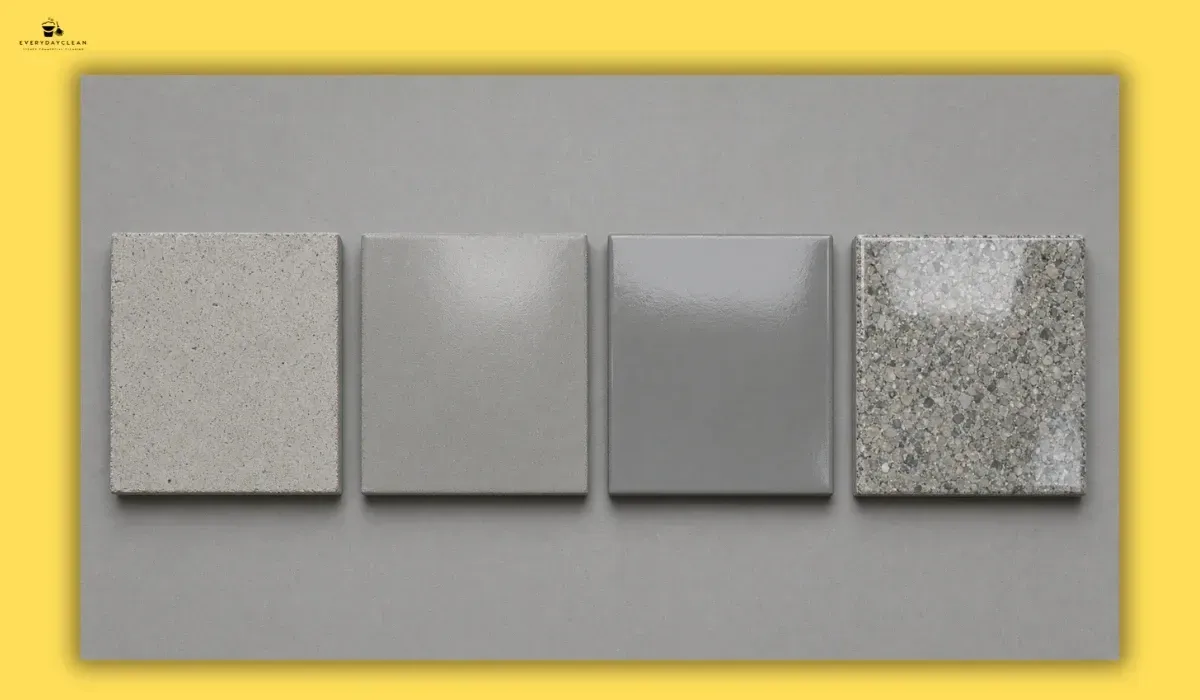
Degreaser Selection Matrix by Facility Scenario
Facility type shapes the soil, the surface and the controls that apply. These scenarios cover the most common settings.
Which degreaser suits commercial underground car parks and shared bays?
- Typical soil: motor oil drips, transmission fluid, tyre residue and general road grime.
- Typical surface: bare or lightly sealed concrete, sometimes coated in ramps or premium bays.
- Usual starting point: diluted alkaline degreaser for scrubbing, with stronger spot treatment for heavy drips.
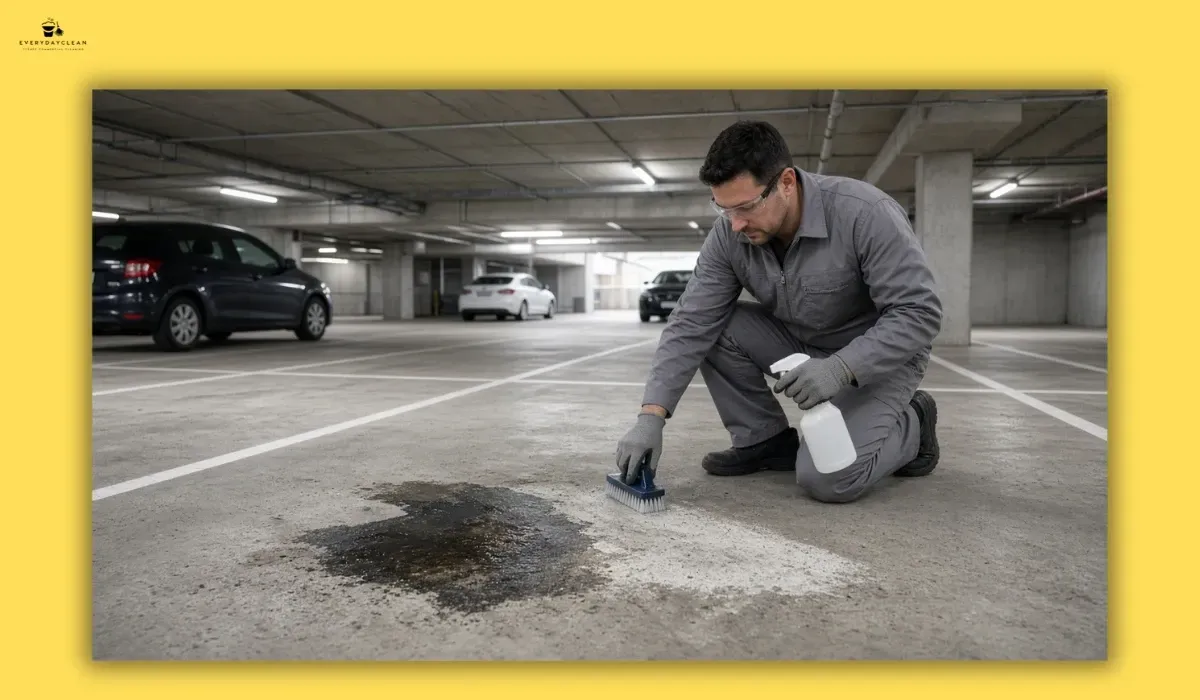
- Key controls: ventilation in enclosed levels, signage and cordoning, and wash water recovery so runoff does not reach drains.
Larger car parks often schedule degreasing as part of commercial car park cleaning services alongside sweeping and periodic washing.
Which degreaser suits workshop and manufacturing plant floors?
- Typical soil: hydraulic oil, cutting fluid, machine lubricants, and heavy grease build-up.
- Typical surface: bare concrete or epoxy-coated floors, depending on the site.
- Usual starting point: alkaline or butyl-based degreasers on bare concrete; coating-compatible products on epoxy.
- Key controls: compatibility with site chemical registers, SDS access for staff, and keeping degreasers away from incompatible chemicals.
Which garage floor degreaser suits residential slabs?
- Typical soil: occasional oil drips, tyre marks and general grime.
- Typical surface: often bare concrete, sometimes sealed or coated with a garage floor coating.
- Usual starting point: a ready-to-use or diluted alkaline garage floor degreaser on bare concrete, or a coating-safe product on sealed floors.
- Key controls: good ventilation, gloves and eye protection, keeping children and pets away, and stopping runoff at the driveway edge.
For dark, set-in marks rather than general grime, a dedicated guide to oil stain removal from concrete car parks covers absorbent and poultice methods in detail.
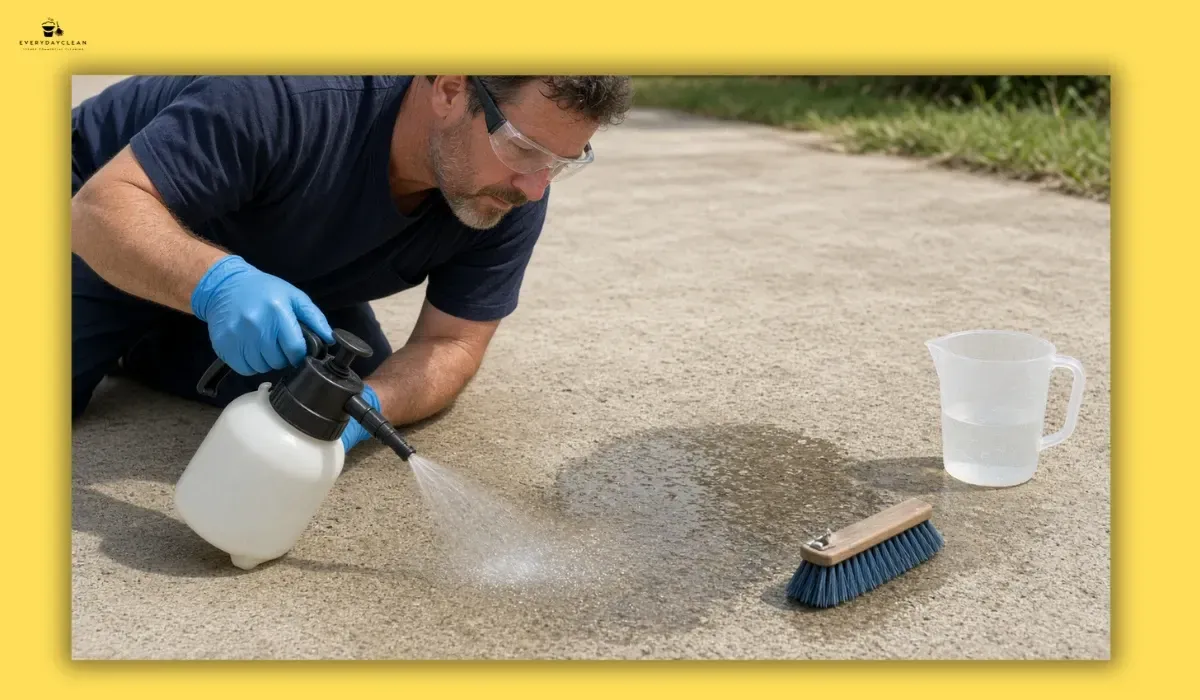
Safe Application Parameters for Degreaser on Concrete
How a degreaser is used matters as much as which one is chosen. Dilution, dwell time and agitation all affect results and surface safety.
How should degreaser be diluted?
Always follow the product label first. As a general pattern:
- Spot treatment of heavy grease: stronger mixes or concentrate, applied only to the affected area.
- General floor scrubbing: weaker mixes, often in a range such as 1:10 to 1:20 for many alkaline products, depending on the label and soil level.
- Auto-scrubber use: low-foam products at the dilution the machine and product manufacturers recommend.
Overly strong mixes rarely clean better. They can leave residue that attracts dirt, increase rinsing time and raise the risk of surface damage.
How long should a concrete degreaser dwell?
Many degreasers need a short dwell time to work, often around 10 to 20 minutes, though labels vary. The key rule is not to let the degreaser dry on the slab. Dried product can leave residue and patchy marks, and on some finishes it may cause discolouration. Work in sections small enough to keep wet, and re-wet lightly if the product starts to dry.
Facility Pro-Tip (The Hydration Rule): When applying concentrated degreaser to unsealed porous concrete on hot Australian days, lightly pre-dampen the slab with clean water first. This helps stop the concrete absorbing the chemical too quickly before it has time to break down surface oils.
Which agitation method should be used?
- Stiff nylon brushes: suit spot treatment on bare concrete and textured surfaces.
- Soft brushes or microfibre: suit sealed, coated and polished floors.
- Auto-scrubber with poly or nylon pads or brushes: suits large commercial floors, with pad aggressiveness matched to the finish.
- Avoid wire brushes: they can scratch coatings and polished surfaces, and leave metal fragments that may rust-stain bare concrete.
Degreasers break down surface oil and assist rinsing, but deep petroleum saturation and aged shadow marks may still need repeated treatment or extraction methods.
WHS, SDS and Wash Water Compliance for Concrete Degreasers
Degreasers are workplace chemicals, so selection and use should sit inside the site's WHS and environmental controls.
What should be checked on the Safety Data Sheet?
Every degreaser used at work should have a current Safety Data Sheet available. Key sections include:
- Section 2 (hazard identification): corrosive, flammable or irritant hazards.
- Section 7 (handling and storage): storage and incompatibility notes.
- Section 8 (exposure controls and personal protection): required PPE and ventilation.
- Section 12 (ecological information): environmental hazards.
- Section 13 (disposal considerations): how product and waste should be disposed of.
What PPE is typically needed?
Requirements depend on the product and SDS, but commonly include chemical-resistant gloves, eye protection, suitable footwear and, for solvent products in enclosed areas, ventilation or respiratory protection as specified.
How should degreaser runoff be controlled?
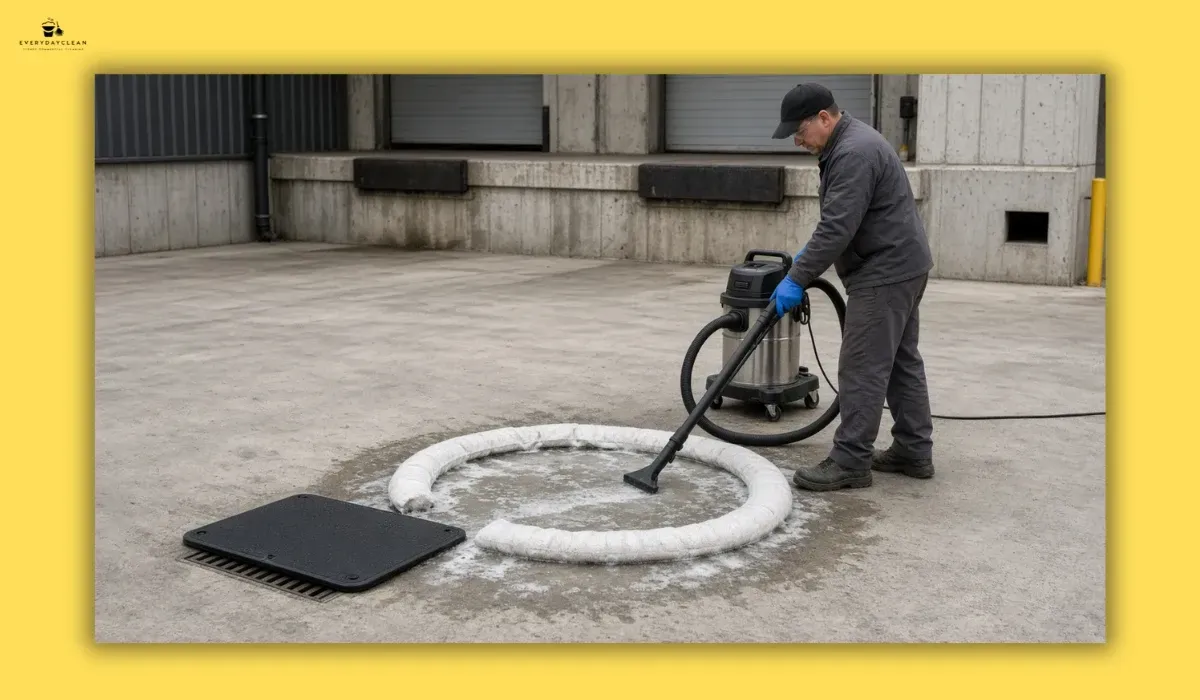
Degreaser and oily wash water should not enter stormwater grates. In Sydney, stormwater generally flows to waterways without treatment, so runoff from car parks, driveways and loading areas can carry chemicals directly into creeks and harbours.
- block or cover stormwater grates before washing
- use absorbent booms around the work area
- collect wash water with a wet vacuum or recovery system
- dispose of collected water and waste through approved channels, following local council and NSW EPA guidance
Concrete Degreaser FAQs
Can concrete degreaser damage polished concrete?
It can. Strong alkaline degreasers, citrus solvents and acidic products may dull or etch polished concrete. For polished floors, use pH-neutral cleaners or products specifically labelled as safe for polished concrete, and test on a small area first. If the gloss has already dulled, the floor may need professional assessment rather than more cleaning.
Is a citrus degreaser safer than an alkaline degreaser?
Not necessarily. Citrus (d-limonene) products are plant-derived, but they are strong solvents that can be flammable, irritate skin and soften some coatings or sealers. Alkaline degreasers are often better for general concrete cleaning, while citrus products suit specific residues such as tar. Safety depends on the product, the surface and following the SDS.
Do bio-enzymatic degreasers work on old oil stains?
Microbial products can gradually break down hydrocarbons in concrete pores, which may help with ongoing or older staining. They usually work slowly and need moisture and suitable temperatures, often over several applications. Heavy or very old saturation may still need extraction methods, and results vary between products and surfaces.
How long should degreaser be left on concrete?
Many products need around 10 to 20 minutes of dwell time, but always follow the label. The degreaser should stay wet during that time, so work in manageable sections and re-wet lightly if needed. Letting it dry on the slab can leave residue or marks.
Can the same degreaser be used on a garage floor and a commercial car park?
Sometimes, if both are bare concrete and the soil is similar. Commercial sites often use more concentrated products, auto-scrubbers and wash water recovery, while home garages suit ready-to-use or lightly diluted products. Sealed or coated floors in either setting need products compatible with that coating.
Choosing the Right Concrete Degreaser and Managing Chemicals Well
Good degreaser selection starts with the surface, then the soil, then the site controls. A practical approach is to:
- identify the finish (bare, sealed, coated or polished) before choosing any product
- match the chemical type to the soil, keeping solvents for specific residues
- follow label dilution and dwell times, and test on a small area first
- keep SDS documents accessible and up to date for every product on site
- store degreasers away from incompatible chemicals and out of reach of the public
- plan wash water control before cleaning starts
- treat drips early, since fresh oil is far easier to remove than aged saturation
Routine cleaning between degreasing treatments keeps soil levels lower, and routine concrete floor cleaning guidance covers that day-to-day side. Degreasers break down surface oil and assist rinsing, but deep petroleum saturation or aged shadows may still require repeated extraction, and surface damage such as etching or failed coatings needs specialist assessment.
About Everyday Clean
Everyday Clean is a Sydney-based cleaning company supporting commercial, office, strata, education, healthcare, hospitality, property and facility cleaning needs. Everyday Clean content is written to help Australian readers make practical cleaning decisions, compare options, and understand when professional cleaning support may be appropriate.
Blog