How to Get a Stain Out of a Wool Rug Safely
How to get a stain out of a wool rug comes down to acting fast, being gentle, and respecting what wool can and cannot handle. Blot rather than rub, use a mild wool-safe solution, work from the outside of the stain inward, and stop the moment the fibres, colour or smell start to change. Wool is a natural fibre, so the wrong product or too much water can cause more lasting damage than the stain itself.
This guide stays focused on wool rugs. The method below suits most fresh food and drink spills, including red wine, but it does not promise full removal, since some stains and dyes set permanently.
How to get a stain out of a wool rug starts with gentle blotting and a mild solution
To get a stain out of a wool rug, blot up the spill straight away, avoid rubbing, apply a small amount of wool-safe mild solution, work from the outside inward, rinse lightly, then blot dry.
Stop and reassess if colour transfers onto your cloth, the pile starts to distort or mat, or an odour develops. These are signs the stain, dye or fibre is reacting, and pushing on can set the mark or damage the wool. At that point a specialist clean is the safer option.
The same careful approach applies whether you are dealing with a muddy footprint, a food spill or trying to work out how to get red wine out of a wool rug.
Wool rugs need different stain care because the fibre reacts to water, heat and chemicals
Wool behaves very differently from synthetic carpet, which is why generic stain advice often does more harm than good. Understanding the fibre helps explain every step that follows.
- Absorbency: wool soaks up liquid quickly, so spills sink into the pile and backing fast, and too much cleaning solution is hard to remove
- Dye sensitivity: many wool rugs, especially hand-knotted or natural-dyed ones, can bleed colour when exposed to strong or alkaline products
- Pile distortion: rubbing or scrubbing can flatten, fuzz or mat the pile, leaving a visible patch even after the stain is gone
- Shrinkage: wool fibres can shrink and tighten with heat and heavy moisture, which can pucker or warp the rug
- Overwetting risk: a soaked wool rug dries slowly and can develop odour, backing damage or watermarks if it stays damp
Because of this, wool stain removal is about minimal product, minimal water and minimal force, not heavy treatment.
First steps work the same for any wool rug stain
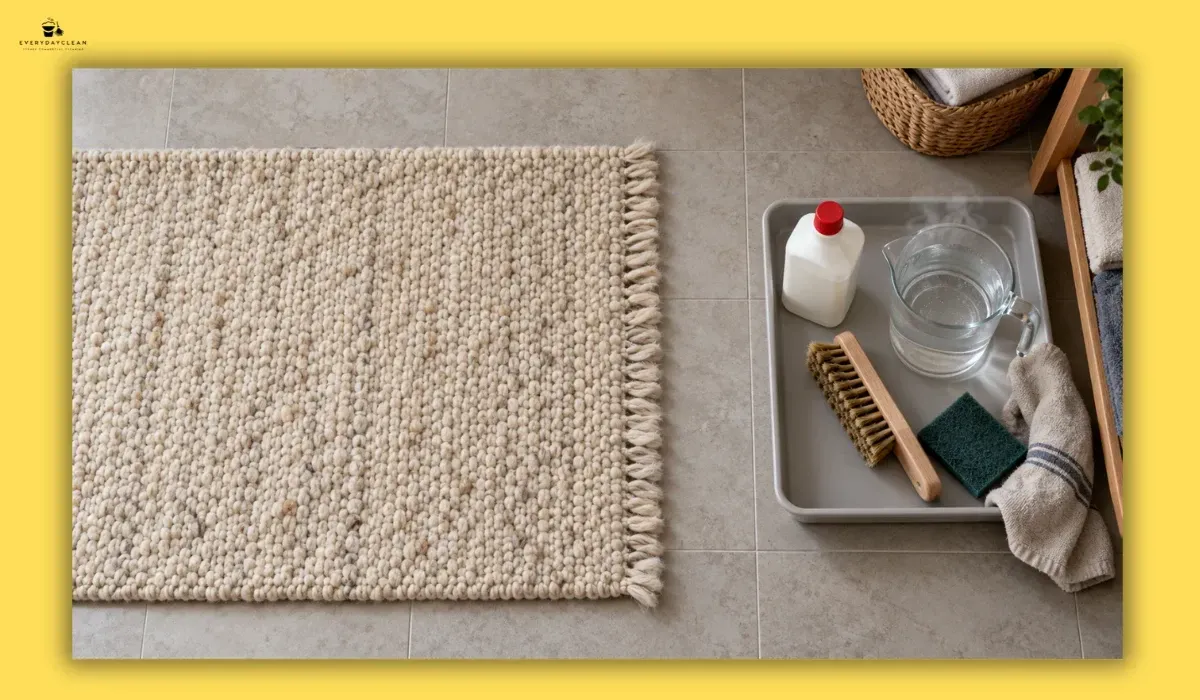
The first few minutes matter most, and the opening steps are the same no matter what caused the stain. Getting these right gives any later treatment the best chance.
- Lift any solids gently with a spoon or blunt edge, scooping rather than scraping
- Blot liquid with a clean, dry, light-coloured cloth or paper towel, pressing down and lifting
- Keep blotting with fresh cloth until little more transfers, always from the outside of the stain toward the centre
- Avoid rubbing, which spreads the stain and disturbs the pile
- Test any cleaning solution on a hidden corner first and check for colour transfer before touching the stain
Only move on to a cleaning solution once you have removed as much of the spill as blotting allows.
General food and drink stains respond to a mild wool-safe solution
Most fresh food and drink stains on wool can be eased with a gentle solution and patience. The aim is to lift the stain gradually, not to soak the fibre.
A cautious method for general stains:
- Mix a small amount of wool-safe detergent, or a few drops of mild dishwashing liquid, into cool water
- Dampen a clean cloth lightly with the solution, so it is barely wet rather than dripping
- Dab the stain from the outside inward, refolding the cloth to a clean section often
- Rinse by dabbing with a second cloth lightly dampened with plain cool water, to lift any residue
- Blot dry with a dry towel, then let the rug air dry away from direct heat and sunlight
Work in small amounts and repeat gently rather than applying more product or pressure. If the stain is not shifting, stopping is better than escalating.
Red wine on a wool rug needs fast blotting and a diluted approach
Red wine is one of the harder spills, so knowing how to get red wine out of a wool rug quickly makes a real difference. The pigments in wine can set fast, especially on pale wool.
A careful red wine approach:
- Blot immediately with a dry cloth to lift as much wine as possible, pressing and lifting, never rubbing
- Lightly dab with cool water to dilute the remaining wine, blotting between each pass
- If needed, use a small amount of the mild wool-safe solution above, dabbing gently from the outside in
- Keep swapping to clean cloth sections so you lift pigment rather than spread it
- Blot dry and let the rug air dry fully, then check the area in good light
Avoid the common habit of pouring salt, white wine or hot water onto wool, as these can overwet the fibre, drive the stain deeper or set it. A faint shadow may remain even after careful work, and on valuable or antique wool rugs it is often safer to blot, contain the spill and move to a professional clean rather than keep treating it.

Some products and habits should never be used on wool
Knowing what to avoid is as important as the method, because wool damage is often permanent. The following can harm the fibre, the dye or the pile.
- Bleach or any whitening product, which can strip or alter wool dyes and weaken fibres
- Harsh alkaline or high-strength cleaners, including many general carpet spot sprays not labelled wool-safe
- Excess water or soaking, which leads to slow drying, odour and backing damage
- Heat, including hot water, hair dryers and steam, which can shrink and distort wool
- Aggressive scrubbing or stiff brushes, which flatten and fuzz the pile
- Enzyme or strong stain removers meant for synthetic carpet, unless confirmed safe for wool
When in doubt about a product, leaving the stain for a professional is lower risk than testing something unsuitable on the fibre.
Knowing when to stop and call a professional protects the rug
Stopping at the right point is part of good wool rug care, not a failure. A professional clean is usually the safer path in several situations.
Consider specialist help when:
- The stain is large, soaked in, old or already dried
- Colour is transferring, suggesting the rug dye is bleeding
- The pile is distorting, matting or changing texture
- An odour is developing, which can point to moisture trapped in the backing
- The rug is hand-knotted, antique, natural-dyed or high value
- Several careful attempts have not improved the stain
Professional commercial carpet cleaning support can help assess the fibre and dye before choosing a method, which lowers the risk of the overwetting, shrinkage and colour loss that home treatment can cause on wool. Even then, full removal cannot be guaranteed on every stain.
Wool rug stains and synthetic carpet stains are not treated the same way
Wool and synthetic carpet call for different handling, which is why a method that works on one can ruin the other. The core difference is how each fibre reacts to water and chemicals.
Synthetic fibres such as nylon and polyester are more stain-resistant, tolerate stronger cleaners and more water, and dry faster, so they usually handle robust spot treatment. Wool is natural, absorbent and dye-sensitive, so it needs gentler products, far less moisture and more care with heat. Using a strong synthetic-carpet spray or a wet extraction approach on wool is a common cause of colour bleed and pile damage.
This fibre difference is also why some spills have their own dedicated guidance. For spills on synthetic carpet and rugs there are separate guides for coffee stains on carpet and rugs and for pet urine stain and odour removal, which cover those specific stains in more detail than a wool-focused article should.
Treating a wool rug stain with patience and limits
Getting a stain out of a wool rug is less about a single trick and more about restraint: act fast, blot gently, use minimal wool-safe solution and water, and stop before the fibre or dye reacts. That approach handles most fresh food, drink and red wine spills while protecting the rug underneath.
Set a limit before you start, treat carefully, and accept that some stains will not fully lift at home. For valuable, antique or stubbornly stained wool rugs, a fibre-aware professional clean is the safer way to protect both the look and the life of the rug.

How to get a stain out of a wool rug: common questions
Can you get any stain out of a wool rug at home?
Not always. Fresh food, drink and red wine spills often respond to gentle blotting and a mild wool-safe solution, but old, dried, large or dye-reactive stains may not fully lift at home. Careful early treatment gives the best chance, though some marks set permanently. For valuable or stubborn stains, a professional clean is safer than repeated home attempts.
How do you get red wine out of a wool rug?
Blot the wine immediately with a dry cloth, pressing and lifting rather than rubbing, then lightly dab with cool water to dilute what remains. If needed, use a small amount of mild wool-safe solution from the outside in, swapping to clean cloth often. Avoid salt, hot water and soaking, which can overwet wool or set the stain.
What should you never use on a wool rug?
Avoid bleach, harsh or alkaline cleaners, excess water, heat such as hot water or hair dryers, and aggressive scrubbing. Many general carpet spot sprays and enzyme removers made for synthetic carpet are also unsafe for wool unless clearly labelled wool-safe. These can strip dyes, shrink fibres, distort the pile or set the stain, often permanently.
Why is wool rug stain removal different from carpet?
Wool is a natural, absorbent and dye-sensitive fibre, while synthetic carpet is more stain-resistant and tolerant of water and stronger cleaners. Wool soaks up liquid quickly, can bleed colour, and may shrink or distort with heat and heavy moisture. That is why wool needs gentler products, far less water and more care than a typical synthetic carpet stain.
When should you call a professional for a wool rug stain?
Call a professional when the stain is large, old, dried or soaked in, when colour is transferring, when the pile is matting or distorting, when an odour develops, or when the rug is hand-knotted, antique or high value. A fibre-aware clean lowers the risk of overwetting, shrinkage and colour loss, though full removal still cannot be guaranteed.
About Everyday Clean
Everyday Clean supports carpet and commercial cleaning needs across Sydney. Delicate, antique or high-value wool rugs should be assessed by a fibre specialist before treatment.
Blog