How to Get Coffee Stains Out of Carpet and Rugs
To get coffee stains out of carpet, blot up the spill quickly, use cold water first, and avoid rubbing, which spreads the stain. Apply a mild cleaning solution, rinse by blotting with clean water, then blot the area dry, repeating gently if a mark remains. Acting fast makes the biggest difference, since fresh coffee lifts far more easily than a stain left to dry.
Coffee is a tannin-based stain, so heat, rubbing and over-wetting can all make it harder to remove. This guide covers fresh spills, dried stains, coffee on rugs, and extra care for wool or delicate rugs, along with when a stain is better left to a professional.
The quick version:
- Blot the spill quickly and do not rub, as rubbing spreads the stain
- Use cold water, not hot water or steam, which can set the stain
- Use a mild dishwashing-liquid and cold water solution only if plain water is not enough
- Rinse by blotting with clean cold water to lift any residue
- Dry the area fully, and stop DIY for wool, delicate rugs or stains that return after drying
Why Coffee Is A Tannin Stain
Coffee stains come from tannins, the same plant compounds found in tea and wine. Tannin stains respond to prompt, cool, gentle treatment, and react badly to the opposite. Hot water can help set a tannin stain into the fibre, rubbing pushes it deeper and wider, and over-wetting can carry it down into the carpet backing.
Understanding this shapes the whole method: work cool, blot rather than rub, and use only as much moisture as the job needs. These habits protect the carpet more than any single product.
Removing Fresh Coffee Spills
Fresh coffee is the easiest to lift, and speed is the key advantage.
- Blot up as much coffee as possible with a clean, dry cloth or paper towel, pressing rather than wiping
- Blot with a cloth dampened in cold water, working from the outside of the stain inward
- If needed, mix a small amount of mild dishwashing liquid into cold water and blot with that solution
- Rinse by blotting with a cloth dampened in plain cold water to lift any residue
- Blot the area dry, then press with a dry towel to draw out remaining moisture
- Let it air dry fully, ideally with airflow from a fan or open window
If a faint mark remains after drying, repeat the process gently rather than scrubbing harder. Patience with repeated light passes is safer than aggressive treatment.
Removing Dried Coffee Stains
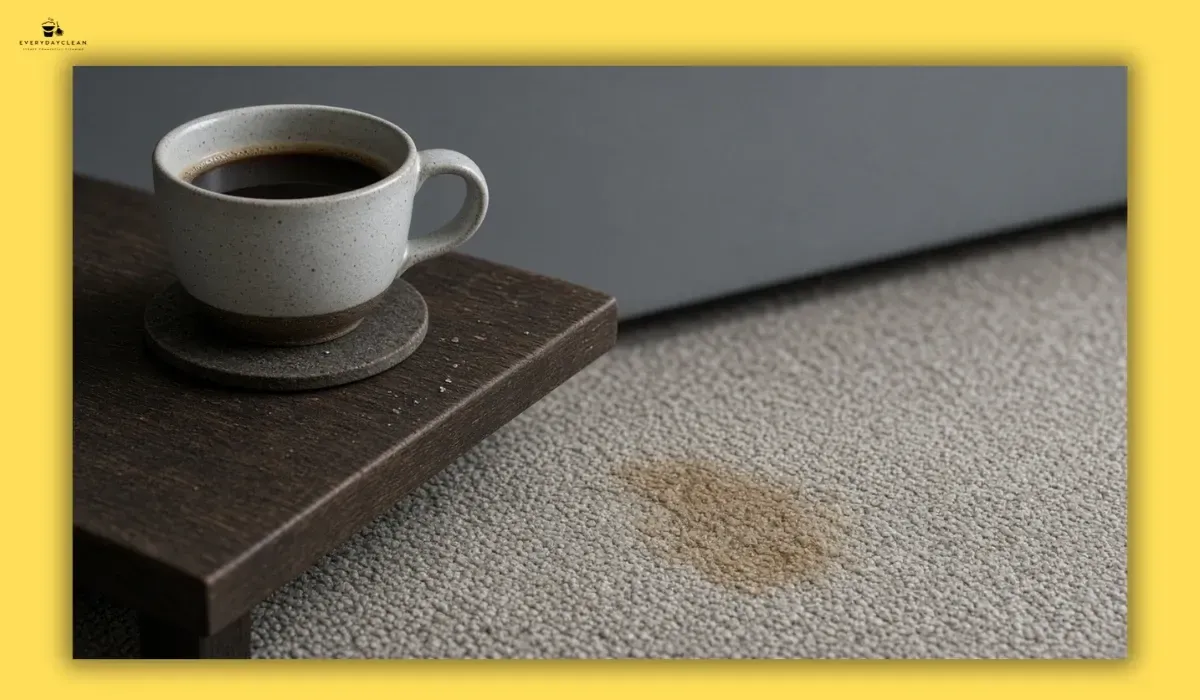
Dried coffee is more stubborn but can often still be improved.
- Dampen the stain with cold water and let it sit briefly to soften, without soaking the carpet
- Blot with a mild dishwashing liquid and cold water solution, working from the outside in
- Blot repeatedly with a clean cloth, re-wetting gently as needed rather than scrubbing
- Rinse by blotting with plain cold water to remove any cleaning residue
- Blot dry, press with a dry towel, and allow the area to air dry fully
Older stains do not always lift completely with DIY methods, particularly if they have been walked in or previously treated with heat, so it is worth knowing when to stop.
Removing Coffee Stains From Rugs
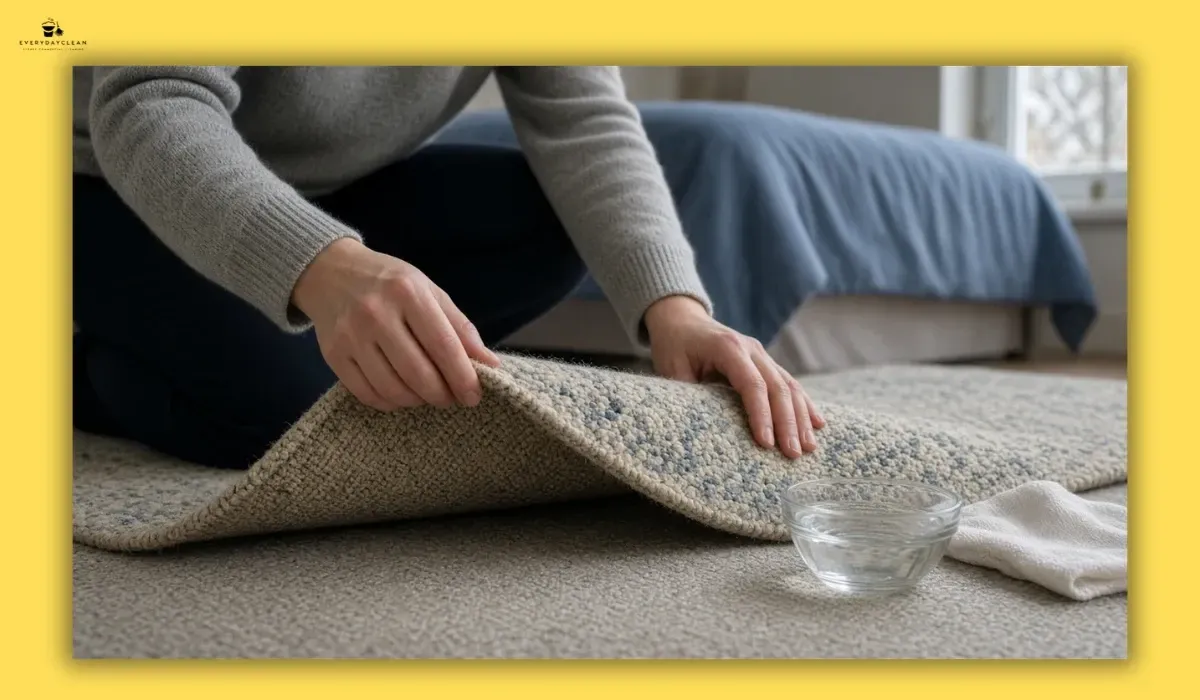
Rugs follow the same cool, gentle, blot-first approach, but the backing and material need extra thought. Many rugs have a backing that can be damaged by over-wetting, and moisture trapped underneath can lead to marks or odour.
Where possible, place a clean cloth or towel under the stained area to protect the floor and absorb moisture from below. Use minimal water, blot from both sides where the rug allows, and dry the rug thoroughly, ideally flat with airflow. Delicate, antique or unusual rugs are a different matter and are covered below.
Extra Care For Wool And Delicate Rugs
Wool and delicate natural-fibre rugs need a gentler touch, since the wrong approach can cause lasting damage.
- Wool is sensitive to alkaline products and heat, so use mild, cool solutions and test first
- Colour bleeding can occur on some rugs, so always test any product on a hidden corner before treating the stain
- Over-wetting can damage backing and cause shrinkage or marks, so keep moisture minimal
- Bleach and strong chemicals should be avoided, as they can strip colour and damage fibres
- Steam and hot water can set tannin stains and harm wool, so keep everything cool
For valuable, antique or unknown-fibre rugs, gentle blotting with cold water is often as far as home treatment should go before seeking specialist advice.
Comparing Coffee Stain Situations
| Situation | Practical Approach | Watch Out For |
|---|---|---|
| Fresh spill | Blot fast, cold water, mild solution | Do not rub or use heat |
| Dried stain | Soften with cold water, blot repeatedly | May not fully lift |
| Rug | Protect backing, minimal water, dry well | Over-wetting the backing |
| Wool or delicate rug | Gentle cold blotting, test first | Colour bleeding, shrinkage |
When Not To DIY Coffee Stains
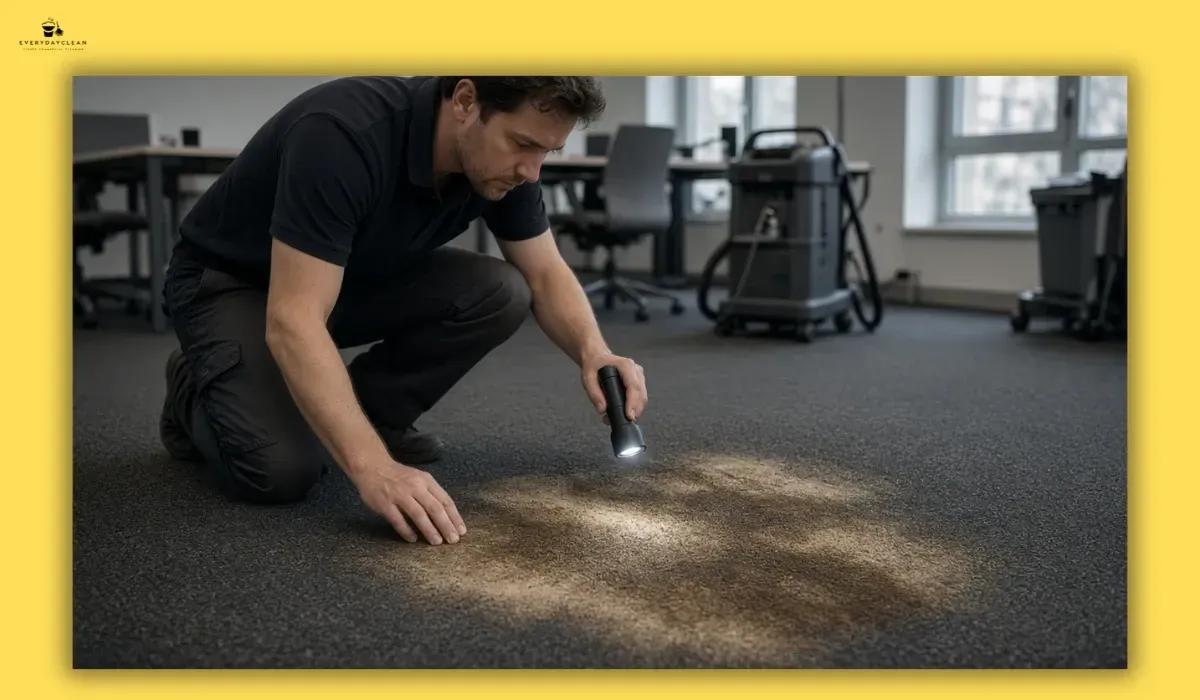
DIY suits fresh spills and light stains on standard carpet, but some situations are better handled professionally. It is worth stopping if the stain is large, old or set in, if the carpet or rug is wool or an unknown fibre, if colours bleed during testing, or if the mark returns after the area dries.
In these cases, professional carpet and rug cleaning may be better suited to delicate fibres and stubborn stains than repeated home attempts that risk damage. It also helps to keep in mind that coffee is a tannin stain with its own method: protein stains such as blood need a different cool-water approach, and pet urine is a separate stain and odour issue again, so matching the method to the stain type matters.
Act Fast, Rinse Residue And Dry Properly
The heart of coffee stain removal is simple: blot the spill quickly, treat it cool and gently, then rinse and dry. Acting fast on a fresh spill gives by far the best result, since dried tannin is much harder to shift.
Rinsing out cleaning residue and drying the area fully are easy to skip but important, because leftover solution attracts new dirt and trapped moisture can cause marks or odour. If a stain keeps returning after drying, that usually means residue or deeper staining remains, and it is often the point to seek professional help rather than keep treating it.

Frequently Asked Questions About Coffee Stains On Carpet and Rugs
How Do You Get Coffee Stains Out Of Carpet?
Blot up the spill quickly, then blot with cold water, working from the outside in. If needed, use a mild dishwashing liquid and cold water solution, rinse by blotting with plain cold water, and blot dry. Repeat gently if a mark remains, and avoid rubbing or using hot water.
Does Coffee Stain Carpet Permanently?
Not usually if treated quickly. Fresh coffee lifts easily, but dried or previously heat-treated stains can be harder and may not fully lift with DIY methods. Older stains in wool or unsealed fibres are more likely to leave a permanent mark, in which case professional help may improve the result.
Can You Use Hot Water On Coffee Stains?
No. Coffee is a tannin stain, and hot water can set it into the fibre, making it harder to remove. Cold water is safer throughout, and steam should also be avoided until the stain is gone, particularly on wool or delicate rugs.
How Do You Get Coffee Out Of A Wool Rug?
Very gently. Blot with cold water, test any mild solution on a hidden corner first, and keep moisture minimal to protect the backing. Avoid bleach, strong chemicals, heat, and steam. For valuable or antique wool rugs, specialist cleaning is often safer than home treatment.
Blog