How to Neutralise Dog Urine Odour & Stains in Carpet
To get rid of dog urine smell, blot up fresh urine straight away without rubbing, then treat the area with an enzyme cleaner made for carpets and rugs, following the dwell time on the label. Rinse only if the product says to, dry the area fully, and check afterwards whether the odour returns, since urine that has soaked deeper often needs a second treatment.
Urine odour is different to an ordinary stain, because the smell can come from urine that has soaked into the carpet backing or underlay, not just the surface. This guide covers fresh dog accidents, old or set-in smells, cat urine, urine on rugs, and when the problem is better handled by a professional.
The quick version:
- Blot fresh urine quickly and do not rub, which spreads it and pushes it deeper
- Use an enzyme cleaner made for carpets or rugs, not a fragrance spray
- Follow the full dwell time on the label, which is often longer than expected
- Dry the area fully before judging the result, since damp can hold odour
- Stop DIY if the odour returns, reaches the underlay or subfloor, or affects wool or delicate rugs
Why Pet Urine Smell Keeps Coming Back
Pet urine smell often returns because the odour source is deeper than the visible mark. Urine can pass through the carpet fibres into the backing and underlay, and even the subfloor, where surface wiping and air freshener cannot reach it. As the area dries or humidity rises, the smell can come back.
This is why enzyme cleaners matter. Enzyme cleaners are designed to break down the compounds in urine that cause the odour, rather than just masking the smell with fragrance. Perfumed sprays and surface cleaning may cover the smell briefly, but they do not remove the source, so the odour returns. Treating at the source, with enough product to reach as deep as the urine went, is what makes the difference.
Removing Fresh Dog Urine On Carpet
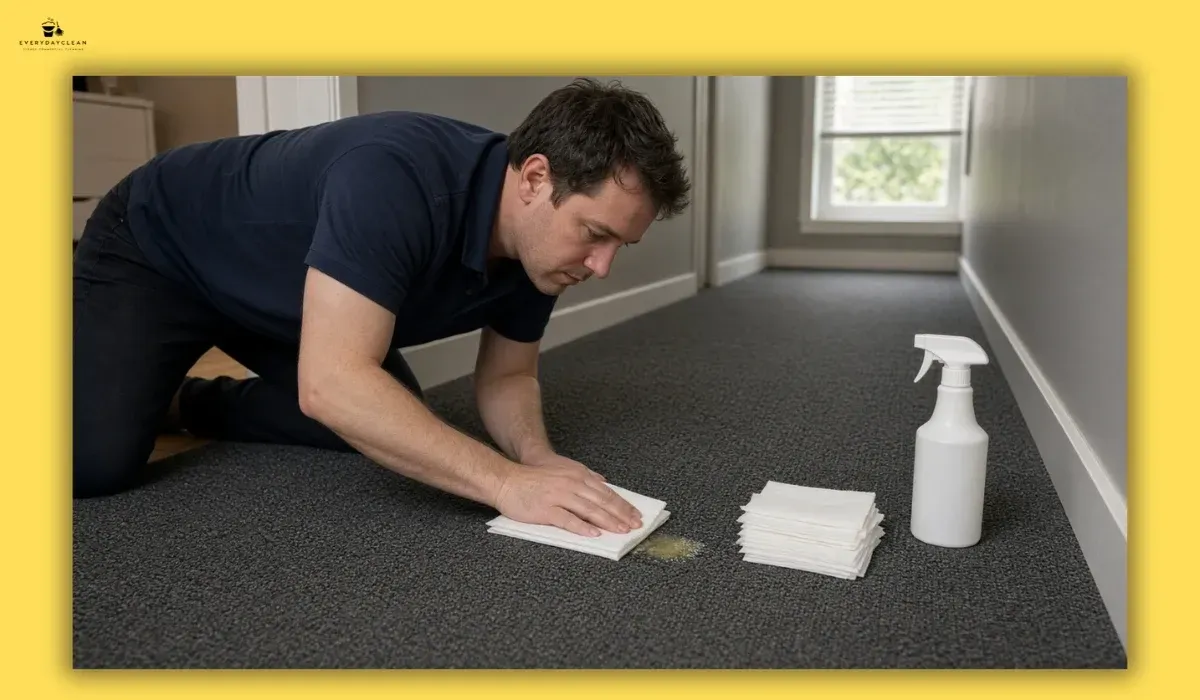
Fresh urine is the easiest to deal with, and speed limits how deep it soaks.
- Blot up as much urine as possible with paper towel or a clean cloth, pressing down rather than wiping
- Keep blotting with fresh towel until little more transfers, standing on the towel can help press moisture up
- Apply an enzyme cleaner made for carpet, enough to reach as deep as the urine soaked
- Leave it to dwell for the full time stated on the label, which is often longer than expected
- Rinse or blot only as the product directs, since some enzyme cleaners are not meant to be rinsed away immediately
- Blot the area, then let it air dry fully with airflow from a fan or open window
- Once dry, check for any remaining smell and repeat if needed
Acting quickly and using enough enzyme cleaner to match how far the urine spread gives the best chance of removing the odour in one go.
Removing Old Or Set-In Urine Smell
Old urine is harder, because it has dried into the fibres and often the backing. Locating the affected areas is the first step, since old accidents are not always visible.
An enzyme treatment is still the main approach, but set-in odour usually needs a generous application and the full dwell time, sometimes repeated over more than one treatment. The area must be allowed to dry fully between attempts, and deep contamination that has reached the underlay or subfloor may not be fully resolved by surface treatment alone. Where the smell persists after repeated enzyme treatment, the urine has likely soaked deeper than DIY can reach, which is the point to consider professional help.
Removing Cat Urine Smell
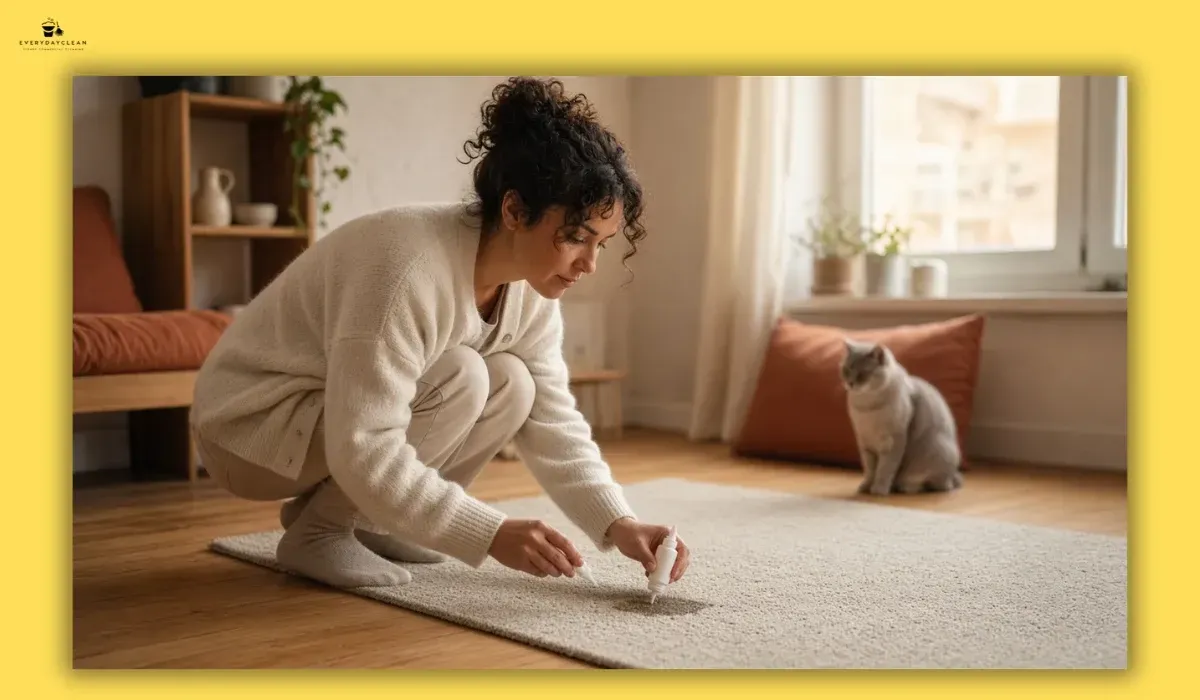
Cat urine tends to have a stronger, more persistent odour than dog urine, so it can be more stubborn to remove. The method is the same enzyme-based approach, but cat urine often needs particular patience and thorough treatment.
Avoid ammonia-based cleaners on cat or dog urine. Urine itself contains ammonia-like compounds, so an ammonia cleaner can add to the odour issue and may even encourage a pet to return to the same spot. Cautious, enzyme-based treatment is generally the safer path. Persistent cat urine odour, particularly in more than one spot, can be difficult to fully clear at home.
Removing Pet Urine From Rugs
Rugs need the same enzyme approach with extra care for the backing and floor beneath. Urine can sit in a rug's backing and transfer to the floor underneath, so protecting and checking both matters.
Place absorbent material under the rug while treating it, use enough enzyme cleaner to reach the soaked area, and dry the rug thoroughly, ideally flat with good airflow. Over-wetting can damage some rug backings, so balance reaching the odour source against soaking the rug. Delicate, antique or wool rugs need particular caution, covered below. Where urine has also reached a sofa or armchair, that is a separate upholstery job, and gentle upholstery cleaning methods differ from carpet treatment.
Cautions For Wool, Delicate Rugs And Products
Some materials and products call for extra care, since the wrong choice can cause lasting damage.
- Wool and delicate rugs are sensitive to alkaline products, heat and over-wetting, so use gentle, tested methods and consider specialist help for valuable pieces
- Colour bleeding can occur on some carpets and rugs, so test any product on a hidden area first
- Over-wetting can damage backing, cause shrinkage and lead to marks or lingering damp odour
- Backing and underlay damage can result from soaking, so use enough product to treat the odour without flooding the area
- Bleach should be avoided, as it can strip colour and damage fibres
- Ammonia-based cleaners can worsen urine odour and may draw pets back to the spot
- Steam and heat can set the odour into the fibres, so keep treatment cool until the smell is gone
- Masking fragrances cover the smell without removing the source, so the odour returns
When the fibre type is unknown or the rug is valuable, treat it as delicate and keep the approach gentle.
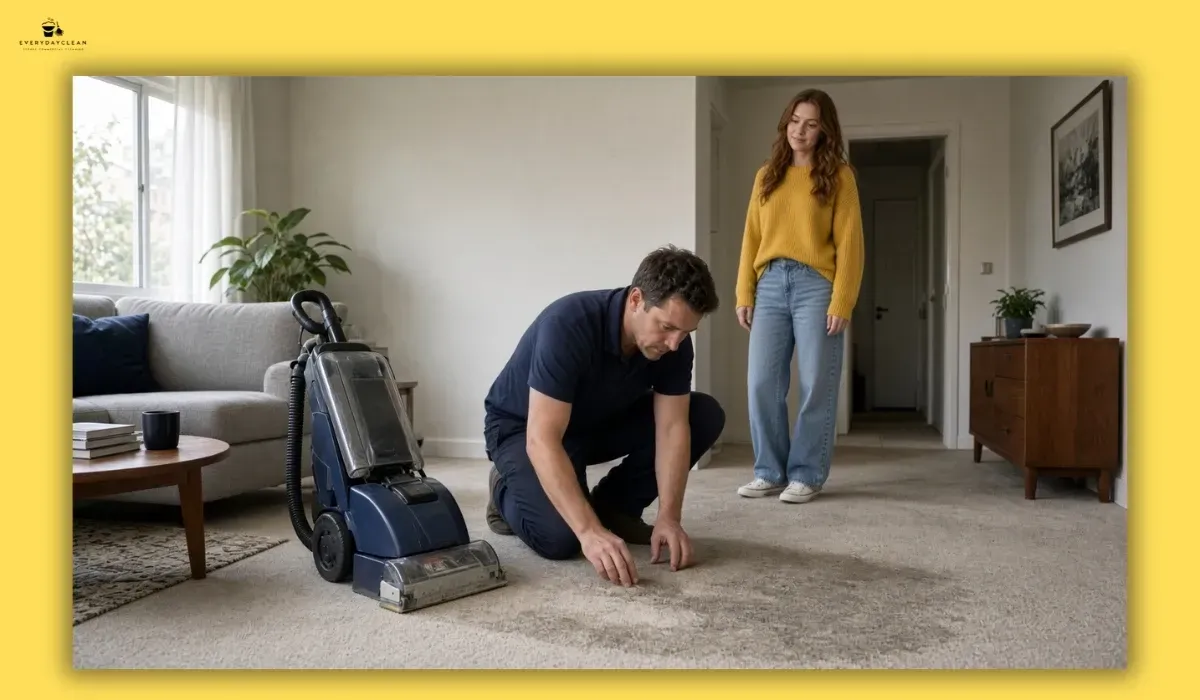
Comparing Pet Urine Situations
| Situation | Practical Approach | Watch Out For |
|---|---|---|
| Fresh dog urine | Blot fast, enzyme cleaner, full dwell | Rubbing, under-treating depth |
| Old or set-in smell | Generous enzyme treatment, repeat, dry fully | Odour deep in backing or subfloor |
| Cat urine | Enzyme treatment, extra patience | Stronger odour, avoid ammonia |
| Rugs | Protect backing and floor, dry flat | Over-wetting, backing damage |
When Not To DIY Pet Urine Odour
DIY suits fresh accidents and light odour on standard carpet, but some situations need professional help. It is worth stopping if the smell keeps returning after repeated enzyme treatment, if urine has soaked into underlay or subfloor, if the carpet or rug is wool or an unknown fibre, if there are multiple or widespread accidents, or if colours bleed during testing.
In these cases, professional carpet and rug cleaning may have equipment and methods better suited to deeper contamination than surface methods, which is often more effective than repeated home attempts. It also helps to remember that urine odour is its own problem: it needs enzyme treatment at the source, unlike surface stains such as coffee that respond to prompt cool-water blotting.
Treat Odour At The Source And Dry Fully
The key to pet urine odour is treating the source, not the surface. Blot fresh urine fast, use an enzyme cleaner that reaches as deep as the urine soaked, give it the full dwell time, and dry the area completely afterwards.
Drying fully matters because trapped moisture can bring odour back and lead to marks. If the smell returns after treatment and drying, that generally means urine has soaked deeper than the treatment reached, and it is often the point to bring in professional help rather than keep reapplying surface products. Avoiding fragrance-only sprays and ammonia cleaners along the way keeps the focus on removing the odour rather than hiding or worsening it.
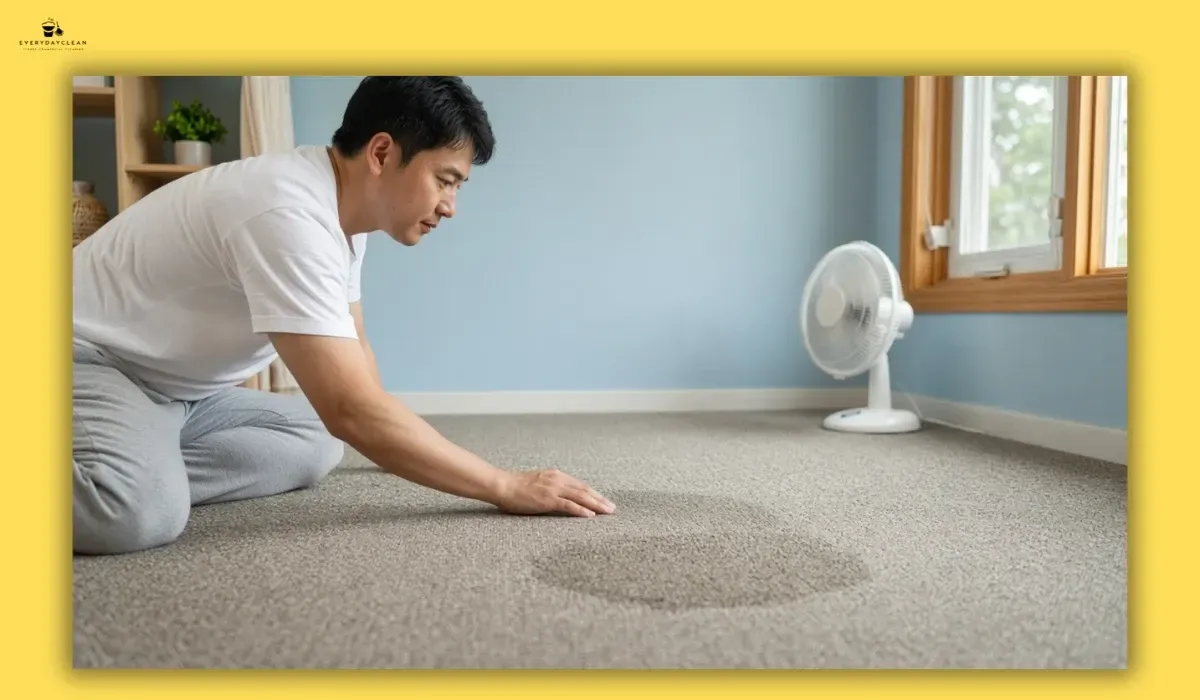
Frequently Asked Questions About Pet Urine Odour
How Do You Get Rid Of Dog Urine Smell In Carpet?
Blot fresh urine quickly without rubbing, then apply an enzyme cleaner made for carpet, using enough to reach as deep as the urine soaked. Leave it for the full dwell time on the label, dry the area fully, and check afterwards for any remaining smell, repeating the treatment if needed.
Why Does Urine Smell Keep Coming Back?
Because the odour source is often deeper than the surface. Urine can soak into the backing, underlay or subfloor, where wiping and air freshener cannot reach. Enzyme cleaners break down the odour compounds at the source, while fragrance sprays only mask the smell, so it returns.
How Do You Remove Cat Urine Smell From Carpet Or Rugs?
Use an enzyme cleaner and be patient, as cat urine is often stronger and more persistent. Avoid ammonia-based cleaners, which can worsen the odour and draw pets back. Treat thoroughly, dry fully, and repeat if needed. Persistent cat odour in multiple spots can be hard to fully clear at home.
Can All Pet Urine Odour Be Removed At Home?
Not always. Fresh accidents on standard carpet usually respond well to prompt enzyme treatment, but urine that has soaked into underlay or subfloor, or affected wool and delicate rugs, may not fully clear with DIY methods. In those cases professional cleaning is generally the more effective option.
Blog