Strata Cleaning and Maintenance: A Practical Guide
Strata cleaning and maintenance covers the routine cleaning of shared areas, planned upkeep of common property, issue reporting and the coordination that supports a safer, more presentable and usable building for everyone. Cleaning handles the recurring hygiene and presentation work, while maintenance handles repairs, servicing and longer-term upkeep, and the two overlap in the day-to-day running of common areas.
Getting the split right matters because responsibility for common property usually sits with the owners corporation, coordinated through the strata manager, and delivered by cleaners and contractors. This guide explains what cleaning and maintenance each involve, which common areas they cover, how often the work happens, and how the coordination fits together.
What Strata Cleaning and Maintenance Includes
The simplest way to understand the scope is to separate the recurring cleaning from the upkeep and repair work, since they are usually handled by different people on different schedules.
| Strata cleaning | Strata maintenance |
|---|---|
| Vacuuming, mopping and surface cleaning of shared areas | Repairs to fixtures, fittings and shared equipment |
| Bathroom and bin-room hygiene | Servicing of lifts, pumps and building systems |
| Glass, mirror and lobby presentation | Painting, sealing and surface restoration |
| Rubbish and recycling area upkeep | Garden, path and external structure upkeep |
| Spot response to spills and mess | Issue-based repairs after damage or wear |
Cleaning keeps common property hygienic and presentable on a regular cycle. Maintenance keeps it functional and in good repair over time. Both feed into the same goal of a safe, usable building, and both rely on someone noticing and reporting issues promptly.

Common Areas Covered
Strata cleaning and maintenance applies to the shared parts of a building rather than individual lots. Typical areas include:
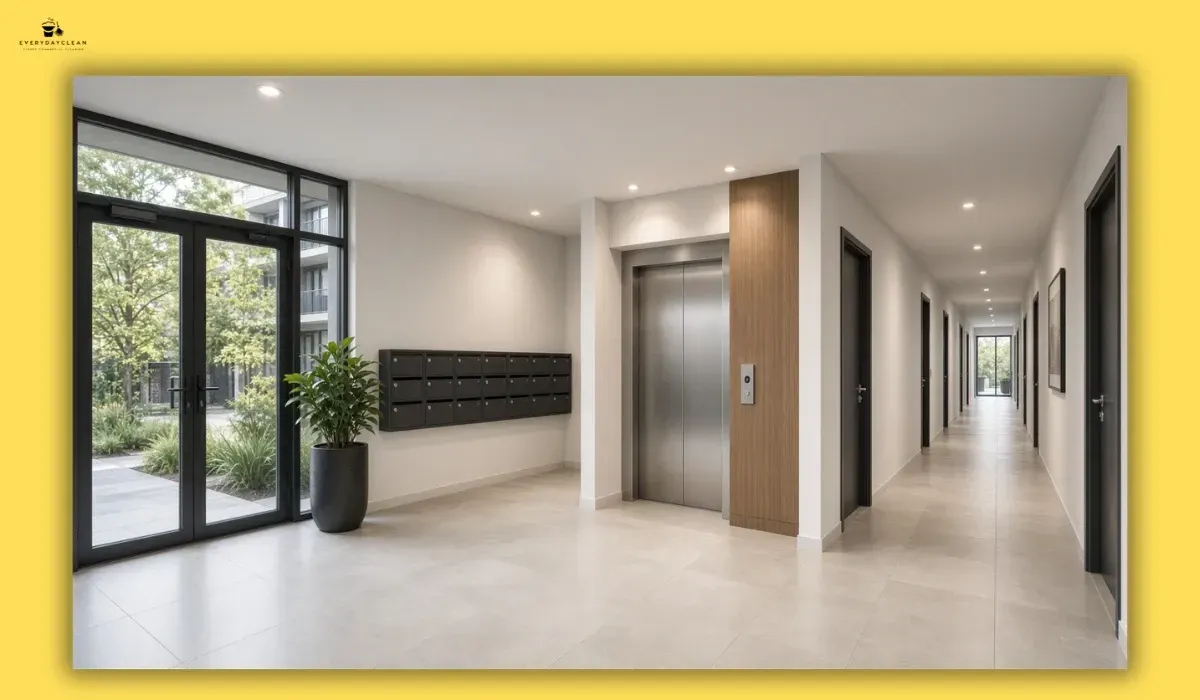
- Lobbies and entrances, the first impression and a high-traffic zone
- Hallways and corridors, cleaned regularly for traffic and presentation
- Lifts, where high-touch points need frequent attention
- Stairs and landings, kept clear and clean for safety
- Shared bathrooms, where hygiene routines matter most
- Bin and recycling rooms, which need regular cleaning and odour control
- Car parks, swept and kept clear of debris and spills
- Outdoor paths and entries, maintained for safety and appearance
- Shared amenities, such as pools, gyms or common rooms where present
Hallways are one of the most visible recurring tasks, and the detail of that work is covered in the guide to hallway cleaning in strata, which sits alongside this broader overview.
Typical Cleaning and Maintenance Frequency
Frequency depends on building size, traffic and the mix of amenities, but most buildings run their work across a few levels.
- Daily or several times weekly: high-traffic cleaning of lobbies, lifts, main corridors and bin areas in busier buildings
- Weekly: general cleaning of shared areas, stairs and bathrooms, adjusted to building size
- Periodic deep cleaning: scheduled monthly or quarterly for carpets, hard floors, glass and detailed common-area work
- Seasonal maintenance: upkeep such as gutter clearing, garden work and external cleaning timed to the season
- Issue-based response: repairs and cleaning triggered by damage, spills, complaints or wear, handled outside the routine schedule
Quieter buildings can run lighter schedules, while high-traffic or amenity-rich complexes need more frequent attention. The schedule is best treated as a baseline that flexes when traffic or issues indicate.
How Responsibilities Are Coordinated
Common property is generally the responsibility of the owners corporation, with day-to-day coordination handled by the strata manager. Exact responsibilities can vary by state, scheme by-laws and management agreement, so strata committees should confirm the current arrangement with their strata manager. Cleaners deliver the recurring work, while maintenance contractors handle repairs and servicing. Clear coordination keeps this running smoothly, and a few practical points make the difference:
- Defined scope of work, so cleaners and contractors know exactly what is included and how often
- Reporting damage and issues, with a simple channel for residents and cleaners to flag problems
- Access arrangements, covering keys, fobs, after-hours entry and secure areas
- Clear responsibility split, so common property and individual-lot issues are not confused
- Regular review, adjusting scope and frequency as the building's needs change
When cleaning and maintenance are coordinated rather than treated as separate silos, issues get noticed and actioned faster, and common areas stay in better condition between deep cleans.
Getting a Strata Cleaning Quote
Understanding scope and frequency is the informational side; pricing and booking are handled separately. For what a service includes and
a strata cleaning quote for your building against your specific common areas and schedule, the service page is the place to start. Detailed cost expectations are set out in the guides on
strata building cleaning cost, so this overview stays focused on what the work involves rather than pricing.
Frequently Asked Questions
What is strata cleaning and maintenance?
Strata cleaning and maintenance covers the recurring cleaning of shared areas and the planned upkeep and repair of common property in a strata building. Cleaning handles hygiene and presentation on a regular cycle, while maintenance handles repairs, servicing and longer-term upkeep. Together they keep common areas such as lobbies, lifts, corridors and bin rooms safe, presentable and usable for residents and visitors.
What is the difference between strata cleaning and strata maintenance?
Cleaning is the recurring work that keeps shared areas hygienic and presentable, such as vacuuming, mopping, bathroom cleaning and bin-room upkeep. Maintenance is the repair and servicing work that keeps the building functional, such as fixing fittings, servicing lifts and restoring surfaces. They overlap in day-to-day operation, and both depend on issues being reported promptly so they can be actioned.
Which areas does strata cleaning cover?
Strata cleaning covers shared parts of the building rather than individual lots, typically lobbies, hallways, lifts, stairs, shared bathrooms, bin and recycling rooms, car parks, outdoor paths and shared amenities such as pools or common rooms where present. High-traffic and high-touch areas like lobbies and lifts usually need the most frequent attention, while other areas fit a weekly or periodic cycle.
Who is responsible for strata common-area cleaning?
Responsibility for common property generally sits with the owners corporation, with day-to-day coordination handled by the strata manager and the work delivered by cleaners and maintenance contractors. A clear scope of work, defined access arrangements and a simple way to report damage keep the arrangement running smoothly. Individual-lot cleaning remains the responsibility of each owner or occupier rather than the strata scheme.
Blog