How to Clean a Colorbond Roof: Safe and Effective
How to clean a Colorbond roof correctly means using mild detergent, warm water, and a soft-bristle brush - then rinsing thoroughly with a low-pressure hose. BlueScope Steel, the manufacturer of Colorbond steel, specifically recommends avoiding abrasive scrubbers, strong solvents (turps, petrol, kerosene, paint thinners), and excessive pressure washing, as these methods strip the protective acrylic coating bonded to the steel substrate.
Colorbond roofing is manufactured with a five-layer system - Zincalume steel core, conversion coating, primer, paint binder, and topcoat - giving it exceptional corrosion resistance and UV stability. Despite this engineering, the surface still accumulates mould, lichen, moss, algae, bird droppings, salt spray, and acid rain particulates over time. Left untreated, these contaminants compromise the coating's integrity, restrict water drainage off the roof, and accelerate surface degradation.
Everyday Clean has provided professional exterior and roof cleaning services across Sydney for over 20 years. The guidance below reflects that hands-on experience alongside BlueScope's official maintenance technical bulletin.
What Damages a Colorbond Roof If Left Uncleaned?
Understanding what builds up on a Colorbond roof surface is the first step to addressing it correctly. The most common contaminants each carry a different risk profile for the steel coating.
The table below identifies the main contaminants, how they form, and their specific threat to Colorbond steel.
| Contaminant | How It Forms | Risk to Colorbond |
|---|---|---|
| Mould and mildew | Moisture retention in shaded areas | Stains paint; can penetrate if coating is compromised |
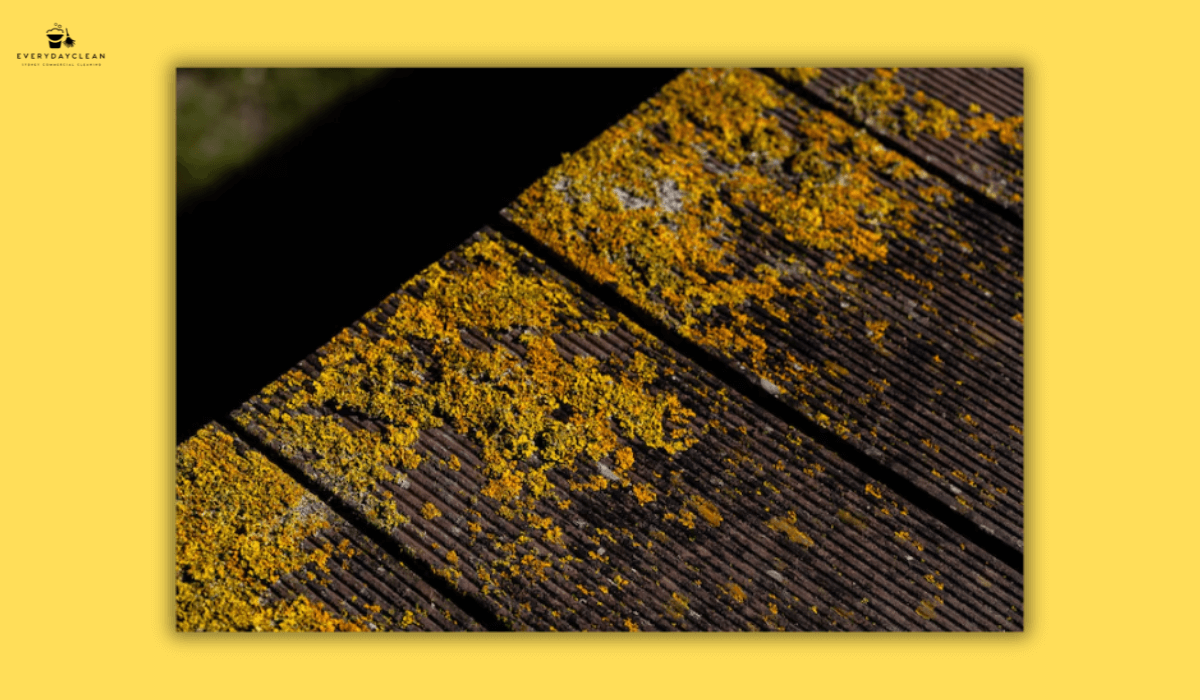
| Lichen | Biological organism feeding on nutrients in debris | Embeds roots into paint surface; difficult to remove |
| Moss | Spore growth encouraged by leaf debris and bird droppings | Retains moisture; restricts roof drainage |
| Algae | Dark streaks from airborne spores | Causes chalking; makes surface dangerously slippery |
| Salt spray | Coastal wind-driven marine aerosol | Accelerates corrosion at cut edges and fasteners |
| Acid rain particles | Industrial and urban air pollution | Erodes paint binder over time; causes discolouration |
| Rust stains | Metal particles from nearby surfaces | Cosmetic staining; can indicate corrosion risk |
One key warning sign to monitor is chalking - a white, powdery residue visible on the roof surface. Chalking indicates the topcoat resin is breaking down under UV exposure and environmental stress. At this stage, routine cleaning alone may not be sufficient, and professional assessment is recommended before more serious damage sets in.
What Do You Need to Clean a Colorbond Roof?
Before starting any cleaning work on a Colorbond roof, gathering the right tools and safety equipment is critical. Using incorrect cleaning agents - particularly bleach products containing benzalkonium chloride (such as "Wet and Walk Away" formulations) - is widely flagged in Australian roofing communities as a risk to the steel's protective coating. BlueScope's position is that a 2% sodium hypochlorite solution is the maximum acceptable concentration for biological growth removal.
The following tools and materials are needed for a safe, effective clean:
- Low-pressure garden hose with adjustable nozzle - for initial rinse and final rinse to flush all detergent residue
- Soft-bristle nylon brush or non-abrasive sponge - for applying cleaning solution without scratching the topcoat
- Mild pure soap or non-abrasive kitchen detergent in warm water - BlueScope's primary recommended cleaning agent
- Formulated metal roof cleaner (sodium- or chlorine-based) - for stubborn staining and biological growth; must be rated safe for pre-painted steel
- Solvent (mineral spirits) - only for isolated, stubborn stains such as tar, grease, graffiti, or paint marks; never applied to the full roof
- Safety equipment - Safe Work Australia-approved ladder, high-grip soled footwear, fall protection harness, and protective eyewear
Safety note: Most falls from residential roofs in Australia occur during DIY cleaning attempts. Colorbond sheeting becomes extremely slippery when wet and algae-covered. If unsure about safe roof access, engage a licensed roof cleaning professional.
How to Clean a Colorbond Roof: Step-by-Step Process
The following steps reflect both BlueScope's official maintenance guidance and the practical approach used by professional roof cleaners across Sydney and broader NSW.
Step 1: Clear loose debris first. Use a soft brush or leaf blower to remove leaves, twigs, dirt, and other loose material from the roof surface and gutters. This prevents debris from spreading during the wet cleaning process and clogging downpipes. Blocked gutters caused by accumulated organic matter are one of the most common maintenance issues on Colorbond roofs and should be cleared at the same time as any roof clean.
Step 2: Perform an initial rinse. Using a garden hose with an adjustable nozzle set to low pressure, rinse the full roof surface from the ridge (highest point) downward toward the gutters. This loosens surface dust and pre-wets the panels before detergent application.
Step 3: Mix and apply the cleaning solution. Prepare a mild solution of pure soap or non-abrasive detergent in warm water. Apply using a soft-bristle brush or sponge, working in manageable sections across the roof. For biological growth, such as moss or lichen, a formulated roof cleaner rated safe for pre-painted steel can be used in place of dish soap.
Step 4: Scrub gently in sections. Work the solution into each panel section using light, circular scrubbing motions. Do not apply heavy pressure - the goal is to lift grime from the coating surface, not abrade through it. Pay particular attention to roof valleys and ridgelines, where debris and moisture accumulate most heavily.
Step 5: Let the solution dwell. Allow the cleaning solution to sit for 5-10 minutes before rinsing. For moss and lichen treatment products, follow the manufacturer's specified dwell time, which may be longer.
Step 6: Rinse thoroughly from top to bottom. This is the most critical step. BlueScope explicitly states that Colorbond steel must be thoroughly rinsed with clean water immediately after cleaning to remove all traces of detergent. Residual detergent accelerates surface degradation if left on the coating.
Step 7: Inspect the roof surface post-clean. Once the roof has dried, inspect for any remaining staining, visible rust spots, loose fasteners, sealant gaps, or areas where the paint coating appears thin or damaged. These issues require professional attention rather than further DIY cleaning.
How to Remove Moss, Mould, and Lichen from a Colorbond Roof
Moss, mould, and lichen are the most common reasons Australian homeowners need a roof clean - and also the most frequently mishandled. The key distinction between these three contaminants matters for the treatment method.
- Mould and algae sit on the surface of the coating and respond well to a mild bleach solution (sodium hypochlorite at 2% concentration) applied with a soft brush, left to dwell, then rinsed off. For minor mould patches, laundry detergent dissolved in warm water is often sufficient. For a detailed approach to treating mould across different surfaces, see Everyday Clean's guide to DIY mould removal.
- Lichen is a more persistent problem. Lichen forms a symbiotic organism (algae and fungi combined) that physically embeds into the topcoat surface with root-like structures called rhizines. Pressure washing alone does not remove lichen effectively - the spores remain and regrow rapidly. The preferred professional approach in Australia is a moss treatment product (often spray-applied), which kills the organism at the spore level and allows rainfall to gradually wash away the dead growth over 2-4 weeks.
- Australian moss treatment specialists note that biological growth on Colorbond roofs typically requires 3-10 years before significant regrowth after a proper kill treatment, compared to 1-2 years when pressure washing is used without a biocide.
- Moss responds to the same moss treatment approach - kill-and-rinse rather than forceful removal. Attempting to scrape or brush away living moss can embed spores deeper into the roof valley areas and gutters, encouraging further colonisation.
Can You Pressure Wash a Colorbond Roof?
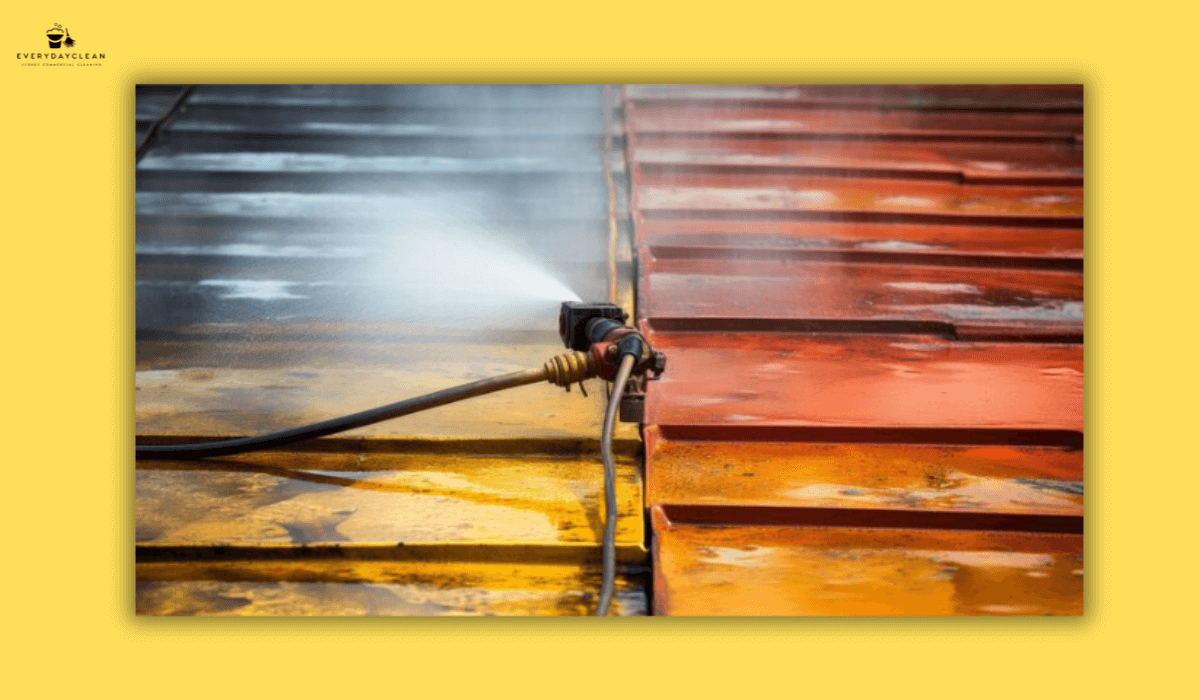
Pressure washing a Colorbond roof is possible, but must be done within strict parameters. This is one of the most debated topics in Australian roofing communities, and the answer is not a simple yes or no.
BlueScope and independent roofing specialists are aligned on these boundaries for safe pressure washing of Colorbond steel:
- Maximum pressure: 1,500 to 2,500 PSI with a wide fan-spray tip; never a concentrated jet nozzle
- Wand distance: Maintain at least 30 cm from the roof surface at all times
- Direction: Work from the ridge downward in slow, side-to-side motions - never spray upward under the sheet laps
- Pressure washer angle: Spray at a low angle (not perpendicular to the surface) to reduce the risk of lifting panel seams
- No high pressure on aged roofs: Older Colorbond with an oxidised or chalking surface should never be pressure-washed. High pressure on a degraded coating removes the oxidised protective layer unevenly, leaving a visually striped roof and exposing the underlying paint film to accelerated UV damage.
For most standard maintenance cleaning on a reasonably new Colorbond roof in good condition, a low-pressure garden hose and soft brush are safer, equally effective, and far less likely to void the BlueScope warranty.
How Often Should You Clean a Colorbond Roof in Australia?
Cleaning frequency for a Colorbond roof depends on the specific environmental conditions of the property, not a fixed calendar. Australian conditions vary significantly, and the right cleaning schedule reflects that.
General guidelines based on environmental exposure:
- Standard suburban areas (low pollution, minimal tree coverage): clean once every 12-18 months
- Coastal properties (within 1 km of the ocean, exposed to salt spray): clean every 6-12 months; BlueScope recommends hose-down at a minimum every 6 months for areas with marine salt spray
- Properties under heavy tree canopy: clean every 6-12 months due to elevated leaf debris, shade, and spore load
- Industrial or high-pollution zones: clean every 6-12 months; airborne particulates and acid rain residue accelerate coating erosion
- Bushfire-prone areas: remove dry leaf litter from valleys and gutters more frequently, as accumulated debris is a direct fire risk under ember attack
A practical indicator that a cleaning is overdue: visible black or green streaks down the roof panels, dark staining in valleys, moss visible from ground level, or gutters overflowing due to organic debris blockage.
When Should You Call a Professional Colorbond Roof Cleaner?
DIY cleaning is achievable for a single-storey property with a low-pitch Colorbond roof in good condition. Beyond that, the risk profile shifts considerably. Professional roof cleaning is recommended when:
- The roof pitch exceeds 25 degrees, making safe ladder access and movement across the surface unreliable
- The property is multi-storey, or the roof edge height exceeds safe working-at-height thresholds under Safe Work Australia guidelines
- Lichen or moss growth covers more than 20-30% of the roof surface, indicating embedded biological colonization requiring biocide treatment
- Chalking (white residue), visible rust spots, or paint delamination are present - these indicate the coating is already compromised and the roof may need restoration rather than cleaning
- The roof is on a rental or commercial property where WHS obligations require licensed workers to perform at-height tasks
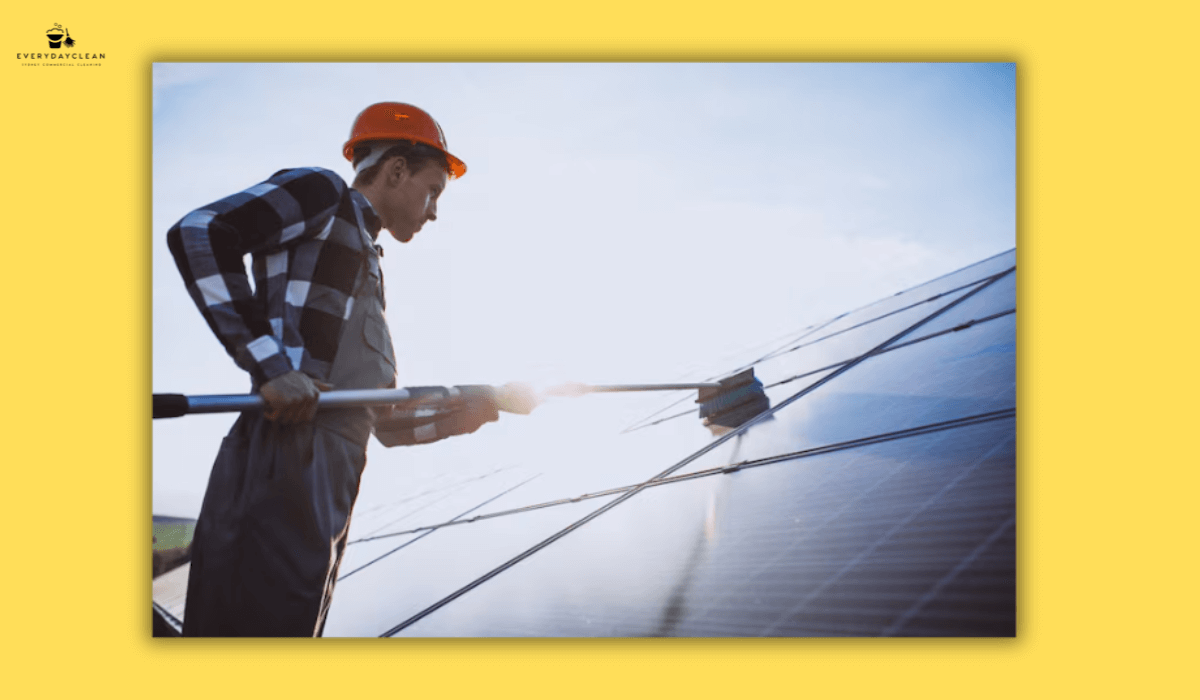
Everyday Clean's team of 20 police-checked professionals operates across Sydney with over 20 years of experience in exterior and roof cleaning for residential and commercial properties. All work is carried out with appropriate height safety equipment and within BlueScope's recommended cleaning specifications, so the manufacturer's warranty is preserved. Properties with solar panels installed on Colorbond roofing benefit from combining solar panel cleaning with a roof clean in a single service visit, reducing access costs and ensuring both the panels and the steel substrate are maintained together.
FAQs About Cleaning a Colorbond Roof
The following questions appear frequently among Australian homeowners researching how to clean a Colorbond roof - covering everything from product safety to cleaning intervals and DIY feasibility.
Can you use bleach to clean a Colorbond roof?
Bleach (sodium hypochlorite) can be used on a Colorbond roof, but only at a diluted concentration of 2% or lower - the concentration level endorsed by BlueScope Steel in their maintenance technical bulletin. At this concentration, it is effective at killing mould, algae, and lichen spores without degrading the acrylic topcoat. What must be avoided are proprietary outdoor cleaning products containing benzalkonium chloride (marketed as "spray and walk away" formulations). These chloride-based compounds are designed to remain on the surface for extended periods, which gradually causes corrosion at cut edges and fasteners on Colorbond steel. Always rinse thoroughly after any bleach application - residual chemical contact with the coating accelerates degradation over time.
Can you use vinegar to clean a Colorbond roof?
Vinegar (diluted acetic acid) can remove paint marks, surface mineral stains, and light discolouration on Colorbond steel without scratching the topcoat. The method involves mixing white vinegar with water in roughly equal parts, applying it to the affected area with a soft brush or sponge, leaving it for up to an hour, then rinsing thoroughly with clean water. Vinegar is not effective at killing biological growth like lichen or mould at the spore level - for those contaminants, a sodium hypochlorite solution or a formulated roof cleaner rated for pre-painted steel is more appropriate. Vinegar should never be used at full concentration on Colorbond, and should always be followed by a thorough water rinse to prevent acid residue sitting on the coating.
How do you get lichen off a Colorbond roof?
Lichen on a Colorbond roof cannot be effectively removed by pressure washing or scrubbing alone. Lichen is a composite organism (fungi and algae in symbiosis) that uses thread-like rhizines to anchor into the coating surface. Physically removing it without killing the spores results in rapid regrowth, typically within 6-18 months. The most effective treatment in the Australian market is a spray-applied moss and lichen treatment product, which chemically kills the organism at the spore level. Within 2-4 weeks, the dead lichen changes colour (yellowing or browning) and gradually washes away with normal rainfall. Following treatment, a targeted hose-down of roof valleys and gutters clears residual organic matter. Professional moss treatment services in Australia typically guarantee no new lichen growth for a minimum of 3 years post-treatment.
What cleaning products are safe for Colorbond roofing?
Safe cleaning products for Colorbond roofing are those that are non-abrasive, pH-neutral or mildly alkaline, and free of strong solvents and chloride compounds. BlueScope's official recommendation is mild pure soap or non-abrasive kitchen detergent dissolved in warm water as the primary cleaning agent for general maintenance. For biological growth, a formulated metal roof cleaner using chlorine- or sodium-based compounds (at safe concentrations) is appropriate. Products to avoid include turpentine, petrol, kerosene, paint thinners, acetone, and any product containing benzalkonium chloride. Solvents like mineral spirits can be used in small quantities on isolated stains (tar, grease, paint) but must not be applied across the full roof surface and must be followed by immediate rinsing.
Is it safe to walk on a Colorbond roof to clean it?
Walking on a Colorbond roof is possible but carries significant safety risks that must be managed carefully. Wet Colorbond panels - particularly those covered in algae or lichen - are highly slippery surfaces. If roof access is necessary, Safe Work Australia recommends a securely positioned, approved ladder, high-grip footwear free of debris, and a fall arrest harness attached to a fixed anchor point. When walking on corrugated or ribbed Colorbond sheets, step in the flat pan section of the sheet directly above a roof batten (the structural timber underneath), not on the raised ribs. Walking on the ribs or in unsupported mid-span areas can permanently deform the sheet. For most homeowners, cleaning a Colorbond roof from a ladder using an extended soft brush and hose attachment - without stepping onto the roof surface at all - is the safer and more practical approach.
Everyday Clean provides professional roof and exterior cleaning across Sydney. With over 20 years of experience and a team of 20 police-checked professionals, Everyday Clean delivers results that protect your roof coating, preserve your warranty, and extend the life of your Colorbond investment.
Blog