Strata Hallway Cleaning Guide & Common Area Checklist
Hallway Cleaning for Strata Buildings: What Common Areas Need and How Often
Common areas in a strata building carry a different cleaning challenge from any single tenancy. Nobody owns the hallway, so nobody feels personally responsible for it, yet every resident and visitor passes through it every day. The result is that build-up happens gradually and often goes unnoticed until it becomes noticeable, which is usually when a resident or the strata committee asks why it looks the way it does.
A workable common-area cleaning schedule separates the tasks that need attention every visit from those that accumulate slowly and need a dedicated effort weekly or periodically. Getting that split right keeps each visit manageable and prevents slow-accumulating grime from becoming a bigger job later.
What strata common-area cleaning covers
Common areas vary between buildings, but most strata properties share the same core set: the entry lobby, ground-floor hallways, upper-floor corridors, lifts, fire stairs and stairwells, letterbox areas, bin rooms, and any shared amenities such as a gym, pool surrounds or rooftop areas.
Each has its own soil profile. Lobbies and entries take the most tracked-in dirt. Lifts concentrate fingerprints, floor grime and odour in a small enclosed space. Bin rooms carry the heaviest hygiene load. Upper corridors are lower traffic but still need regular attention because dust, fire door handles and corridor windows accumulate without being noticed.
Regular tasks: every service visit
These are the tasks where a skipped visit shows immediately.
Entry and lobby
- Sweep or vacuum the entry floor, including mat edges and corners
- Clean entry glass doors and sidelights, checking both the push side and pull side for fingerprints
- Wipe letterbox surrounds, intercom panels and entry touchpoints
- Mop the lobby floor with a neutral cleaner
- Check the entry mat and replace or clean if soiled
- Report items left in the entry lobby, or move them only according to the building procedure
Ground-floor and upper-floor hallways
- Sweep or vacuum corridor floors
- Spot-clean marks on walls around light switches, door handles and push plates
- Clean door handles on fire doors and common-area access points
- Mop hard corridor floors with a neutral cleaner
- Report any burnt-out common-area lights found during the visit
Lifts
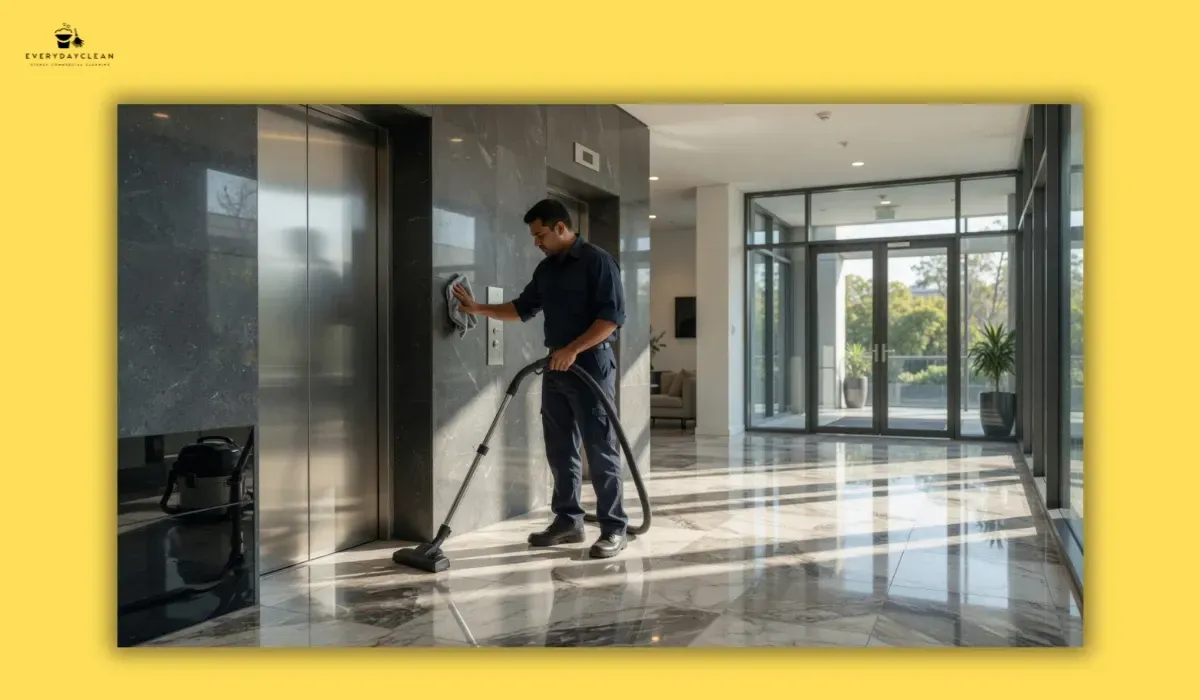
- Vacuum or sweep the lift floor
- Wipe lift walls, handrails, button panels and door edges
- Clean the floor threshold and tracks, which collect grit quickly
- Check for and remove any graffiti, stickers or damage on the interior
- Mop the lift floor
- Note any faults or damage in a building report
Stairwells and fire stairs
- Sweep each landing and stair tread
- Wipe handrails on every floor
- Remove rubbish left on landings
- Check fire door handles and closers for grime build-up and report any mechanical issues found
Bin rooms
- Remove any bins left outside the bin room
- Sweep the bin room floor
- Spot-wipe the surrounding wall and door where bins contact them
- Replace any bin liners that have been left out
Safety notes for common-area cleaning
Wet floor signs go out before mopping starts, not after. In a building where residents can appear from a lift or a door at any point, this is not optional. Signs stay in place until the floor is dry enough that slip risk has passed.
Cleaning in lifts with the door held open creates a pinch point for residents. Lift cleaning is best done quickly with the door propped, or timed between peak morning and evening periods.
Weekly tasks: what accumulates between visits
Hallways and corridors
- Full wall wipe-down at handle and light-switch height
- Skirting boards along corridors
- Air vent covers and door frames
- Detail clean around fire hose reels and extinguisher brackets
- Windowsill ledges on corridor windows
Entry and lobby
- Entry glass cleaned more thoroughly than the daily spot clean, including frames and sills
- Lobby feature surfaces such as mailbox fronts, signage boards and directory panels
- Any seating or feature furniture in the lobby
- Light fittings within reach, dusted and wiped
Lifts
- Full interior wipe of all wall panels, including panel joints and corners
- Ceiling vent if accessible
- Full threshold and track clean
Bin rooms
- Sweep and mop the full bin room floor
- Wipe bin surrounds and any fixed shelving
- Check drainage and report blockages
Stairwells
- Full handrail clean on all floors
- Wall spot-clean at landing height
- Sweep under any propped items or fixture brackets
Periodic tasks: what needs dedicated attention
Some tasks need more time or equipment than a regular visit allows, and trying to squeeze them into a standard visit means they get done poorly or not at all.
- Carpet cleaning in carpeted corridors: regular vacuuming is not a substitute for extraction, which most carpeted hallways need at least a couple of times a year depending on traffic
- Hard floor machine scrubbing: grout lines, vinyl edges and concrete floors accumulate embedded soil that mopping does not reach
- High-level dusting: the tops of fire doors, high corridor ledges and light fittings above reach
- Window cleaning for corridor and stairwell windows
- Bin room pressure washing or deep clean
- Car park level if applicable: the connection between the car park and the building foyer is one of the most heavily tracked areas in any strata building
- Gym, pool surround, BBQ area and other shared amenities: these carry their own specific requirements depending on the facilities in the building
Periodic tasks are worth listing explicitly in any cleaning agreement so they are not assumed and not accidentally skipped.
Buildings with restricted access hours, booked lifts or resident movements at certain times may need cleaning scheduled around those patterns. Confirm access arrangements and any strata committee requirements with the building manager before the schedule is finalised.
How to tell if the common-area schedule is too light
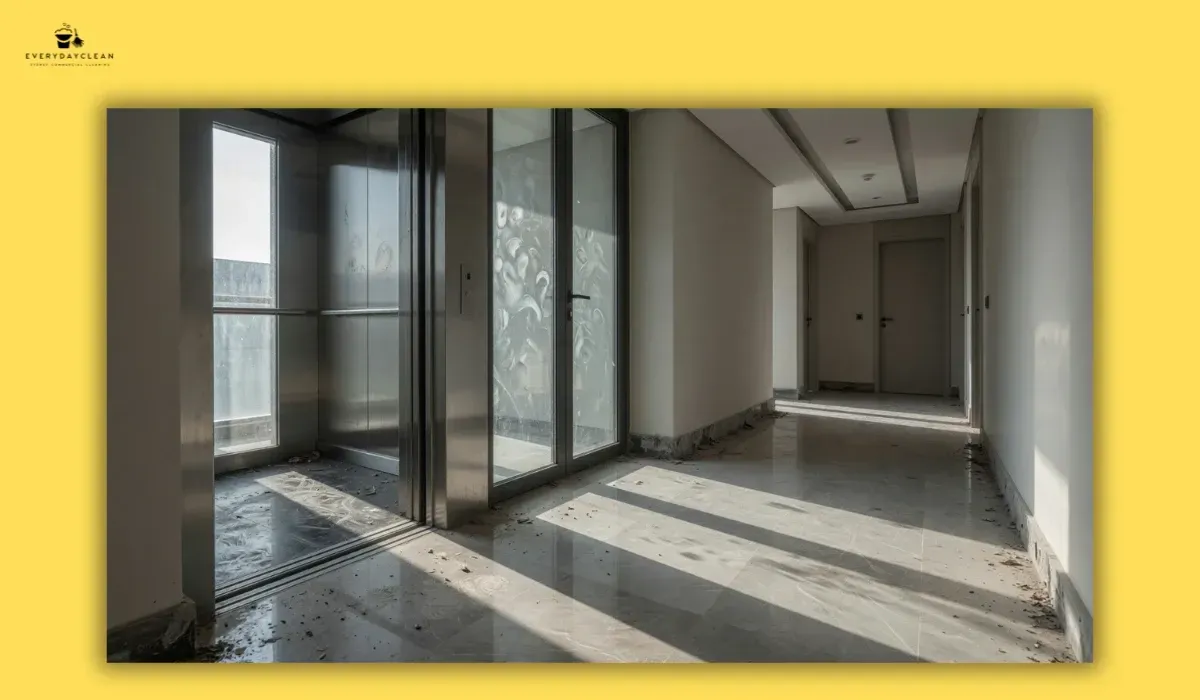
A schedule that looks complete on paper can still be under-delivering. These signs usually appear before a formal complaint does.
- Lift floors have visible grime at edges and in the threshold track after only a few days
- Entry glass carries fingerprints and marks from the previous day's traffic consistently
- Skirting boards in corridors show dust build-up within a week of a visit
- Bin room has persistent odour between visits
- Residents or the strata committee ask about the clean more than occasionally
- Periodic tasks keep being deferred because there is no time in the regular visit
- High-touch points such as intercom panels and lift buttons feel tacky or show residue
Any one of these can reflect an access issue or a difficult building rather than an under-scheduled clean. Multiple patterns appearing together usually indicate the visit frequency, duration or scope needs adjusting.
The most common cause is that the schedule was set for the building when it was newer or less occupied, and has not been revised since. Traffic patterns, resident numbers and fit-out changes all shift what the building actually needs from a common-area clean.
Frequently asked questions
What is included in strata hallway cleaning?
Strata hallway and common-area cleaning typically covers vacuuming and mopping corridor floors, cleaning entry glass and touchpoints, lift interiors including floor, walls and button panels, stairwell handrails and landings, letterbox surrounds, bin rooms and fire door handles. Frequency varies between daily, weekly and periodic tasks depending on the area and the building's traffic.
How often should strata common areas be cleaned?
Lobbies, lifts and high-traffic entries usually need attention every service day. Upper-floor corridors and stairwells can often be cleaned less frequently depending on occupancy. Weekly tasks cover walls, skirtings, window ledges and detail cleans. Periodic tasks such as carpet extraction, floor machine scrubbing and high-level dusting are typically scheduled separately rather than included in routine visits.
Who is responsible for common-area cleaning in a strata building?
Common-area cleaning is usually arranged by the owners corporation or strata committee, though responsibilities vary depending on the strata scheme, its by-laws and the relevant state or territory rules. If there is uncertainty about what the building's cleaning obligations cover, the strata manager or committee is the right starting point rather than assuming a standard arrangement applies.
Why do lifts need more frequent cleaning than corridors?
Lifts concentrate a building's entire foot traffic into a small enclosed space with limited ventilation. Every resident and visitor passes through them, and the floor, walls and button panels accumulate grime, fingerprints and odour quickly. A corridor deteriorates visibly over days; a lift can show visible soil within hours at peak occupancy.
What should be included in a strata cleaning agreement?
A strata cleaning agreement should set out which areas are covered, the frequency of each service, what tasks are included in a regular visit versus what is periodic, how access is managed, how faults and building issues are reported, and the process for adjusting the schedule if needs change. Periodic tasks such as carpet extraction and floor scrubbing should be listed explicitly rather than assumed.
Keeping common areas at a consistent standard
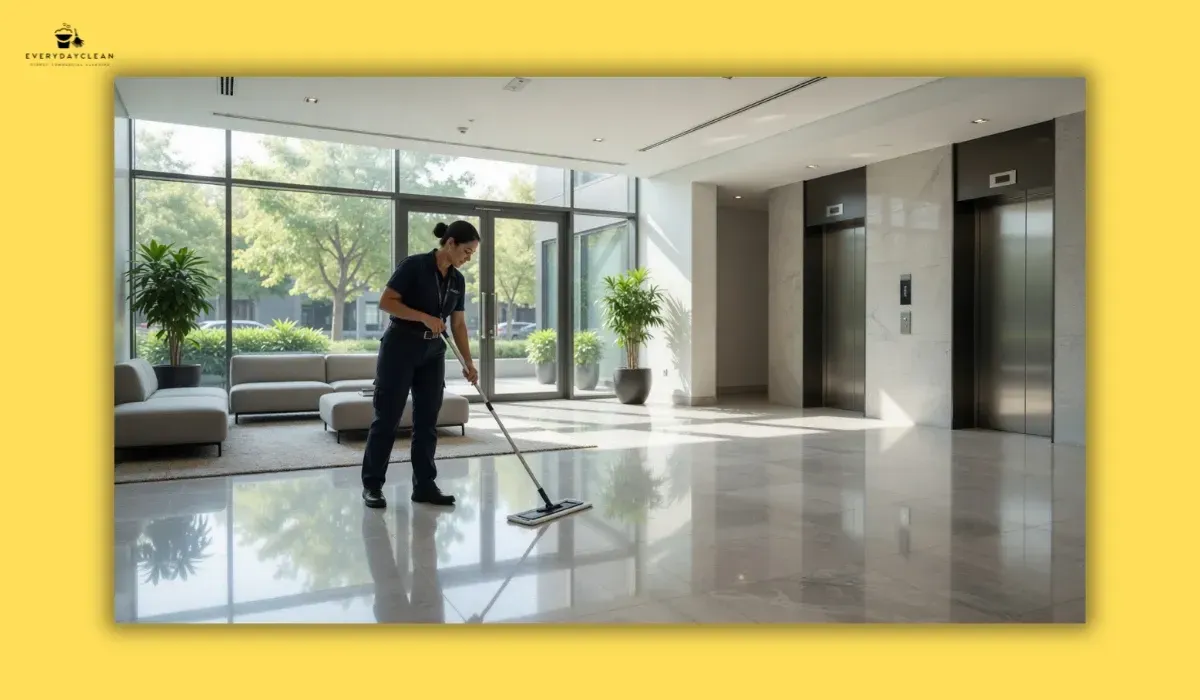
The difference between a common area that looks well managed and one that does not is usually consistency rather than intensity. A light clean done reliably every visit maintains a much better standard than an occasional thorough clean with long gaps in between.
Review the schedule at least once a year, or when occupancy or building use changes. Common areas that were manageable with a twice-weekly visit can quickly fall behind when a new tenancy brings more residents, a gym opens or the building ages and accumulates more surface grime than it used to.
Where the building's common-area scope needs to be set or reviewed, strata cleaning arrangements are typically agreed with the strata committee or building manager, with task lists and frequency matched to the building's layout, occupancy and access requirements.
Blog