Office Kitchen Cleaning: Checklist, Rules, Etiquette and Signs
Office Kitchen Cleaning: Checklist, Rules, Etiquette and Signs
Office kitchen cleaning covers the daily wipe-downs, weekly deep tasks, house rules, and shared responsibility needed to stop a communal kitchen turning into the messiest room in the workplace. Most office kitchens fail not because nobody cleans, but because nobody has agreed who does what and how often.
This guide brings together a practical checklist, clear rules, etiquette guidance for shared use, and ready-to-use signs, so office managers and admin teams have one place to set expectations instead of relying on vague reminders.
If your office kitchen keeps sliding back into mess within days of a clean-up, the problem is usually unclear ownership, not lack of effort. Fix that with a written checklist, a short set of rules, and signage that removes ambiguity about what's expected.
Office Kitchen Cleaning Checklist
A useful checklist splits tasks by how often they need doing, since daily hygiene tasks and deeper weekly tasks require different levels of effort and different owners.
| Task | Frequency | Who usually handles it |
|---|---|---|
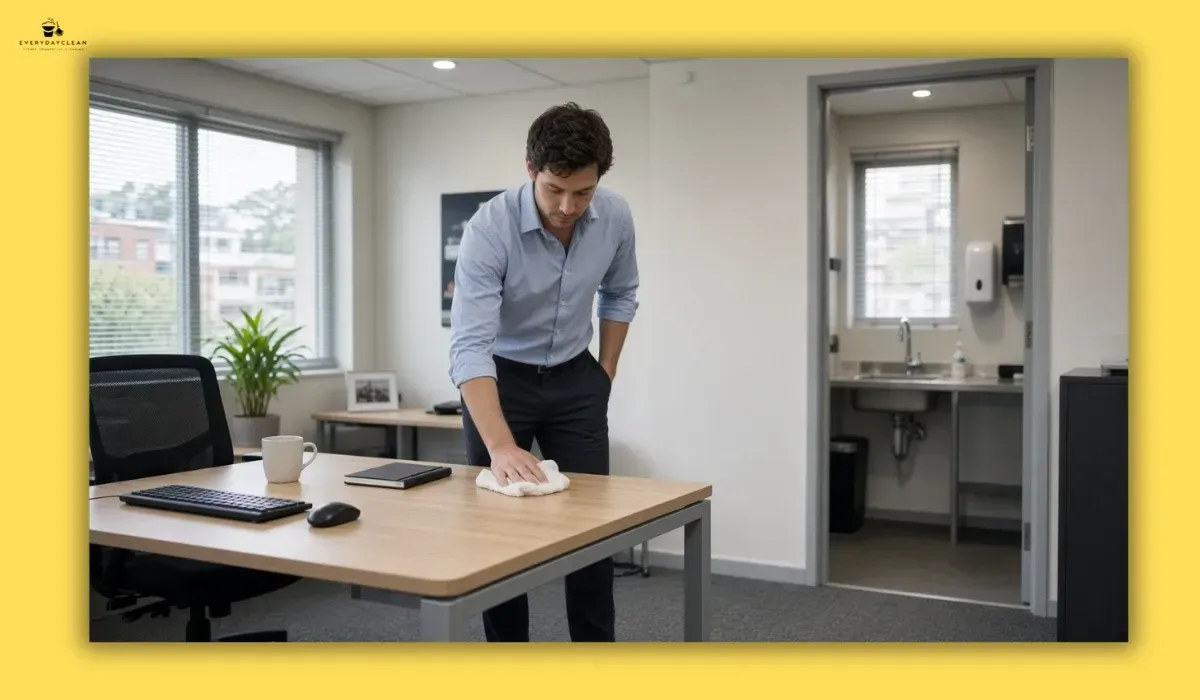
| Wipe benches and food-prep surfaces | Daily | Staff after each use, or rostered cleaner |
| Wash and put away personal dishes | Daily | Individual staff member |
| Wipe down microwave interior and exterior | Daily to weekly | Staff after spills; deeper clean by cleaner |
| Clean sink and taps | Daily | Rostered cleaner or in-house team |
| Empty general and food waste bins | Daily | Rostered cleaner or in-house team |
| Check and clear the fridge | Weekly | Admin team or rostered staff |
| Deep clean fridge interior | Monthly | Cleaner or admin team |
| Wipe down shared appliances (kettle, toaster) | Weekly | Cleaner or in-house team |
| Mop kitchen floor | Weekly | Cleaner or in-house team |
| Disinfect high-touch points (handles, switches) | Daily to weekly | Cleaner or in-house team |
For a broader view of how kitchen tasks fit into overall workplace cleaning, see this
office cleaning duties list covering daily and weekly responsibilities across the whole office, not just the kitchen.

Office Kitchen Cleaning Rules
Rules work best when they're short, specific and enforceable, rather than a long list nobody reads. A practical starting set:
- Clean up after yourself immediately, not "later"
- Personal dishes are washed and put away the same day, not left in the sink overnight
- Food is labelled with a name and date before going in the fridge
- Spills are wiped immediately, especially on floors where they become a slip hazard
- Shared appliances are wiped down after each use if visibly dirty
- Expired or unlabelled food is removed from the fridge on a set day each week
- Strong-smelling food is reheated with consideration for shared air space
Rules only work if they're visible and consistently applied. A rule that exists only in an email sent once tends to be forgotten within a fortnight. Pairing rules with printed signage, covered below, is what makes them stick.
Office Kitchen Cleaning Etiquette
Etiquette covers the informal behaviours that rules alone don't capture. These are the things that make a shared kitchen pleasant to use, beyond strict hygiene requirements.
- Don't leave dishes for someone else to wash, even if you're in a hurry
- Replace milk, coffee or shared condiments if you finish them, or flag it to whoever manages supplies
- Avoid leaving strong-smelling leftovers in the office bin; use the food waste bin if one is provided
- Clean up crumbs and spills around the toaster and kettle, not just the bench directly under your own plate
- Give others space during peak lunch periods rather than monopolising the microwave or sink
- If you notice a hygiene issue, such as a full bin or a spill, report it rather than
Etiquette breaks down fastest in kitchens with high staff turnover or a mix of full-time, part-time and visiting staff, since new starters don't inherit the informal norms automatically. Including a short kitchen etiquette note in onboarding materials helps close that gap.

Office Kitchen Cleaning Signs to Use
Signs work because they remove ambiguity at the exact moment someone is deciding whether to clean up or walk away. They're most effective when placed directly at the point of use, not on a noticeboard people rarely look at.
Practical, copyable examples:
- "Please wash and put away your dishes"
- "Wipe the bench after use"
- "Label food before storing it in the fridge"
- "Remove food from the fridge every Friday"
- "Report spills immediately"
- "Rinse your mug before placing it in the sink"
- "This microwave is cleaned weekly. Please wipe spills as they happen."
Place dish and bench signs directly above the sink or on the splashback, fridge signs on the fridge door at eye level, and spill-reporting signs near the entrance where they're seen on the way in rather than on the way out.
Caring For Key Kitchen Areas
Benches and food-prep surfaces. These are food-contact surfaces, so they need a food-safe cleaner rather than a general-purpose chemical that isn't labelled for that use. Always check the product label before applying anything to a surface where food is prepared.
Fridge. Weekly checks catch expired or unlabelled food before it becomes a bigger problem. A full interior clean, including shelves and door seals, should happen at least monthly, more often if spills go unaddressed.
Microwave. Splatters left uncleaned bake on and become harder to remove daily. A quick wipe after each use prevents the need for a heavier scrub later.
Sink. As a high-moisture, high-touch area, the sink and surrounding taps need daily attention to avoid becoming a source of lingering odour or bacterial buildup.
Bins. General waste and food waste should ideally be separated and emptied daily, particularly in warmer months when food waste attracts pests faster.
Dishes. Dishes left in the sink overnight are one of the most common sources of office kitchen complaints. A same-day rule, backed by signage, is more effective than an unenforced expectation.
Shared appliances. Kettles, toasters and coffee machines accumulate crumbs and residue quickly with shared use. A weekly wipe-down, with spot cleaning after visible spills, keeps them functional and hygienic.
Floors. Spills should be addressed immediately as a slip hazard, with a full mop at least weekly to manage crumbs and general foot traffic buildup.
High-touch points. Fridge handles, microwave buttons, tap handles and cupboard pulls are touched constantly throughout the day and benefit from more frequent disinfection than general surfaces.
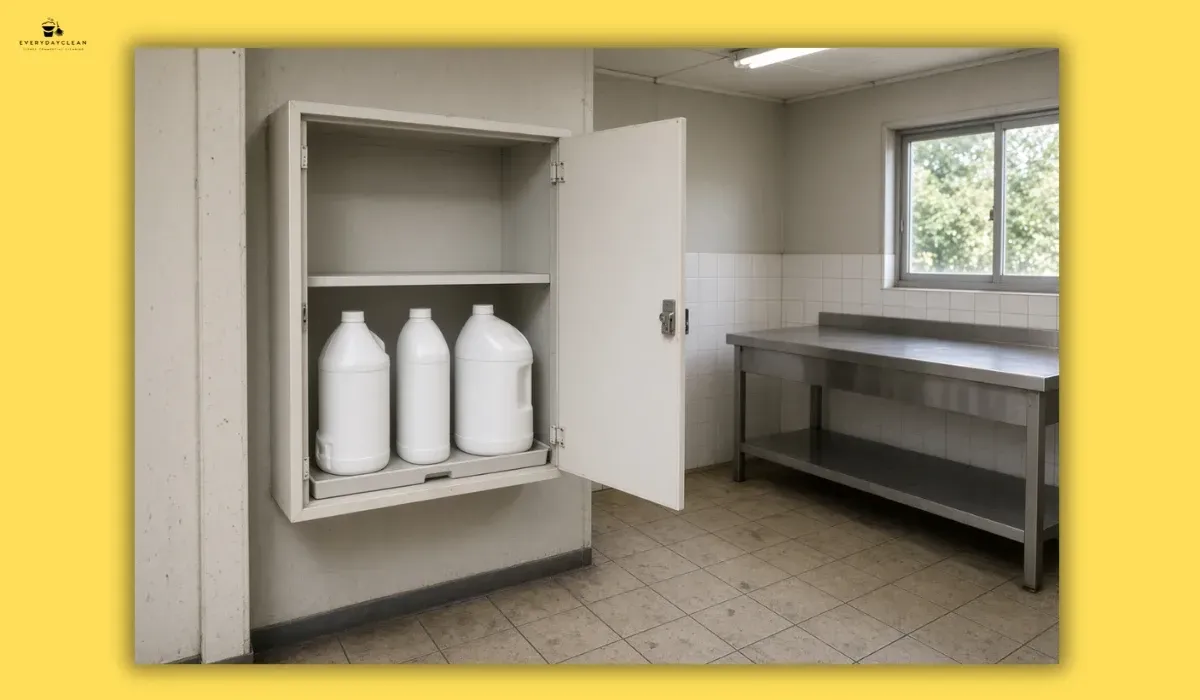
Never mix cleaning chemicals, since some combinations can produce harmful fumes. Always follow the product label and, where provided, the Safety Data Sheet (SDS) for storage, dilution and use. Store chemicals away from food and food-prep areas, and keep them out of reach in shared spaces where non-cleaning staff have access.
For guidance on choosing appropriate products, dispensers, PPE and consumables for a shared kitchen, see this
office cleaning supplies guide.

Who Is Responsible For Office Kitchen Cleaning
Responsibility typically splits three ways. Staff are responsible for their own mess: dishes, spills they cause, and food they store. A rostered in-house team or admin staff usually handle daily hygiene tasks like bins, sink and bench disinfection when no formal cleaning service is in place. A professional cleaning service is generally the more consistent option for daily hygiene tasks and weekly deep cleaning, particularly in larger offices where relying on staff goodwill alone tends to break down over time.
If your office kitchen sits within a broader workplace cleaning schedule, this weekly office cleaning checklist covers how kitchen tasks fit alongside the rest of the office.
When To Bring In Professional Support
Internal rules and rostering work well for small teams with consistent staff and a workable ratio of people to kitchen size. It becomes harder to maintain hygiene standards through informal arrangements once the office grows, staff turnover increases, or nobody has clear accountability for daily tasks.
At that point, a professional office cleaning service in Sydney can take on the daily and weekly hygiene tasks that are hardest to sustain through staff goodwill alone, freeing admin teams from having to chase compliance with kitchen rules on top of their other work.

FAQs
How often should an office kitchen be cleaned?
Daily tasks like bench wiping, sink cleaning and bin removal should happen every working day, with deeper tasks like fridge interiors and appliance cleaning handled weekly to monthly. High-traffic kitchens with more staff generally need daily attention across most tasks rather than relying on a weekly-only schedule.
Who is responsible for cleaning the office kitchen?
Responsibility usually splits between staff cleaning up their own mess, an in-house team or rostered staff handling daily hygiene tasks, and a professional cleaning service for consistent daily or weekly deep cleaning. Without a clear split, kitchens are one of the first shared spaces to become inconsistent.
What should be included in an office kitchen cleaning checklist?
A useful checklist covers benches, the fridge, microwave, sink, bins, dishes, shared appliances, floors and high-touch points, each assigned a frequency and an owner. Splitting tasks into daily, weekly and monthly groups makes the checklist easier to follow and audit.
What are good office kitchen cleaning rules?
Effective rules are short and specific: clean up immediately, wash dishes the same day, label fridge food, wipe up spills straight away, and remove expired food on a set day each week. Rules work best when paired with visible signage rather than existing only as a one-off email or policy document.
Should offices use cleaning signs in the kitchen?
Yes, signs placed at the point of use, such as above the sink or on the fridge door, are more effective than relying on memory or a general email reminder. Simple, direct wording like "wipe the bench after use" tends to get followed more consistently than longer instructional text.
When should a professional cleaner handle the office kitchen?
A professional cleaner becomes the more practical option once staff turnover, office size or inconsistent internal follow-through make it hard to maintain daily hygiene standards through informal arrangements alone. This is especially relevant for offices without a dedicated in-house cleaning role.
Blog