Magazine Office Cleaning: Media & Publishing Workspaces
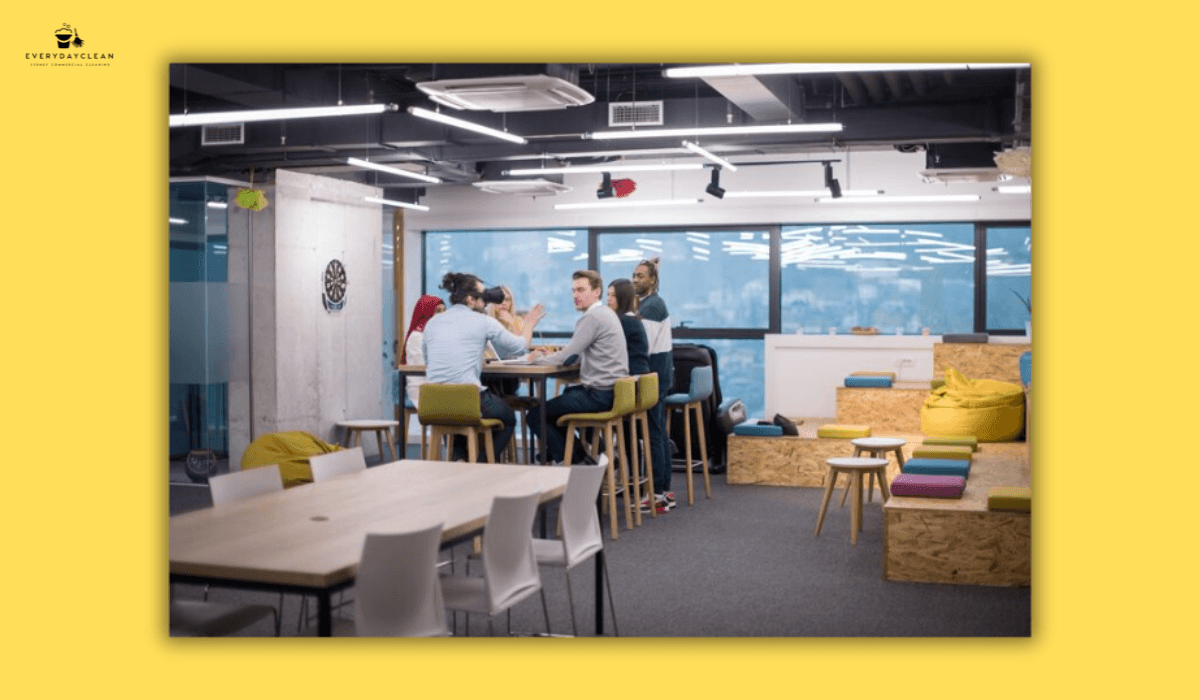
Magazine office cleaning is a professional cleaning service calibrated to the physical and operational realities of media publishing workspaces - editorial floors, design studios, advertising sales suites, and production areas where print and digital magazine content is created. Pricing starts from $45 per hour for standard editorial suites, rising to $55 per hour for larger, multi-zone publishing floors in inner-city locations. The physical environment of a magazine office is genuinely different from a corporate administrative workspace: paper density is extreme, large-format printers cycle continuously, mood boards accumulate physical samples, and creative deadlines mean the office is often occupied at irregular hours in the lead-up to issue close.
Magazine Offices Create Cleaning Conditions That Standard Commercial Protocols Don't Address
A generic commercial clean designed for a uniform open-plan office misses the specific contamination patterns and surface types that define a publishing environment. The differences are structural, not minor.
- Paper volume and dust accumulation are significantly higher than in standard offices. An active editorial team generates printed proofs, layout mockups, back-issue reference copies, press releases, contributor submissions, and clippings at a volume that standard commercial cleaning schedules do not account for. Paper fibres are a distinct class of particulate matter - finer than standard office dust, more electrostatically adherent to monitor screens, and capable of accumulating in ventilation intakes and under raised flooring faster than standard dust accumulation models predict. HEPA-filter vacuums are the correct tool for this environment; standard brush-roll vacuum units redistribute paper fibres rather than capturing them.
- Ink residue from large-format and colour-accurate printing equipment requires specific cleaning protocols. Magazine offices routinely operate Epson, Canon, or HP large-format printers calibrated for colour-critical proof output. The cartridge-based ink systems in these machines can produce fine airborne overspray and surface residue on nearby furniture and floor areas. Solvent-based cleaning sprays applied near colour-calibrated monitor screens or printer sensor arrays can cause calibration drift and hardware damage. Anti-static, screen-safe wipes and dry microfibre cleaning around printing equipment are the appropriate method, not spray-and-wipe techniques from a general cleaning kit.
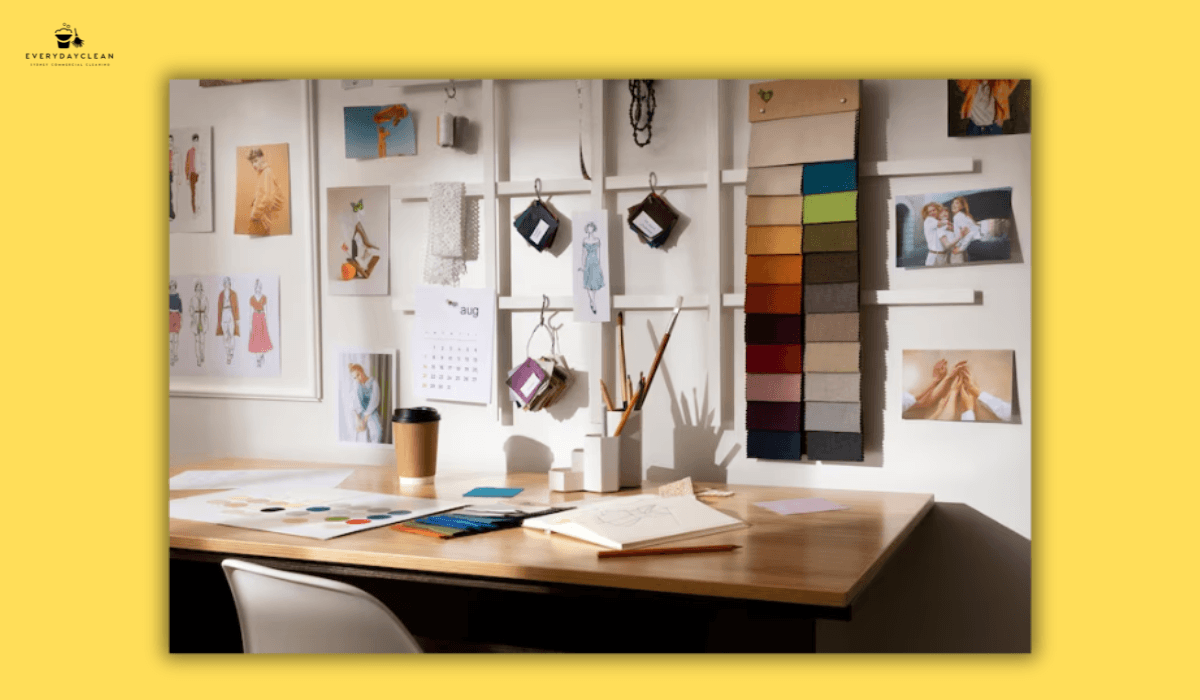
- Creative workspaces contain surface types and physical objects that require discretion, not just hygiene. Mood boards, editorial flat-plans pinned to walls, layout proofs spread across light tables, photography contact sheets, and physical product samples (for fashion, food, or beauty editorial pages) must be cleaned around without repositioning, photographing, or discarding. The clean-around-in-place protocol that applies in legal and financial offices has equal relevance in a magazine workspace - an art director's half-assembled issue flat-plan is not waste, and a fashion editor's sample wall is not clutter to be tidied.
- Irregular occupancy hours create scheduling complexity. Magazine offices operate in deadline cycles: calm in the early weeks of an issue, intense in the final 48-72 hours before close. A cleaning schedule that assumes 9 am-5 pm Monday-Friday occupancy fails on the close week, when editorial and design staff may be present until midnight. After-hours flexibility and a willingness to communicate around the production calendar are operational requirements, not optional service features.
What Magazine Office Cleaning Covers
A correctly scoped magazine office clean is structured around six functional areas with different contamination profiles and handling requirements.
Editorial Desk and Workstation Cleaning
Editorial desks in a magazine environment carry dual or triple monitors, keyboards, mice, reading lamps, printed reference materials, and often a physical sample or two from the current editorial focus. Cleaning around these workstations uses anti-static microfibre cloths on desk surfaces, dry screen-safe wipes on monitors (never spray cleaners near screens calibrated for colour accuracy), and compressed air on keyboard surfaces to remove paper fibre accumulation between keys.
Documents and proofs in progress are left exactly as positioned. Any printed material visible on a desk is treated as active work product, regardless of appearance.
Design Studio and Art Department Cleaning
The design studio - home to art directors, graphic designers, and photo editors - typically contains drawing tablets, colour-calibrated monitors, wide-format print samples, and pinned layout references. These surfaces require the same electronic-safe cleaning approach as editorial workstations, with additional care around drawing tablet surfaces, which accumulate skin oils and can be scratched by abrasive cleaning cloths.
Wide-format printer areas are cleaned with HEPA filter vacuums to capture paper fibre and ink particulate without redistributing them. Floor areas beneath and adjacent to large-format printers accumulate a fine coating of ink mist and paper fibre that standard mop-and-bucket methods smear rather than remove.
Advertising Sales Suite Cleaning
The advertising sales team occupies the most client-facing part of a magazine office. This area receives external visitors - media buyers, advertising agency representatives, and brand marketing contacts - and must maintain a presentation standard consistent with the magazine's visual identity. Surfaces, seating, entry glass, and any branded display materials are cleaned to a higher presentation threshold than the editorial floor. High-touch surfaces, including door handles, meeting room table edges, and presentation equipment, are disinfected using TGA-listed products at every routine visit.
Print Room and Production Area
The print room in a magazine office - where proofs, press sheets, and bound dummy issues are printed and reviewed - generates significant paper waste and ink residue. This area requires a designated cleaning protocol: HEPA vacuuming of floor and surface areas adjacent to printers, emptying of the proof waste bin without disturbing any current-job proofs still in progress, and dry wiping of non-electronic surfaces. Print room floors typically accumulate paper trimming scraps, chip-board off-cuts, and binding remnants that must be removed systematically.
Kitchen and Shared Amenity Areas
Magazine offices tend toward long working days around deadlines, which means kitchen and break areas see heavier use than standard office environments. Bench surfaces, appliances, sink surrounds, and shared equipment are cleaned at every scheduled visit. Coffee machine surrounds require specific attention in creative workplaces - espresso residue and milk splatter accumulate faster in environments with high coffee consumption and less attention paid to tidy-up habits during deadline pressure.
Bathroom Maintenance
Client-facing bathrooms - used by advertising visitors and contributors as well as staff - require the same presentation standard as any professional services environment. Toilet, basin, mirror, tap fittings, floor mopping, and paper product restocking are completed at each scheduled visit.
Recommended Cleaning Frequency for Magazine Offices
| Office Profile | Team Size / Activity | Recommended Frequency | Estimated Monthly Cost (2026) |
|---|---|---|---|
| Small indie title, editorial-only (under 80 sqm) | 3-8 staff, low visitor traffic | 2-3x per week | $350 - $650 |
| Mid-size publisher, editorial + ad sales (80-200 sqm) | 10-25 staff, regular client visits | Daily or 5x per week | $950 - $1,900 |
| Large multi-title publishing house (200-500 sqm) | 25-80 staff, high volume | Daily + issue-close deep clean | $2,000 - $5,000 |
| Post-issue deep clean (any size) | After a close week | As required | $300 - $800 per event |
Note: Publishing offices located in inner-city precincts such as Pyrmont, Surry Hills, and the CBD - historically home to media companies including News Corp, Bauer Media, Pacific Magazines, and independent publishers - typically sit at the upper end of cost estimates. After-hours access during the close week, building management coordination, and Cleaning Services Award 2020 evening penalty rate loadings all contribute to higher per-visit costs.
For magazine offices based in the central business district,
office cleaning Sydney CBD services from Everyday Clean include building management coordination, after-hours access capability, and police-checked staff familiar with the security and access protocols of commercial high-rise buildings.
Selection Criteria for a Magazine Office Cleaning Provider
The physical complexity and irregular schedule of a publishing environment narrow the field of suitable cleaning providers considerably. The following criteria are the minimum standard.
- Experience with creative and media workplace environments - Ask the provider whether they have experience cleaning editorial, design studio, or media agency spaces. Providers without this experience tend to treat flat-plan proofs as waste and approach wide-format printer areas with general-use sprays.
- HEPA-filter vacuum equipment as standard - Not all commercial cleaning companies carry HEPA-filter vacuums. For a magazine office with high paper fibre particulate, this equipment is not optional.
- Electronic-safe and anti-static cleaning materials - Confirm that staff carry anti-static screen wipes and dry microfibre cloths rated for electronic surface cleaning, not just general cotton or synthetic cloths.
- Clean-around-in-place protocol - Written policy preventing staff from repositioning, photographing, or discarding any visible work materials, printed matter, or physical samples.
- Flexible scheduling around production calendars - The cleaning provider should be willing to adjust the schedule for issue close weeks. This is a direct logistical requirement, not a negotiable service feature.
- Police-checked staff - All cleaning personnel entering the premises should hold a current National Police Check, particularly where the office handles pre-publication editorial content, unreleased brand campaign materials, or confidential advertiser briefs.
- Public liability insurance at $10 million minimum - Verify currency of cover before signing. Magazine offices often contain expensive design hardware and colour-critical equipment with high replacement costs.
Everyday Clean's office cleaning Sydney service includes police-checked cleaners, HEPA-equipped teams, electronic-safe cleaning protocols, and flexible scheduling designed around the operational rhythms of media and creative workplaces across the greater metropolitan area.
Magazine Office Cleaning Pricing in 2026
Three pricing models apply to magazine and publishing office cleaning in 2026:
- Hourly rate: $45-$55 per hour for CBD and inner-city locations. $38-$48 per hour for suburban publishing offices in areas such as the Inner West, North Shore, and Eastern Suburbs. Rate includes labour under the Cleaning Services Award 2020, HEPA-equipped cleaning gear, and standard consumables.
- Monthly flat fee: The standard model for ongoing magazine office contracts. Set from estimated hours per visit multiplied by agreed visit frequency, providing a budget
- Uncertainty for the publication's operations budget.
- Issue-close deep clean rate: A separate per-event rate applied after the close of the week, when the office accumulates higher-than-normal paper waste, food residue from extended working hours, and general disorder. Priced from $300-$800, depending on office size and scope.
For a complete breakdown of how commercial office cleaning costs are structured, see the commercial office cleaning cost guide.
Annual contracts typically deliver 10-20% cost savings compared to month-by-month arrangements. A
commercial cleaning contract that specifies the production-calendar-aligned scheduling arrangement, issue-close provisions, and equipment requirements protects both the publisher and the cleaning provider from ambiguity around service expectations.
FAQs about The Magazine Office Cleaning in Sydney
Magazine offices and publishing companies ask a consistent set of questions when selecting a professional cleaning service. The answers below address the specific operational concerns of a media editorial environment.
How Do Professional Cleaners Handle Proofs, Flat-Plans, and Editorial Materials?
The correct protocol is the same clean-around-in-place standard used in legal and financial environments: no cleaning staff member touches, moves, reorders, photographs, or discards any visible printed material, pinned reference, physical sample, or flat-plan item. This applies to what might appear to be waste - an issue flat-plan, a stack of proof corrections, or a wall of editorial image printouts has active professional value that an external cleaner cannot assess. The cleaning provider should have a documented policy on this, and it should appear as a specific clause in the cleaning contract. If the publisher needs printed proofs or old issues disposed of, this must be explicitly instructed in writing to the cleaning team - not assumed to be part of standard paper waste removal.
How Should Magazine Office Cleaning Be Scheduled Around Issue Deadlines?
A shared production calendar is the most practical solution. Magazine publishers know their close dates months in advance; sharing these dates with the cleaning provider at contract commencement allows the schedule to be structured proactively. During standard production weeks (weeks one to three of a typical monthly cycle), the agreed schedule runs normally. In the week of and immediately following close, two adjustments are typically needed: cleaning times are shifted to later in the evening or early morning to accommodate staff presence, and a post-close deep clean is booked as a separate service event to reset the office after the intensity of deadline week. Cleaning providers without experience in deadline-driven creative environments often fail to anticipate this need, resulting in missed cleans during the close week and a heavily accumulated backlog immediately after.
Does Magazine Office Cleaning Require Specialist Equipment?
Yes, in two specific areas. First, HEPA-filter vacuums are necessary for magazine offices because paper fibres from continuous high-volume printing create a particulate load that standard vacuum units recirculate rather than capture. A HEPA filter physically traps particles as small as 0.3 microns, preventing paper fibre from being redistributed across clean surfaces. Second, colour-calibrated monitors, drawing tablets, and proof printers require anti-static, solvent-free cleaning materials. General multipurpose spray cleaners used on colour-calibrated screens interfere with screen coatings, degrade anti-glare surfaces, and in some cases affect the colour calibration profiles that design and photo editing teams rely on for accurate print-to-screen colour matching. Any cleaning provider operating in a design-studio environment should carry and use only dry anti-static screen wipes on these surfaces.
Is Magazine Office Cleaning Tax Deductible in Australia?
Yes. Professional cleaning of a magazine or publishing office is classified as an ordinary business operating expense under the Income Tax Assessment Act 1997 (Cth), fully deductible in the income year the expense is incurred. This applies equally to small independent magazine operations structured as sole traders or partnerships, and to larger publishing companies operating as Pty Ltd entities. The ATO treats commercial office cleaning as an expense directly related to the income-producing activities of the business, provided the cleaned premises are used for business operations. Retain all invoices and service records. For publishing operations that occupy a portion of a home (a home office used exclusively for editorial work), the deductible proportion of cleaning costs is calculated based on the business-use percentage of the dwelling, consistent with ATO home office expense guidance.
A Clean Creative Space Produces Better Work
There is a measurable relationship between physical environment quality and cognitive output. A Princeton University Neuroscience Institute study found that visual clutter in the workspace competes for attention by continuously activating the brain's threat-monitoring impulses - a direct distraction tax on the concentration required for editing, design, and creative direction. In a magazine office, where the primary output is a considered, visually precise product, the environment in which that work happens matters.
A well-maintained magazine office is not an aesthetic luxury. It is an operational condition - for the editorial team producing the work, for the advertising team presenting it to clients, and for the production team getting it to print on schedule.
Everyday Clean provides professional
office cleaning services for magazine offices, media companies, creative agencies, and publishing workspaces across the greater metropolitan area. With over 20 years of experience, police-checked staff, HEPA-equipped cleaning teams, and production-calendar-aware scheduling, the team is equipped to maintain the specific environment that a publishing workplace requires.
Blog