Environmentally Friendly Cleaning Products & GECA Guide
Environmentally friendly cleaning products are formulated to minimise harm across three distinct dimensions - chemical toxicity, biodegradability, and packaging waste - and the product that performs well on one dimension can still fail badly on the others. Terms like "natural," "green," and "eco-safe" carry no legal definition under Australian Consumer Law and require no third-party evidence to use, which means the most important skill when selecting these products is knowing how to separate genuine environmental credentials from marketing language. This guide covers the ingredient categories that define a genuinely low-impact product, the certification systems that verify those claims, the ingredients to actively avoid, and how commercial cleaning programs incorporate these standards without compromising cleaning performance.
Key Takeaways
- GECA (Good Environmental Choice Australia) is the only Australian ecolabel accredited by the Global Ecolabelling Network, making it the single most reliable verification standard for commercial and residential cleaning products.
- "Natural," "green," "eco-safe," and "non-toxic" are unregulated marketing terms under Australian Consumer Law - any product can carry them without evidence, certification, or independent testing.
- Plant-based surfactants derived from coconut or sugar cane replace petroleum-based surfactants (such as alkylphenol ethoxylates) that disrupt aquatic hormonal systems and do not fully biodegrade in standard sewage treatment.
- Concentrated formats reduce packaging waste more significantly than any label claim - a 1:64 concentrate in a single 1-litre bottle displaces 64 single-use bottles while also reducing transport emissions.
- The ingredients that cause the most documented environmental harm - phosphates, phthalates, triclosan, chlorine bleach, and synthetic musks - remain present in products displaying "eco" imagery, green packaging, and leaf logos without certification to back the claim.

The 8 Markers of a Genuinely Environmentally Friendly Cleaning Product
The checklist below is structured around verifiable criteria - not marketing language. Each marker corresponds to a specific, testable product characteristic that distinguishes products with genuine environmental credentials from those making unsubstantiated claims. Apply all eight criteria before classifying any product as environmentally responsible for procurement purposes.
1. Third-Party Certification - Not Self-Declared Claims
The single most reliable indicator of an environmentally friendly cleaning product is independent, third-party certification from an accredited ecolabelling body. Self-declared claims such as "eco-friendly," "plant-based," or "natural" require no testing, no independent audit, and no ongoing compliance monitoring to use. Third-party certification requires all three.
The key certifications to look for in the commercial cleaning sector:
- GECA (Good Environmental Choice Australia) - the gold standard for the commercial market. GECA is an independent, not-for-profit organisation and the only Australian member of the Global Ecolabelling Network (GEN), which includes Green Seal (USA), the Nordic Swan (Nordic countries), and the EU Ecolabel (Europe). GECA-certified products are assessed for ingredient toxicity, biodegradability, packaging recyclability, manufacturing practices, and the supplier's broader environmental compliance record. Achieving GECA certification requires meeting standards that exceed any other Australian ecolabelling program.
- Australian Certified Organic (ACO) - verifies that certified organic ingredients are present and that sourcing is sustainable. Relevant for products where botanical ingredient integrity is a priority.
- B Corp Certification - a corporate-level accreditation, not a product-level certification, but indicates that the manufacturer meets rigorous and verified standards for environmental and social performance across the entire business.
- Sensitive Choice (National Asthma Council Australia) - confirms that the product formula does not trigger asthma or respiratory irritation, which is particularly relevant for cleaning products used in offices, healthcare environments, and childcare facilities.
In commercial cleaning contracts, GECA certification is the benchmark standard. Products used in sensitive environments - medical centres, aged care facilities, and childcare centres - are frequently required to carry GECA accreditation as a contract condition.
2. Plant-Based Surfactants - Not Petroleum-Derived Alternatives
Surfactants are the active cleaning agents in every spray, liquid, and detergent - they reduce surface tension and allow water to lift and suspend soil. The environmental distinction between petroleum-derived and plant-based surfactants is significant and measurable.
Petroleum-derived surfactants, including alkylphenol ethoxylates (APEs) and nonylphenol ethoxylates (NPEs), have been identified by the US EPA and European regulators as endocrine-disrupting compounds that interfere with the hormonal systems of aquatic organisms. They do not fully break down in standard sewage treatment and accumulate in waterways. APEs are banned in cleaning products across the EU but remain in use in unregulated products marketed elsewhere.
Plant-based alternatives - surfactants derived from coconut, sugar cane, or corn - biodegrade rapidly under standard conditions and do not bioaccumulate in aquatic ecosystems. Legitimate eco-certified products disclose their surfactant source on the ingredient list. Phrases to look for: "coconut-derived surfactant," "sugar-based surfactant," "coco glucoside," or "decyl glucoside." Phrases that do not indicate plant origin: "surfactant," "non-ionic surfactant," or "biodegradable surfactant" without specifying the source.
3. Full Ingredient Disclosure
An environmentally friendly cleaning product discloses its full ingredient list - not a selective ingredient highlight. The practice of listing only favourable ingredients while omitting problematic ones is a common greenwashing technique. Under Australian Consumer Law, misleading representations about product characteristics are prohibited, but the law does not require full ingredient disclosure for cleaning products, which creates a significant transparency gap.
Brands with genuine environmental credentials publish complete ingredient lists on their packaging and website. Look for:
- All cleaning agents are listed with their chemical name and source
- Preservatives identified by name (not grouped under "preservative system")
- Fragrance components disclosed, particularly any synthetic musks or phthalate-based fragrance compounds
- pH level stated, which informs surface compatibility and skin safety
If a product displays eco claims but lists only three or four ingredients while a competitor's equivalent product lists twelve, that discrepancy warrants investigation before procurement.
4. Biodegradability Under Standard Conditions
Biodegradability is a term that requires precise qualification to be meaningful. "Biodegradable" without a defined timeframe and test condition is effectively an empty claim - all organic matter biodegrades eventually. The relevant standard is ready biodegradability as defined by the Organisation for Economic Cooperation and Development (OECD 301 series tests), which requires that a substance breaks down by at least 60% within 28 days under defined aerobic conditions.
Products certified by GECA, EU Ecolabel, or Green Seal are required to meet ready biodegradability standards for all surfactants and active cleaning agents. Products that simply state "biodegradable" without specifying the test standard used provide no verifiable claim.
This matters specifically for commercial cleaning contexts where large volumes of product enter wastewater systems. A 50-person office using a non-readily-biodegradable disinfectant across 250 working days generates a cumulative aquatic chemical load that is directly preventable by switching to a certified biodegradable equivalent.
5. Absence of High-Risk Ingredients
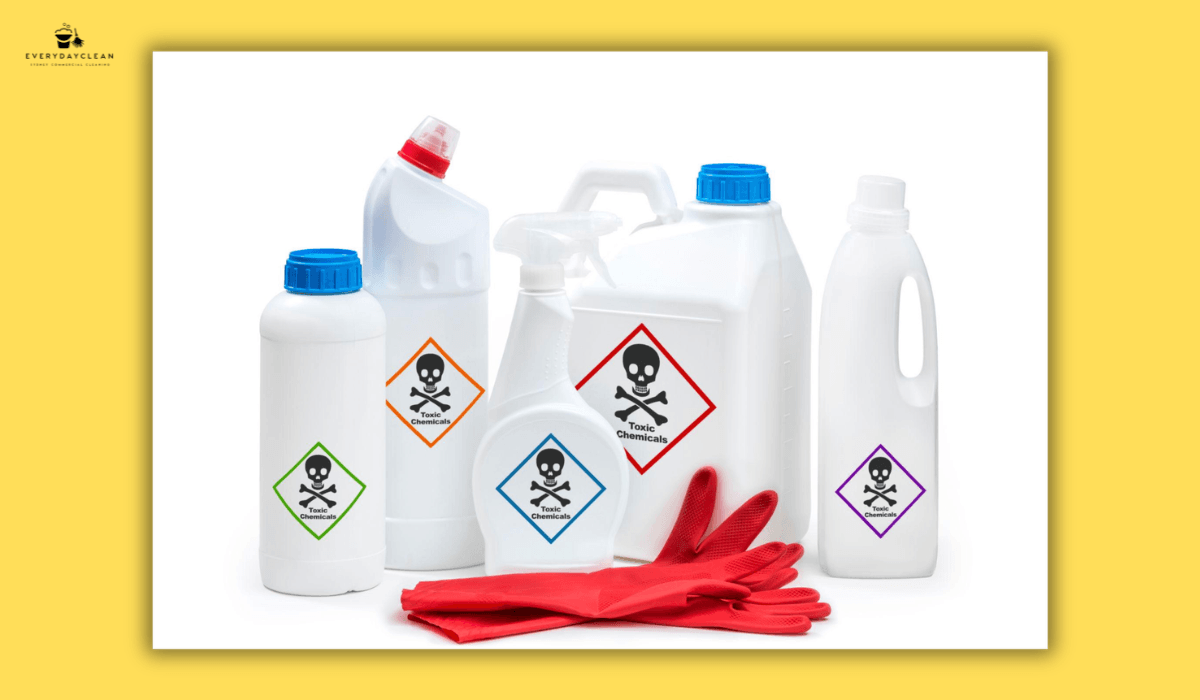
The following ingredient categories cause documented environmental or human health harm and should be absent from any product genuinely classified as environmentally friendly. Presence of any of these - regardless of eco labelling on the packaging - disqualifies the environmental claim:
- Phosphates - accelerate algal bloom in freshwater systems by acting as a fertiliser, depleting dissolved oxygen and killing aquatic life. Banned from laundry detergents in many Australian states, but still found in some dishwashing and surface cleaning products.
- Chlorine bleach (sodium hypochlorite) - generates chlorinated organic compounds (organochlorines) when it reacts with organic matter in wastewater. Several organochlorine compounds are persistent environmental pollutants. Bleach also degrades indoor air quality through chlorine gas off-gassing at standard use concentrations.
- Triclosan and triclocarban - antimicrobial agents found in some cleaning and personal care products. Both are classified as persistent bioaccumulative toxicants and have been linked to hormonal disruption in aquatic organisms and the development of antibiotic-resistant bacterial strains.
- Phthalates - used as synthetic fragrance carriers and plasticisers. Phthalates are classified as endocrine disruptors and are frequently hidden under the ingredient label "fragrance" or "parfum" because fragrance formulations are protected as proprietary.
- Quaternary ammonium compounds (Quats) at high concentrations - while Quats have legitimate use in healthcare disinfection, they persist in waterway sediments, show toxicity to aquatic invertebrates, and have been linked to occupational respiratory sensitisation with repeated exposure. Products relying solely on Quats as a disinfection mechanism are not appropriate as general-purpose eco cleaners.
- Synthetic musks (nitro musks and polycyclic musks) - fragrance compounds that bioaccumulate in fatty tissue of aquatic organisms and have been detected in human breast milk and blood. They are not disclosed individually under the "fragrance" umbrella label.
6. Sustainable and Recyclable Packaging
Packaging is a critical dimension of environmental impact that product labels routinely understate. Over 700 million laundry detergent containers enter landfills in comparable markets annually, and less than 10% of all plastic is successfully recycled. For a cleaning product to make credible environmental claims, its packaging must address this directly.
Packaging standards for genuinely eco-responsible products:
- Concentrate formats - a concentrated product that dilutes 1:32 or higher before use generates a fraction of the packaging waste of a ready-to-use equivalent. Commercial-grade concentrates at 1:64 or 1:128 dilution ratios are the most packaging-efficient format available. Many GECA-certified commercial cleaning ranges are sold exclusively in concentrate form.
- (PIC) and be made from materials accepted by the kerbside recycling system in major Australian jurisdictions (primarily PET #1 and HDPE #2).
- Refill systems - products sold with a permanent dispenser bottle and a refill tablet, pouch, or concentrate dramatically reduce single-use plastic consumption. Refill formats reduce carbon emissions from transport and manufacturing by eliminating the weight of water in ready-to-use formulations.
- Packaging disclosure - genuinely sustainable brands specify the recycled content percentage in their packaging, the recyclability of all components (including pump mechanisms and spray heads, which are often non-recyclable), and their take-back or return program if applicable.
7. Low or Zero Volatile Organic Compound (VOC) Content
Volatile organic compounds (VOCs) are carbon-based chemicals that evaporate at room temperature, contributing to indoor air pollution and, at outdoor scale, to ground-level ozone formation. Many conventional cleaning products - including surface sprays, glass cleaners, floor polishes, and disinfectants - contain significant VOC loads from solvents, synthetic fragrances, and preservative systems.
In commercial settings such as offices, healthcare facilities, and schools, repeated daily exposure to VOC-containing products affects indoor air quality and is a compliance consideration under Safe Work Australia's workplace environment standards. GECA-certified products are required to meet VOC limits as part of the certification criteria. For the office cleaning context specifically, VOC content in cleaning chemicals is a legitimate occupational health consideration under the Work Health and Safety Act 2011 (NSW), particularly in buildings with limited ventilation.
Ingredient categories that contribute most significantly to VOC load in cleaning products: glycol ether solvents, synthetic pine oil, synthetic citrus solvents, and petroleum distillates. Plant-derived terpene solvents from essential oils (lemon myrtle, eucalyptus, tea tree) are biogenic VOCs with a different atmospheric chemistry profile and substantially lower human toxicity.
8. Verified Performance - Not a Trade-Off for Environmental Credentials
A common objection to environmentally friendly cleaning products is that they underperform relative to conventional chemical alternatives. This is a legitimate concern when applied to unverified eco products, but not when applied to GECA-certified or third-party-tested formulas. CHOICE Australia's independent testing of eco-friendly multipurpose and bathroom cleaners found that two Earth Choice products achieved a 95% Expert Rating - outperforming several conventional chemical products in the same category. The Ecostore Antibacterial Bathroom and Shower Cleaner Refill Concentrate achieved a 90% Expert Rating in the same testing series.
Performance verification matters in commercial cleaning specifically because underperforming products create a false economy: more product is used per application, cleaning time increases, and additional labour cost offsets any cost saving from the eco product's price. Certified products with disclosed concentration ratios and independent performance testing provide the only reliable basis for commercial procurement decisions. For eco-friendly cleaning products used in commercial contract cleaning, performance data should be requested from the supplier alongside the certification documentation.

How to Identify Greenwashing in Cleaning Products
Greenwashing is the practice of using environmental language or imagery to create the impression of sustainability without the substance to support it. The following signals indicate that a product's eco claims warrant scrutiny before purchase:
- Green or earth-toned packaging with leaf and plant imagery - visual cues designed to trigger eco associations without any certification backing them. Packaging aesthetics are not regulated and cannot be relied upon as a proxy for environmental performance.
- Vague claim language - phrases like "kind to the planet," "eco-conscious formula," "naturally inspired," or "environmentally responsible" have no regulatory definition and require no substantiation.
- Selective ingredient disclosure - listing three plant-derived ingredients prominently while omitting synthetic preservatives, fragrance compounds, or Quat-based disinfectants from view.
- Single positive attribute highlighted to imply overall sustainability - for example, "100% recyclable bottle" on a product that contains phosphates and synthetic musks. Recyclable packaging does not make the formula environmentally safe.
- No independent certification mark - a genuine eco product carries at least one third-party mark (GECA, ACO, Sensitive Choice, B Corp) that can be verified independently. Absence of any certification mark, combined with eco claims, is the defining indicator of greenwashing.
The Australian Competition and Consumer Commission (ACCC) has taken enforcement action against greenwashing claims under the Australian Consumer Law's prohibition on misleading and deceptive conduct. Businesses procuring cleaning products for commercial facilities should document the certification basis for any eco claims made to clients, tenants, or stakeholders.
FAQs
The following questions reflect the most common search queries around environmentally friendly cleaning products, covering ingredient concerns, certification verification, commercial suitability, and the distinction between eco and non-toxic classifications.
Are environmentally friendly cleaning products as effective as conventional cleaners?
Yes, when selected on the basis of third-party certification and independent performance testing. The confusion on this point comes from conflating unverified eco products - which may genuinely underperform - with certified products that must meet efficacy criteria as part of the certification standard. CHOICE Australia's independent testing of eco multipurpose cleaners found that GECA-certified and plant-based products matched or exceeded conventional products in performance scores. In commercial settings, highly concentrated GECA-certified formulas often deliver better cost-per-application outcomes than ready-to-use conventional products because the concentration allows correct dilution for each task type rather than a single generic formulation. Performance issues with eco products are almost always a function of incorrect dilution, wrong product for the surface type, or insufficient dwell time - not an inherent limitation of the formula.
What ingredients should be avoided in environmentally friendly cleaning products?
The ingredients with the most significant documented environmental harm are phosphates, chlorine bleach (sodium hypochlorite), triclosan, phthalates (often hidden under "fragrance"), alkylphenol ethoxylates (APEs), synthetic musks, and high-concentration quaternary ammonium compounds (Quats). Phosphates trigger algal blooms in freshwater systems. Triclosan and APEs are classified as endocrine disruptors that accumulate in aquatic organisms. Phthalates disrupt hormonal systems and are frequently unlisted because fragrance formulations are classified as proprietary. A product can carry a "natural" or "plant-based" label while still containing one or more of these ingredients, which is why checking the full ingredient list - or relying on GECA or equivalent certification - is the only reliable verification method.
How do environmentally friendly cleaning products differ from non-toxic cleaning products?
"Environmentally friendly" and "non-toxic" address different harm vectors and are not interchangeable. A product classified as environmentally friendly has low environmental impact - biodegradable formula, minimal aquatic toxicity, sustainable packaging, low VOC content - but may still cause skin or respiratory irritation in occupational use. A product classified as non-toxic is safe for human contact and inhalation at normal use concentrations, but may contain ingredients that are persistent environmental pollutants. The best-performing products for sensitive commercial environments - including medical facilities, childcare centres, and offices with poor ventilation - carry certifications that address both simultaneously: GECA for environmental performance, and Sensitive Choice (National Asthma Council Australia) for occupant safety. For professional eco-friendly office cleaning programs, dual-certified products are the appropriate standard.
Can environmentally friendly cleaning products be used in commercial and medical settings?
Yes - provided they carry the appropriate certification for the environment in which they are used. GECA-certified commercial cleaning concentrates are formulated specifically for the cleaning frequency, surface types, and contamination loads found in commercial facilities. For medical and healthcare environments, disinfection performance must also meet the requirements of the Therapeutic Goods Administration (TGA) for listed disinfectants, which assesses efficacy against specific pathogen types. A product that is both GECA-certified and TGA-listed satisfies both environmental and infection-control requirements simultaneously. Standard consumer eco products - including supermarket-shelf plant-based sprays - are not formulated for commercial soil loads or the dilution and application equipment used in contract cleaning. The commercial carpet cleaning and surface cleaning products used in professional facilities contracts are commercial-grade GECA-certified concentrates, not retail eco products repackaged for commercial use.
How can businesses verify that their cleaning contractor is using genuinely eco-friendly products?
Request documentation - specifically the Safety Data Sheet (SDS) and the certification number for each product in use. GECA certification numbers are publicly verifiable on GECA's website. The SDS discloses the full ingredient list, hazard classification, biodegradability data, and disposal requirements - providing a direct basis for assessing whether the product meets the environmental standards being claimed. Businesses should also ask for the dilution rate and application method for each product, as correct dilution is critical for both cleaning performance and environmental compliance. An underdiluted concentrate increases chemical load unnecessarily; an overdiluted product underperforms. For organisations with sustainability reporting obligations under climate reporting regulations or corporate ESG frameworks, documented product certification provides the evidence trail required for verified environmental claims. Everyday Clean's approach to eco-friendly cleaning solutions includes full product documentation available to commercial clients on request.
Selecting Environmentally Friendly Cleaning Products That Deliver
Environmentally friendly cleaning products perform their stated purpose - reduced environmental harm - only when the claim is backed by third-party certification, full ingredient disclosure, verified biodegradability, and packaging designed to minimise waste across the product lifecycle. The eight markers in this guide provide a practical verification framework that applies equally to household procurement and commercial cleaning contracts.
The distinction between genuine environmental performance and greenwashing is not subtle once the criteria are understood: certified products carry verifiable accreditation, disclose all ingredients, specify biodegradability test standards, and provide performance data. Uncertified products with eco imagery do none of these things. For commercial facilities with sustainability obligations, client-facing environments, or sensitive occupant groups, that distinction is not a preference - it is a compliance and duty-of-care consideration.