10 Office Areas That Need Cleaning Regularly
Areas of the office that need cleaning regularly include restrooms, shared kitchens, workstations, reception zones, meeting rooms, high-touch surfaces, floors, HVAC vents, shared equipment, and entry points - each accumulating bacteria, allergens, and cross-contamination risk at a different rate. The consequences of inconsistent cleaning in these zones are measurable: higher rates of employee sick leave, reduced indoor air quality, accelerated wear on surfaces and flooring, and a direct impact on how clients perceive the business before a single conversation takes place. This checklist identifies every priority area, explains why each zone attracts contamination, and specifies what cleaning tasks must be completed and at what frequency.
Key Takeaways
- High-touch surfaces - door handles, light switches, lift buttons, and shared equipment controls - require disinfection at least once daily, and multiple times per day in offices with over 25 occupants.
- Office desks carry up to 400 times more bacteria than a toilet seat due to food consumption at workstations, infrequent keyboard cleaning, and hand-to-face contact throughout the day.
- Break rooms and shared kitchens are the highest-density contamination zone in any office, with microwave handles, fridge door handles, and coffee machine controls consistently ranking among the dirtiest surfaces per Kimberly-Clark Professional research.
- HVAC vents and air conditioning ducts distribute accumulated dust and mould spores across entire floors when not cleaned on schedule - a compliance issue under Safe Work Australia indoor air quality guidelines.
- A structured cleaning checklist covering all 10 areas below - not just visible surfaces - is the minimum standard for workplaces with obligations under the Work Health and Safety Act 2011 (NSW).
The 10 Office Areas That Need Cleaning Regularly
The list below is structured by contamination risk and cleaning frequency. Areas requiring daily attention appear first. Areas suitable for weekly or periodic maintenance appear later. Each zone includes the specific surfaces professional cleaners target, the contamination type involved, and the recommended cleaning frequency.
1. Restrooms and Bathrooms
Restrooms carry the highest bacterial load of any area in an office. Every surface touched before or after handwashing - toilet handles, flushing buttons, sink taps, soap dispenser pumps, door handles, paper towel holders, and stall latches - is a direct transfer point for pathogens, including E. coli, Staphylococcus aureus, and norovirus. Restroom cleaning cannot be limited to a visible wipe-down; it requires full disinfection of every surface a hand contacts.
Daily tasks:
- Scrub and disinfect toilet bowls, seats, and cistern buttons using a hospital-grade disinfectant with a minimum 30-second dwell time
- Disinfect sink basins, taps, and backsplash tiles
- Clean mirrors and glass partitions streak-free
- Mop floors with a pH-neutral disinfectant solution, including behind toilet bases and around floor drains
- Restock soap, paper towels, and toilet tissue
- Empty and sanitise sanitary bins - not just empty them; the bin exterior transfers contamination with every foot-pedal contact
- Wipe down door handles, stall locks, and push plates on both sides
Weekly tasks:
- Descale taps, showerheads (if applicable), and under-sink pipes
- Clean exhaust vents to prevent mould accumulation in humid conditions
- Deep clean grout lines on tiled floors and walls where bacteria colonise below the surface
2. Shared Kitchen and Break Room
The shared kitchen is the highest-concentration germ environment in any office. A Kimberly-Clark Professional swab study of nearly 5,000 office surfaces identified break rooms as the zone with the densest contamination - specifically microwave door handles, fridge door handles, coffee machine buttons, and kitchen sink taps. The combination of food residue, moisture, warmth, and high-frequency hand contact creates near-ideal conditions for bacterial multiplication.
Daily tasks:
- Disinfect the microwave exterior, interior ceiling and walls, and the door handle - food splatter on interior surfaces becomes an aerosolised contamination source every time the door opens
- Wipe down fridge door handle, fridge seals, and any shelving touched during regular access
- Clean the coffee machine control panel, drip tray, and handle with food-safe disinfectant
- Sanitise sink basin, tap handles, and dish rack
- Wipe countertops with a food-safe antibacterial spray after every lunch period
- Empty bins and replace liners - not just at the end of the day, but whenever food waste reaches mid-capacity to prevent odour and pest attraction
- Clean and sanitise any shared cutting boards, utensils, or dishcloths
Weekly tasks:
- Wipe inside fridge, including shelves, crisper drawers, and drip tray
- Clean inside the microwave with a descaling or food-safe solution
- Run a cleaning cycle through the coffee machine or dishwasher
- Degrease the stovetop or oven surfaces if the kitchen has cooking facilities
3. Workstations and Desks
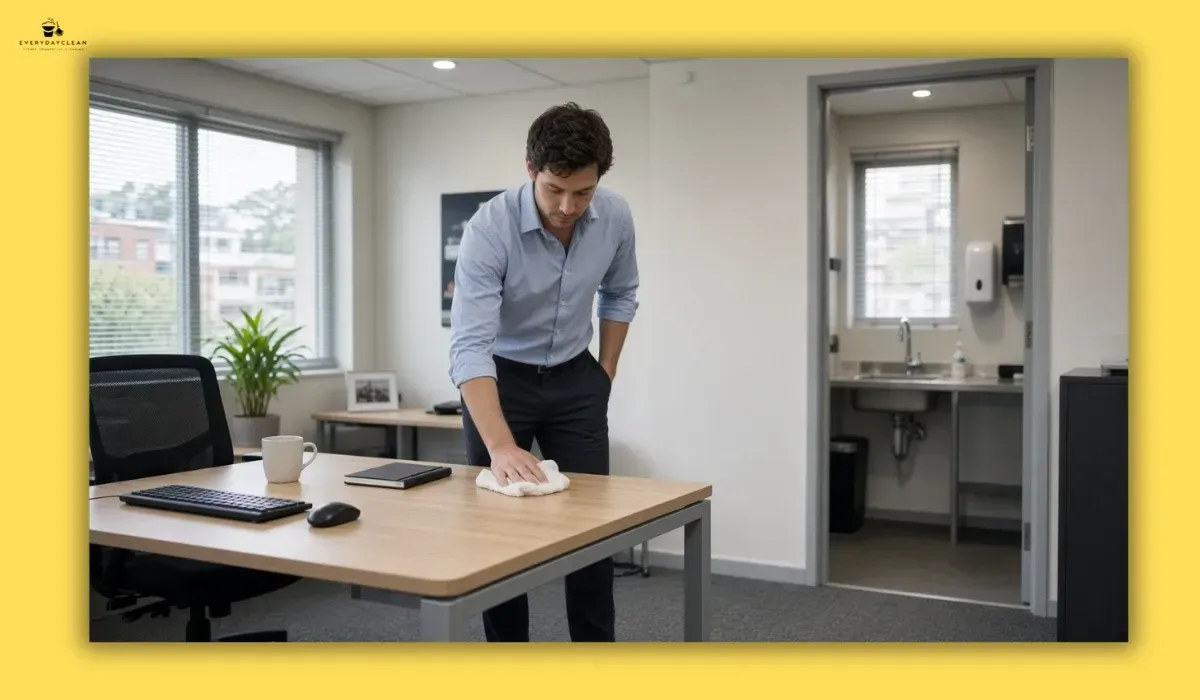
The average office desk contains more than 400 times the bacterial count of a toilet seat - a figure consistently cited in microbiological workplace studies - because desks combine food consumption, extended hand contact, and rare disinfection. Keyboards specifically harbour up to 20,000 germs per square inch due to food debris trapped between keys, skin oil transfer, and the fact that most employees never clean them without direct instruction.
Daily tasks:
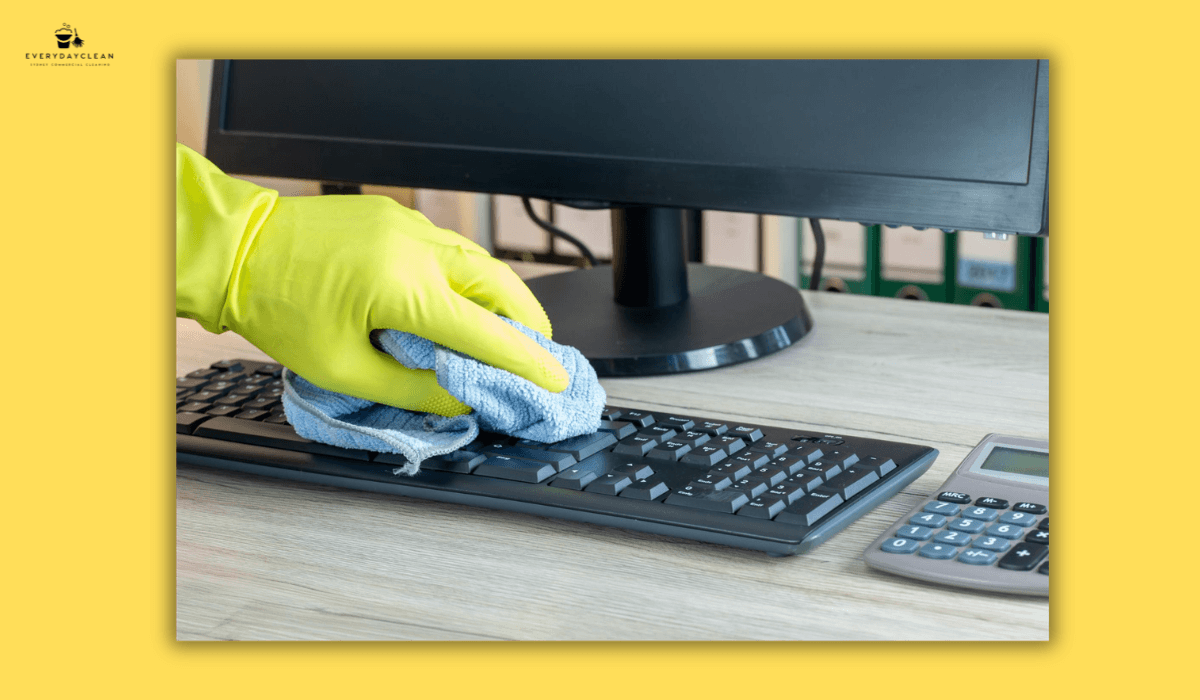
- Wipe desk surface with a microfibre cloth and disinfectant spray, including edges, cable management areas, and monitor stands
- Sanitise keyboard and mouse with compressed air to clear debris between keys, followed by a wipe with electronics-safe disinfectant wipes - do not spray liquid directly onto keyboards
- Disinfect the desk phone handset, including the mouthpiece, earpiece, cradle buttons, and the underside of the handset
- Clean the monitor screen with an antistatic cloth; wipe the monitor frame and tilt adjustment points
- Empty desk-side bins and replace liners
Weekly tasks:
- Dust monitor backs, CPU units, docking stations, and cable bundles
- Wipe chair armrests, backrest, and seat surface - fabric chairs require a fabric-safe antibacterial spray; hard-shell chairs can be wiped with a standard disinfectant
- Clean the underside of the chair, including wheels and base spokes - a high-contact area employees touch when repositioning
For offices operating a hot-desking or shared workstation model, every surface on the above daily list must be cleaned between each user, not just at end of day.
4. Reception and Entry Zone
The reception area is the first physical space clients, visitors, and delivery personnel encounter, meaning contamination brought in from outside - on hands, clothing, and footwear - concentrates here before distributing through the rest of the office. Entry mats trap a significant volume of outdoor dirt but become a contamination source themselves if not cleaned regularly.
Daily tasks:
- Disinfect reception desk surface, computer, telephone handset, and any sign-in tablet or stylus
- Clean glass entry doors on both sides - fingerprints on glass accumulate bacteria alongside visual marks
- Wipe door handles, push plates, intercom buttons, and entry card readers
- Vacuum entry mats thoroughly; mop hard entry floors
- Dust and wipe reception seating armrests and coffee table surfaces
- Tidy and wipe any brochure stands, magazine racks, or display items
Weekly tasks:
- Shampoo or deep-vacuum fabric reception furniture
- Wipe skirting boards and window ledges at the entry point
- Clean entry mat - remove, shake, and wash rubber-backed mats to prevent mould on the underside
5. Meeting Rooms and Conference Areas
Meeting rooms combine high-frequency use, food and drink consumption, and multiple different occupants throughout the day - creating compounding contamination that accumulates across surfaces between sessions. The conference table and shared AV equipment are the primary vectors.
Daily tasks (after each meeting or at a minimum, end-of-day):
- Disinfect the full conference table surface, including the edge and underside at seated positions where hands grip
- Wipe all chair armrests and any chair adjustment levers
- Disinfect the TV remote, video conferencing remote, presentation clicker, and any shared USB devices
- Clean whiteboard and wipe whiteboard tray; sanitise marker holders
- Disinfect light switches, projector controls, and wall panels
- Empty bins, remove any cups or food debris, and spot-clean spills on carpet or hard floor
Weekly tasks:
- Vacuum or mop floors fully, not just spot-clean
- Wipe down glass walls or partitions
- Dust AV equipment, cable management boxes, and ceiling-mounted projectors
6. High-Touch Surfaces Throughout the Building
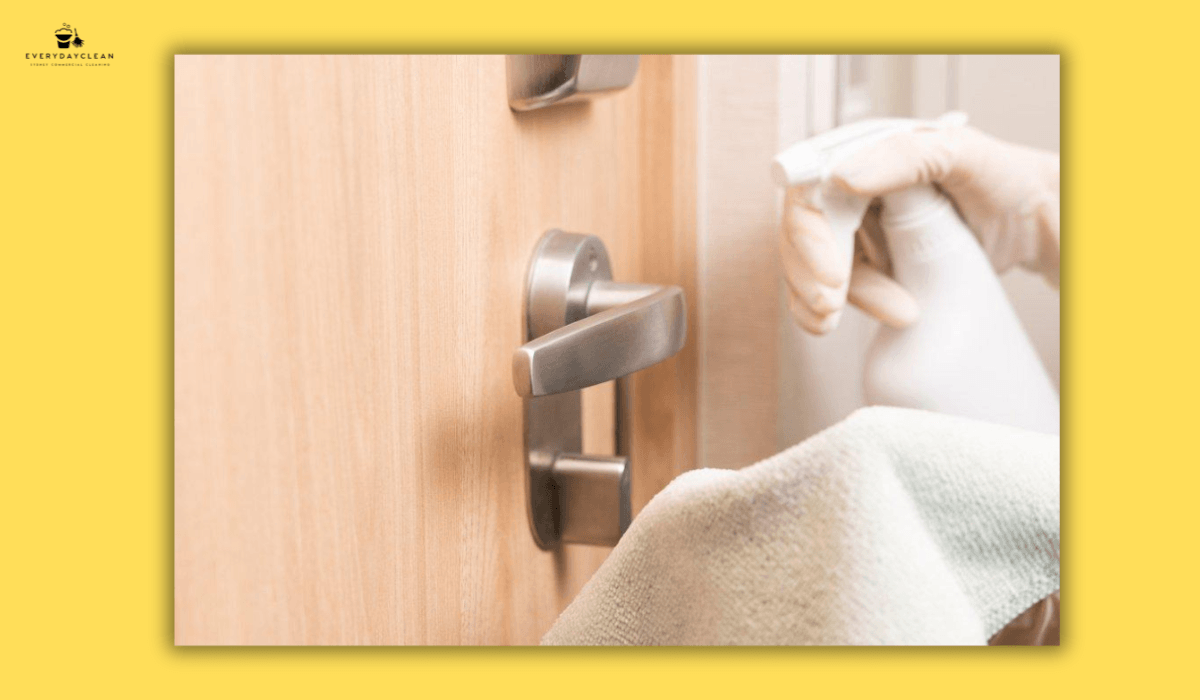
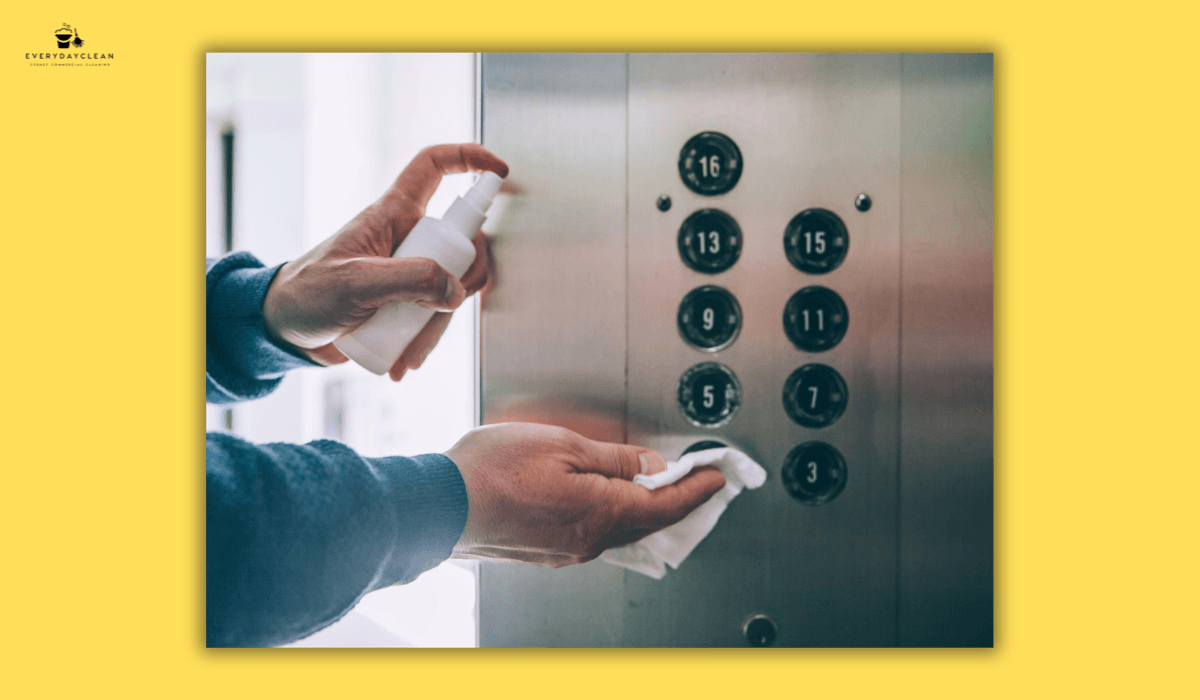
High-touch surfaces are defined as surfaces contacted by multiple different people multiple times per day. In an office context, these include door handles on every door in the building, light switches, lift buttons, stair handrails, shared printer and copier controls, water cooler dispensers, and vending machine buttons. A single contaminated lift button can transfer pathogens to every person who uses that floor.
Daily disinfection required:
- All door handles and push plates - both sides of every door
- Light switches in all rooms and corridors
- Lift call buttons and interior floor buttons
- Stair handrails on all flights used by staff
- Printer and photocopier control panels, including touch screens
- Water cooler, water dispenser tap, and drip tray
- Vending machine buttons and payment interface
- Hand sanitiser dispenser exteriors (the pump handle is itself a high-touch surface)
During periods of elevated illness risk - flu season or any notified outbreak - the disinfection frequency for all surfaces in this category should increase to a minimum of twice daily. The Work Health and Safety Act 2011 (NSW) places a duty on employers to maintain safe working conditions, and a failure to address known contamination vectors in high-touch zones is a direct compliance risk.
7. Floors - Carpeted and Hard Surface
Floors are the most consistently used surface in any office and carry contamination from footwear, food debris, dust, and airborne particulate matter that settles out of the air. Carpet fibres trap dust mites, allergens, skin cells, and moisture from spills - none of which routine vacuuming fully removes. Hard floors show contamination less visually but carry the same microbial load at high-traffic points.
Daily tasks:
- Vacuum all carpeted areas thoroughly, with particular attention to entry zones, corridors, and under-desk areas where debris accumulates
- Sweep and mop hard floors using a microfibre flat mop and pH-neutral floor cleaner - do not use string mops, which redistribute rather than remove contamination
- Spot-clean any spills on carpet immediately rather than deferring to scheduled cleaning; dried spills attract additional soil and resist treatment
Weekly tasks:
- Edge-vacuum skirting boards and furniture legs where carpet cleaning equipment does not reach
- Machine-scrub hard floors in high-traffic corridors and kitchen areas
Periodic (quarterly or as contracted):
- Hot water extraction carpet cleaning to remove embedded allergens, dust mite colonies, and staining that vacuuming cannot address - this is the cleaning method recommended by the IICRC and endorsed by major fibre manufacturers for commercial carpets
For structured carpet maintenance in commercial settings, a professional office cleaning in Sydney schedule typically combines daily vacuuming with monthly encapsulation cleaning and quarterly hot water extraction.
8. HVAC Vents, Air Conditioning Units, and Ducts
HVAC systems are the primary mechanism by which dust, mould spores, and airborne allergens distribute through sealed office environments. When air conditioning filters are not replaced on schedule and vents are not cleaned, the system acts as a distribution system for contamination rather than a ventilation solution. Indoor air quality directly affects cognitive performance; a Harvard University study found measurable improvements in decision-making scores when CO2 levels and pollutant loads in office air were reduced.
Ongoing maintenance tasks:
- Clean accessible HVAC vent grilles with a damp microfibre cloth monthly - not with a dry cloth, which releases rather than captures dust
- Replace or wash air conditioning filters every 3-6 months, depending on system type and occupancy density
- Vacuum dust from split-system unit fins and return air vents as part of each professional cleaning visit
- Commission a professional duct cleaning service annually or biannually for sealed duct systems - this requires specialist equipment and cannot be performed by standard cleaning staff
Poor HVAC maintenance is one of the most common causes of elevated sick leave in commercial offices during winter months, when windows remain closed and air circulation is entirely dependent on mechanical systems. This is a specific compliance area under Safe Work Australia's workplace environment guidelines.
9. Shared Office Equipment
Shared equipment - photocopiers, printers, fax machines, laminators, shared desktop computers, and any device with a control panel - combines high touch frequency with near-zero routine cleaning in most offices. Because these surfaces are not perceived as personal property, no individual employee accepts responsibility for cleaning them, and they fall outside standard desk-cleaning routines.
Daily tasks:
- Wipe printer and photocopier control panel with an electronics-safe disinfectant wipe - do not spray liquid directly onto touch screens
- Sanitise any shared telephone handsets in open-plan areas
- Wipe paper feed tray and document output tray edges, which are touched repeatedly during printing cycles
Weekly tasks:
- Clean the exterior casing of all shared equipment with a dry or slightly damp microfibre cloth to remove accumulated dust and fingerprint oils
- Dust behind and underneath the equipment, where dust concentrates around ventilation slots
10. Windows, Blinds, and Window Ledges
Windows and their immediate surroundings are a consistent accumulation point for dust, allergens, and in humid climates, condensation-related mould on window frames and sill surfaces. Blinds - whether venetian, vertical, or roller - trap significant dust volumes that re-enter the room air with every adjustment.
Weekly tasks:
- Dust window ledges and sills with a damp microfibre cloth, not a dry duster, to capture rather than redistribute particles
- Wipe blind slats individually, or run a microfibre sleeve tool along venetian blind rows - dry dusting disperses particles into the room air rather than removing them
- Clean interior glass surfaces with a streak-free glass cleaner and microfibre cloth or squeegee
Monthly or as needed:
- Clean exterior windows using appropriate access equipment; in high-rise or multi-level buildings, professional window cleaning services with the correct fall-protection equipment are required under the Work Health and Safety Regulation 2017 (NSW)
- Remove, wash, and dry roller blinds or fabric curtains to eliminate embedded dust and any mould forming in the hem or at the top rail
FAQs about The Areas of The Office That Need to Be Cleaned
The following questions reflect the most common search queries around office cleaning schedules, surface priorities, and compliance obligations. Each answer is written for facility managers, office administrators, and business owners making decisions about cleaning frequency and contracted service scope.
How often should high-touch surfaces in an office be cleaned?
High-touch surfaces in an office - including door handles, light switches, lift buttons, shared keyboard and printer controls, and bathroom taps - require disinfection at minimum once per day in a standard office with fewer than 25 occupants. In offices with higher occupancy, client-facing environments, or during active illness outbreaks, the minimum frequency increases to two or three times daily. Safe Work Australia's workplace hygiene guidance identifies frequent-contact surface disinfection as a core employer obligation under the duty of care framework, not an optional enhancement. Using a colour-coded microfibre cloth system - separate cloths for restrooms, kitchen, and general surfaces - prevents cross-contamination between zones during the disinfection process.
What are the most commonly missed areas during office cleaning?
The most consistently overlooked areas in routine office cleaning are the underside of office chairs, the rear of elevator button panels, the inside of microwave ovens, HVAC vent grilles, keyboard gaps, the underside of desk surfaces where hands grip when repositioning, and the exterior of hand sanitiser dispensers. These surfaces are missed because they are either out of direct sight, not perceived as shared-use surfaces, or not itemised on cleaning checklists that focus only on visible horizontal surfaces. A structured cleaning inspection checklist - modelled on the zones covered in this article - is the most reliable way to ensure these areas receive consistent attention. The office cleaning standards applied in professional contracts typically itemise these missed zones explicitly.
How does office cleanliness affect employee health and sick days?
A Harvard University study found that improving indoor environmental quality - including air quality, surface cleanliness, and ventilation - produced a 61% improvement in cognitive performance scores among office workers. From a direct health outcome perspective, offices where high-touch surfaces are disinfected daily report measurably lower rates of employee absenteeism caused by respiratory and gastrointestinal infections. Kimberly-Clark Professional's research found that modern office buildings can harbour up to 4,800 contaminated surfaces at any given time, with break rooms and entry points representing the highest-density infection vectors. Regular professional cleaning does not just remove visible dirt - it reduces the viable pathogen load on surfaces to levels where transmission risk drops significantly. For businesses, this translates to fewer sick days, reduced presenteeism, and sustained productivity levels.
What is the difference between daily office cleaning and a deep clean?
Daily office cleaning covers surface-level hygiene maintenance: vacuuming floors, emptying bins, wiping workstations, disinfecting restrooms, cleaning the kitchen, and sanitising high-touch surfaces. It maintains the baseline hygiene of a workplace on an ongoing basis. A deep clean addresses accumulated contamination that daily cleaning cannot reach - inside HVAC ducts, inside appliances, behind and underneath furniture, inside carpet fibres, grout lines, blind slats, and any area not itemised in a daily routine. Most commercial facilities require a professional deep clean every 3-6 months in addition to daily or weekly maintenance cleaning. For offices in sensitive environments such as medical centres or childcare facilities, the medical cleaning standard requires deep cleaning protocols that go further still, targeting infection control compliance rather than general hygiene maintenance.
What cleaning frequency does an office need under Safe Work Australia guidelines?
Safe Work Australia does not prescribe a specific cleaning schedule by frequency, but does require employers to provide and maintain a workplace that is safe and without risks to health - which includes controlling biological hazards through adequate cleaning and hygiene practices. In practical terms, this means restrooms must be cleaned and restocked daily at a minimum; high-touch surfaces must be disinfected regularly; indoor air quality must be maintained through HVAC servicing; and waste must be removed before it creates odour, pest attraction, or contamination risks. Offices in regulated industries - including healthcare, childcare, food handling, and aged care - face additional sector-specific standards that exceed the general Safe Work obligation. A contracted professional office cleaning Sydney CBD service typically includes a documented cleaning schedule and task log that provides evidence of compliance if a workplace inspection occurs.
Keeping Every Area of the Office to a Consistent Standard
The 10 areas covered in this checklist do not carry equal contamination risk, do not require the same cleaning frequency, and cannot be addressed with the same products or techniques. Restrooms and shared kitchens demand daily disinfection with hospital-grade products. Workstations require electronics-safe methods. HVAC systems require periodic specialist servicing that standard cleaning staff are not equipped to perform. Floors need layered maintenance combining daily vacuuming with periodic deep extraction.
The most reliable way to ensure all 10 areas receive consistent attention is a structured cleaning specification - a documented checklist that itemises every surface, assigns a frequency, and records each completed task. Without this structure, the areas most likely to be missed are exactly the ones that carry the highest contamination risk: the surfaces no one thinks to check because they do not look dirty until the bacterial load is already significant.
Blog