Carpet Cleaning Products: Types, Uses & How to Choose
Carpet cleaning products fall into five distinct categories - enzyme-based formulas, oxidising agents, encapsulation solutions, hot water extraction detergents, and dry compound products - each engineered to break down a specific type of soil at the molecular level. Choosing the wrong product does not just produce poor results; it can set stains permanently, damage carpet fibres, or leave behind a sticky residue that attracts more dirt within days. This guide covers every major product type, how each one works, which stains each is designed to treat, and what professional cleaners use to achieve deep, lasting results across residential and commercial settings.
Key Takeaways
- Enzyme cleaners are the only product type that permanently eliminates organic odour - not just masks it - by digesting uric acid, proteins, and fats at the source.
- Hot water extraction formulas are endorsed by the IICRC and recommended by major fibre producers, including Shaw, Mohawk, and DuPont as the gold standard for deep carpet cleaning.
- Encapsulation products crystallise soil particles as they dry, making them easy to vacuum away - ideal for commercial carpet maintenance between deep extraction cycles.
- Oxidising agents (oxygen-based formulas) brighten and deodorise without bleaching, making them safe for coloured carpets when used at the correct dilution.
- Matching the product to both the stain type and the carpet fibre (nylon, wool, olefin, polyester) prevents permanent damage and avoids costly re-treatment.
The 5 Main Types of Carpet Cleaning Products
Carpet cleaning products are not interchangeable. Each formula addresses a distinct cleaning mechanism - chemical breakdown, biological digestion, crystallisation, or thermal activation - and performs poorly outside its designed application. Understanding these categories before purchasing saves time, avoids fibre damage, and produces consistently better results across residential and commercial settings.
- Enzyme-based cleaners contain live bacterial cultures that produce proteases, lipases, and amylases to digest organic matter such as urine, vomit, blood, and food. The enzymatic action continues working after the visible stain disappears, breaking down residual odour compounds embedded in the carpet pad. These are the only product category that eliminates organic odour at the biological source rather than masking it with fragrance.
- Oxidising (oxygen-based) formulas use oxygen molecules to chemically break the molecular bonds holding soil and pigment to carpet fibres. Products containing hydrogen peroxide or sodium percarbonate fall into this category. They brighten and deodorise without the bleaching risk of chlorine-based products, provided the dilution ratio is observed. Oxygen formulas are particularly effective on tannin stains from red wine, coffee, and tea.
- Encapsulation solutions contain polymer compounds that surround and crystallise soil particles as the product dries. The dried crystals detach from fibres and are removed by vacuuming. This method uses significantly less water than extraction methods, resulting in dry times of 20-30 minutes, which is why it is the preferred interim maintenance method in offices, hotels, and retail environments.
- Hot water extraction (HWE) detergents are low-foam, low-residue formulas specifically engineered to be injected under pressure into carpet fibres and immediately recovered by high-powered vacuum. These are machine-dependent products and must not be used in spray or foam applications, as the high concentration causes residue buildup that accelerates resoiling.
- Dry compound products are absorbent powders or granules pre-treated with solvents, worked into carpet fibres, allowed to bind with soil, and then vacuumed away. Drying time is near-zero, but cleaning depth is limited to the upper third of the carpet pile. For facilities that need a low-moisture option between deep cleans, dry carpet cleaning using compound products is a practical maintenance method.
Choosing between these categories requires knowing the carpet fibre type, the soil load, and the drying window available. For example, a WoolSafe-accredited formula is mandatory on wool carpets, where alkaline detergents cause irreversible fibre shrinkage.
How Enzyme Carpet Cleaners Work
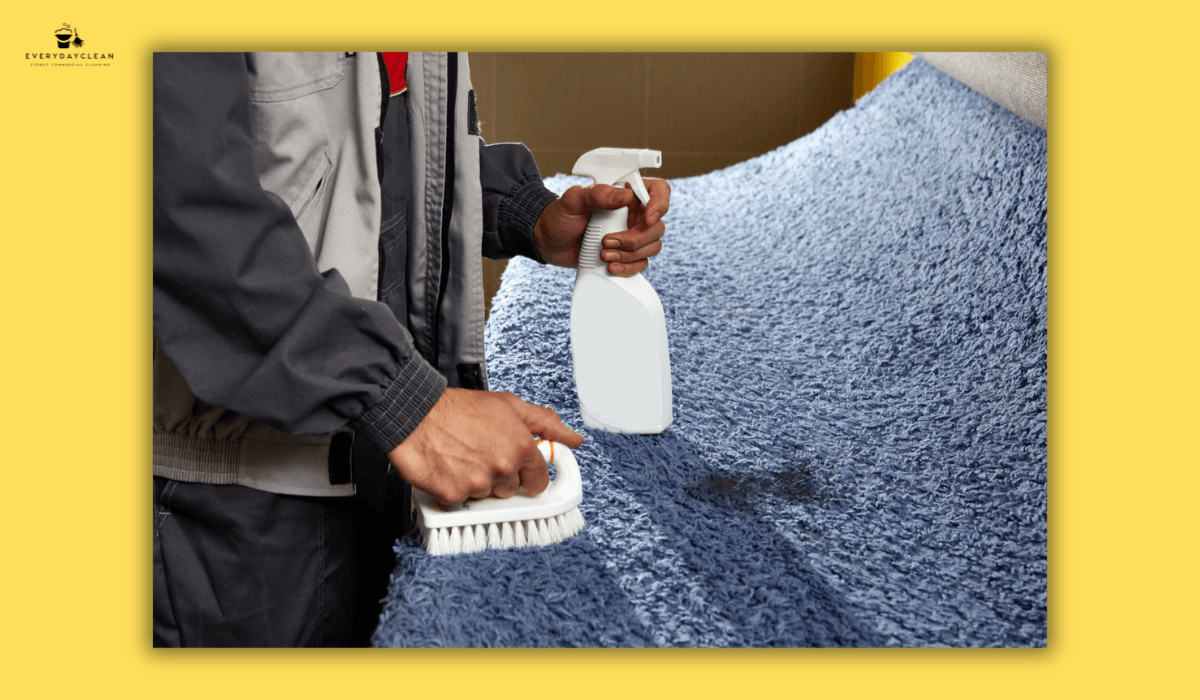
Enzyme carpet cleaners work through a biological process - not a chemical one. The formula contains live bacterial spores that activate on contact with moisture. Those bacteria produce specific enzymes - proteases for proteins, lipases for fats and oils, amylases for starches, and urease for uric acid compounds - that break complex organic molecules into smaller, odourless fragments that can then be extracted or absorbed.
Standard carpet cleaning solutions mask odour using fragrance compounds or temporarily neutralize pH. Enzyme cleaners eliminate the source compound entirely. Uric acid crystals from pet urine reactivate whenever humidity rises, which is why untreated pet stains return every time a carpet is steam cleaned with a standard formula. Enzyme products dissolve those crystals permanently.
Effective use of enzyme cleaners requires three steps that most users skip:
- Pre-moisten the area with warm (not hot) water. Heat above 60°C deactivates enzymes and kills the bacterial cultures before they can work. Rehydrating dried urine salts before applying the product significantly increases enzyme penetration into the carpet pad.
- Allow adequate dwell time. Most consumer enzyme products require a minimum of 10-15 minutes for fresh stains and 30 minutes to several hours for old or deeply saturated stains. Covering the treated area with a damp cloth or plastic wrap prevents premature drying and keeps bacterial cultures active.
- Extract moisture promptly. Leaving the carpet saturated for more than 24 hours introduces mould risk in humid conditions. After the dwell period, extract with a wet/dry vacuum or blot with clean microfibre towels, then promote airflow with fans at ambient temperature - not heat, which kills the bacteria.
"Enzyme cleaners are the only product category that addresses odour at the biological source. Every other formula - including professional-grade extraction detergents - removes what is visible. Enzyme products eliminate what is not."
In commercial settings such as aged care facilities, childcare centres, and gyms, enzyme-based products are the recommended choice for organic contamination because they are non-toxic post-drying and do not require rinsing. These properties align directly with the product standards applied in professional ffice cleaning Sydney CBD programs, where occupant safety during and after treatment is a compliance requirement.
What Encapsulation Carpet Cleaning Products Are Used For
Encapsulation carpet cleaning products are specifically engineered for interim maintenance - the regular cleaning cycle that sits between full hot water extraction sessions. The technology was developed for commercial carpet management, where deep extraction every week is impractical due to long drying times and business continuity requirements.
The active mechanism involves polymer chemistry. When an encapsulation solution is applied and agitated into carpet fibres using a cylindrical brush machine (CRB) or rotary buffer, the polymer compounds coat and surround individual soil particles. As the solution dries - usually within 20-30 minutes - those coated particles crystallize and detach from the carpet fibre surface. A standard commercial vacuum then removes the dried crystals during the next cleaning cycle.
Key advantages of encapsulation products for commercial environments:
- Minimal residue - the crystallized polymer does not reattract soil the way soap-based shampoos do. Traditional shampooing leaves sticky surfactant residue in the pile, which accelerates resoiling. Encapsulation leaves a dry, non-sticky crystalline residue that vacuums clean.
- Fast dry times - 20-30 minutes versus 4-12 hours for hot water extraction. In a busy office, hotel lobby, or retail floor, this means carpets can be cleaned during business hours without closing areas.
- Extended extraction intervals - regular encapsulation maintenance keeps carpets visually clean and hygienically maintained between annual or bi-annual deep extractions.
- Compatibility with low-moisture equipment - encapsulation products work with rotary machines, CRBs, and bonnet pads, meaning facilities without wet extraction equipment can still achieve professional interim results.
For wool and delicate carpets, confirm the encapsulation formula carries WoolSafe accreditation. Alkaline pH encapsulants cause browning and shrinkage in natural fibre carpets. Products from Prochem, Chemspec, and Bonnet Pro are among the professional-grade options with verified fibre compatibility.
Which Carpet Cleaning Products Work Best With Hot Water Extraction
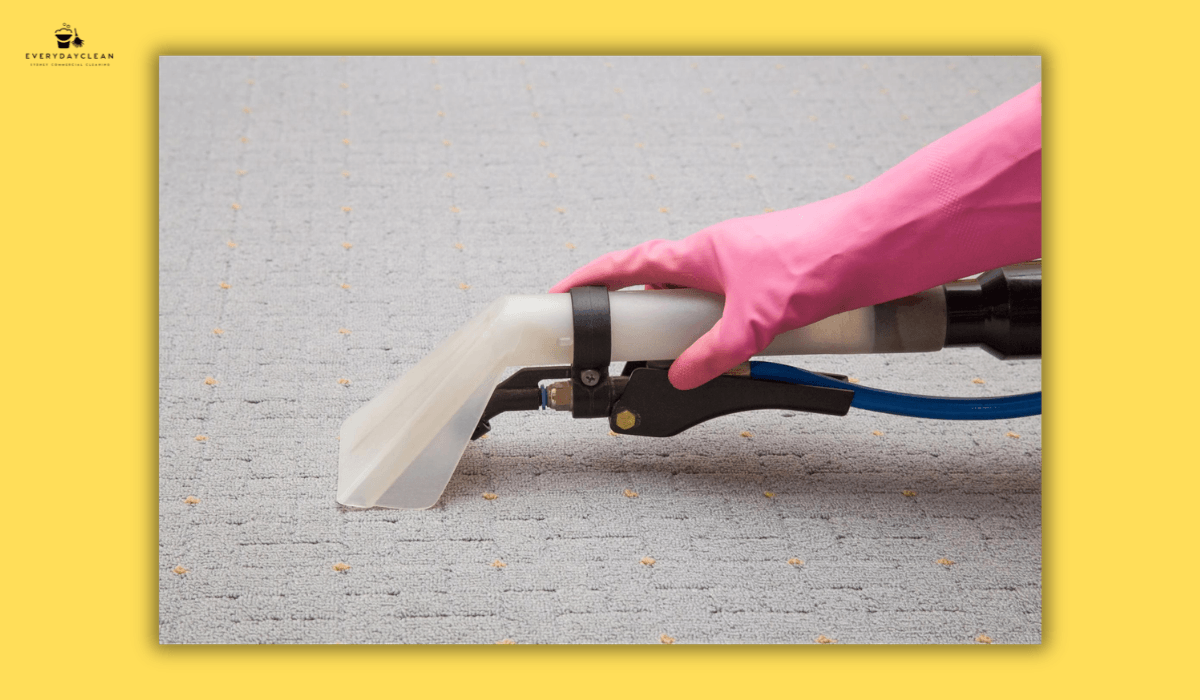
Hot water extraction (HWE) - frequently and inaccurately called steam cleaning - is the deepest cleaning method available for carpeted surfaces. It involves injecting a heated cleaning solution under pressure directly into the carpet pile, then immediately recovering it along with dissolved soil through high-powered vacuum extraction. The Institute of Inspection, Cleaning and Restoration Certification (IICRC) endorses HWE as the preferred method for residential and commercial carpet restoration.
The products used in HWE machines have a specific chemical profile that differs from every other carpet cleaning category:
- Low-foam or zero-foam formulation - foam in an extraction machine reduces suction efficiency and can damage the motor. Never use a standard carpet shampoo or upholstery spray in a hot water extraction machine - the foam volume will compromise the recovery system.
- Low residue - the product must rinse clean from fibres in a single extraction pass. High-residue formulas cause rapid resoiling because the sticky surfactant left in the pile attracts ambient dust and foot traffic soil. Look for formulas specifically labelled "low-residue" or "residue-free" for machine use.
- pH-matched to fibre type - synthetic carpet fibres (nylon, olefin, polyester) tolerate a broader pH range. Wool requires a near-neutral pH (6.5-7.5) to prevent shrinkage and fibre damage. Commercial HWE prespray products, such as alkaline traffic lane cleaners, should never be used on wool without a matching acid rinse step.
- Temperature stability - HWE solution is heated to 50-90°C, depending on the machine and fibre type. The chosen detergent must remain effective and stable across that temperature range without breaking down into harmful byproducts.
Professional HWE cleaning sequences typically follow a three-product structure: a traffic lane prespray applied and agitated before extraction, the primary extraction detergent injected through the machine wand, and an acid fibre rinse applied in the final pass to restore pH balance and prevent browning. For businesses managing high-traffic flooring, professional commercial carpet cleaning services use this three-stage HWE protocol as standard.
Carpet Cleaning Products Matched to Each Stain Type
No single carpet cleaning product effectively treats every stain type. Stains fall into three broad chemical categories - organic, inorganic, and oil-based - and each requires a different removal mechanism. Applying the wrong product can permanently set a stain: hot water on blood coagulates the protein, making extraction impossible; alkaline cleaners on tannin stains from tea or red wine can permanently darken the fibre.
The table below maps common stain types to the correct product category and the most critical application rule for each.
| Stain Type | Product Category | Critical Rule |
|---|---|---|
| Pet urine (fresh) | Enzyme cleaner | Blot before applying - never rub |
| Pet urine (old/dried) | Enzyme cleaner + warm pre-soak | Rehydrate uric acid crystals first |
| Blood | Cold water + enzyme or hydrogen peroxide | Never use hot water - sets protein permanently |
| Red wine/coffee | Oxidising (oxygen-based) formula | Test for colourfastness first |
| Mud/dirt | Standard extraction detergent | Let dry completely before treating |
| Grease/oil | Dry-solvent spotter or alkaline prespray | Never apply water first - spreads oil |
| Ink | Isopropyl alcohol (blotting technique) | Work from stain edge inward |
| Vomit/food | Enzyme cleaner (multi-enzyme formula) | Remove solids before treating liquid residue |
| General traffic grime | HWE prespray + extraction detergent | Agitate prespray before extraction |
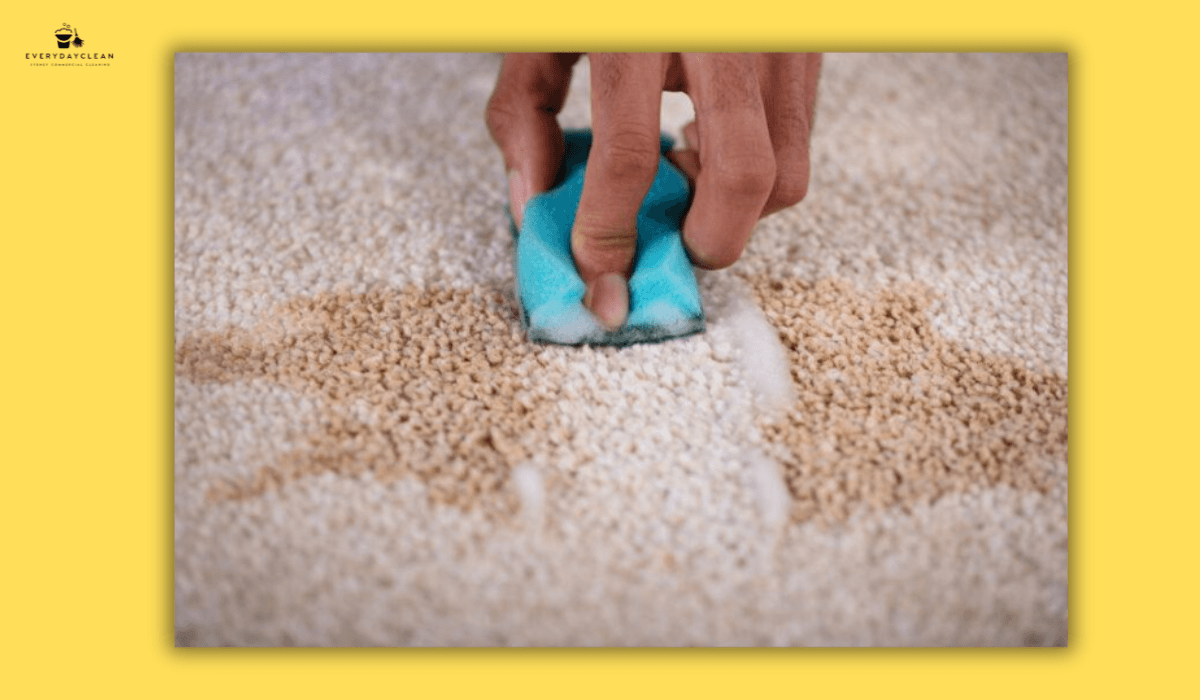
One universal technique applies across all stain categories: blot, never rub. Rubbing a stain forces the soil deeper into the carpet pile and spreads it laterally, increasing the treatment area. Blotting lifts the stain upward into the cloth. Work from the outside perimeter of the stain inward to prevent spreading. Conduct a colourfastness test on any new product by applying it to an inconspicuous area - inside a wardrobe or under furniture - and waiting 10 minutes before treating the visible stain.
How Commercial Carpet Cleaning Products Differ From Consumer Products
Commercial carpet cleaning products and consumer-grade products are not the same formulas in different packaging. They differ in four fundamental ways: concentration levels, active ingredient strength, application method requirements, and fibre safety credentials.
Concentration - commercial products are typically sold as concentrates requiring dilution ratios of 1:10 to 1:64 with water before use. Consumer products are sold ready-to-use or at light dilution. Using a commercial concentrate at full strength on a domestic carpet generates excessive alkalinity during dwell time and can cause browning, fibre distortion, or irreversible colour change.
Active ingredient strength - professional traffic lane cleaners contain higher-pH alkaline builders that penetrate oily soils more aggressively than consumer-grade formulas. This increased alkalinity requires a pH-neutralising rinse step after treatment - a step built into professional equipment but absent in consumer spray-and-blot applications.
Equipment dependency - many commercial products, particularly HWE detergents and encapsulation solutions, require specific application equipment to perform correctly. An encapsulation product applied by hand spray without mechanical agitation from a cylindrical brush machine will not crystallise properly, leaving residue rather than a vacuumable powder.
Regulatory and certification requirements - commercial products used in sensitive environments are often required to carry GECA (Good Environmental Choice Australia) certification for environmental compliance, or WoolSafe accreditation when used on natural fibre carpets. For businesses that prioritise sustainability, eco-friendly carpet cleaners carry both GECA and WoolSafe credentials, meeting the compliance requirements of commercial cleaning contracts without compromising cleaning performance.
For businesses managing carpeted workplaces - including offices, retail floors, medical centres, and aged care facilities - the product selection used by contracted cleaners directly impacts occupant health, carpet lifespan, and compliance with the Work Health and Safety Act 2011 (NSW). Professional
office cleaning service in Sydney uses commercial-grade, accredited products matched to each carpet fibre type, soil load, and environmental sensitivity of the space.
FAQs about The Carpet Cleaning Products
The following questions address the most common queries around carpet cleaning products, covering safety, application timing, fibre compatibility, and when professional intervention replaces DIY treatment.
What carpet cleaning products are safe to use around children and pets?
Enzyme-based cleaners are the safest option for households with children and pets once the treated area has fully dried - typically 2-4 hours, depending on airflow. During the active dwell period, the area should remain off-limits because the live bacterial cultures can cause mild irritation if directly ingested or contacted. Avoid any product containing ammonia, as ammonia mimics the scent of urine and attracts pets back to the treated area, perpetuating the soiling cycle. Products carrying GECA (Good Environmental Choice Australia) certification and plant-based enzyme formulations are the benchmark for sensitive environments. Fragrance-free, neutral-pH options minimise respiratory irritation for children with asthma or allergies. In commercial childcare and aged care settings, cleaning product selection is a compliance issue under the National Quality Framework and relevant NSW health and safety legislation.
How long should carpet cleaning products be left to dry before walking on the carpet?
Drying time varies significantly by product type and application method. Encapsulation products produce the fastest dry times - carpets are typically walkable within 20-30 minutes in a ventilated room. Dry compound products allow near-immediate foot traffic once vacuumed. Hot water extraction leaves carpets damp for 4-12 hours, depending on machine suction power, room temperature, and airflow; in high-humidity conditions, this extends to 24 hours without supplementary drying equipment. Walking on a wet carpet after extraction presses fibres flat and causes traffic wicking - where dissolved soil is drawn back to the surface as the carpet dries. Using fans, open windows, and air conditioning reduces dry time substantially. In commercial spaces, scheduling HWE cleaning for Friday afternoons or outside business hours allows full drying before the next operational day, which is standard practice in structured commercial cleaning programs.
Can carpet cleaning products damage wool or natural fibre carpets?
Alkaline carpet cleaning products above pH 8.5 cause irreversible shrinkage and fibre browning in wool carpets. Wool is a protein fibre with a natural pH between 4.5 and 5.5. Applying a high-alkaline prespray or traffic lane cleaner designed for synthetic nylon or olefin without a subsequent acid rinse disrupts the wool's pH balance and causes the fibre to swell and shrink irreversibly. WoolSafe-accredited products are independently tested to confirm compatibility with wool and natural blends. Always verify the WoolSafe mark before applying any carpet cleaning product to wool, sisal, jute, or silk rugs. For silk and antique rugs, professional fibre assessment before any treatment is strongly recommended - incorrect product selection on these materials causes damage that cannot be recovered. Most professional commercial carpet cleaning services carry WoolSafe-certified product ranges as a contract standard.
When should carpet cleaning products be replaced with professional cleaning services?
DIY carpet cleaning products are appropriate for fresh, isolated stains in residential settings. Professional intervention is warranted when urine contamination has reached the carpet pad or subfloor - at this depth, consumer enzyme products cannot fully penetrate the contaminated layers. Full-room odour from multiple or repeated pet accidents indicates pad saturation requiring sub-surface extraction tools or pad replacement. Old stains that have altered the carpet's dye colour cannot be restored by any cleaning product; professional re-dyeing or carpet replacement are the only remedies. In commercial environments, the standard industry recommendation is professional hot water extraction every 6-12 months supplemented by interim encapsulation maintenance every 4-6 weeks. Offices, retail spaces, and medical centres with high foot traffic require this frequency to maintain hygiene compliance and extend carpet service life.
Selecting the Right Carpet Cleaning Product for the Job
Carpet cleaning products work precisely when matched to the stain chemistry, the carpet fibre, and the available application method. Enzyme cleaners eliminate organic odour permanently. Encapsulation solutions maintain commercial carpets between deep extraction cycles. HWE detergents flush the deepest soil loads when paired with professional extraction equipment. Oxidising formulas brighten and deodorise colour-safe synthetics. Dry compound products serve low-moisture maintenance needs in facilities that cannot tolerate extended dry times.
For high-traffic commercial carpets in offices, retail floors, and shared facilities, product selection is one component of a broader maintenance strategy. The frequency, technique, and post-treatment fibre protection applied by trained cleaners determine whether a carpet investment lasts 5 years or 15. Treating stains promptly with the correct product category and scheduling professional deep extraction on a structured calendar delivers the most cost-effective outcome for any carpeted commercial environment.
Blog