Organic Cleaning Products: Certified vs Claimed Explained
Organic cleaning products occupy one of the most misleading categories in the consumer goods market, because "organic" on a cleaning product label carries no legal definition in Australia and no mandatory certification requirement. Under Australian Consumer Law, a manufacturer can print "organic" on a surface spray that contains zero certified organic ingredients, provided the claim is not proven deceptive in court - a standard that has historically been difficult to enforce at the product level. The practical result is a market saturated with products carrying organic imagery, botanical terminology, and green design language that have never been independently assessed, tested, or certified by any organic certifying body. This guide defines what genuine organic certification requires for cleaning products in the Australian market, identifies the specific certifications that verify the claim, maps the ingredient categories that define a credible organic formula, and lists the Australian brands that meet the standard.
How to Verify an Organic Cleaning Product Claim
The most important distinction in the organic cleaning products category is between certification-backed organic claims and self-declared organic marketing. Every other evaluation criterion - ingredient sourcing, biodegradability, packaging - depends on resolving this distinction first, because an organic cleaning product without independent certification provides no verifiable basis for any organic claim it makes.
ACO Certification - Organic Cleaning Products Verified at Ingredient Level
Australian Certified Organic is the largest and most recognised organic certification body in Australia, operating under accreditation from the Department of Agriculture, Water and the Environment. ACO has over 25 years of operation and certifies organic cleaning products across household, personal care, and commercial categories.
For a cleaning product to carry the ACO bud logo, the manufacturer must demonstrate that certified organic ingredients are grown and processed without synthetic agricultural chemicals, genetically modified organisms, or irradiation. The supply chain from farm to finished product is subject to an annual independent audit. The percentage of certified organic content required varies by ACO's product standard - for cleaning products, ACO requires that the product disclose its certified organic ingredient percentage and that those ingredients are sourced from certified organic suppliers on record with ACO.
What ACO does not currently certify is the overall environmental performance of the cleaning formula - it verifies organic ingredient sourcing, not the biodegradability of the surfactant system, the recyclability of the packaging, or the absence of problematic non-organic ingredients like preservatives and synthetic fragrance compounds. A product can carry ACO certification and still contain a methylisothiazolinone (MIT) preservative or a synthetic fragrance system - neither of which are certified organic ingredients, but neither of which disqualifies the organic content certification.
This gap is important to understand: ACO certification verifies that the certified ingredients are genuinely organic, not that the entire formula is environmentally safe or free from all problematic synthetic compounds.
NASAA Certification - Organic Cleaning Products Sourced From Audited Australian Growers
The National Association for Sustainable Agriculture Australia (NASAA) is the second major accredited organic certifier in Australia. NASAA's organic standard requires that organic cleaning product ingredients are grown and processed without synthetic chemicals and GMOs, with annual third-party audit of the supply chain.
NASAA is particularly active in agricultural certification - it certifies the broadest range of Australian organic farms and is the certifier of choice for many raw botanical ingredient suppliers to the cleaning products industry. For cleaning product manufacturers sourcing certified organic essential oils, plant extracts, and botanical surfactants from Australian growers, NASAA-certified ingredient suppliers are the most common source in the domestic supply chain.
Koala Eco, one of the best-known Australian organic cleaning brands, uses NASAA-certified Australian native essential oils (including lemon myrtle, peppermint, eucalyptus lemon, and tea tree) as the primary antimicrobial and fragrance agents across its cleaning range. These essential oils are antimicrobially active - lemon myrtle contains 90-98% citral, an aldehyde compound with documented antimicrobial efficacy - not merely aromatic, which is the critical difference between an evidence-based botanical formula and a fragrance-marketed one.
COSMOS Organic Certification - The Most Restrictive Standard for Organic Cleaning Products
COSMOS (COSMetic Organic and natural Standard) is an internationally recognised certification framework increasingly adopted by organic cleaning product manufacturers as a more comprehensive standard than domestic-only certifications. It is managed by COSMOS-standard AISBL, an alliance of European organic certification bodies including Ecocert, BDIH, COSMEBIO, the Soil Association, and ICEA.
COSMOS Organic certification requires:
- A minimum percentage of organic ingredients from certified organic agriculture
- A ban on synthetic fragrances, GMOs, and a defined list of excluded synthetic ingredients, including parabens, phthalates, phenoxyethanol, MIT, and silicones
- Biodegradability assessment for all ingredients
- Sustainable sourcing requirements for all non-organic ingredients
- Packaging recyclability criteria
The COSMOS standard is more restrictive than ACO alone because it excludes specific synthetic preservatives and fragrance compounds at the formula level - not just at the ingredient sourcing level. A product certified COSMOS Organic cannot contain synthetic fragrance compounds regardless of how clean its organic ingredient sourcing is, which directly addresses the transparency gap that ACO certification alone leaves open.
Saba Organics, an Australian manufacturer whose cleaning range is ACO-certified, applies a formula philosophy that overlaps substantially with COSMOS Organic requirements - excluding parabens, sulfates, and synthetic fragrance compounds while using certified organic botanical ingredients as primary actives.
Key Ingredients That Separate Genuine Organic Cleaning Products From Imitations
Certification tells you the sourcing is verified. The ingredient list tells you what the organic cleaning product actually does. A product can be ACO-certified on the basis of a 10% certified organic lavender oil content, while the remaining 90% of the formula - the surfactant, preservative, and water - carries no organic certification at all. Understanding which ingredient categories carry the most functional weight in a genuine organic cleaning product enables evaluation beyond the certification logo.
Castile Soap - The Foundational Cleaning Agent in Organic Cleaning Products
Castile soap - a soap produced by saponifying organic plant oils (olive oil, coconut oil, hemp seed oil, or jojoba oil) with an alkali (sodium hydroxide for solid soap, potassium hydroxide for liquid) - is the foundational cleaning agent in most genuinely formulated organic cleaning products. Saponification converts the plant oil into soap molecules that have a hydrophilic (water-attracting) head and a lipophilic (oil-attracting) tail, enabling them to emulsify grease and soil for rinsing away.
Dr. Bronner's, founded in 1948, is the largest USDA Certified Organic personal care company globally and its 18-in-1 Pure-Castile Soap is the most versatile organic cleaning base available - used for everything from mopping floors to cleaning produce. The USDA Organic certification it carries is governed by the National Organic Program, which requires that 95% of ingredients are certified organic. In the Australian market, castile soap-based cleaners from brands including Kin Kin Naturals use coconut-derived saponified oils certified to organic standards as their primary surfactant system.
Essential Oil Antimicrobials - How Organic Cleaning Products Deliver Hygiene Performance
Organic cleaning products use essential oils not as fragrance compounds but as evidence-based antimicrobial agents. The distinction is critical for understanding how these products deliver hygiene performance without synthetic disinfectants. The most well-documented antimicrobial essential oils used in Australian organic cleaning products are:
- Lemon myrtle (Backhousia citriodora) - contains 90-98% citral, one of the highest citral concentrations of any plant essential oil. Citral is documented to be effective against Staphylococcus aureus, E. coli, Listeria monocytogenes, and Candida albicans at concentrations achievable in cleaning formulas. Koala Eco's range is built around lemon myrtle as the primary active. Bosisto's Lemon Myrtle Spray, an Australian-made product, is TGA-listed as a disinfectant on this basis.
- Tea tree oil (Melaleuca alternifolia) - contains terpinen-4-ol as its primary active compound, with demonstrated efficacy against a broad spectrum of bacteria, fungi, and several viruses, including influenza A. Tea tree is widely used in Australian organic cleaning formulas for bathroom, floor, and surface products.
- Eucalyptus oil (Eucalyptus globulus and Eucalyptus radiata) - contains 1,8-cineole as the primary antimicrobial component, with documented activity against respiratory pathogens and surface bacteria. Australian-grown eucalyptus oil is NASAA-certifiable as an organic ingredient when sourced from certified growers.
- Lavender oil (Lavandula angustifolia) - contains linalool and linalyl acetate, with documented antimicrobial activity and significant evidence for airway-calming properties relevant to indoor air quality in occupied spaces.
Plant-Derived Surfactants - What Organic Cleaning Products Use Instead of Petroleum Compounds
Organic cleaning products replace petroleum-derived surfactants (alkylphenol ethoxylates, nonylphenol ethoxylates) with plant-derived alternatives that biodegrade rapidly and carry no aquatic endocrine disruption risk. The most common plant-derived surfactants in certified organic cleaning products are:
- Coco glucoside and decyl glucoside - derived from coconut oil and glucose (from sugar cane or corn). Both are readily biodegradable, non-irritating, and rated A by the EWG. They are the primary surfactants in most premium organic cleaning products.
- Sodium cocoate - the saponified salt of coconut oil, used in solid cleaning bars and powder detergents. ACO-certifiable when the coconut oil source is certified organic.
- Sodium lauryl sulfate (SLS) from coconut - a more aggressive surfactant derived from lauric acid in coconut oil, acceptable in rinse-off organic cleaning applications but not in leave-on or food-contact applications due to its mucosal irritation profile at sustained exposure.
Sodium Carbonate, Bicarbonate, and Citric Acid - The Mineral Workhorses of Organic Cleaning Products
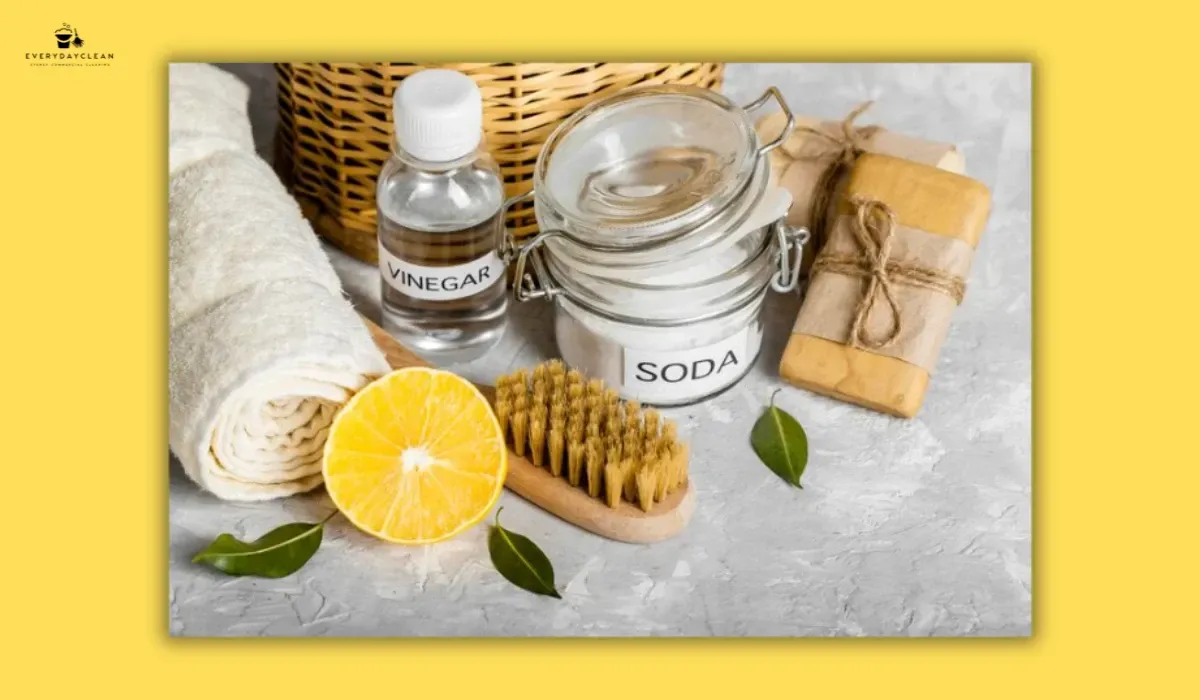
These inorganic mineral compounds are the workhorses of both DIY and commercially formulated organic cleaning products. They are not "organic" in the certified-ingredient sense - they are minerals, not botanicals - but they are fully compatible with organic cleaning product formulas and carry no environmental or toxicity concerns:
- Sodium carbonate (washing soda) - a strong alkali that cuts grease, removes stains, and softens water. pH approximately 11.5. Not suitable for use on natural stone, aluminium, or wool.
- Sodium bicarbonate (baking soda) - a mild abrasive and deodoriser at pH 8.3. The most widely used ingredient in DIY organic cleaning formulations. Effective as a non-scratch scrub on sinks, baths, and oven interiors.
- Citric acid - a naturally occurring acid from citrus fermentation, used as a descaler, pH adjuster, and chelating agent in organic cleaning formulas. It functions identically to commercial descaler products on mineral scale, limescale, and hard water deposits, without the hazard profile of mineral acid products.

Australian Organic Cleaning Products Brands With Verified Credentials
The following brands produce organic cleaning products that meet the verification standard - assessed on the basis of third-party certification, full ingredient disclosure, and botanical ingredient integrity:
- Koala Eco uses NASAA-certified Australian native essential oils across its full cleaning range - multi-surface spray, bathroom cleaner, kitchen cleaner, floor cleaner, dishwashing liquid, and laundry wash. All products are cruelty-free, vegan, and packaged in 100% recycled plastic with refill concentrates available. The formula philosophy uses essential oils as primary actives rather than as fragrance additions, which is the structural difference between a genuinely antimicrobially functional organic formula and a cosmetically scented conventional product.
- Saba Organics is ACO-certified, Australian-made, and formulates across a full household cleaning range including surface sanitisers, window cleaners, and floor cleaners. The products are free from parabens, sulfates, and synthetic fragrances. Saba Organics is distributed through Organic Cleaning Co and independent health retailers.
- Kin Kin Naturals is an Australian-owned brand whose formulas are built around coconut-based surfactants, mineral salts, bicarbonate, and essential oils. The range covers laundry, dishwashing, and general household cleaning. Products are available through Flora and Fauna and Biome - the two largest online eco retail platforms in Australia.
- Euclove is an Australian-made, family-run brand formulating around botanical ingredients and essential oil actives. Products are packaged in recycled plastic with refill options and are available through Biome and Nourished Life.
- Dr. Bronner's (US-made, USDA Certified Organic) - the 18-in-1 Pure-Castile Soap is available through Australian retailers including Biome and iHerb and remains the most certified organic cleaning base on the market by both ingredient percentage and certification depth.
- For commercial facilities seeking organic cleaning credentials, the above brands are residential-grade. Commercial
eco-friendly cleaning products specifications for offices, medical centres, and strata properties require GECA-certified concentrates rather than retail organic products - the soil loads and cleaning frequency of commercial environments exceed the design parameters of all residential organic product ranges.

FAQs about The Organic Cleaning Products
The following questions address the most common searches around organic cleaning products - covering regulation, performance, ingredient safety, and how to separate genuine certification from greenwashing.
Are organic cleaning products actually regulated in Australia?
"Organic" is not a legally defined term for cleaning products under Australian Consumer Law. Any product can print it on a label without certification, independent testing, or a minimum certified ingredient threshold. The only reliable protection is voluntary third-party certification - ACO, NASAA, or COSMOS - each of which requires an annual audit of ingredient sourcing and supply chain documentation. A product displaying "organic" without one of these marks carries an unverifiable claim. For facilities with sustainability procurement requirements, natural cleaning products that carry a verifiable ACO or GECA certification number are the only defensible specification.
Do organic cleaning products perform as well as conventional chemical cleaners?
Certified organic cleaning products built around evidence-based botanical actives - not fragrance-forward formulas - match conventional cleaners for routine residential surfaces. Lemon myrtle oil (90-98% citral) is documented as effective against Staphylococcus aureus, E. coli, and Listeria at in-use concentrations; Bosisto's Lemon Myrtle Spray is TGA-listed as a disinfectant on this basis. The limitation applies to heavy commercial soil loads and high-frequency contact surfaces - in those environments, a TGA-listed disinfectant is the appropriate primary product, with organic cleaning products covering routine maintenance between disinfection cycles. For eco-friendly cleaning products used in residential and office settings, performance is not the constraint.
What is the difference between organic, natural, and eco-friendly cleaning products?
These three terms target different attributes and are not interchangeable:
- Organic - a supply chain claim. Ingredients are grown without synthetic pesticides, herbicides, or GMOs, verified by ACO, NASAA, or COSMOS. It says nothing about the finished formula's biodegradability or overall environmental impact.
- Natural - an unregulated marketing term with no certification requirement in Australia. Any product can use it without evidence.
- Eco-friendly - a lifecycle claim covering ingredient toxicity, biodegradability, packaging waste, and manufacturing impact. The most rigorous verification is GECA certification. A product can be ACO-certified organic but not GECA-certified eco-friendly, and vice versa.
For the strongest environmental credential, look for organic cleaning products that carry both ACO and GECA certification. Eco-friendly office cleaning programs that specify both marks satisfy supply chain and lifecycle compliance simultaneously.
Are organic cleaning products safe around children, pets, and people with asthma?
Certified organic cleaning products using plant-derived surfactants and essential oil actives are among the safest options for sensitive households - free from synthetic fragrance, phthalates, MIT preservatives, alkylphenol ethoxylates, and phosphates. The one qualifier for asthma: essential oils contain biogenic VOCs (terpenes, linalool, aldehydes) that can trigger respiratory irritation in individuals with severe sensitivities. Fragrance-free organic cleaning products - castile soap, sodium carbonate, citric acid only - present the lowest possible VOC profile. For childcare and aged care environments, child-safe disinfectants combined with Sensitive Choice-accredited organic products cover both hygiene compliance and occupant safety.
What organic cleaning product ingredients should be avoided?
Organic cleaning products displaying any of the following ingredients carry an unsupported organic claim regardless of label language:
- Synthetic fragrance ("parfum" or "fragrance" without component disclosure) - frequently contains phthalates and synthetic musks incompatible with certified organic standards
- MIT or BIT (methylisothiazolinone, benzisothiazolinone) - synthetic preservatives excluded from COSMOS Organic certification
- PEGs (polyethylene glycols) - petroleum-derived polymer compounds used as surfactant boosters
- SLES (sodium laureth sulfate with ethylene oxide) - petroleum-derived, distinct from plant-sourced SLS
- Triclosan - a persistent environmental pollutant and endocrine disruptor- is still present in some imported products
For commercial procurement where the absence of these ingredients must be documented, chemical-free cleaning solutions verified under GECA certification provide the independently audited ingredient exclusion list required for contract compliance.
Choosing Organic Cleaning Products That Deliver What the Label Claims
Organic cleaning products are one of the most integrity-variable product categories on the market - the gap between a genuinely ACO-certified formula built on NASAA-sourced lemon myrtle and coconut-derived surfactants, and a petroleum-based surface spray in a green bottle labelled "organic," is invisible at the shelf but significant in terms of chemical exposure, environmental impact, and cleaning performance.
The evaluation framework is straightforward: look for ACO, NASAA, or COSMOS certification marks that can be verified independently; check that the primary active ingredients are evidence-based botanicals, not decorative fragrance additions; confirm that the surfactant system is plant-derived and EWG-rated; and verify that the preservative system excludes MIT, BIT, and parabens. For commercial facilities with environmental procurement requirements, GECA certification alongside organic ingredient certification is the standard that satisfies both internal ESG policies and external compliance documentation requirements.
Blog