Commercial Cleaning Schedule: Frequency Guide
A commercial cleaning schedule sets out which tasks happen daily, weekly, monthly and periodically, grouped by area, so a workplace stays consistent between visits. The right frequency depends on foot traffic, site type, hygiene risk and any local requirements, which is why one fixed routine rarely suits every business.
In practice that means daily attention for high-traffic areas, weekly floor and detail work, and monthly or periodic deep cleans. Kitchens, carpets, grease traps, hoods, ice machines and coffee machines sit on their own frequencies based on usage, manufacturer guidance and site risk, so plan them separately.
What should a commercial cleaning schedule include?
A workable schedule is built around three layers: routine tasks on a set frequency, area-by-area detail, and clear ownership so nothing is assumed. Start with the frequency bands below, then attach real tasks to each.
- Daily or every visit: high-touch points, toilets and amenities, kitchen and break areas, entrances, rubbish removal, spot cleaning of floors.
- Weekly: full floor care, glass and internal glazing, dusting of surfaces and fixtures, detail cleaning in lower-traffic rooms.
- Monthly: skirting boards, vents and light fittings, high dusting, edges and corners missed in routine work.
- Periodic (quarterly to yearly): carpet and upholstery cleaning, hard-floor stripping or polishing, window cleaning where access is needed, and specialist equipment servicing.
Keep these bands brief in your own document and let the task list carry the detail. For a fuller task breakdown alongside your frequencies, our commercial cleaning checklist works well as a companion.

Commercial cleaning schedule template
A simple template maps areas down the side and frequencies across the top, so anyone can see at a glance what is due. Keep it as a printed sheet, a shared spreadsheet or a wall chart. The structure below is a starting point to copy and adjust for your site.
| Area | Daily | Weekly | Monthly or periodic |
|---|---|---|---|
| Entrances and foyers | Mop, spot clean, wipe glass, empty bins | Detail matting, clean tracks | High dusting, deep floor care |
| Offices and workstations | Empty bins, wipe high-touch points, spot clean | Vacuum, dust surfaces, clean glass | Carpet clean, vents, skirting |
| Toilets and amenities | Full clean, restock, mop, disinfect touch points | Descale, detail grout and fittings | Deep clean, exhaust vents |
| Kitchens and break rooms | Wipe benches, clean sink, empty bins, mop | Clean appliances, detail splashbacks | Deep clean, degrease, equipment service |
| Warehouse and back of house | Clear waste, spot clean spills | Sweep or scrub floors, wipe rails | Deep floor scrub, high dusting |
| Shared floors and stairs | Spot clean, wipe handrails | Vacuum or mop end to end | Strip and seal or deep care |
Adjust to match your trading hours and risk. A busy retail or hospitality site may lift weekly tasks to daily, while a quiet office may drop some daily tasks to a few times a week.
How do you set the right commercial cleaning frequency?
The right commercial cleaning frequency comes from matching tasks to how the space is actually used, not from copying a generic routine. The main factors to weigh are:
- Foot traffic and headcount: more people means more frequent amenity and floor cleaning.
- Site type and hygiene risk: kitchens, medical rooms and childcare areas carry higher risk than a quiet office.
- Surfaces and finishes: some floors and fabrics need gentler methods and set intervals.
- Trading hours: 24-hour or shift sites need cleaning built around low-use windows.
- Local requirements and manufacturer guidance: some equipment and waste systems have set servicing expectations.
For a plain-English starting point before you finalise your bands, our cleaning frequency suggestions give a useful reference to adapt.
Consistent cleaning of high-touch points and shared areas can help maintain a presentable, hygienic workplace, though outcomes depend on the products, method, frequency and condition of the site.
How often should commercial kitchens, carpets and equipment be cleaned?
Kitchens, carpets, waste systems and beverage equipment usually need their own frequencies, separate from the general schedule. Treat the figures below as a general guide only, and always confirm against manufacturer instructions, your supplier or servicer, and any local council or water authority requirements.
- Commercial carpets: many benefit from professional cleaning every 6 to 12 months, more often in high-traffic areas, on top of regular vacuuming.
- Kitchen deep clean: often scheduled monthly to quarterly for a full degrease, with daily and weekly upkeep in between, depending on cooking volume.
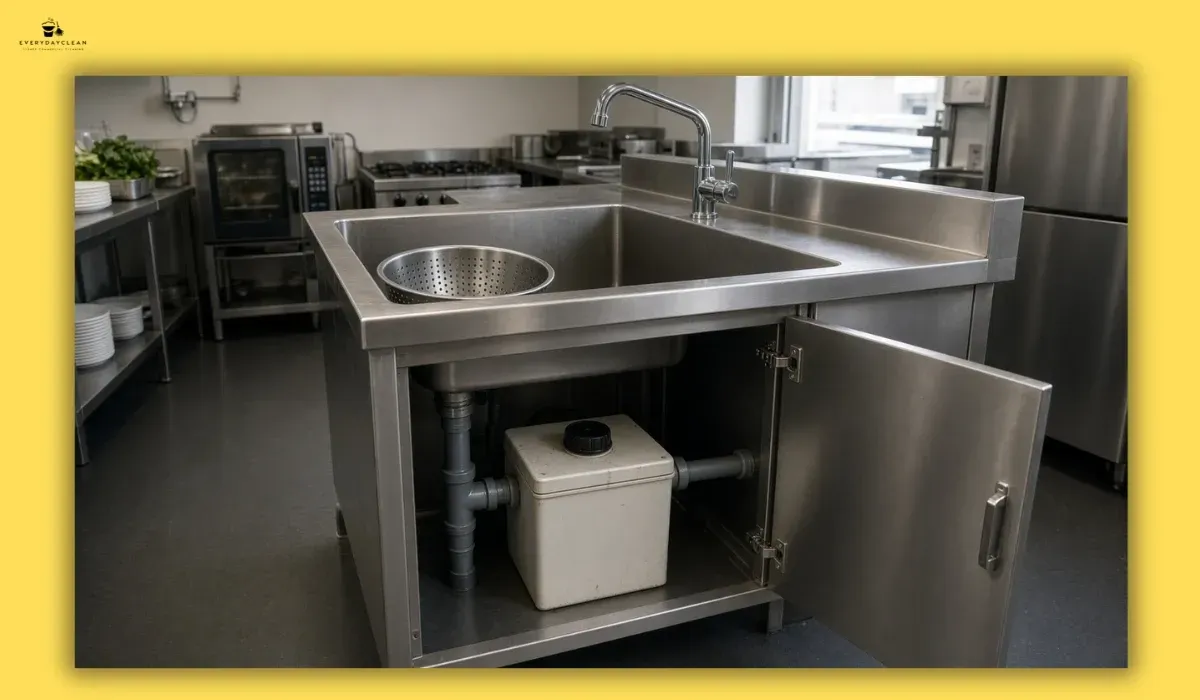
- Grease traps: frequency varies widely with volume and local rules, and is commonly set on a regular cycle rather than left until there is a problem. Confirm your interval with your servicer and local authority. Our commercial grease trap cleaning guide covers this further.
- Exhaust hoods and canopies: cleaning frequency depends heavily on how much and what you cook, and is tied to fire safety, so it should follow qualified guidance rather than a fixed guess. See our notes on commercial exhaust hood cleaning.
- Ice machines: typically cleaned and sanitised every few months following the manufacturer's instructions, as build-up affects both hygiene and performance.
- Coffee machines: usually rinsed and wiped daily, with a periodic deep clean and descale per the manufacturer, since residue and scale build up quickly with heavy use.
Because these intervals shift with usage, equipment, and local rules, it is safer to plan each one as its own line item than to fold it into the general routine.
Who owns the commercial cleaning schedule?
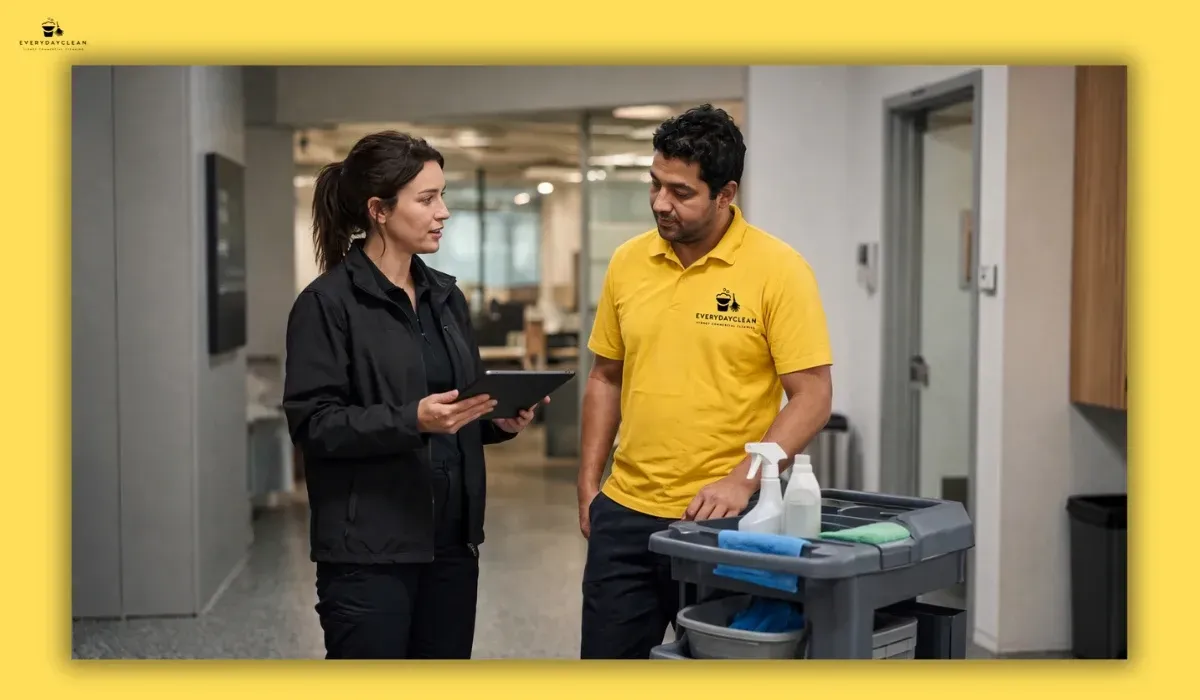
Clear ownership keeps a schedule from slipping. On most sites it splits like this:
- The cleaning provider carries out the scheduled tasks and flags anything outside scope, such as repairs or specialist servicing.
- The site manager or business owner sets the scope and frequency, approves the schedule, and books specialist work like grease trap or hood servicing.
- Staff keep shared areas usable between cleans and report spills, faults, or hygiene issues promptly.
Writing down who owns each part, plus a short sign-off after each visit, gives you a record and keeps standards steady.
Frequently asked questions
How often should commercial carpets be professionally cleaned?
As a general guide, many commercial carpets are professionally cleaned every 6 to 12 months, with high-traffic areas done more often. Regular vacuuming between deep cleans helps protect the fibres and appearance.
How often should a commercial kitchen be deep cleaned?
A full kitchen deep clean is often scheduled monthly to quarterly, on top of daily and weekly upkeep. The right interval depends on cooking volume, the equipment in use and local food-safety expectations, so confirm against your own requirements.
How often should a commercial grease trap be cleaned?
Grease trap frequency varies with volume and local rules, and is usually set on a regular cycle rather than left until it fails. Check the required interval with your servicer and local council or water authority.
How often should commercial kitchen hoods be cleaned?
Hood and canopy cleaning frequency depends on how much and what you cook, and is closely tied to fire safety. Because of that risk, it should follow qualified guidance rather than a fixed assumption.
How often should a commercial ice machine or coffee machine be cleaned?
Both follow the manufacturer's instructions. Ice machines are typically sanitised every few months, while coffee machines usually need daily rinsing plus a periodic deep clean and descale, since residue and scale build up quickly with heavy use.
Is there a commercial cleaning schedule template I can use?
Yes. Map your areas down one side and frequencies across the top, then attach real tasks to each cell. Keep it as a spreadsheet, printed sheet or wall chart, and review it as traffic and needs change.
Making your commercial cleaning schedule stick
Start with the frequency bands, attach real tasks by area, set each specialist item on its own line, and name who owns what. Review it once or twice a year as your site and traffic change. If consistency is proving hard across a larger or higher-risk site, professional commercial cleaning in Sydney can run the routine to a schedule you set, with a clear record of what was done and when.
Blog