Commercial Kitchen Grease Trap Cleaning: Health Rules
Commercial kitchen grease trap cleaning removes built-up fats, oils, grease and food solids from the trap so wastewater can flow through properly, reducing the risk of odour, blockages and drainage problems. A trap that is not cleaned on a sensible schedule fills up, stops separating grease effectively, and can lead to slow drains, backups and unpleasant smells in the kitchen.
This guide covers what a grease trap does, the signs it may need attention, a high-level maintenance workflow, what affects cleaning frequency, and where the line sits between what kitchen teams can monitor and what belongs to licensed contractors. It focuses on grease traps specifically, not exhaust hoods, canopies or general kitchen cleaning.
What A Grease Trap Does In A Commercial Kitchen
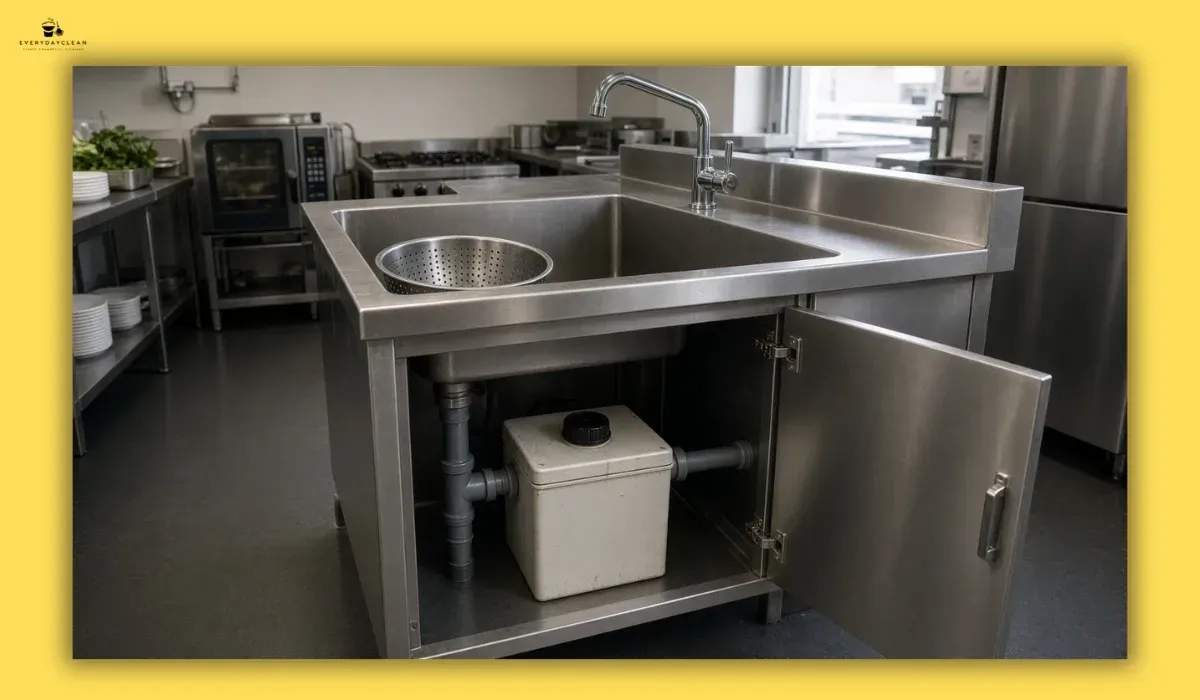
A grease trap sits between the kitchen's sinks and the sewer, and its job is to slow wastewater down so fats, oils and grease, often called FOG, can separate out before the water continues to the drain. Grease floats and food solids sink, so the trap holds both while the cleaner water in the middle flows on.
Over time, the layers of grease and solids build up and reduce the space the water has to move through. Once the trap is too full, it can no longer separate grease effectively, and fats start passing into the drain lines where they cool, harden and cause blockages. Regular cleaning keeps the trap working as intended.
Signs A Grease Trap May Need Cleaning
A grease trap usually gives warning signs before it fails outright. Kitchen teams are well placed to notice these day to day.
- Persistent or worsening odour around drains or the trap area
- Slow drainage from kitchen sinks or floor drains
- Drain backups or water pooling where it should not
- Visible grease building up at or near the trap
- Pests attracted to the area, which grease and food waste can draw
- Repeated plumbing issues that keep recurring after being cleared
Any of these can indicate the trap is overdue for cleaning, though slow drains and backups can also have other causes, so they are a prompt to check rather than a definitive diagnosis.
Basic Grease Trap Maintenance Workflow
At a high level, grease trap servicing follows a consistent sequence. The detail and who carries it out depend on the trap type, size and local requirements, and larger or fully-submerged traps are generally a contractor task rather than a kitchen one.
- Isolate safely: stop adding wastewater and set up the area safely before opening the trap
- Remove accessible waste: take out the built-up grease and food solids from the trap
- Clean internal surfaces: clear grease from the walls, base and internal components
- Check baffles, lids and seals: inspect these for damage, wear or poor sealing
- Dispose of waste appropriately: grease trap waste must be handled and disposed of through the correct channels, not down the drain
- Record the service: note what was done, when, and by whom
Grease trap waste may be treated as a controlled or regulated waste stream, depending on the area and site requirements, and how it must be transported and disposed of is generally set by local requirements, so this part in particular is usually handled by approved waste contractors.
What Affects Cleaning Frequency
There is no single cleaning interval that suits every kitchen, since the right frequency depends on how quickly the trap fills. Several factors drive that.
| Factor | Effect On Frequency |
|---|---|
| Kitchen size and covers | Busier kitchens fill traps faster |
| Cooking volume | Higher output means more grease |
| Menu type | Fried and fatty menus load the trap more |
| Trap size and capacity | Smaller traps fill and need cleaning sooner |
| Local requirements | Some areas set minimum servicing expectations |
A common approach is to service based on how full the trap gets, sometimes measured as a proportion of its capacity, rather than purely on the calendar. Local councils or water authorities may set their own expectations, so it is worth checking what applies to a specific premises.
What Kitchen Teams Can Monitor Versus Contractor Work
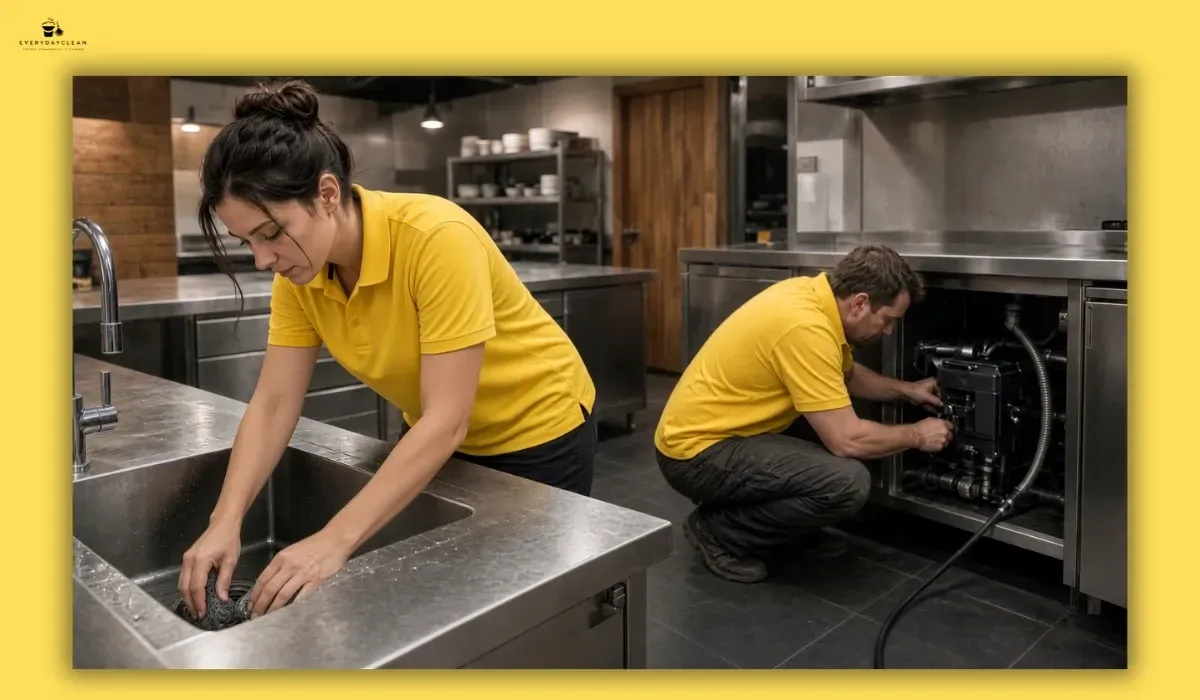
There is a useful split between day-to-day monitoring and the actual servicing. Kitchen teams can watch for warning signs, keep good habits that reduce load on the trap, and flag issues early. Contractors handle the servicing and waste disposal.
Kitchen-side habits that help include scraping food scraps into the bin rather than the sink, using sink strainers, avoiding pouring fats and oils down the drain, and reporting odour, slow drainage or backups promptly. The cleaning, inspection of internal components, and disposal of grease trap waste are generally best left to licensed or approved waste and plumbing contractors, since grease trap waste may be treated as a controlled or regulated waste stream, depending on the area and site requirements, and the work can in some cases involve confined-space or plumbing considerations. This guide is general information, not plumbing or regulatory advice, so specific requirements should be confirmed with the relevant contractor or authority.
How Grease Trap Cleaning Differs From Other Kitchen Cleaning
Grease trap cleaning is sometimes lumped in with other commercial kitchen cleaning, but it is a distinct task. Grease trap cleaning deals with the wastewater system beneath the sinks, removing separated fats and solids so water drains properly.
Exhaust hood and canopy cleaning, by contrast, deals with the grease that collects in the ventilation system above the cooking line, which is a fire-safety and air-quality concern rather than a drainage one. General kitchen cleaning covers surfaces, floors, equipment and hygiene across the kitchen. These are separate jobs with separate schedules, and keeping one clean does not cover the others. Broader commercial kitchen cleaning guidance can help coordinate the surface and hygiene side, while grease traps and exhaust systems are typically specialist tasks in their own right.
Records To Keep
Keeping records of grease trap servicing is useful for several parties and is often expected. Good records generally include the date of each service, what was done, who carried it out, the volume or proportion of waste removed where recorded, and where the waste was disposed of.
These records can matter to landlords and facility managers tracking maintenance, councils or water authorities that may request evidence of servicing, and plumbers diagnosing recurring issues. Keeping the paperwork in one accessible place makes it easier to demonstrate a maintenance history and to spot whether the cleaning interval needs adjusting.
Keeping A Grease Trap Working Between Services
The most reliable way to avoid grease trap problems is a combination of sensible servicing intervals and good daily habits. Monitoring for odour, slow drainage and backups, keeping fats and food solids out of the drains, and servicing before the trap gets too full all reduce the risk of blockages and smells.
Because grease trap waste and disposal are generally controlled, the servicing itself is usually a contractor task, while the kitchen's role is monitoring, prevention and record-keeping. Matching the cleaning frequency to how the kitchen actually operates, and confirming any local requirements, keeps the system flowing and the kitchen running smoothly.

Frequently Asked Questions About Grease Trap Cleaning
How Often Should A Commercial Grease Trap Be Cleaned?
It depends on kitchen size, cooking volume, menu type and trap capacity, so busy or fry-heavy kitchens need more frequent servicing. Many are cleaned based on how full the trap gets rather than a fixed date. Local councils or water authorities may also set expectations, so it is worth confirming what applies.
What Are The Signs A Grease Trap Needs Cleaning?
Common signs include persistent odour, slow drainage, backups, visible grease build-up, pests around the area, and recurring plumbing issues. These indicate the trap may be overdue, though drainage problems can have other causes, so they are a prompt to check rather than a certain diagnosis.
Can Kitchen Staff Clean The Grease Trap Themselves?
Staff can monitor for warning signs and keep habits that reduce grease load, but the servicing and waste disposal are generally best handled by licensed or approved contractors. Grease trap waste may be treated as a controlled or regulated waste stream depending on the area and site requirements, so how it is removed and disposed of is usually set by local requirements.
Is Grease Trap Cleaning The Same As Exhaust Hood Cleaning?
No. Grease trap cleaning deals with fats and solids in the wastewater system below the sinks, while exhaust hood and canopy cleaning deals with grease in the ventilation above the cooking line. They are separate tasks with separate schedules, and keeping one clean does not cover the other.
Blog