
How to Remove Mould from Ceilings Without Paint Damage
Small patches of mould on a ceiling can often be cleaned by improving ventilation, wearing basic protective gear, testing a mild cleaning solution on a hidden spot, wiping the area gently, drying it fully, and then fixing whatever is causing the moisture. Cleaning the visible mould alone is rarely enough, since it tends to return if the underlying damp is left unaddressed.
This guide covers painted and bathroom ceilings specifically, including what causes ceiling mould, the safety checks to do before you start, a gentle cleaning method that protects paint, and the point where a mould problem is better left to a professional. It focuses on small, manageable patches rather than large or structural mould issues. In Australia, "mould" is the common spelling, though some people search for "mold", and both refer to the same thing here.
Common Sources of Moisture and Ceiling Dampness
Ceiling mould is almost always a moisture problem. Mould needs damp and poor airflow to grow, and ceilings often provide both, particularly in bathrooms, kitchens, laundries and poorly ventilated rooms.
Common causes include steam and condensation from showers and cooking, poor ventilation that lets humid air sit against the ceiling, roof or plumbing leaks, and cold surfaces where warm moist air condenses. Identifying the likely cause matters, because the same patch will keep returning if the moisture source stays. A leak-driven patch, for example, needs the leak fixed, not just a wipe-down.
Safety Checks Before You Start
A few checks before cleaning help avoid injury and avoid making the problem worse.
- Working at height: use a stable step ladder on firm, level ground, and avoid overreaching. Have someone nearby where possible
- Basic PPE: wear gloves, eye protection and a suitable mask or respirator for the task, since disturbing mould can release spores
- Ventilation: open windows and doors so the area is not enclosed while you work
- Chemical safety: never mix cleaning products, particularly bleach with ammonia or other cleaners, as this can create dangerous fumes
- Surface check: press gently to check the plaster is firm. Soft, sagging or crumbling plaster suggests water damage that needs assessment rather than cleaning
If disturbing the mould causes irritation, or the area feels unsafe to reach, stop and reconsider whether DIY is the right approach.
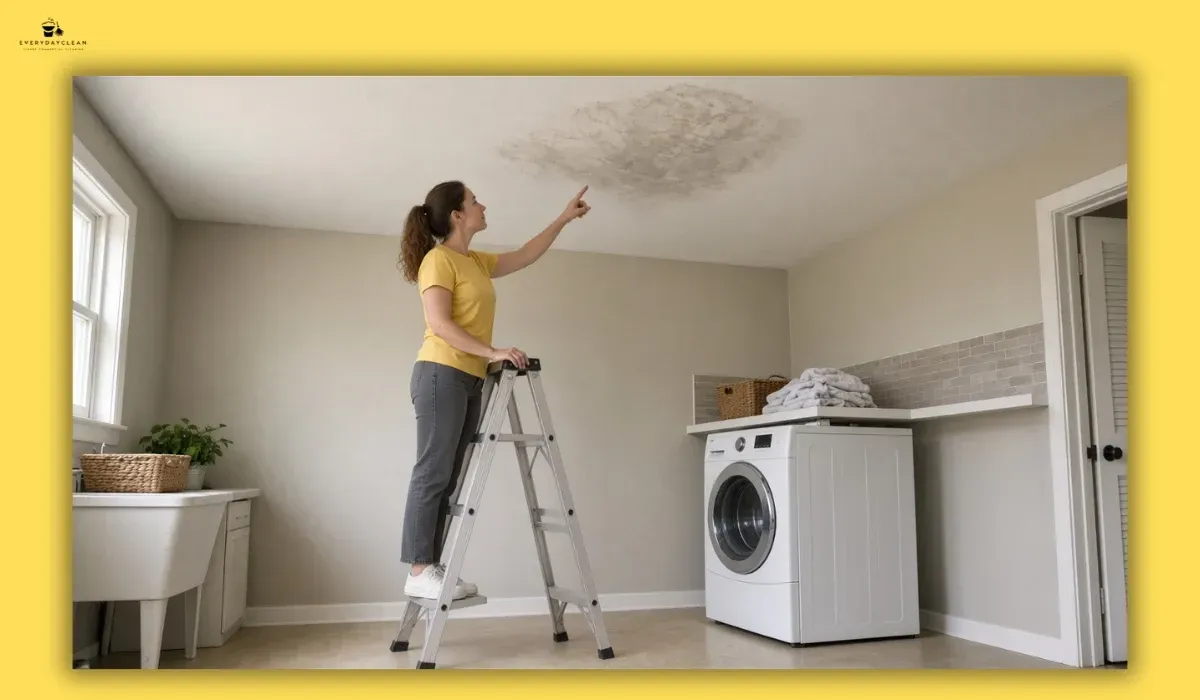
How To Clean Small Ceiling Mould Patches
For a small patch on a sound, painted ceiling, a gentle approach usually works and protects the paint.
- Ventilate the room and put on gloves, eye protection and a mask
- Set up a stable ladder and lay a drop sheet below to catch drips
- Mix a mild solution, such as a small amount of dishwashing liquid in warm water, or a diluted cleaning product suited to mould
- Test the solution on a small, hidden area first to check it does not lift or mark the paint
- Wipe the mould gently with a damp (not soaking) cloth, working without heavy scrubbing
- Rinse the cloth often and go over the area again if needed, rather than scrubbing hard
- Dry the ceiling thoroughly with a clean cloth and keep the room ventilated until fully dry
Work gently and avoid over-wetting, since too much moisture can damage paint and plaster and add to the damp problem you are trying to solve. For a broader walk-through of home mould removal beyond the ceiling, these steps for removing mould at home cover the general approach.
How To Avoid Damaging The Paint
Painted ceilings are easy to mark, so a light touch matters. Harsh scrubbing, abrasive pads and strong undiluted chemicals can strip paint, leave patches or dull the finish.
Testing any solution on a hidden spot first is the single most useful habit, since it shows how the paint reacts before you treat the visible area. Use soft cloths rather than abrasive scourers, keep the cloth damp rather than wet, and avoid repeatedly going over the same spot with pressure. If the paint starts to lift or discolour during testing, stop and consider a gentler method or professional advice, as the ceiling may need repainting after treatment.
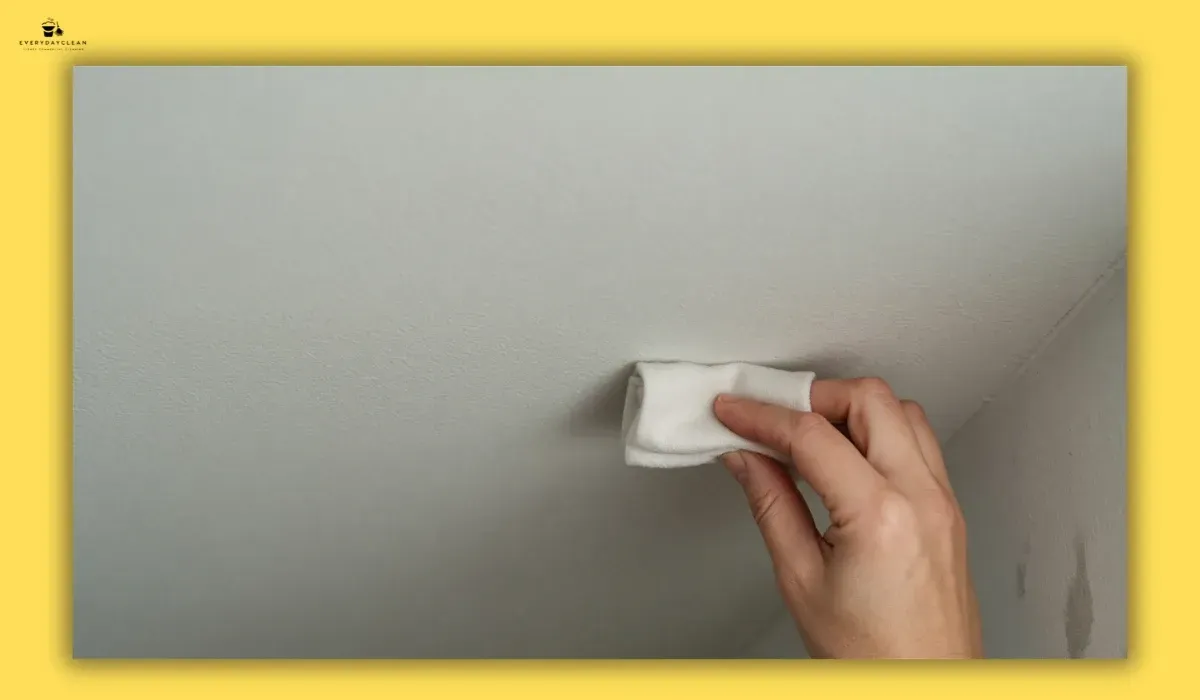
Bathroom Ceiling Mould Needs Moisture Control Too
Bathroom ceilings are the most common place for ceiling mould, because showers create steam and bathrooms are often poorly ventilated. The cleaning method above applies, but the moisture side matters even more here.
Running an exhaust fan during and after showers, opening a window where possible, and wiping down excess condensation all help reduce the damp that feeds mould. Cleaning the ceiling without improving airflow usually means the mould returns. Guidance on keeping bathroom moisture under control covers ventilation and prevention habits that make ceiling mould less likely to come back.
Cleaning Alone Is Not Enough If Moisture Remains
It is worth repeating that removing visible mould does not fix the cause. If the damp source stays, whether that is a leak, condensation or poor ventilation, the mould will generally grow back in the same place.
After cleaning, address the moisture: improve ventilation, fix any leaks, and reduce condensation. A patch that keeps returning despite cleaning is a sign the moisture problem has not been solved, and that is often the point to bring in help rather than clean it again.
Comparing Ceiling Mould Situations
| Situation | Practical Approach |
|---|---|
| Small patch, sound painted ceiling | Gentle DIY clean, then fix moisture |
| Bathroom ceiling with steam | Clean plus improve exhaust and ventilation |
| Large or spreading area | Professional assessment is safer |
| Soft, stained or leaking ceiling | Stop, check for water damage first |
When Not To DIY Ceiling Mould
DIY suits small patches on sound ceilings, but some situations are better handled professionally. Stop and seek help if the mould covers a large area, keeps returning after cleaning, is linked to a water leak, appears on soft or damaged plaster, cannot be reached safely, or if the room has poor ventilation that makes cleaning risky.
For commercial or shared spaces, a broader commercial cleaning service may help with cleaning planning, while leaks, damaged plaster or widespread mould may need specialist assessment. Persistent or widespread mould is often a sign of a bigger moisture problem that cleaning alone will not resolve.

Frequently Asked Questions About Ceiling Mould
What Is The Best Way To Remove Mould From A Ceiling?
For small patches on a sound painted ceiling, ventilate the room, wear gloves, eye protection and a mask, test a mild solution on a hidden spot, then wipe gently without heavy scrubbing and dry the area fully. Fixing the moisture source afterwards is essential, or the mould tends to return.
Why Does Mould Keep Coming Back On My Ceiling?
Because cleaning removes the visible mould but not the cause. If the damp source remains, such as a leak, condensation or poor ventilation, the mould will usually grow back. Recurring mould in the same spot is a sign the moisture problem still needs to be addressed.
Can You Remove Mould From A Painted Ceiling Without Damaging It?
Often, if you work gently. Test any solution on a hidden area first, use a soft damp cloth rather than abrasive scrubbing, and avoid over-wetting. If the paint lifts or discolours during testing, the ceiling may need repainting after treatment, so a gentler method or professional advice is worth considering.
Is Ceiling Mould In The Bathroom Dangerous To Clean Myself?
Small patches can often be cleaned with basic PPE and good ventilation. However, disturbing mould releases spores, so a mask and airflow matter. Large areas, recurring mould, or mould linked to leaks are better assessed professionally rather than repeatedly cleaned.
Blog