Butcher Shop Cleaning Procedure: Steps and Checklist
A butcher shop cleaning procedure sets out how to clean and sanitise food-contact surfaces, equipment, floors, drains, cool rooms, waste areas and staff spaces, and how to record the work. The aim is a routine that is consistent, easy to follow during a busy trading day, and clear about who does what.
Butcher shops handle raw meat across the day, so the order of steps matters. Cleaning and sanitising are treated as two separate actions, and high-risk equipment is broken down and dealt with properly rather than wiped over.
A butcher shop cleaning procedure separates cleaning from sanitising across every food zone
A butcher shop cleaning procedure should separate cleaning and sanitising, and cover food-contact surfaces, equipment, floors, drains, waste, cool rooms, staff areas and records.
Quick answer: a butcher shop cleaning procedure first cleans a surface to remove debris and grease, then sanitises it to reduce remaining bacteria. It applies this to benches, slicers, mincers, knives, display cabinets, cool rooms, floors, drains and bins, scheduled across opening, trade and close, with the work logged so nothing is skipped.
The same base approach suits most food retail settings. Fish and chip shops, discussed later, follow the same structure with a few fryer and splash-zone additions.
Cleaning and sanitising are two separate steps, not one
The main difference is what each step does. Cleaning removes visible soil, fat and food residue, while sanitising reduces the bacteria left behind on a cleaned surface.
What does cleaning remove?
Cleaning uses detergent, warm water and physical effort to lift grease, blood, meat debris and general soil from a surface. A surface that still looks or feels greasy has not been cleaned properly, and sanitiser applied over that residue will not work as intended. Cleaning always comes first.
What does sanitising do?
Sanitising reduces bacteria on a surface that has already been cleaned. It needs the right product, the right dilution and enough contact time to work, so surfaces are usually left wet for the time stated on the label rather than wiped dry straight away. Sanitising supports food safety but does not replace thorough cleaning, and it cannot make up for a surface that was not cleaned first.
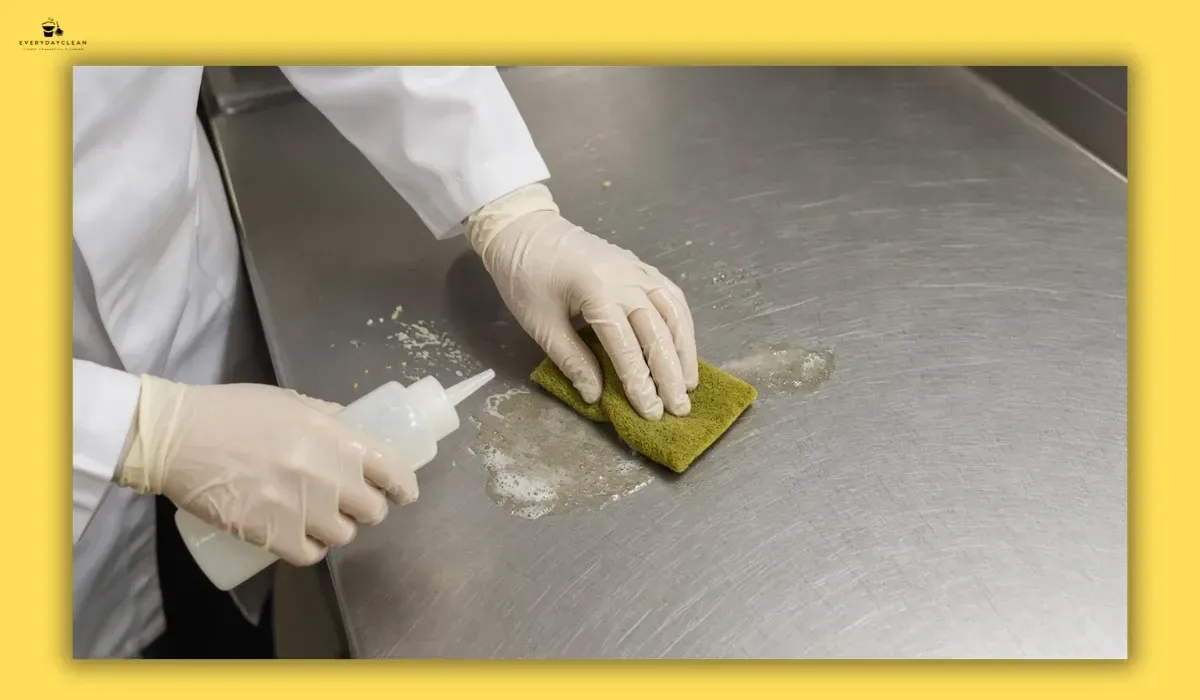
FSANZ Standard 3.2.2 frames clean and sanitary as a general expectation
Food Standards Australia New Zealand (FSANZ) Standard 3.2.2 sets a general expectation that food premises, fixtures, fittings, equipment and food transport vehicles are kept clean and sanitary. FSANZ guidance also treats cleaning and sanitising as two distinct steps, which is why a butcher shop procedure keeps them separate.
This is general context only, not legal advice or a compliance guarantee. Requirements can vary by location and by business type, so butcher shops and other food businesses should confirm their specific obligations with their local council, their food safety supervisor or the relevant state or territory food authority.
A butcher shop cleaning duties checklist covers opening, trade and close
A butcher shop cleaning duties checklist works best when it splits tasks across opening, during trade and closing, so the shop starts clean, stays controlled through the day and is reset at close.
What are the opening tasks?
- Check cool rooms and fridges are holding temperature and look clean
- Wipe and sanitise benches and food-contact surfaces before any product is handled
- Confirm hand-wash stations have soap and paper towel
- Check display cabinets are clean and trays are sanitised
- Make sure cleaning cloths, sanitiser and bin liners are stocked and ready
What needs cleaning during trade?
- Clean and sanitise benches and boards between different products, especially when moving between raw meat types
- Wipe scales, counters and handles that are touched often
- Clear offcuts and debris as work goes, rather than letting it build up
- Spot-clean floor spills quickly and use signage where needed
- Keep display cabinet trays tidy and rotate as product sells
What are the closing tasks?
- Break down and clean slicers, mincers and saws, then sanitise food-contact parts
- Clean and sanitise all benches, boards, knives and hand tools
- Empty, clean and sanitise display cabinets and trays
- Sweep and mop floors, including under benches and equipment
- Clean drains, empty and wash bins, and remove waste
- Wipe cool room handles, shelves and seals, and clean any spills
- Complete the cleaning and sanitising log for the day
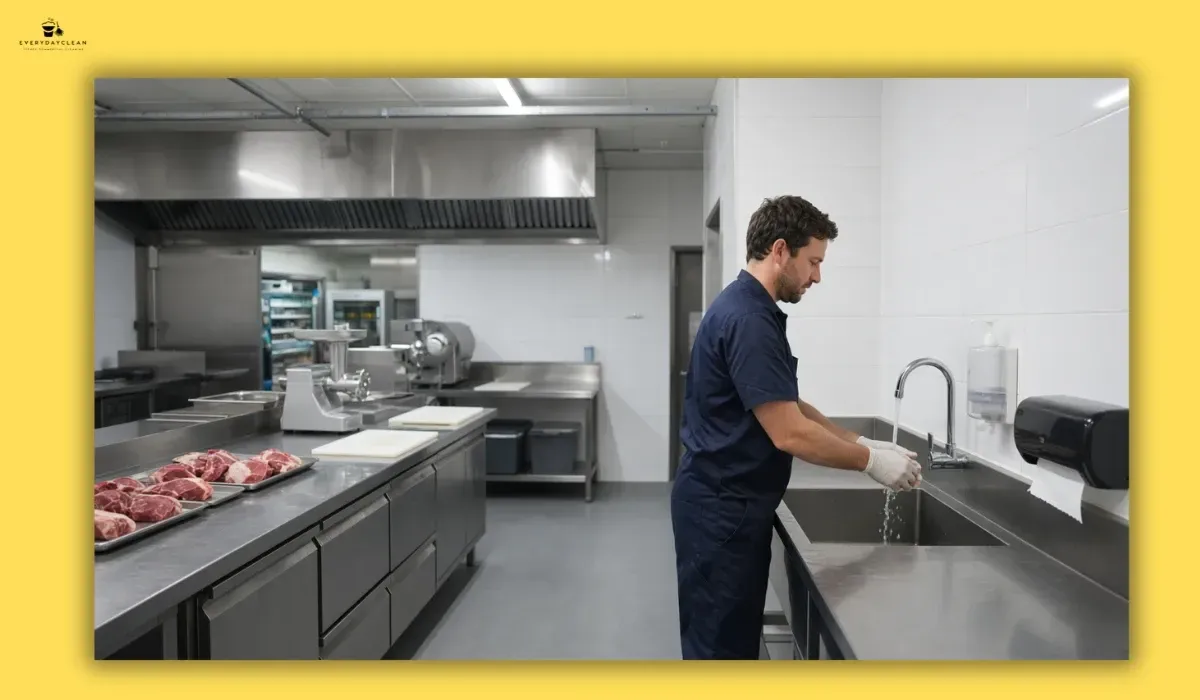
Equipment and surfaces each need a set cleaning and sanitising method
Each piece of equipment needs its own method, because a slicer, a mincer and a display cabinet carry different risks and come apart differently. The table below is a general guide and should be adjusted to each manufacturer's instructions and the shop's own food safety program.
| Equipment or surface | Clean | Sanitise | Typical frequency |
|---|---|---|---|
| Cutting benches and boards | Remove debris, wash with detergent | Apply food-safe sanitiser, allow contact time | Between products and at close |
| Slicers | Dismantle removable parts, wash components | Sanitise blade, guard and food-contact parts | After use and at close |
| Mincers | Break down, wash all components | Sanitise every food-contact part | After product changes and at close |
| Knives and hand tools | Wash with detergent | Sanitise, then air dry or use clean cloths | Between tasks and at close |
| Display cabinets and glass | Wipe interior, trays and glass | Sanitise food-contact trays | Daily, trays as needed |
| Cool rooms and fridges | Clear, wash shelves and floors | Sanitise handles, seals and shelves | Scheduled, with spill clean-up as needed |
| Floors | Sweep, then mop with detergent | Sanitise higher-risk zones | Daily, more often in wet areas |
| Drains | Clear and scrub | Treat per product guidance | Regular schedule |
| Bins | Empty and wash | Sanitise lids and touch points | Daily |
Removable parts on slicers and mincers are where debris hides, so these are taken apart rather than wiped in place. Anything that cannot be cleaned on a schedule the shop can actually keep up should be flagged for review.
Cross-contamination and chemical storage are the main risk points
Cross-contamination and unsafe chemical storage are the two risks most likely to cause problems in a butcher shop. Both are manageable with simple, consistent habits.
To reduce cross-contamination risk:
- Clean and sanitise between raw meat types and between tasks
- Use separate or clearly managed boards and tools where practical
- Avoid letting cloths move soil from a dirty surface to a clean one, and change or launder cloths regularly
- Keep raw product, waste and clean equipment separated in storage and handling
- Wash hands at the right points, not only at the start and end of the day
For chemical storage and safe use:
- Store cleaning chemicals away from food, packaging and food-contact surfaces
- Keep products in labelled containers and never in unmarked drink bottles
- Follow the label and the Safety Data Sheet for dilution, contact time and protective equipment
- Keep sanitiser and heavy-duty degreasers separated and clearly marked
- Make sure staff know which product is used where, and at what strength
Good cleaning and sanitising can reduce contamination risk, but it works alongside safe handling, storage and temperature control rather than replacing them.
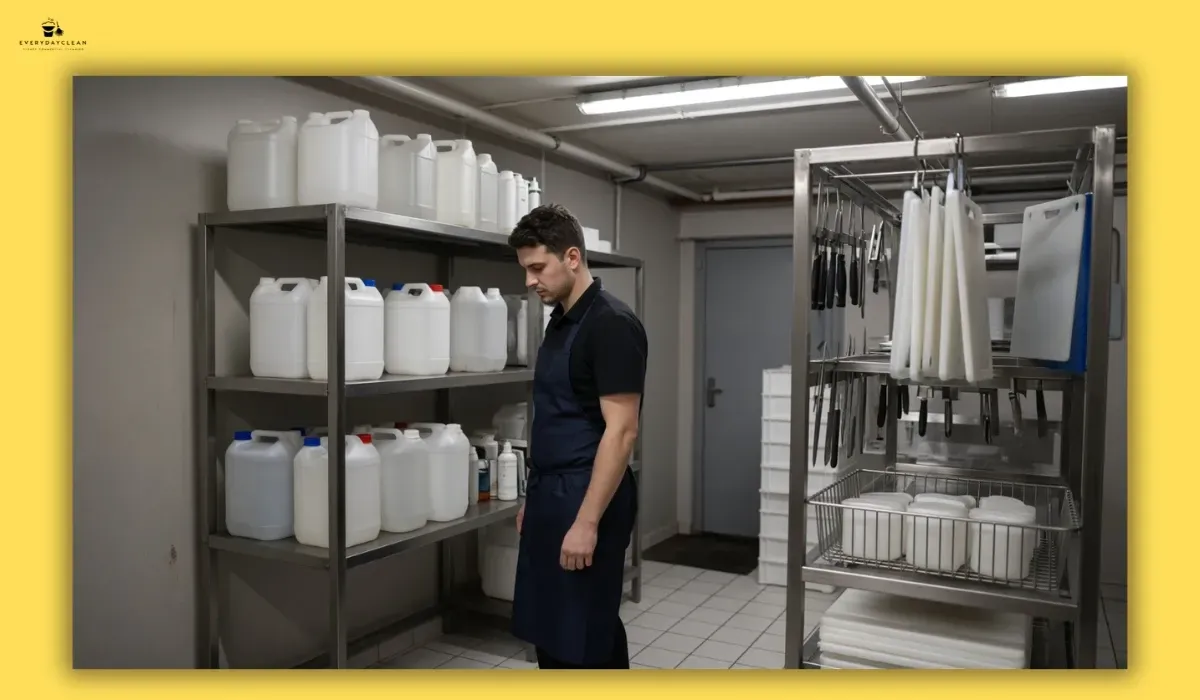
Cleaning, sanitising and maintenance records support a reliable routine
Records turn a cleaning routine into something that can be checked and improved. A simple log shows what was cleaned, when, by whom, and whether anything needs follow-up.
Useful records include a daily cleaning and sanitising log, an equipment breakdown and deep-clean schedule, a chemical list with dilution notes, and a maintenance log for repairs to seals, drains, fridges and equipment. These do not need to be complex. A clear checklist that staff actually complete each day is more useful than a detailed system nobody keeps up. Records also help when confirming the routine with a food safety supervisor or an inspecting authority.
Fish and chip shops share the same base routine with fryer and splash-zone extras
Fish and chip shops follow the same cleaning and sanitising structure as a butcher shop, with extra attention to fryers, oil splash zones and ventilation. A fish and chip shop cleaning list usually adds the following to the core routine:
- Fryers: safe cooling before cleaning, oil management, and cleaning of baskets, surrounds and splash areas
- Splash zones: walls, surfaces and equipment near fryers where grease and batter build up
- Floors: regular cleaning of oily, higher-slip areas, with signage during wet cleaning
- Counters and food-contact surfaces: cleaned and sanitised through trade and at close
- Bins and waste: frequent removal to manage oil, food waste and odour
- Ventilation touch points: cleaning of accessible filters and surrounds on a schedule, with specialist exhaust and canopy cleaning handled separately
Many fish and chip shops and butchers sit inside or beside shopping centres, where food retail tenancies also coordinate with the venue's own retail and shopping centre cleaning for shared walkways, bathrooms and bin areas.
Trained food business staff and external cleaners cover different tasks
Responsibility usually splits by risk and timing. Trained food business staff handle food-contact cleaning and sanitising, while external cleaners more often handle floors, back-of-house and periodic tasks.
Food business staff are generally best placed to clean and sanitise benches, boards, knives, slicers, mincers, display cabinets and cool rooms, because this work happens throughout the day and is tied directly to food safety. These tasks also belong in the shop's own food safety program.
External cleaners often support floors, walls, back-of-house areas, bins, drains and scheduled deep cleaning, usually outside trading hours. General commercial cleaning services can cover this surrounding work, though food-contact sanitising and food safety compliance remain the responsibility of the trained food business operator and should be confirmed with a food safety supervisor or the relevant authority.
Building a butcher shop cleaning routine that holds up day to day
A butcher shop cleaning routine works when it is simple enough to follow on a busy day, clear about cleaning versus sanitising, and specific about who handles each task. The strongest routines break the work into opening, trade and close, give each piece of equipment a set method, control cross-contamination and chemical storage, and log the work so gaps show up early.
Treat this guide as a practical starting point rather than a compliance document. Final requirements should always be confirmed with the local council, a qualified food safety supervisor or the relevant state or territory food authority, since these set the standards a specific shop must meet.
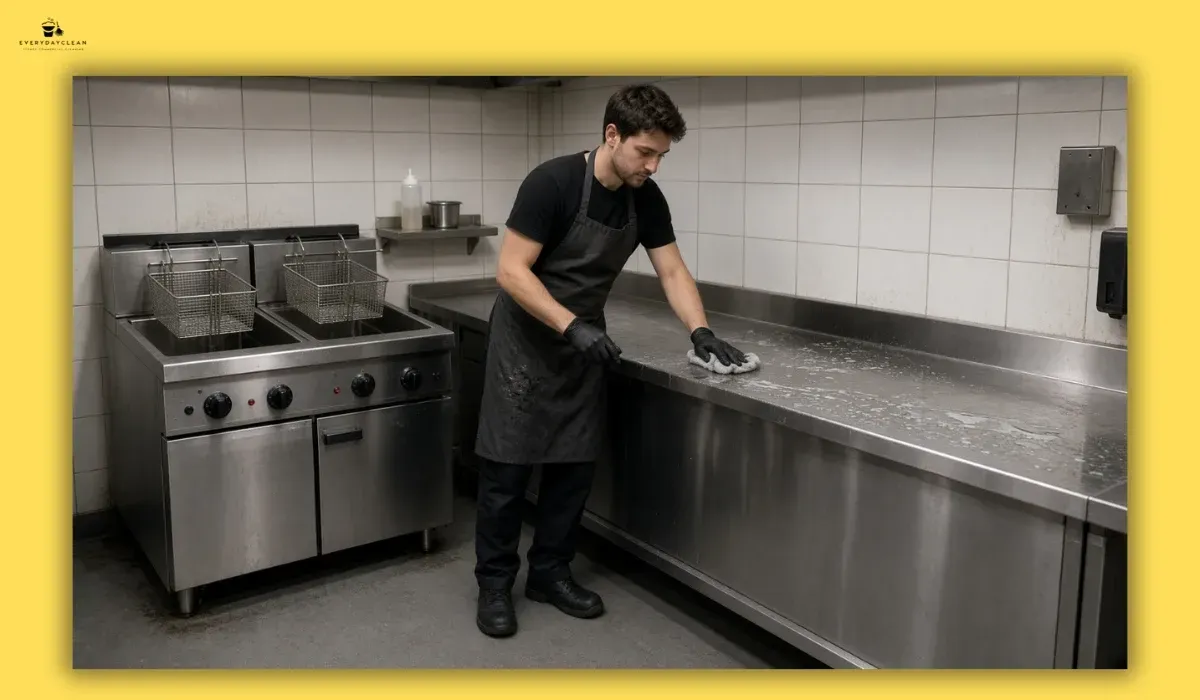
Butcher shop cleaning procedure: common questions
How often should a butcher shop be cleaned?
A butcher shop needs cleaning and sanitising throughout the day, not only at close. Food-contact surfaces are cleaned between products and tasks, high-touch points are wiped regularly during trade, and a full clean of equipment, floors, drains and bins happens at close. Frequency depends on volume, product mix and the shop's own food safety program.
What is the difference between cleaning and sanitising in a butcher shop?
Cleaning removes visible grease, blood, meat debris and soil using detergent and physical effort. Sanitising then reduces the bacteria left on that cleaned surface, using the right product and enough contact time. Cleaning always comes first, because sanitiser applied over residue will not work properly. Both steps are needed, not one or the other.
How are slicers and mincers cleaned safely?
Slicers and mincers are turned off, isolated and broken down into their removable parts before cleaning. Components are washed with detergent to remove debris, then sanitised and allowed to dry or reassembled per the manufacturer's instructions. Cleaning in place is not enough, because debris collects in parts that are only reachable once the equipment is dismantled.
Does a butcher shop cleaning procedure cover fish and chip shops too?
The same base procedure suits most food retail settings, including fish and chip shops. Fish and chip shops add fryer cleaning, oil management, splash-zone surfaces, oily floors and ventilation touch points to the core routine. The cleaning and sanitising logic is the same, with a few extra tasks suited to frying and higher grease levels.
Who is responsible for cleaning in a butcher shop?
Trained food business staff are responsible for food-contact cleaning and sanitising and for food safety compliance, since this work is tied directly to safe food handling. External cleaners can support floors, back-of-house areas, bins, drains and scheduled deep cleaning. The split should be clear and agreed, and overall food safety duties stay with the trained operator.
About Everyday Clean
Everyday Clean is a Sydney-based cleaning company that supports commercial cleaning needs across a range of sites, including general and back-of-house cleaning. Food-safety procedures and compliance remain the responsibility of trained food business operators.
Blog