How to Clean a Retail Store: Staff SOP Guide
How to clean a retail store comes down to a repeatable process rather than a one-off effort: remove hazards first, keep on top of mess during trade, clean floors and surfaces safely, then reset the space and hand over at close. The goal is a routine any staff member can follow the same way, shift after shift.
This guide covers the process and the people, not an area-by-area task list. It sets out the staff procedure, the safe work method, the trading-hours flow and the basic policies that keep a store presentable without disrupting customers.
How to clean a retail store follows a remove, maintain and reset flow
To clean a retail store, remove hazards first, then keep surfaces and floors under control through trade, then reset and hand over at close.
Start each shift by clearing hazards and spot cleaning, then wipe high-touch surfaces regularly and clean floors safely using wet floor signs. As you move towards close, reset the fitting rooms and counters, manage waste, run quick quality checks, and complete a closing handover so the next shift starts clean.
Everything below builds on that flow. It works for a single shop and scales up with more staff and a larger floor.
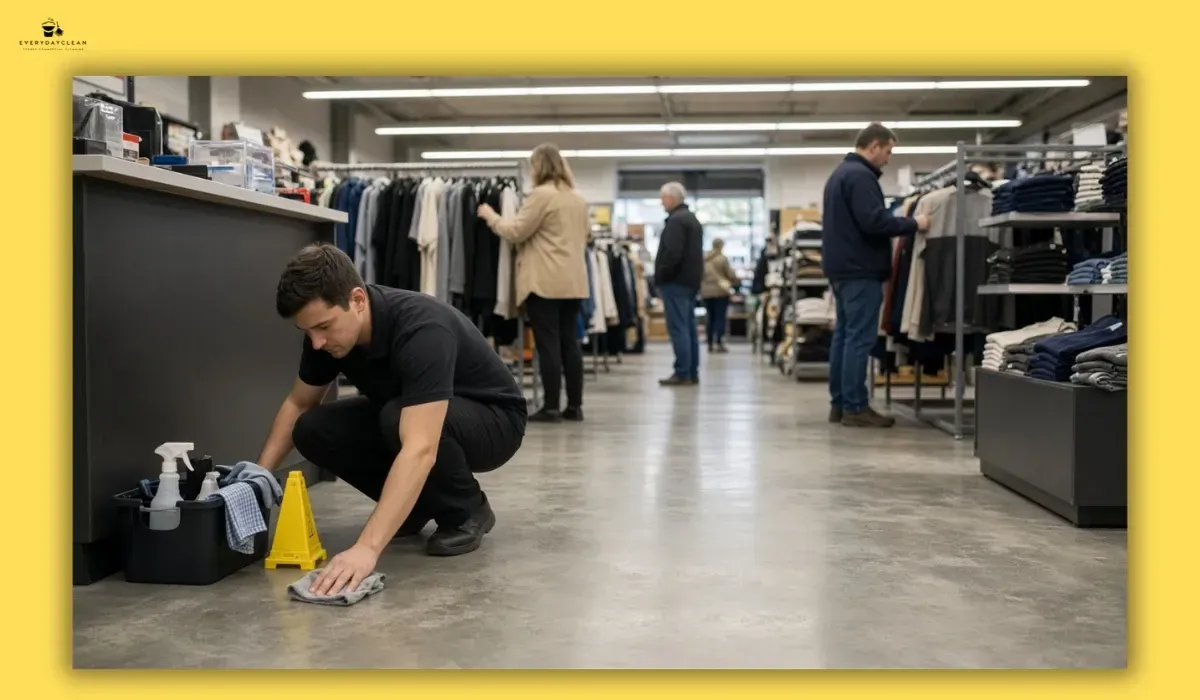
A retail cleaning SOP runs across opening, trade and closing
A retail cleaning standard operating procedure splits the day into three stages, so each shift knows what to do and when. Keeping the stages separate stops cleaning from clashing with customers.
What happens before opening?
Opening is about starting safe and presentable. Before the doors open, staff clear any overnight hazards, check walkways are clear, wipe and reset counters and point-of-sale areas, confirm bathrooms are stocked and clean, and make sure cleaning supplies and signage are on hand. Floors are given a quick check and spot clean so the store opens looking cared for.
What happens during trade?
Trade is about light, frequent upkeep rather than deep cleaning. Staff spot-clean spills as they happen, wipe high-touch surfaces through the day, tidy displays and fitting rooms between customers, clear rubbish, and keep entrances and walkways clear. Wet or noisy tasks are kept to a minimum and done with signage and care while customers are present.
What happens at close?
Close is the full reset. After trade, staff clear and wipe counters, reset fitting rooms, clean and restock bathrooms, remove waste, and clean floors properly once customers have left. The final steps are a quick quality check of the floor and a closing handover, including any issues to flag and a completed sign-off so the record is current.
Retail cleaning staff procedures split work between staff, manager and cleaner
Retail cleaning staff procedures work best when each role has clear tasks. Retail staff handle shop-floor upkeep, the store manager oversees and schedules, and an external cleaner handles heavier and after-hours work.
| Task | Retail staff | Store manager | External cleaner |
|---|---|---|---|
| Spot cleaning during trade | Primary | Oversees | - |
| High-touch surface wiping | Primary | Oversees | Supports after hours |
| Spill response | First response | Escalation point | - |
| Floor mopping and machine scrubbing | Light spot only | Schedules | Primary, after hours |
| Fitting rooms and counter reset | Primary | Checks | - |
| Waste removal | Primary | Oversees | Bulk and bin area |
| Bathrooms | Basic checks and restock | Escalation point | Deep clean |
| Deep clean and periodic tasks | - | Schedules | Primary |
| Sign-off and records | Completes | Reviews | Reports issues |
The split is a guide and should be adjusted to each store's size and staffing. Larger stores and tenancies inside a centre often bring in commercial cleaning services for after-hours floor work and periodic deep cleaning, while day staff keep the floor presentable during trade.
Safe cleaning procedures protect staff and customers in a live store
Knowing how to safely clean work areas in a retail environment matters because the work happens around customers. Cleaning in a live store is as much about managing the space as it is about the cleaning itself.
Core safe-work steps include:
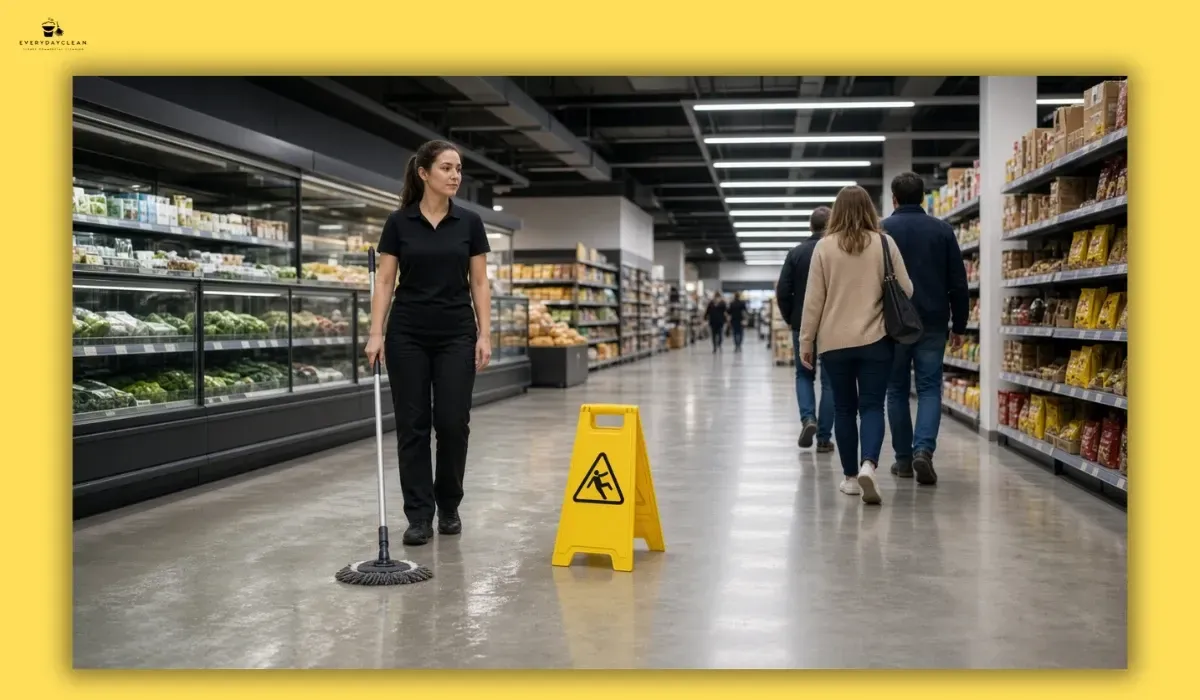
- Place wet floor signs before and during any wet cleaning, and remove them only once the floor is dry
- Cordon off spills, broken glass or hazards until they are cleared, rather than leaving them unattended
- Use personal protective equipment such as gloves where the task or chemical calls for it
- Keep cleaning chemicals in labelled containers, never in unmarked bottles, and follow the label and Safety Data Sheet
- Never block walkways, exits or fire egress with equipment, trolleys or signage
- Leave wet floor cleaning, machine scrubbing and noisy tasks for after hours or quiet periods where possible
- Store chemicals and equipment away from customer reach and away from stock
Working in sections keeps part of the floor open while another is cleaned, so customers always have a safe path through the store.
Keeping a retail store clean during trading hours needs light, frequent resets
Keeping a retail store clean during trade is about small, regular resets rather than one big clean. The aim is to stop mess building up so the store always looks ready, without pulling staff away from customers for long stretches.
Practical ways to keep your retail store clean through the day:
- Build short reset moments into quiet periods, such as tidying a display or wiping a counter between customers
- Deal with spills and dropped stock straight away, not at the end of the shift
- Keep a small cleaning kit near the floor so staff are not walking to a store room for every task
- Reset fitting rooms as customers leave them, not in a single pile at close
- Wipe high-touch points such as door handles, counters, EFTPOS terminals and rails through the day, which can help reduce the spread of germs when done consistently
- Keep entrances and the first few metres of floor clean, since this is what customers notice first
Practical retail cleaning tips that fit a busy shop floor
The most useful retail cleaning tips are operational, not just "clean more often". They make the routine easier to keep up when the floor is busy.
- Assign cleaning tasks to shifts and roles, so upkeep does not rely on whoever happens to notice
- Keep signage, gloves and spill kit stocked and in a known spot, so response is fast
- Standardise which product is used where, so staff are not guessing between bottles
- Train new staff on the cleaning flow during induction, not only on the till
- Use a quick visual check of the floor at set times, such as before peak periods
- Flag recurring problem spots, such as a leaking fridge or a worn floor, for a proper fix rather than repeated clean-ups
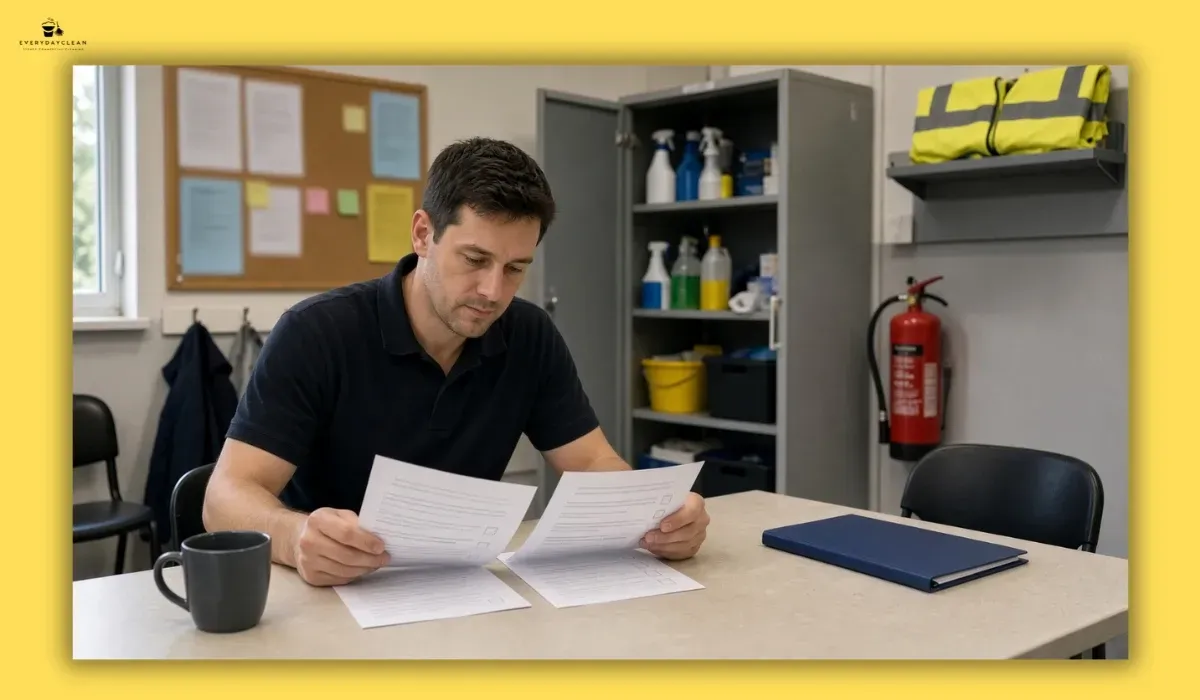
Cleaning policies and procedures in retail set the ground rules
Basic cleaning policies and procedures in retail give staff a clear standard to follow and a path for anything out of the ordinary. Standard cleaning procedures in retail should cover the everyday flow plus a few key rules.
A simple policy set usually includes:
- Hazard reporting: how and when staff report a spill, breakage, leak or slip risk
- Product storage: where chemicals and equipment are kept, labelled and separated from stock
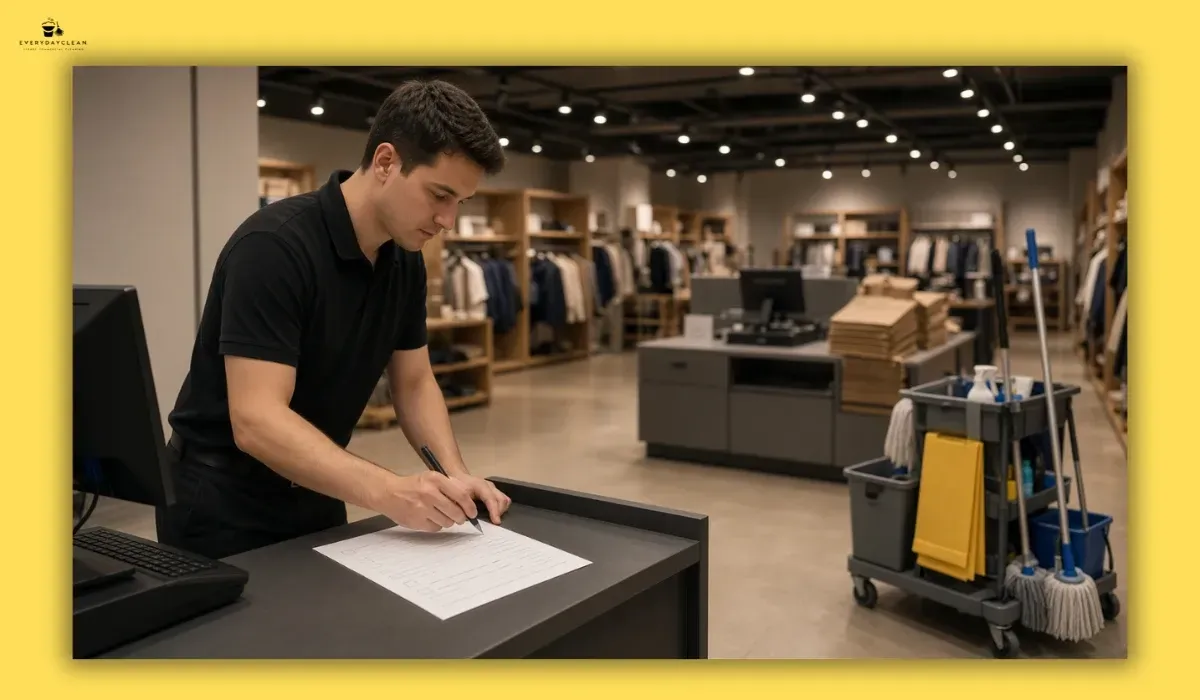
- A sign-off sheet: a short record of cleaning tasks completed each shift, with the person and time
- Escalation rules: what to do about broken glass, large spills, bathroom faults or anything a staff member cannot safely handle alone
- Handover: what gets passed to the next shift or the manager at close
For stores inside a centre, these policies also sit alongside the venue's own retail shopping centre cleaning arrangements for shared walkways, bathrooms and bin areas, so it is clear where store responsibility ends and centre responsibility begins.
A cleaning SOP and a cleaning checklist do different jobs
An SOP and a checklist are not the same thing, and a store usually needs both. The SOP in this guide sets out the process: who cleans, when, how, and what to do when something goes wrong. A checklist sets out the specific tasks by area and frequency.
For the task side, a dedicated retail store cleaning checklist lists what to clean in each area and how often, which pairs well with the staff procedure here. This SOP explains the cleaning process, while the checklist page is better for task-by-task sign-off. Use the SOP to run the shift and the checklist to confirm nothing is missed.
Turning a retail cleaning SOP into a daily habit
A retail cleaning SOP only helps if staff actually follow it, so the simpler and clearer it is, the better it holds up. The strongest routines keep the opening, trade and close stages distinct, give each role defined tasks, build safe-work steps into every wet or hazardous job, and back it all with a short sign-off and clear escalation.
Set the process once, train it into every shift, and review it when the store layout, staffing or stock mix changes. A store that cleans to a repeatable method stays presentable through trade and resets cleanly at close, without cleaning ever getting in the way of customers.
How to clean a retail store: common questions
What is the best order to clean a retail store?
Work from hazards to upkeep to reset. Clear any hazards and spot clean before opening, keep surfaces and floors under control with light cleaning during trade, then do the full reset at close once customers have left. Leaving wet floor cleaning and heavier tasks until after trade keeps customers safe and avoids disruption.
How do you keep a retail store clean during trading hours?
Use small, frequent resets rather than one large clean. Deal with spills and dropped stock straight away, wipe high-touch points through the day, reset fitting rooms as customers leave them, and build short tidy-ups into quiet moments. Keeping a cleaning kit and signage near the floor makes this quick and easy to keep up.
What should a retail cleaning SOP include?
A retail cleaning SOP should set out the opening, trade and close flow, the tasks each role is responsible for, the safe work method for wet and hazardous jobs, and the policies for hazard reporting, product storage, sign-off and escalation. It describes how the store is cleaned and by whom, which is different from a checklist of individual tasks.
Who is responsible for cleaning in a retail store?
Responsibility is usually shared. Retail staff handle shop-floor upkeep such as spot cleaning, high-touch wiping and resets, the store manager oversees and schedules, and an external cleaner handles after-hours floor work, bathrooms and periodic deep cleaning. The exact split should be set out clearly so nothing falls through the gaps.
How is a cleaning SOP different from a cleaning checklist?
An SOP describes the process: who cleans, when, how, and what to do when something goes wrong. A checklist lists the specific tasks by area and frequency. The SOP runs the shift and keeps the method consistent, while the checklist confirms each task is done. Most stores use both together.
About Everyday Clean
Everyday Clean supports commercial and retail cleaning needs across Sydney, including floor care, after-hours cleaning and back-of-house cleaning where it fits the site scope.
Blog