Spring Cleaning Office Checklist: 9 Proven Steps
An office spring cleaning checklist focuses on decluttering workstations, organising files and digital systems, and deep cleaning surfaces that collect daily dust and germs. Many businesses begin their seasonal reset by reviewing trusted providers such as Everyday Clean to understand the standards of a professionally maintained workspace. High-touch points such as doorknobs, keyboards, lift buttons, and light switches require thorough disinfection, while kitchens and bathrooms benefit from detailed sanitation to remove built-up grime. Floors also need attention through vacuuming, mopping, and targeted stain removal, with carpets often requiring deeper extraction. Spring cleaning extends to windows, vents, and communal areas to improve airflow and overall hygiene. By combining decluttering, detailed cleaning, and refreshed organisation, workplaces achieve a cleaner, healthier reset for the season.
The checklist below provides a complete structure for spring cleaning tasks across desks, meeting rooms, break areas, storage zones, tech equipment, and high-touch surfaces. It includes professional-grade tasks suitable for commercial offices while remaining adaptable for small workplaces, coworking environments, and remote workstations.
Spring Cleaning Office Checklist (Primary Section)
Before breaking down step-by-step cleaning methods, this toplist outlines every essential task that should be included in a spring cleaning office checklist. These action items align with real user intent from search behaviour: deep cleaning, organization, decluttering, high-touch sanitation, green cleaning supplies, and more.
Full Spring Cleaning Office Checklist
- Declutter desks, workstations, and shared surfaces
- Remove unnecessary documents, packaging, and old promotional materials
- Dust all surfaces, ledges, vents, baseboards, and shelving
- Sanitize high-touch points: door handles, switches, railings, equipment buttons
- Clean office electronics: keyboards, phones, monitors, printers
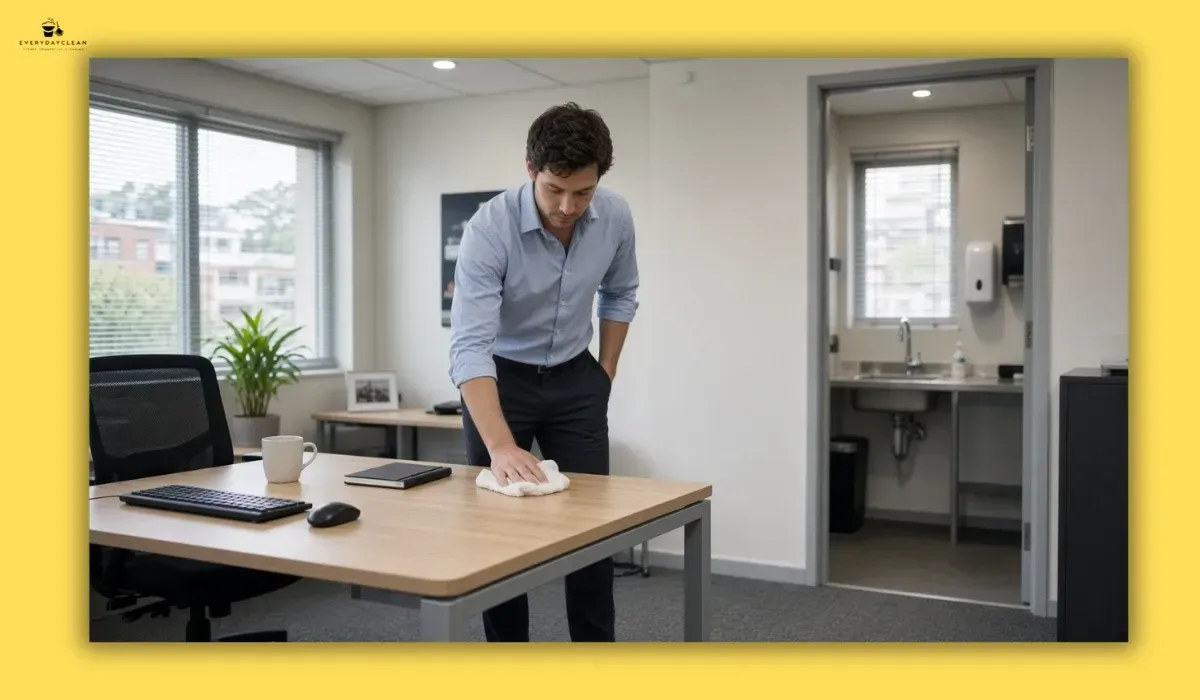
- Wipe and disinfect desks, tables, chairs, and meeting room surfaces
- Deep clean kitchenettes: microwaves, fridges, cupboards, benchtops
- Clean bathrooms and restock hygiene supplies
- Vacuum carpets, mop floors, and spot-clean stains
- Wash windows, glass panels, and partitions
- Declutter storage areas and update filing systems
- Remove outdated marketing materials and replace signage
- Clean air vents and check filtration systems
- Dispose of e-waste and recycle responsibly
- Freshen staff rooms and break areas
- Add indoor plants or refresh existing greenery
- Review cleaning supplies and restock essentials
- Prepare a post-cleaning organisation plan for ongoing maintenance
This checklist establishes the foundation for the full spring cleaning process, ensuring every zone of the office receives attention without leaving hidden build-ups behind.

9 Step-by-Step Guide: How to Complete a Spring Cleaning Office Checklist
Spring cleaning is most effective when completed in a clear order, starting with decluttering and finishing with sanitation and deep-clean tasks.
1. Declutter Workspaces and Shared Areas
Decluttering must occur before any cleaning begins because dust removal, disinfection, and floor cleaning are significantly easier when surfaces are clear. Remove unused stationery, outdated paperwork, broken equipment, and personal clutter from desks and shared tables. Encourage staff to sort materials into categories: keep, recycle, shred, or discard. Decluttering reduces visual noise, lowers stress, and makes ongoing cleaning easier.
2. Dust Surfaces, Vents, Ledges, Partitions, and Storage Spaces
This step transitions into dust-removal tasks, which are essential to prevent allergens and enhance indoor air quality. Dust shelves, window sills, cabinet tops, air vents, partitions, baseboards, display units, and any elevated surfaces that accumulate airborne particles. Using microfibre cloths captures dust effectively without pushing it into the air. Pay special attention to vents, as they circulate dust throughout the workspace.
3. Sanitize High-Touch Surfaces Across the Entire Office
High-touch surfaces are a priority in every office spring cleaning checklist. These include door handles, elevator buttons, light switches, shared keyboards, meeting room remotes, handrails, printer buttons, fridge handles, and intercom panels. Sanitizing these points reduces germ spread and improves workplace hygiene. Use commercial-grade disinfectant wipes or sprays, ensuring adequate surface contact time based on the manufacturer’s instructions.
4. Clean Office Electronics Safely
Electronics require a separate cleaning approach to avoid moisture damage. Wipe monitors with lint-free cloths, sanitize keyboards using compressed air and alcohol-based solutions, and clean phones, headsets, and shared devices. Printers, scanners, and photocopiers should be dusted and wiped while avoiding internal components. Clean electronics last longer and function more efficiently, reducing the need for service repairs.
5. Deep Clean Kitchenettes and Staff Break Areas
Before listing tasks, a transition paragraph clarifies why this zone is critical. Office kitchens accumulate food debris, germs, and odours over time, making them one of the most important areas during spring cleaning.
Clean out fridges, discard expired food, sanitize interior shelves, wipe microwaves, scrub sinks, degrease cooktops, disinfect benchtops, and wipe cupboard handles. Replace sponge cloths, replenish dishwashing liquid, and ensure rubbish bins are emptied and sanitized. A clean kitchenette improves morale and workplace hygiene.
6. Clean Bathrooms Thoroughly and Restock Supplies
Bathroom cleaning requires attention to sanitation. Clean tiles, grout, sinks, flushing buttons, door locks, dispensers, and mirrors. Restock hand towels, soap, tissues, toilet paper, and ensure sanitary bins are emptied and disinfected. Regular deep cleaning prevents odours and supports better workplace health.
7. Vacuum, Mop, and Spot-Clean All Flooring
A transition paragraph is needed because flooring maintenance affects overall office presentation and staff well-being. Carpets, tiles, vinyl, and laminate accumulate dirt, coffee spills, food crumbs, and debris.
Vacuum all carpeted areas, mop hard floors with appropriate cleaning solutions, and use spot-cleaning techniques for stains. For higher-traffic offices, consider scheduling professional carpet cleaning or floor polishing as part of the spring clean.
8. Clean Windows, Glass Panels, and Office Partitions
Clean windows and interior glass panels to improve natural light flow and enhance the office’s visual appeal. Use streak-free glass cleaner and microfibre cloths, ensuring both sides of the glass surfaces are wiped. Meeting room partitions and glass dividers benefit greatly from spring cleaning because they collect fingerprints, dust, and smudges.
9. Reorganize Storage Areas, Files, and Digital Documents
Spring cleaning extends beyond physical dust removal. Organize filing cabinets, update labelling systems, archive old documents, and declutter storage closets. This is also a useful time to organize digital files, delete outdated folders, and restructure shared cloud systems to improve workflow efficiency.

Eco-Friendly Office Cleaning Supplies to Include in Your Checklist
Sustainability is becoming increasingly important for Australian workplaces, and many offices now prefer to use green cleaning products.
Eco-friendly cleaning supplies include biodegradable sprays, plant-based disinfectants, microfibre systems, reusable cloths, non-toxic glass cleaners, and HEPA-filter vacuums. These products reduce chemical exposure and improve indoor air quality, making them ideal for offices with allergies, sensitivities, or sustainability policies.
Professional Office Cleaning vs DIY Spring Cleaning
Offices often question whether to complete spring cleaning internally or hire a commercial cleaning company.
DIY spring cleaning may work for small offices with limited staff and simple layouts. However, professional cleaners provide deeper sanitation, specialized equipment, and consistent results across complex or multi-room environments. Businesses in Sydney seeking professional help can refer to detailed service information on office cleaning services in Sydney to understand available options, service inclusions, and hygiene standards.
How to Organize an Office After Spring Cleaning
Organizing the office after spring cleaning involves resetting desk arrangements, updating filing systems, assigning storage locations, and implementing workplace cleanliness guidelines. Offices should introduce cable management solutions, label storage containers, set up recycling stations, and encourage staff to maintain clear desks. This ensures the benefits of spring cleaning last long after the day’s work is complete.
FAQs About Spring Office Cleaning Checklist
To ensure your office spring cleaning is thorough and stress-free, we’ve put together answers to the most common questions about office cleaning checklists. From planning and prioritizing tasks to maintaining a clean and healthy workspace, these FAQs provide practical guidance for every step of the process.
How often should an office be deep-cleaned?
An office should be deep-cleaned at least once or twice per year, with spring cleaning serving as the ideal anchor point. However, businesses with high foot traffic, shared work environments, or sensitive industries—such as childcare, healthcare, or hospitality—benefit from quarterly deep cleaning to remove built-up dust, bacteria, and grime. Deep cleaning should be scheduled at least once or twice per year. If you're budgeting for seasonal cleaning, you can review our full pricing breakdown in Commercial Office Cleaning Cost to estimate professional service expenses.
What should be included in an office deep cleaning checklist?
An effective office deep cleaning checklist should include dusting vents, scrubbing baseboards, sanitizing high-touch surfaces, deep-cleaning carpets and upholstery, washing windows, disinfecting desks, cleaning kitchen appliances, sanitizing bathrooms, and organizing storage areas. Deep cleaning also involves removing old signage, decluttering cupboards, and refreshing communal zones. This checklist expands beyond daily cleaning by targeting areas that accumulate hidden dirt. Completing a thorough deep clean ensures better hygiene, improved office presentation, and a healthier workspace for employees.
What supplies are needed for eco-friendly office spring cleaning?
Eco-friendly spring cleaning requires biodegradable surface cleaners, plant-based disinfectants, microfibre cloths, reusable mop heads, HEPA-filter vacuums, non-toxic glass cleaners, and refillable spray bottles. These products reduce the presence of harsh chemicals and help create healthier indoor environments. Offices that adopt green cleaning practices often notice improved air quality and fewer irritations among staff. Eco-friendly supplies also support sustainability goals, making them ideal for environmentally conscious workplaces or offices seeking certification under green building standards.
Should a small office use a professional office cleaning service for spring cleaning?
Small offices can handle light spring cleaning tasks internally, such as decluttering desks or wiping communal surfaces. However, professional cleaning services become essential when deep cleaning, sanitation, carpet treatment, or kitchen hygiene is required. A professional team has the tools, expertise, and chemicals to complete the job to a higher standard. For small offices where employees already manage multiple responsibilities, outsourcing spring cleaning can reduce disruption and ensure every zone—especially high-touch points and hidden areas—receives the attention it needs.
Final Notes on Building the Best Office Spring Cleaning Checklist
A well-structured office spring cleaning checklist helps businesses improve hygiene, create a more organized workspace, and restore a cleaner environment that supports productivity and staff wellbeing. By following a clear checklist, applying deep-cleaning techniques, using eco-friendly supplies, and understanding when to involve professional cleaners, offices can achieve long-lasting results and maintain a fresher, healthier workspace throughout the year.
About the Author
At
Everyday Clean, we believe a clean space should feel good, not complicated. With over 20 years of experience, our team has learned what truly matters to customers: reliability, honesty, and results you can see. We share practical cleaning tips and real-world advice to help you care for your home or workplace with confidence. Every guide we write comes from everyday experience, focusing on what works, what does not, and how to make cleaning simpler for everyone.
Blog