Office Cleaning Maintenance: Sydney Schedule 2026
Office cleaning maintenance is a structured, recurring program of cleaning tasks - executed daily, weekly, monthly, and quarterly - that keeps commercial workspaces hygienic, operationally safe, and professionally presented. The frequency and depth of each task is determined by variables including office size, occupancy levels, floor and surface types, HVAC configuration, and industry-specific compliance requirements such as those set under the Work Health and Safety Act 2011 (NSW). For Sydney businesses managing staff welfare, client-facing environments, or multi-tenancy buildings, a well-designed office cleaning Sydney maintenance program is not a cost - it is a risk management and asset protection strategy.
What Does Office Cleaning Maintenance Cover?
Office cleaning maintenance covers two interconnected layers of upkeep: routine surface cleaning carried out at regular intervals, and preventive maintenance cleaning that targets building systems, fixtures, and materials before damage or contamination occurs. Both layers are essential to a functional maintenance program.
Routine cleaning addresses the visible and immediate - emptying bins, wiping workstations, sanitizing restrooms, and vacuuming high-traffic zones. Preventive maintenance cleaning goes deeper: replacing HVAC filters, extracting embedded dirt from carpets, descaling bathroom fixtures, and removing accumulated dust from air vents. Neglecting either layer leads to deteriorating indoor air quality, accelerated wear on flooring and furniture, and a measurable drop in staff productivity.
In Sydney's commercial environment, where offices range from compact co-working studios to large multi-level corporate towers, the scope of a cleaning maintenance plan should be calibrated to the actual footprint, not applied as a generic standard.
What Is the Difference Between Routine Cleaning and Preventive Maintenance Cleaning?
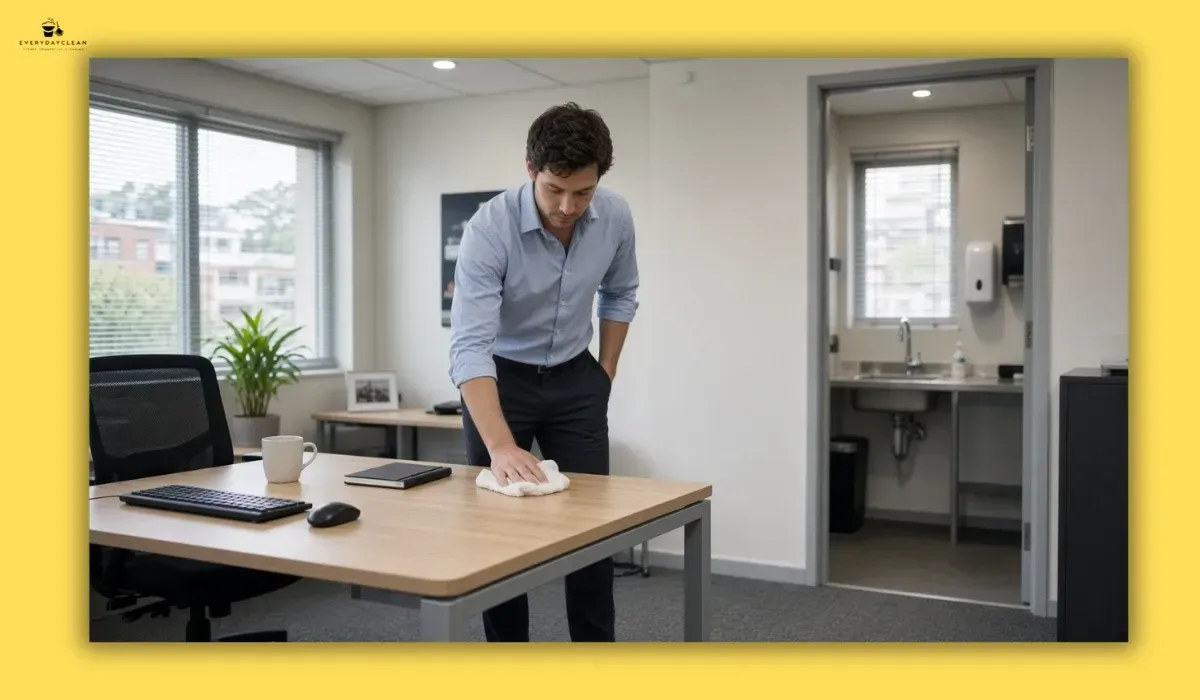
Routine cleaning refers to the daily and weekly tasks that maintain baseline hygiene - surface wiping, floor mopping, restroom sanitization, and waste removal. These tasks are visible, frequent, and performed primarily to sustain day-to-day cleanliness standards.
Preventive maintenance cleaning, by contrast, refers to the less frequent but higher-impact tasks that protect the longevity of office infrastructure. This includes quarterly HVAC vent cleaning, bi-annual carpet deep extraction, annual grout treatment in restrooms, and periodic hard floor resealing. These tasks prevent long-term material degradation, reduce costly replacement timelines, and maintain indoor environmental quality in line with standards referenced by Safe Work Australia's guidance on indoor working environments. A professional office cleaning provider treats both layers as part of a single, documented maintenance schedule - not as separate services to be booked reactively.
How Often Does Office Cleaning Maintenance Need to Happen?
Cleaning frequency is determined by occupancy, surface type, use-pattern of specific zones, and the regulatory environment of the industry. The framework below applies to a mid-sized Sydney office (approximately 200-500 sqm) with 10-30 occupants. High-traffic or client-facing offices may require daily attention across all categories.
Daily tasks - these form the non-negotiable baseline of any office cleaning maintenance program:
- Bin emptying and liner replacement across all workstations, kitchens, and restrooms
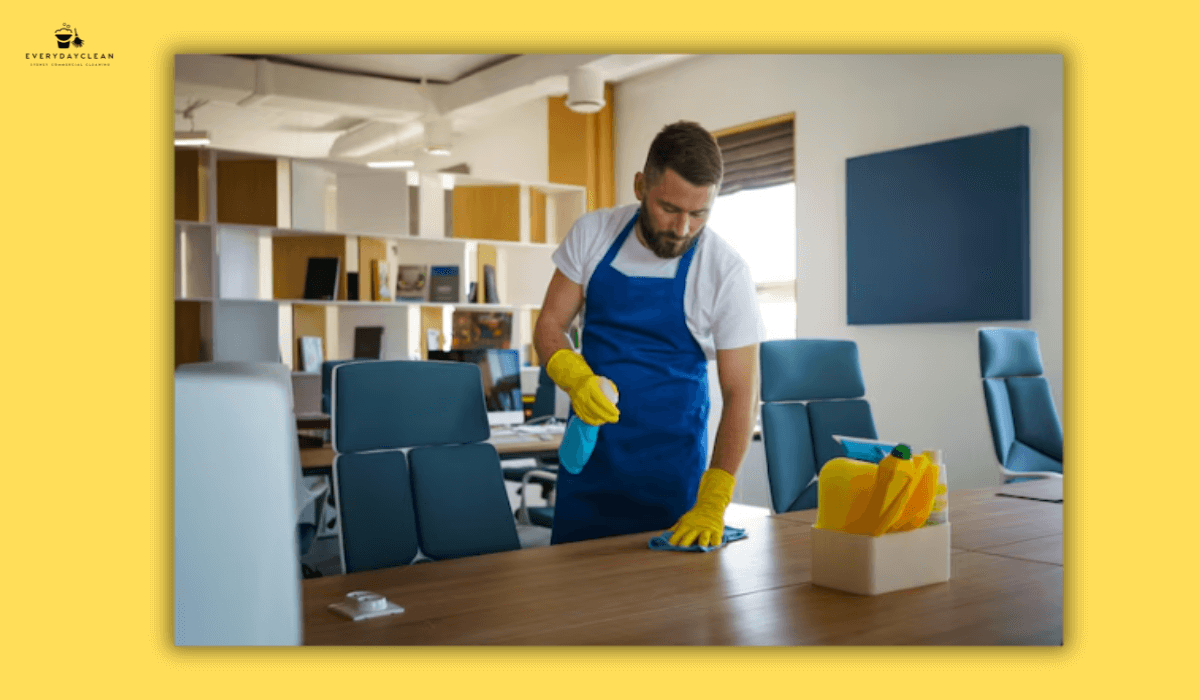
- Workstation and desk surface wiping
- Restroom sanitization - toilets, sinks, mirrors, and floor mopping
- Kitchen bench and sink cleaning
- Floor vacuuming of all carpeted zones
- Hard floor mopping - tiles, vinyl, and polished concrete
- Disinfection of high-touch surfaces - door handles, lift buttons, light switches, shared equipment
Weekly tasks - targeting buildup that daily cleaning does not fully address:
- Carpet spot treatment and detail vacuuming along edges and under furniture
- Interior window and glass partition cleaning
- Appliance exterior cleaning - microwave, fridge, and dishwasher surfaces
- Blind and ledge dusting throughout all zones
Monthly tasks - deeper servicing of high-risk and high-use zones:
- Deep cleaning of restrooms, including grout lines, behind fittings, and descaling of fixtures
- Full appliance interior cleaning - microwave cavity, fridge shelving, dishwasher filter
Quarterly tasks - preventive maintenance that protects assets and indoor air quality:
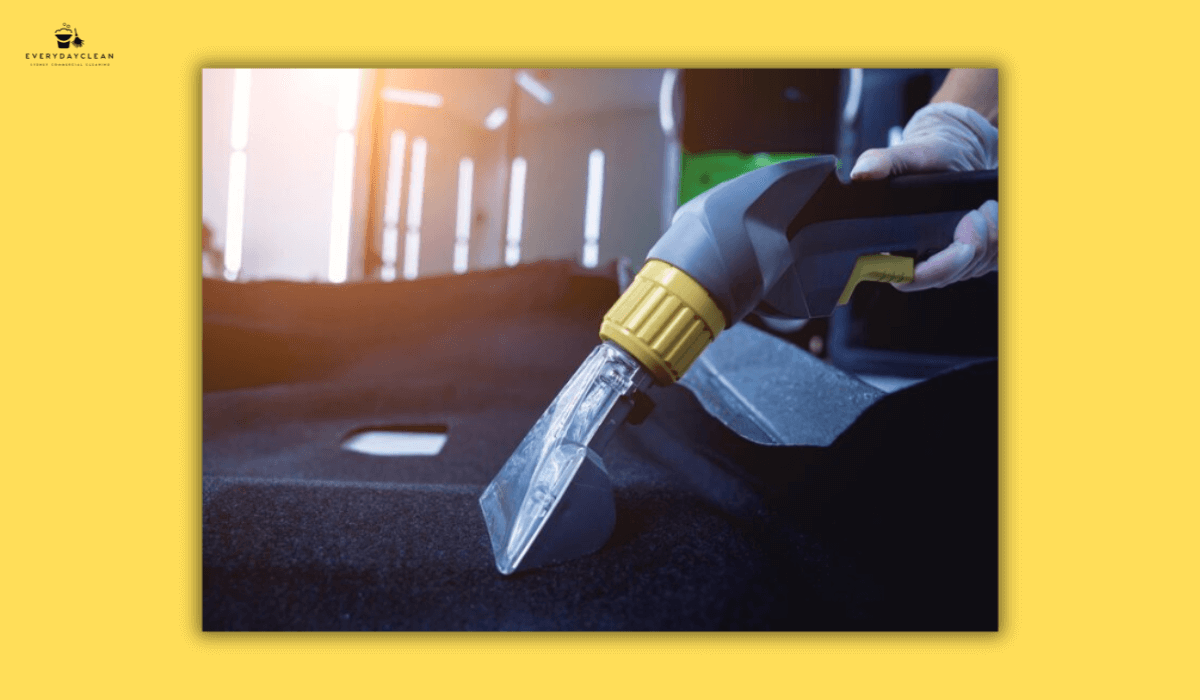
- Carpet deep extraction using hot water extraction (HWE) or encapsulation methods
- HVAC vent and filter cleaning across all supply and return air points
- Hard floor resealing or machine buffing for polished concrete, VCT, and timber surfaces
- Upholstery deep cleaning for meeting room and breakout area seating
What Are the Key Areas in an Office Cleaning Maintenance Schedule?
A structured office cleaning maintenance schedule divides the workplace into functional zones, each with its own task list and frequency requirement. The four highest-priority zones in any Sydney office maintenance program are outlined below.
How Should High-Touch Surfaces Be Maintained in an Office?
High-touch surfaces are the primary transmission pathway for pathogens in commercial office environments. Research cited by the Australian Government Department of Health confirms that viruses and bacteria transfer readily from contaminated surfaces to hands, and from hands to mucous membranes. In a standard office, the highest-risk contact points include keyboard surfaces, door handles, lift buttons, printer touchscreens, meeting room AV remotes, light switches, and shared phone handsets.
Effective maintenance of these surfaces requires daily disinfection of high-touch surfaces using TGA-listed disinfectants - not surface wipes that simply redistribute contamination. Products should carry an ARTG registration number and be suitable for use on electronic equipment without causing corrosion or residue buildup. For offices with 20+ staff, mid-day disinfection rounds of communal zones (kitchens, reception desks, meeting rooms) reduce pathogen load at peak contact periods and measurably reduce sick-day frequency across the team.
What Cleaning Standards Apply to Office Restrooms and Kitchens?
Restrooms and kitchens are the two zones with the highest hygiene risk in any office environment. These areas require daily servicing as a minimum, with a more thorough deep clean conducted monthly. Daily restroom maintenance includes toilet sanitization (bowl, seat, lid, and base), sink and tap cleaning, mirror polishing, floor mopping with a disinfectant solution, restocking of paper towels, soap, and hand sanitizer, and removal of sanitary waste.
Kitchen maintenance at a daily level covers bench surfaces, sink basins, stovetops or microwave interiors, bin emptying, and floor cleaning. Monthly deep cleaning of kitchen appliances - including full microwave interior and exterior, oven, fridge interior, and dishwasher filter - is essential to prevent bacterial biofilm buildup, cross-contamination, and pest attraction. Sydney offices operating under AS/NZS 3666 (Air Handling and Water Systems) or similar hygiene frameworks may have specific documentation requirements for kitchen and restroom cleaning records.
How Should Office Carpets, Hard Floors, and Upholstery Be Maintained?
Flooring represents one of the highest-value asset categories in a commercial office fit-out, and its maintenance directly impacts replacement cost timelines. For carpeted offices, daily vacuuming removes surface debris and prevents grit from embedding into carpet fibres - a process that accelerates wear and dulls appearance. Weekly spot treatment addresses stains before they set permanently. Quarterly deep extraction using hot water extraction (HWE) or encapsulation methods removes embedded particulate matter, restores pile depth, and eliminates allergen accumulation that contributes to poor indoor air quality.
Hard floors - including polished concrete, vinyl composite tile (VCT), and timber - require daily damp mopping with a pH-neutral cleaner appropriate to the surface. Abrasive or high-alkaline products cause finish degradation and increase long-term refinishing costs. Periodic buffing and resealing (typically biannually for high-traffic zones) restores slip resistance and surface gloss. Upholstered seating in meeting rooms and breakout areas should be deep cleaned quarterly using dry compound or low-moisture methods to prevent fabric deterioration and odour retention.
Why Is HVAC and Indoor Air Quality Part of Office Cleaning Maintenance?
HVAC systems are a frequently overlooked dimension of office cleaning maintenance. Dust, mould spores, and allergens accumulate within air handling units, ductwork, and supply vents, and are distributed continuously throughout the office environment when systems are operating. The Australian Building Codes Board (ABCB) and AIRAH (Australian Institute of Refrigeration, Air Conditioning and Heating) both reference regular HVAC maintenance as a requirement for compliant indoor air quality in commercial buildings. For Sydney offices, improving indoor air quality is an increasingly regulated aspect of workplace compliance.
In practical terms, HVAC maintenance within an office cleaning program involves quarterly cleaning of supply and return air vents, annual inspection of cooling coil drain trays for biofilm and Legionella risk, and filter replacement on the schedule specified by the unit manufacturer (typically every 90 days for standard MERV-8 filters, or every 30-60 days for high-occupancy offices). Offices with poor air quality experience measurably higher rates of staff fatigue, headaches, and respiratory complaints - outcomes that reduce productivity and increase absenteeism rates across the team
How Does Office Cleaning Maintenance Affect Workplace Productivity and Business Operations?
The relationship between office cleaning maintenance and operational performance is measurable, not theoretical. Research published in the Journal of Environmental Psychology found that employees working in cleaner environments reported significantly higher levels of focus and cognitive clarity. Specific to Australian workplaces, Safe Work Australia's guidance on psychosocial hazards identifies physical work environment quality - including cleanliness and orderliness - as a direct contributor to employee wellbeing and mental health outcomes.
From an asset management perspective, consistent cleaning and maintenance extend the service life of flooring, furniture, and building finishes. A carpet maintained through regular extraction can last 10-15 years; the same carpet without maintenance may require replacement within 5-7 years. For a 500 sqm office with carpet throughout, that represents a capital avoidance of $30,000-$80,000 over a standard fit-out lifecycle. Sydney businesses with formal office cleaning maintenance programs also report fewer WHS incidents related to slip hazards, spill accumulation, and pest-related hygiene issues - all of which carry both direct costs and reputational risk.
What Should a Professional Office Cleaning Maintenance Plan Include?
A professional office cleaning maintenance plan is a documented, site-specific program that defines scope, frequency, responsible parties, products used, and quality verification processes. The following steps outline how a structured plan is built and implemented.
- Step 1: Site Audit and Zone Mapping - A qualified commercial cleaning provider conducts a physical inspection of the office, mapping all zones, surface types, high-traffic areas, and any compliance-sensitive spaces such as server rooms, medical stations, or food preparation areas.
- Step 2: Frequency and Task Assignment - Based on the audit, tasks are assigned to daily, weekly, monthly, or quarterly cycles. The scope of work document specifies which tasks fall under each frequency tier and which staff member or crew is responsible for delivery.
- Step 3: Product and Equipment Specification - Approved cleaning products are listed, including safety data sheets (SDS). For Sydney offices with sustainability commitments, GECA-certified (Good Environmental Choice Australia) or Green Star-aligned products are specified. Equipment requirements - HEPA-filter vacuums, microfibre systems, floor scrubbers - are also documented.
- Step 4: Quality Assurance and Reporting - Reputable Sydney commercial cleaning providers implement real-time quality reporting through digital audit tools. Inspections are conducted against the scope of work, with findings shared with the client. Everyday Clean, for example, delivers scheduled quality audits and site reporting as a standard component of every commercial cleaning contract.
- Step 5: Review and Adjustment Cycle - Scope of work is reviewed quarterly to reflect seasonal changes, occupancy fluctuations, and new compliance requirements. This ensures the maintenance program remains effective and cost-efficient over time.
For further guidance on structuring a cleaning agreement, contact the Everyday Clean team directly for a site-specific scope of work and contract review.
FAQs About Office Cleaning Maintenance
Facility managers, office administrators, and business owners across Sydney regularly raise the same core questions when evaluating or reviewing office cleaning maintenance programs. The answers below address each question with specificity relevant to the Australian commercial cleaning context.
How often should office cleaning maintenance be carried out?
Office cleaning maintenance frequency depends on three variables: occupancy level, industry type, and the functional zones within the office. For a standard Sydney office with 10-30 staff, daily maintenance covers restrooms, kitchens, bins, and high-touch surface disinfection. Weekly maintenance addresses floor detail cleaning, window partitions, and appliance surfaces. Monthly maintenance targets deep restroom cleaning, interior window washing, and appliance deep cleaning. Quarterly maintenance covers HVAC vents, carpet extraction, and hard floor resealing. High-occupancy offices (50+ staff), client-facing reception areas, or premises in the healthcare or childcare sector require increased frequency across all categories - often daily for tasks that standard offices complete weekly.
What is the difference between office cleaning and office maintenance cleaning?
Office cleaning typically refers to the surface-level tasks performed at regular intervals to maintain basic hygiene and tidiness - vacuuming, mopping, wiping surfaces, emptying bins, and sanitizing restrooms. Office maintenance cleaning encompasses a broader scope: it includes not just routine hygiene tasks, but also the preventive upkeep of building materials, fixtures, and systems. Carpet deep extraction, HVAC vent cleaning, floor resealing, grout treatment, and upholstery deep cleaning are all maintenance cleaning tasks. The distinction matters because a program that only performs routine cleaning without preventive maintenance allows gradual deterioration of assets and indoor air quality - both of which carry financial and operational consequences for Sydney businesses over a 3-5 year period.
How much does office cleaning maintenance cost in Sydney in 2026?
Office cleaning costs in Sydney typically range between $20 and $80 per hour for routine cleaning, or $2 to $7 per square metre for contract-based services covering larger commercial spaces. For a 200 sqm Sydney office requiring three cleaning visits per week, monthly costs typically fall between $600 and $1,400, depending on scope and service inclusions. Quarterly deep cleaning services - covering carpet extraction, HVAC vents, and hard floor maintenance - are generally quoted separately, ranging from $350 to $1,200 depending on the size of the space and the complexity of the surfaces. Businesses requiring office cleaning in Sydney CBD may attract a location surcharge due to parking constraints, building access requirements, and higher operational costs in the central district.
What is included in a professional office cleaning maintenance schedule?
A professional office cleaning maintenance schedule covers all functional zones in the workplace across four frequency tiers. Daily inclusions: bin emptying, workstation surface disinfection, restroom sanitization, kitchen cleaning, and floor vacuuming and mopping. Weekly inclusions: window and glass partition cleaning, appliance exterior wiping, blind and ledge dusting, and detail floor cleaning. Monthly inclusions: deep restroom cleaning (grout, fixtures, behind fittings), appliance interior cleaning, and carpet spot treatment. Quarterly inclusions: HVAC vent and filter cleaning, carpet deep extraction, hard floor buffing or resealing, and upholstery deep cleaning. A reputable provider documents all inclusions in a formal scope of work, with quality audits conducted against that scope to maintain accountability and consistency across each service visit.
Can office cleaning maintenance reduce employee sick days?
Yes - and the mechanism is well-documented. High-touch surfaces in offices carry measurably higher bacterial and viral loads when not disinfected regularly. A study cited by the US Centers for Disease Control and Prevention (CDC) found that regular surface disinfection in shared workplaces reduced the incidence of common cold and influenza transmission by up to 80%. In an Australian context, Safe Work Australia estimates that workplace illness and injury costs Australian businesses over $28 billion annually, with absenteeism contributing a significant proportion. For Sydney offices implementing daily high-touch disinfection alongside regular HVAC maintenance - which removes airborne allergens and pathogens from circulation - measurable reductions in sick-day frequency are a predictable operational outcome. The investment in a structured maintenance program consistently delivers a return through reduced absenteeism, lower turnover linked to poor work environment conditions, and sustained team performance.
Everyday Clean has delivered professional commercial cleaning services across Sydney for over 20 years, supporting offices, strata buildings, medical centres, childcare facilities, and commercial spaces with documented, compliance-aligned cleaning programs.
Blog