Bookkeeper Office Cleaning: Secure & Professional Service
Bookkeeper office cleaning is a professional cleaning service designed for accounting and bookkeeping firm workspaces, covering workstation sanitation, electronics cleaning, document-safe surface care, and client-facing reception maintenance. Cost, scheduling, and cleaning protocols vary based on office size, document density, frequency of client visits, and whether after-hours access is required. Bookkeeping practices across NSW range from sole-practitioner home offices to mid-size accounting firms with dedicated meeting rooms - each requiring a cleaning approach calibrated to the operational environment, not generic office standards.
Bookkeeper Offices Have Unique Cleaning Requirements
Most commercial cleaning companies treat all small offices the same. A bookkeeper's workspace is different in three specific ways.
Paper-heavy environments produce significantly more dust. Physical documents, receipts, print-outs, and tax records - standard inventory in any active bookkeeping practice - generate airborne particles at a higher rate than open-plan tech offices. File drawers left ajar, paper stacked on shelves, and printers running throughout the day contribute to a persistent dust load on surfaces, vents, and electronics. Standard dry-dusting with a cloth disperses this rather than removing it. A HEPA filter vacuum and microfibre capture system are the appropriate tools for these environments - not the standard domestic-grade equipment most general cleaners carry.
Financial documents carry confidentiality obligations. Under the Privacy Act 1988 (Cth), bookkeeping firms handle clients' personally identifiable financial information, tax file numbers, payroll data, and ATO correspondence. A cleaner who moves, photographs, reads, or inadvertently discards a document creates a compliance exposure for the practice. Properly run bookkeeper office cleaning services address this through background-checked staff, signed non-disclosure agreements (NDAs), documented clean-around-in-place protocols, and a strict no-touch policy for any item on a desk or in an open filing system.
A client-facing presentation is a trust signal. Bookkeepers manage money and financial reputation on behalf of clients. When a client enters a reception area that smells stale, has a dusty reception desk, or shows evidence of poor upkeep, it conflicts with the credibility the practice is trying to project. A consistently clean environment communicates operational discipline - the same quality a client is paying for in their accounts.
Bookkeeper Office Cleaning: What Each Area Covers
A properly scoped bookkeeper office cleaning covers the following areas. Each requires a slightly different approach, given the sensitivity of the environment.
Workstation and Electronics Cleaning
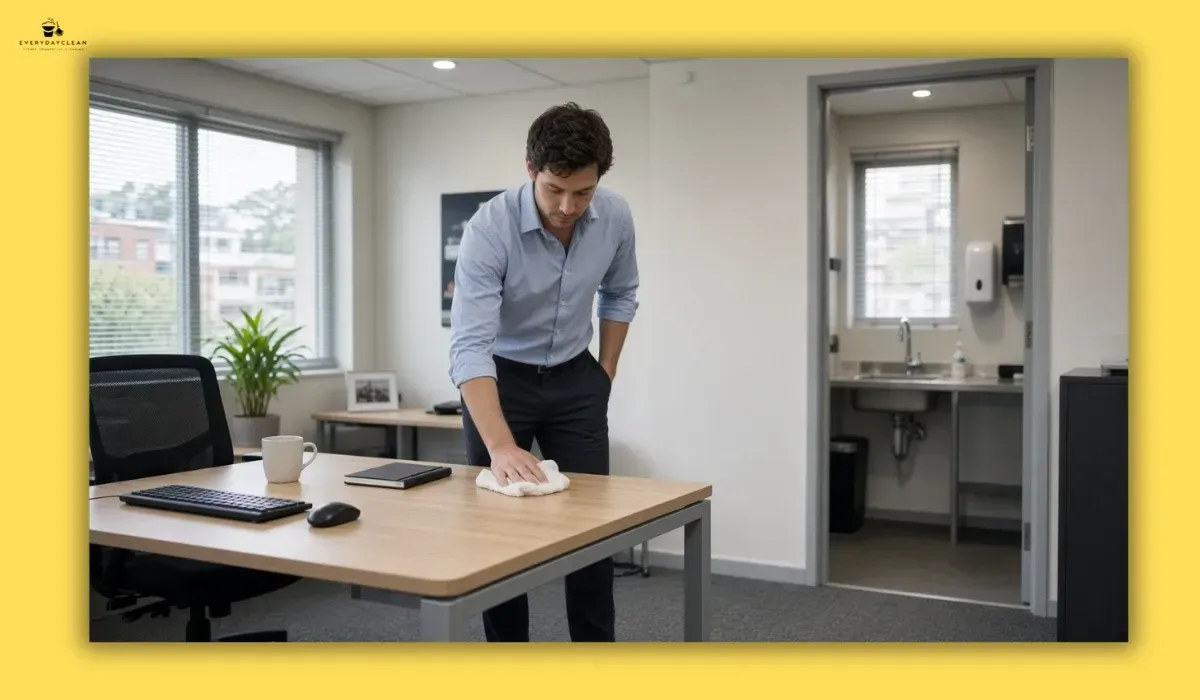
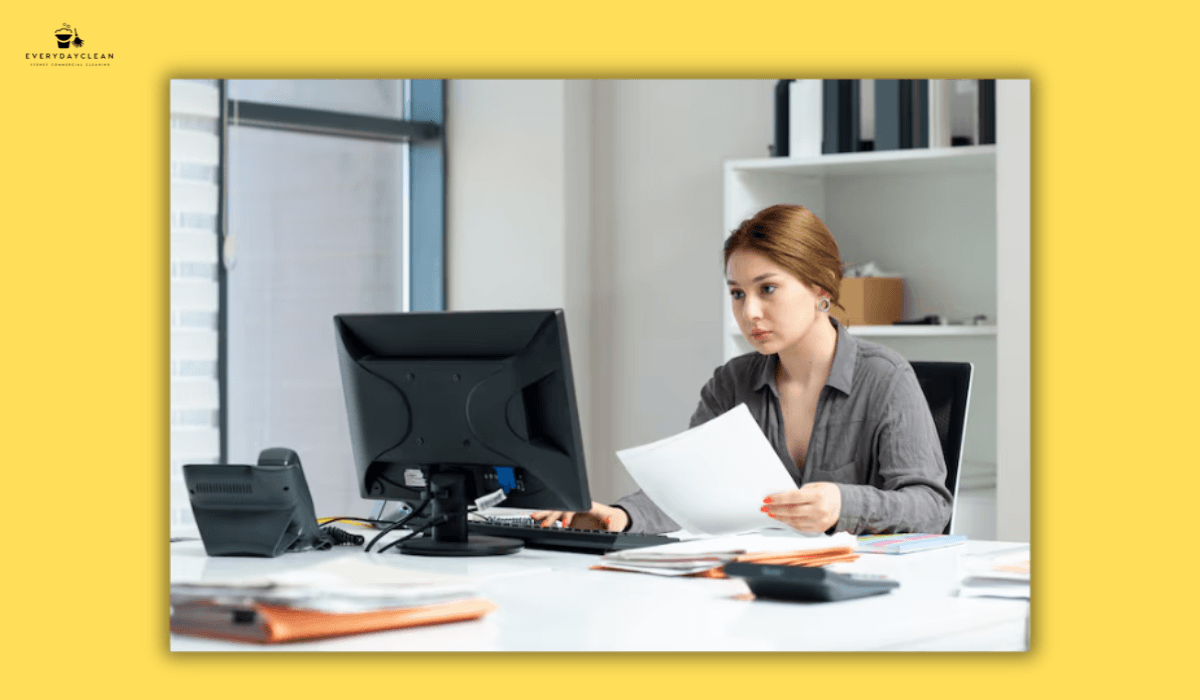
Bookkeeper workstations typically carry two to four monitors, a keyboard, a mouse, a telephone, a document scanner, and a printer. These items accumulate dust, skin oils, and particulates faster than furniture surfaces. Professional cleaning of these areas uses anti-static dry wipes or low-static compressed air on electronics, streak-free glass cleaner on monitors, and microfibre cloths on desk surfaces. Keyboards require a blowing-out or dedicated key-safe wipe - not a general spray-and-wipe approach that can push moisture into hardware.
Desks with open documents are cleaned around without disturbing placement. Any document left face-up on a desk at the time of cleaning is left exactly as found. Cleaners do not stack, sort, or reposition papers.
Document-Safe Surface Cleaning
Filing cabinets, shelf units, document trays, and archive boxes collect dust along their tops and edges. These surfaces are dusted using damp microfibre cloths (which capture rather than redistribute particles) without opening drawers or handling document contents. Lockable filing rooms and archive storage areas are typically cleaned at reduced frequency - often a monthly deep clean rather than a routine visit - and only with an authorised staff member present if required by the firm.
Secure document bins and cross-cut shredder units are not emptied by cleaning staff unless explicitly authorised in writing by the practice manager. Waste from standard bins is removed as standard.
Reception and Client Meeting Area Cleaning
Reception desks, waiting area chairs, coffee tables, magazines, and any client-facing display area receive priority treatment. These spaces are cleaned to a presentation standard - wiped, vacuumed, and sanitised fully at every visit - because they form the client's first and last impression of the practice. Glass partitions and entry doors receive a streak-free finish. High-touch surfaces, including door handles, light switches, reception desk edges, and shared pens or signing pads, are disinfected using a TGA-listed disinfectant at every routine visit.
Meeting room tables, chairs, and whiteboards are cleaned after each service. Whiteboard cleaner is used only on the whiteboard surface - not a general multipurpose spray that can damage the board coating over time.
Kitchen and Bathroom Maintenance
Kitchen benches, sink, splashback, microwave interior, kettle exterior, and rubbish bin are cleaned at every routine visit. Dishwasher interiors are cleaned on a scheduled basis (typically weekly). Refrigerator cleaning is a scheduled periodic task, not a routine item unless requested. Bathroom sanitation covers toilet, basin, mirror, tap fittings, floor mopping, and restocking of paper products and hand soap. In a small bookkeeping practice with one or two bathrooms, the bathroom is often the highest-risk hygiene area given lower cleaning frequency by staff between professional cleans.
Recommended Cleaning Frequency for a Bookkeeper's Office
Cleaning frequency for a bookkeeper's office depends on office size, headcount, and client foot traffic:
| Office Profile | Recommended Frequency | Estimated Monthly Cost (2026) |
|---|---|---|
| 1-2 person sole practitioner (under 50 sqm) | Weekly | $280 - $450 |
| Small practice 3-8 staff (50-150 sqm) | 2-3x per week | $550 - $1,100 |
| Mid-size firm 8-20 staff (150-300 sqm) | Daily or 5x per week | $1,200 - $2,200 |
| Quarterly deep clean (any size) | Every 3 months | $300 - $800 per session |
Note: CBD and North Shore accounting offices typically fall in the upper range of these estimates due to after-hours access requirements, building management coordination, and higher hourly rates under the Cleaning Services Award 2020.
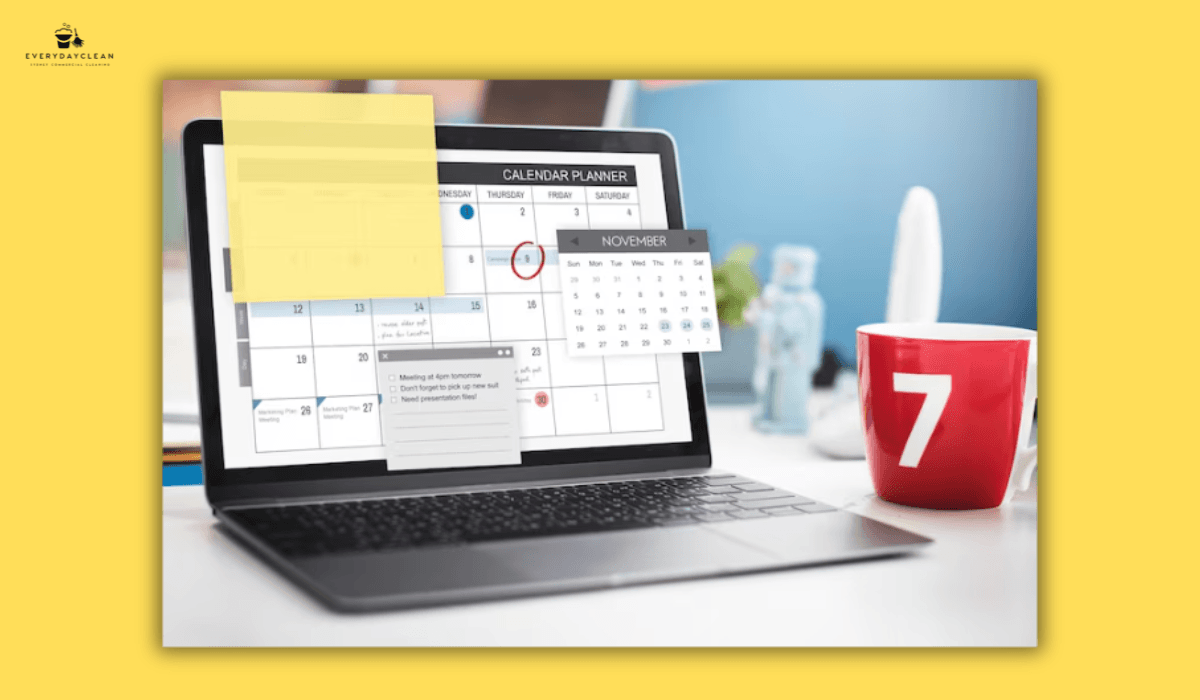
Firms with high client throughput - such as practices running at full capacity during tax season between July and October - may schedule an additional mid-week clean during peak periods to maintain presentation standards when reception and meeting rooms are in daily use.
Key Criteria for Choosing a Bookkeeper Office Cleaning Company
Not every commercial cleaning provider is equipped to work in a financial services environment. The following criteria matter specifically for bookkeeping offices.
- Police-checked staff - All cleaners entering a bookkeeper's premises should hold a current National Police Check. This is non-negotiable given the document environment.
- Non-disclosure capability - The cleaning provider should be willing to have staff sign an NDA relevant to the practice's confidentiality obligations under the Privacy Act 1988.
- Clean-around protocol - The company should have a documented procedure for cleaning around sensitive materials without touching or moving them.
- Public liability insurance - Minimum $10 million cover is standard for commercial cleaning contracts in NSW. Verify this before signing.
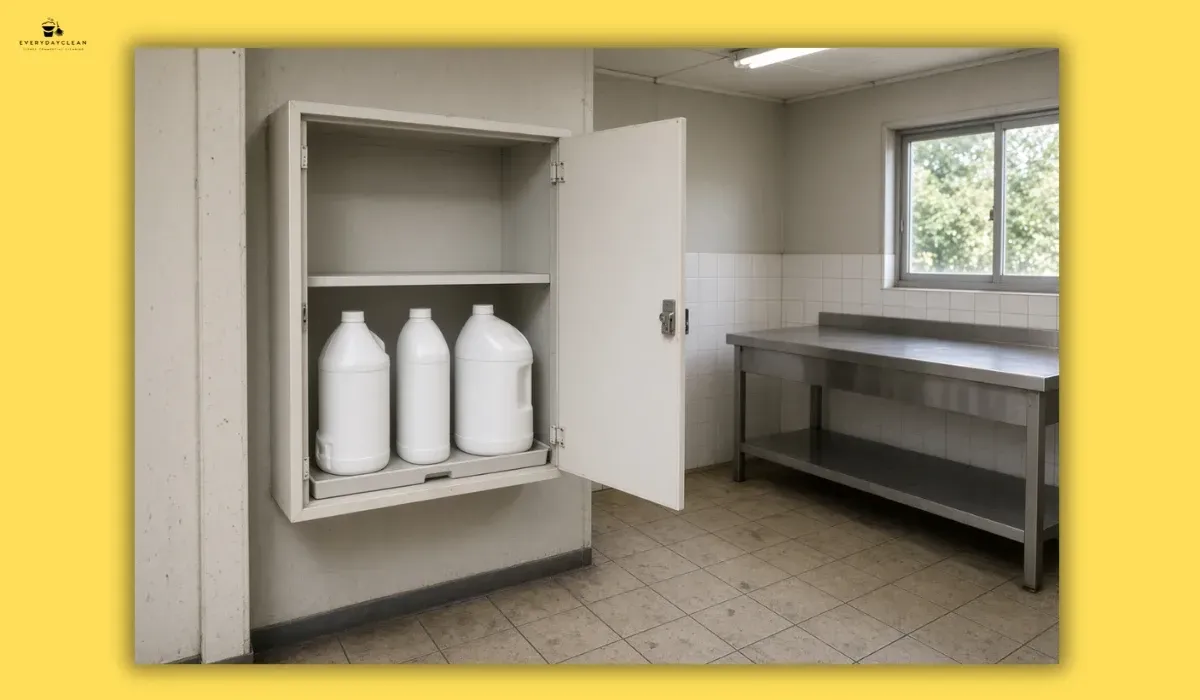
- GECA-certified or equivalent cleaning products - GECA (Good Environmental Choice Australia) certified products and TGA-listed disinfectants are appropriate for environments where clients and staff spend long hours. Harsh solvent-based products are inappropriate in enclosed financial office settings.
- Flexible after-hours scheduling - Most bookkeeping offices prefer cleaning outside business hours to avoid disruption. Confirm the provider can work with building management for after-hours access at your specific location.
- Structured quality reporting - A cleaning provider worth contracting should supply a task checklist sign-off after every visit, and a supervisor inspection log at agreed intervals.
Everyday Clean's office cleaning Sydney service includes police-checked cleaners, flexible after-hours scheduling, and eco-certified products appropriate for professional financial office environments.
Bookkeeper Office Cleaning Pricing in 2026
Pricing in 2026 follows three primary models used across the commercial cleaning market:
- Hourly rate: $45-$55 per hour for CBD and inner-city locations. $38-$48 per hour for suburban practices across the Parramatta, Chatswood, and Ryde corridors. Rate includes Award-compliant cleaner wages under the Cleaning Services Award 2020, equipment, and standard consumables.
- Monthly flat fee: The most common model for ongoing contracts. Calculated from estimated hours per visit plus visit frequency. Provides budget certainty and is preferred by most practice managers.
- Per square metre: $0.40-$2.50 per sqm per clean, depending on service intensity. Useful for larger fit-outs where the scope is clearly defined in advance.
For practices based in the central business district, office cleaning Sydney CBD rates sit at the top of the hourly range due to building access complexity, security coordination, and after-hours penalty rate loading.
Annual contracts typically produce a 10-20% reduction in per-visit cost compared to rolling month-by-month arrangements. For established bookkeeping practices with consistent occupancy and schedules, a 12-month commercial cleaning contract is the most cost-efficient structure.

FAQs about The Bookeeper Office Cleaning Sydney
Below are the questions most commonly asked by bookkeepers and accounting firm managers when arranging professional cleaning for their practice. Each reflects a real concern raised by financial services operators, where cleaning is not simply a maintenance task but also a compliance and presentation issue.
Office Cleaning Tax Deductibility for Bookkeeping Practices
Yes. Office cleaning is classified as an operating expense - a cost incurred in the ordinary course of running a business - and is fully deductible under the Income Tax Assessment Act 1997. The ATO categorises professional cleaning as a legitimate business expense, provided the expense relates directly to the income-producing premises. For a sole-trader bookkeeper operating from a dedicated home office, the deductible portion is calculated based on the percentage of the home used exclusively for business purposes. A general-use room cleaned as part of a broader home clean does not qualify. Sole traders should retain invoices and service records in case the ATO requests substantiation. For registered companies and trusts, commercial cleaning invoices are a standard operating expense line item.
Safe Cleaning Products for Financial Documents and Electronics
The appropriate products for a bookkeeper's office are low-VOC (volatile organic compound), water-based formulations that do not release airborne residue capable of damaging paper documents or electronic components. GECA-certified general-purpose cleaners and TGA-listed disinfectants in spray or diluted wipe form are the standard. Aerosol-based cleaners with solvent propellants are not appropriate near open documents or unsealed printer paper trays - the propellant spray disperses over a wider area than the target surface and can degrade ink-jet printouts or leave residue on monitor screens. Anti-static screen wipes (individually sealed, not pre-moistened cloths from a bulk dispenser) are the correct tool for monitor surfaces.
How Professional Cleaners Handle Confidential Documents
Reputable commercial cleaning companies address this through a combination of staff vetting, contractual obligation, and operational protocol. Police-checked cleaners reduce the risk of information misuse at the personnel level. Non-disclosure agreements bind cleaning staff to confidentiality obligations that align with the Privacy Act 1988 requirements placed on the bookkeeping practice itself. Operational protocol - specifically, the clean-around-in-place rule - means no document is moved, photographed, read, or repositioned during a clean. Secure document shredding bins and locked archive rooms are left entirely untouched unless the practice manager has provided explicit written authorisation. If the firm requires an additional layer of protection, a designated staff member can be present during cleaning of high-security areas such as the principal's office or document storage room.
After-Hours Scheduling for Bookkeeper Office Cleaning
Yes, and for most active bookkeeping practices, after-hours cleaning is the preferred arrangement. Cleaning during business hours introduces noise from vacuuming, physical disruption around workstations, and the presence of additional personnel in a space where client appointments or confidential calls may be occurring. After-hours cleaning eliminates these issues and allows cleaners to access all areas - including meeting rooms and individual offices - without operational interruption. The practical requirement is that the cleaning provider can coordinate with building management for key or swipe card access, and that cleaners are familiar with alarm arming and disarming procedures. In major commercial precincts, this is a standard operational capability for established cleaning companies. After-hours cleans under the Cleaning Services Award 2020 attract a penalty rate loading, which is typically factored into the monthly flat fee quote rather than billed as a separate surcharge.
Everyday Clean provides professional commercial cleaning across the greater metropolitan area, including bookkeeper and accounting office cleaning, with over 20 years of experience, police-checked staff, and eco-certified products.
Blog