Office Bathroom Cleaning Checklist: Daily to Deep
Office Bathroom Cleaning Checklist for Workplace Washrooms
An office bathroom needs three levels of attention: a daily clean covering toilets, sinks, touchpoints, floors and consumables; a weekly clean adding partitions, doors, vents and skirtings; and a periodic deep clean covering grout, behind fixtures and drains. Splitting the work this way keeps daily visits fast and stops the harder tasks from being quietly skipped.
Washrooms are the part of any office that staff and visitors judge hardest, and they are also where a rushed clean shows most obviously. A written checklist is the difference between a bathroom that is consistently acceptable and one that swings depending on who cleaned it.
Daily office bathroom cleaning checklist
These tasks apply every service day, in this order. Cleaning comes before disinfecting, because disinfectant does not work reliably on a soiled surface.
Toilets and urinals
- Apply toilet cleaner inside the bowl and under the rim, then leave it to sit while other tasks are done
- Clean the seat, both sides of the lid, the hinges and the cistern top
- Clean the exterior of the pan, including the base where it meets the floor
- Clean flush buttons, handles and sensor plates
- Return to scrub and flush the bowl
- Clean urinals, including the surround and the wall directly behind
Sinks and taps
- Clean basins, plugholes and overflow openings
- Clean taps, including the underside and the base where residue collects
- Clean the vanity or bench surface and the splashback
- Clean soap dispensers and check they are working
Mirrors and glass
- Clean mirrors and dry them fully, checking the finish from an angle rather than straight on
Touchpoints
- Door handles and push plates, both sides
- Cubicle latches and coat hooks
- Light switches
- Hand dryer buttons and paper towel dispenser levers
- Sanitiser dispensers
Floors and bins
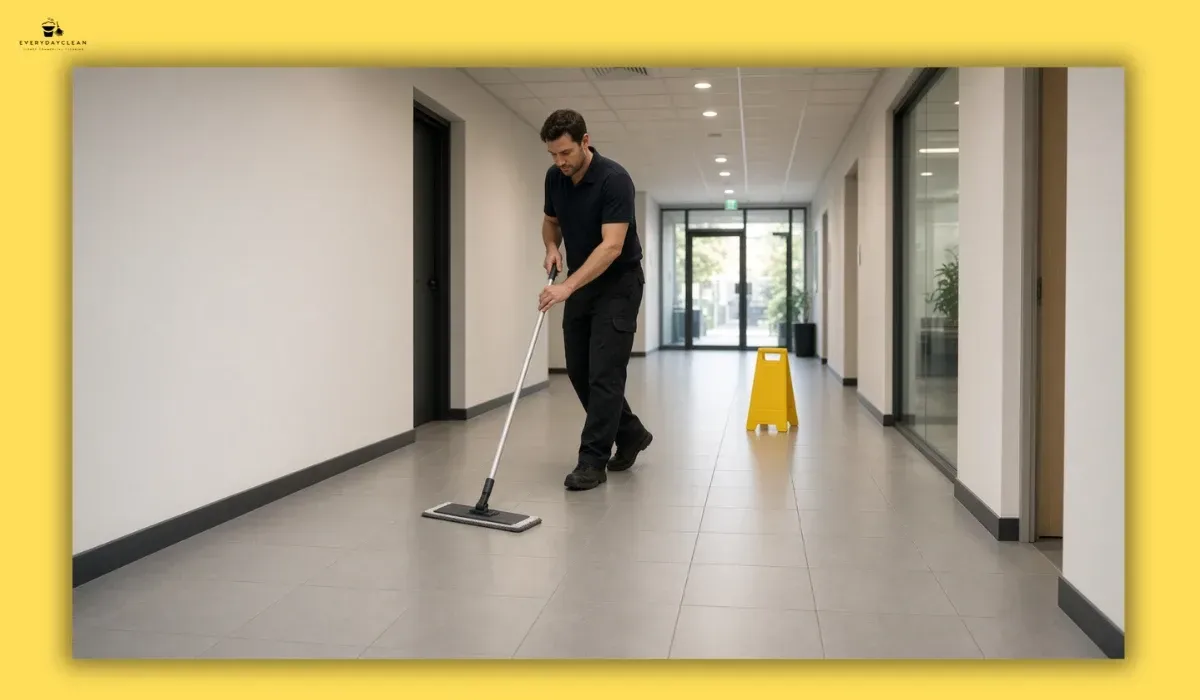
- Sweep or vacuum, then mop with a dedicated bathroom mop
- Pay attention to the area around and behind toilet pans, which is the most commonly missed spot
- Empty all bins, wipe lids, replace liners
- Empty sanitary disposal units per the servicing arrangement
Consumables and finishing
- Restock toilet paper, hand towel, soap and sanitiser
- Check the room for odour, and identify a source rather than masking it
- Leave the space dry, with wet floor signage removed once safe
- Report anything faulty: leaks, blocked drains, broken fittings, failed dryers
Which daily tasks matter most when time is short?
If a visit has to be shortened, prioritise toilets, touchpoints, consumables and floors. A bathroom with restocked supplies and clean touchpoints is more likely to be perceived as maintained even if the skirtings were left. The reverse is not true.
Weekly and periodic tasks
Weekly work targets the surfaces that accumulate slowly. Periodic work targets what builds up over months and needs equipment or time that a daily visit does not allow.
| Frequency | Tasks |
|---|---|
| Weekly | Cubicle partitions and dividers, full door surfaces, skirting boards, wall spot-cleaning around urinals and sinks, vent covers and extraction grilles, bin exteriors, detail around fixtures and pipework |
| Monthly | Tile walls in full, shower areas where fitted, light fittings and diffusers, high dusting, dispenser interiors, door tracks and thresholds |
| Quarterly or periodic | Grout cleaning and inspection, descaling of taps, urinals and cisterns, floor drain and waste cleaning, deep floor treatment or scrubbing, behind and under fixtures where accessible, sealant inspection |
Periodic tasks are where most workplaces fall behind, because nothing looks urgent until grout discolours or a drain starts to smell. Scheduling them into a cleaning contract avoids that drift. If bathrooms sit within a broader site scope, regular office cleaning usually covers daily and weekly work, with periodic tasks priced and scheduled separately.
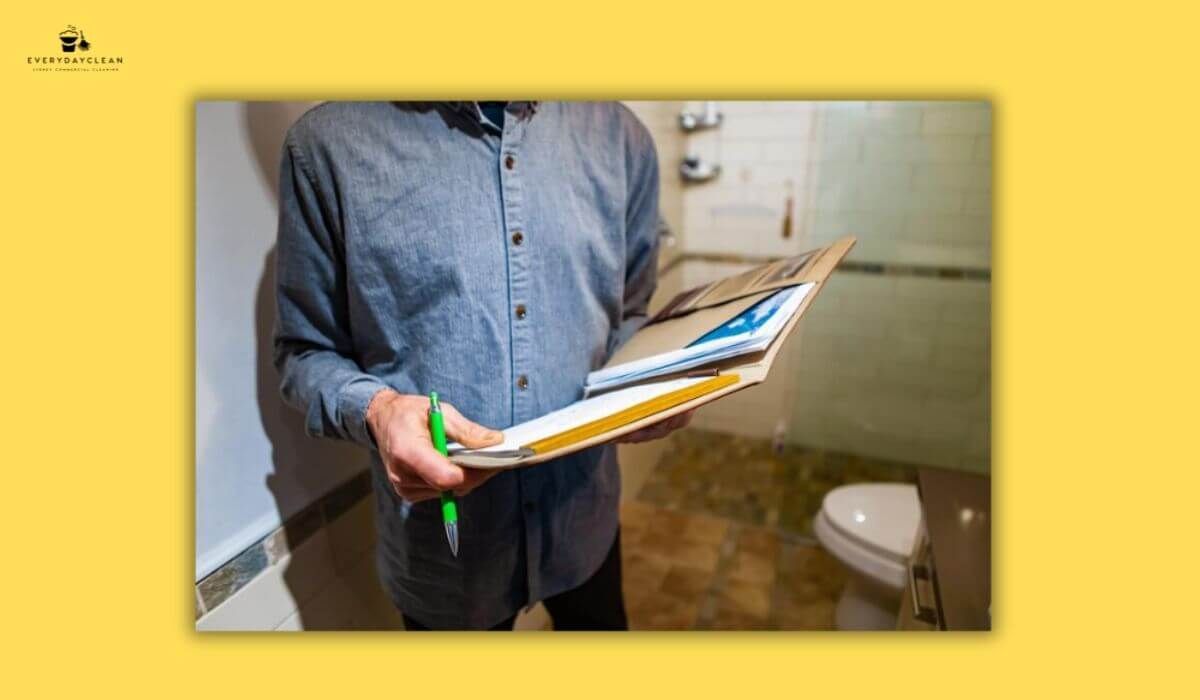
What to check during a restroom inspection
Inspections work best as a short, repeatable walkthrough rather than a long form. Check these, in this order:
- Smell on entry. The first impression, and the fastest indicator of a drain, moisture or bin issue
- Consumables. Toilet paper, hand towel, soap and sanitiser all stocked, dispensers working
- Toilet bowls and rims. Look under the rim, not just at the water line
- The floor behind pans and urinals. One of the most reliable checks of whether a clean was thorough
- Mirrors and taps at an angle. Streaks and water spotting are invisible face-on
- Touchpoints. Handles, latches and buttons, checked by feel as well as by eye
- Bins. Not overflowing, liners intact, lids clean
- Grout and sealant. Discolouration, gaps or mould growth
- Ventilation. Extraction running, grilles not blocked with dust
- Faults. Leaks, loose fittings, slow drains, failed dryers
Record findings the same way each time so trends are visible. A drain that appears in the notes three months running is a plumbing issue, not a cleaning one.
Hygiene basics that make the checklist work
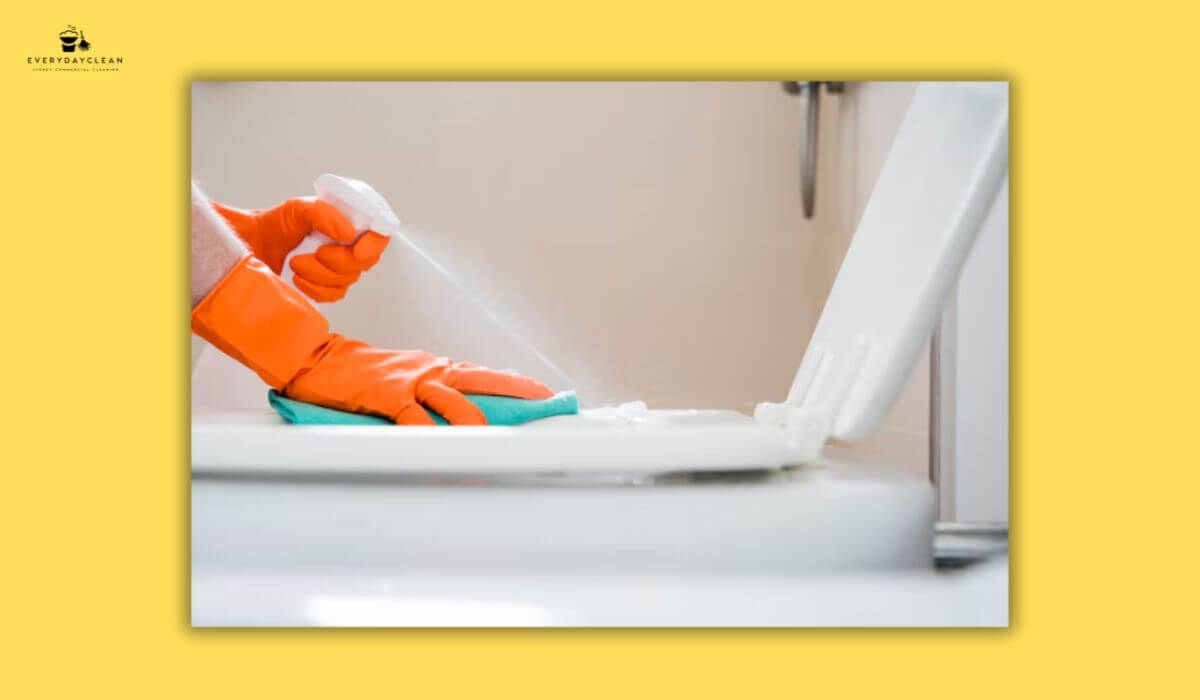
The checklist assumes a few practices are already in place. Without them, the tasks get done but the outcome is unreliable.
- Clean before disinfecting. Soil and residue interfere with disinfectant performance, so surfaces are cleaned first
- Respect contact time. Products that make a disinfection claim only support it when the surface stays wet for the time stated on the label
- Use colour-coded cloths and mops. Bathroom equipment stays with bathrooms and is never used elsewhere on site
- Follow the label and Safety Data Sheet. Dilution, ventilation requirements and PPE come from the product documentation, not habit
- Wear appropriate PPE. Gloves at minimum, with eye protection where the label requires it
- Never mix products. Combining bathroom chemicals, particularly bleach and acidic cleaners, can produce hazardous fumes
- Ventilate during and after cleaning, especially in enclosed washrooms
- Launder cloths and mop pads between uses, and store them dry
Persistent washroom odour is rarely a cleaning-product problem. The usual sources are dry floor waste traps, sanitary bins overdue for service, moisture trapped behind fittings, or a urinal drain needing attention. Adding fragrance masks the symptom while the cause continues.
Adapting the checklist to your site
The list above suits a typical office washroom. Adjust for what the site actually has and how heavily it is used.
High-traffic buildings often need multiple daily services rather than one, particularly around peak periods. Sites with shower facilities need those added to the daily list, with attention to drains and screen glass. Buildings with accessible bathrooms should include grab rails, alarm cords and door mechanisms as touchpoints. Where a building has multiple tenancies, agree who covers shared washrooms before assuming the schedule is complete.
If you are building washroom tasks into a wider site schedule, the structure in our office cleaning checklist guide shows how to fit them alongside other areas. For multi-site or mixed-use portfolios, office cleaning in Sydney arrangements usually set washroom frequency by traffic rather than applying one schedule across every building.
Frequently asked questions
How often should office bathrooms be cleaned?
Most office washrooms need a full clean each working day, with weekly attention to partitions, doors, skirtings and vents. High-traffic buildings often need more than one service per day, particularly around peak use. Periodic deep cleaning covering grout, descaling and drains is usually scheduled quarterly or as conditions require.
What is the correct order for cleaning an office bathroom?
Apply toilet cleaner first so it can sit while other work happens, then clean high surfaces before low, and finish with floors. Toilets and urinals are cleaned before sinks and mirrors, using separate cloths. Floors are done last so any debris or drips from earlier tasks are picked up rather than left behind.
Why do office bathrooms still smell after cleaning?
Usually because the source has not been addressed. Common causes include dry floor waste traps, sanitary bins due for servicing, moisture trapped behind fittings or under fixtures, and urinal drains needing attention. Deodorisers mask odour without resolving it. If a smell returns quickly after cleaning, investigate the drain and bin situation first.
Should cleaning cloths be shared between bathrooms and other office areas?
No. Bathroom cloths, mops and buckets should be colour-coded and used only in washrooms. Sharing equipment between bathrooms and kitchens, desks or common areas moves soil between areas and undermines the whole routine. Equipment should also be laundered between uses and stored dry.
Who is responsible for restocking bathroom consumables?
This depends on the cleaning agreement. Some contracts include restocking with consumables supplied by the client, others include supply as well, and in some buildings facilities staff handle it separately. Clarify it in writing before the arrangement starts, since consumables running out is one of the most common washroom complaints.
Keeping the checklist useful over time
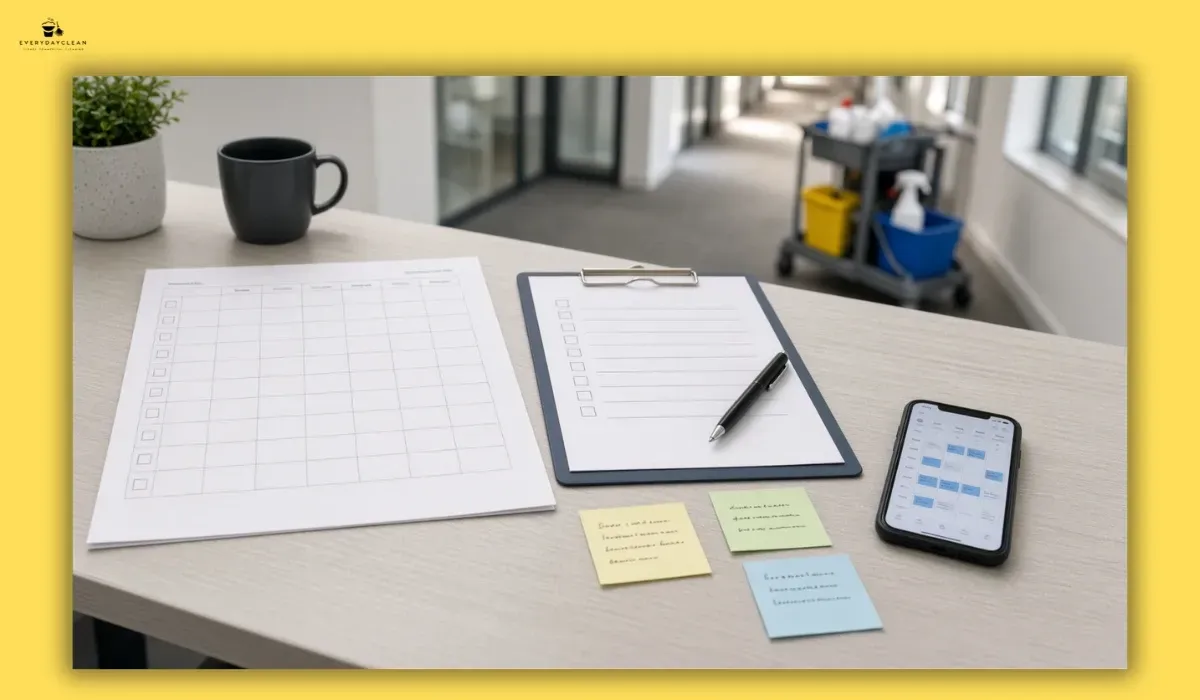
A washroom checklist works when it is short enough to follow properly and specific enough that nothing depends on interpretation. Print it, keep it in the washroom store or with the cleaning trolley, and review it after any change to fittings, traffic or hours.
The most valuable habit is recording faults as they are noticed. Leaks, slow drains and failing dispensers rarely fix themselves, and the cleaner is almost always the first person to see them.
Everyday Clean is a Sydney-based cleaning provider working across offices and other commercial sites.
Blog