NDIS Cleaning Prices: Costs & Rates Guide Australia 2025
NDIS cleaning prices in Australia range from $60 to $75 per hour for standard support services, with specialist disability cleaning costing $75 to $95 per hour depending on participant needs and provider qualifications. NDIS-registered cleaning providers must meet Pricing Arrangements and Price Limits set by the National Disability Insurance Agency (NDIA), ensuring participants receive transparent, consistent pricing aligned with their NDIS plan budgets under Core Supports or Capacity Building categories.
Everyday Clean operates as an NDIS-registered provider delivering professional cleaning services across Australian metropolitan and regional areas. Pricing structures reflect labour costs, travel time, consumables, and the skill level required for participant-specific support - factors the NDIA evaluates when setting maximum claimable rates.
Understanding NDIS cleaning costs means examining how the scheme categorises services, what drives price variations, and how participants can maximise their plan budgets while maintaining quality disability support.
What Are NDIS Cleaning Services and How Do They Differ from Standard Cleaning?
NDIS cleaning services provide household and personal environment maintenance for participants with disability-related support needs that prevent them from completing cleaning tasks independently. These services differ fundamentally from standard residential cleaning because they operate under NDIA compliance frameworks, require worker screening, and often involve additional support coordination beyond basic housework.
Standard commercial cleaners charge $25 to $50 per hour for routine domestic work without disability-specific training or NDIS registration obligations. NDIS providers incorporate disability awareness training, NDIS Worker Screening Check costs, public liability insurance, and quality and safeguards compliance into their pricing models.
The service scope varies based on participant goals documented in NDIS plans. Light cleaning includes vacuuming, mopping, bathroom sanitisation, and kitchen maintenance. Specialist support incorporates decluttering assistance for participants with hoarding behaviours, sensory-sensitive cleaning for autism spectrum participants, or physical assistance for mobility-impaired individuals requiring hands-on support during cleaning activities.
Participants access these services through Core Supports budgets (Assistance with Daily Life category) when cleaning relates to maintaining a safe, hygienic living environment. Some coordination-intensive cleaning falls under Capacity Building when the goal involves teaching participants cleaning skills for greater independence.
How NDIS Pricing Arrangements Control Maximum Rates
The NDIA publishes Support Catalogue pricing that caps the hourly rates providers can claim. Standard weekday rates (Monday-Friday, 6 am-8 pm) sit at $60.41 per hour for household tasks. Evening rates (8 pm-midnight and 6 am-8 am weekends) increase to $72.49, while overnight and public holiday rates reach $84.57 to $96.66 per hour.
These price limits apply to registered providers billing through NDIS payment systems. Plan-managed and self-managed participants may negotiate rates with unregistered providers, but most choose NDIS-registered businesses to ensure service quality and dispute resolution pathways.
Geographic loading adjustments add 10-20% for remote and very remote area service delivery, compensating for higher operational costs in regional Australia. Providers serving participants in Western Australia's Kimberley region or Queensland's Cape York can claim these loadings on top of base rates.

What Factors Determine NDIS Cleaning Prices Across Different Providers?
NDIS cleaning prices fluctuate based on service complexity, worker qualification levels, consumable costs, travel time claims, and provider business models. Participants comparing quotes must evaluate these variables to understand why identical hourly allocations produce different total costs.
- Worker qualification and disability support skills: Providers employing Certificate III in Individual Support workers charge higher rates than those using unqualified staff. Qualified workers deliver person-centred support, recognise disability-specific needs, and implement behaviour support strategies during cleaning activities. This expertise justifies premium pricing within NDIA caps.
- Consumables and equipment supply: Some providers include cleaning products, equipment, and consumables in hourly rates, while others charge separately. Eco-friendly or hypoallergenic products for participants with chemical sensitivities cost 15-30% more than standard cleaning supplies. Participants should clarify whether quoted rates incorporate these materials or appear as line-item additions.
- Travel time and service location: NDIA guidelines permit providers to claim reasonable travel between appointments, typically calculated at 80% of the standard hourly rate. A participant booking two hours of cleaning may see 30-45 minutes of travel time added if they live outside the provider's primary service radius. Urban participants experience lower travel charges than rural participants, requiring longer provider commutes.
- Minimum service hours and booking flexibility: Many providers enforce two-hour minimum bookings to offset scheduling inefficiencies and travel costs. Participants needing only one hour of weekly cleaning may pay for unused time or face higher effective hourly rates. Flexible providers offering 90-minute minimums provide better value for participants with modest cleaning needs.
- Plan management type and invoice processing: Providers working with plan-managed participants often build invoice processing time into rates, while those serving agency-managed participants submit claims directly to NDIA without administrative markup. Self-managed participants negotiating direct rates should account for the time they'll spend processing timesheets and invoices themselves.
How Much Do Different Types of NDIS Cleaning Services Actually Cost?
NDIS cleaning costs vary significantly based on service intensity, participant support requirements, and cleaning task complexity. Breaking down pricing by service type helps participants budget accurately and select appropriate support levels.
Standard Household Cleaning Services
Standard NDIS household cleaning covers routine maintenance tasks performed weekly or fortnightly. Services include vacuuming carpets and hard floors, mopping, bathroom sanitisation (toilet, shower, basin), kitchen cleaning (benchtops, stovetop, sink), dusting surfaces, and basic tidying.
Providers charge $60-$68 per hour for these services during weekday daytime hours. A typical two-hour fortnightly session costs $120-$136, delivering comprehensive home maintenance that prevents hygiene-related health risks for participants with limited mobility or cognitive impairments affecting cleaning capacity.
Urban providers often offer lower rates than regional operators due to reduced travel time between appointments and higher client density, supporting scheduling efficiencies. Metropolitan Sydney and Melbourne participants access competitive pricing, while Hobart or Darwin participants may encounter 10-15% premium pricing reflecting smaller provider pools.
Specialist Disability Cleaning Support
Specialist cleaning incorporates disability-specific assistance beyond standard housework. Examples include decluttering support for participants with compulsive hoarding disorder, sensory-adapted cleaning for autism spectrum participants who require noise control and chemical-free products, and physical prompting for participants learning cleaning skills through occupational therapy programs.
These services command $75-$90 per hour, reflecting the additional training, coordination, and participant engagement required. A participant working toward independent living skills might book a three-hour weekly session ($225-$270) where the support worker coaches cleaning techniques while completing tasks together.
Providers delivering specialist support typically employ workers with Certificate III or IV qualifications in disability support, mental health, or allied health backgrounds. This expertise ensures cleaning activities align with participant NDIS goals and support plan outcomes.
Deep Cleaning and Spring Cleaning Services
Deep cleaning addresses accumulated dirt, neglected areas, or move-in/move-out scenarios requiring intensive effort. Tasks include oven cleaning, window washing, carpet shampooing, cupboard sanitisation, and wall washing.
Providers charge $70-$85 per hour for deep cleaning, with most jobs requiring 4-8 hours ($280-$680 total cost). Participants typically budget these services annually or when transitioning housing, using Core Supports funds if cleaning maintains health and safety or Capacity Building budgets when cleaning supports housing transition goals.
Some participants combine standard fortnightly cleaning with quarterly deep cleans, maintaining baseline hygiene through regular service while addressing intensive tasks periodically. This approach optimises budget allocation across plan review periods.
After-Hours and Weekend Premium Rates
Participants requiring evening, weekend, or public holiday cleaning face premium pricing aligned with NDIA's evening/weekend rates. Standard $60/hour weekday cleaning increases to $72-$75 for Saturday/Sunday service or weekday evening appointments after 8 pm.
Shift workers, participants with weekday support commitments, or those preferring weekend cleaning should budget 20-25% more than standard rates. A two-hour Saturday session costs $144-$150 compared to $120-$136 weekdays, adding $480-$672 annually for weekly service.
Public holiday rates reach $90-$96 per hour, though few participants schedule routine cleaning on public holidays. Emergency cleaning following incidents may warrant public holiday booking if the situation creates health or safety risks requiring immediate resolution.
What Should NDIS Participants Look for When Comparing Cleaning Provider Quotes?
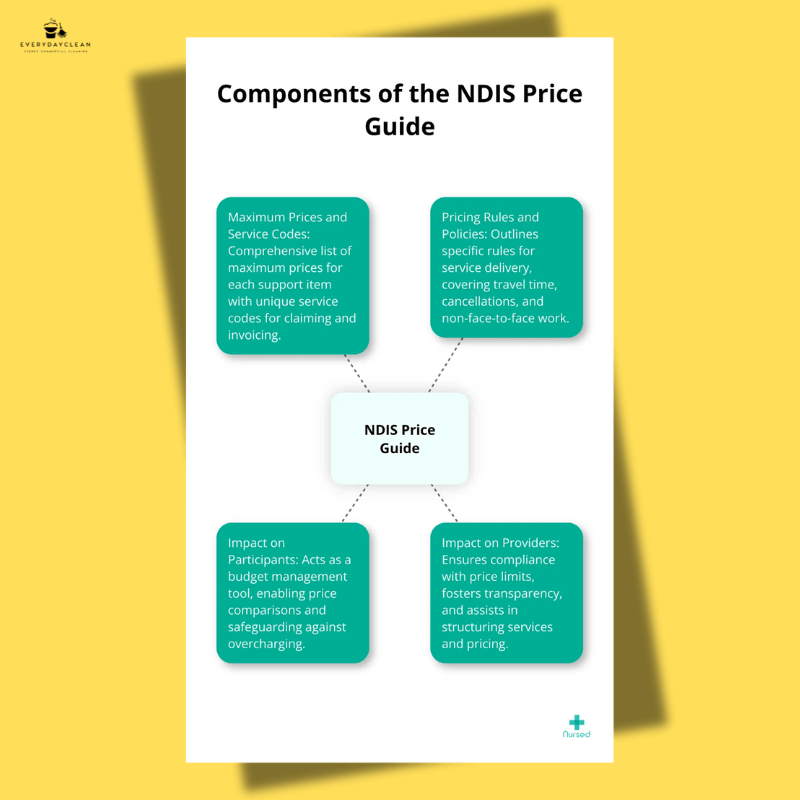
NDIS participants comparing cleaning providers must evaluate factors beyond hourly rates to ensure they receive value, quality, and appropriate support alignment. Transparent pricing, service scope clarity, and provider credentials significantly impact long-term satisfaction.
Request itemised quotes specifying hourly rates, travel time charges, consumable costs, minimum booking requirements, and cancellation policies. Vague quotes listing only "from $65/hour" hide potential add-ons that inflate final invoices. Quality providers supply detailed breakdowns showing exactly what participants pay for.
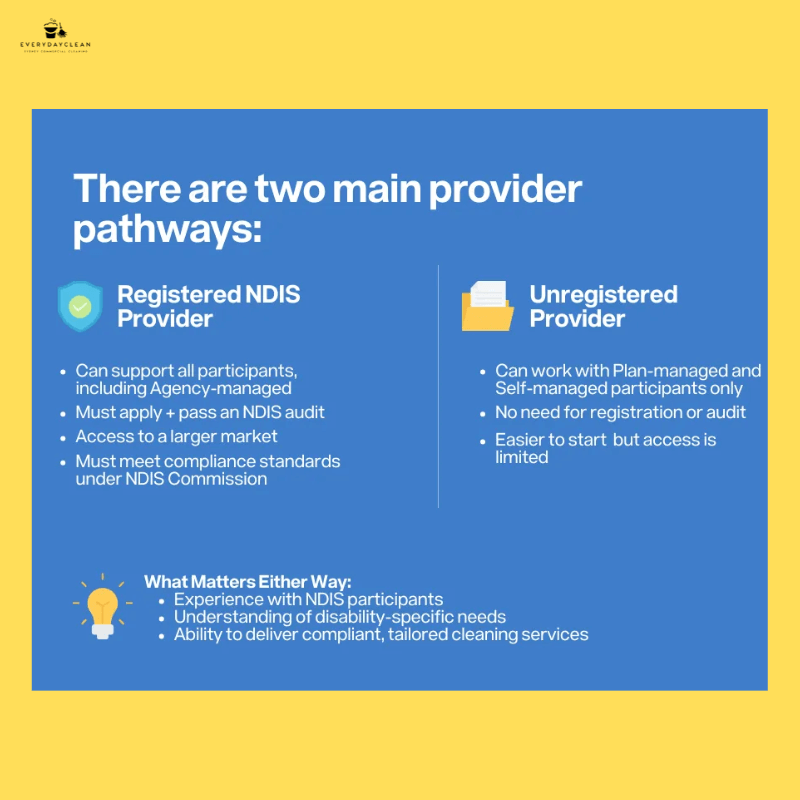
Verify NDIS registration status through the NDIS Commission Provider Register. Registered providers undergo background checks, meet quality standards, and submit to complaint resolution processes. Unregistered providers may offer lower rates but lack accountability frameworks protecting participants.
Assess worker qualifications and disability support experience. Providers employing Certificate III Individual Support workers deliver higher-quality person-centred service than those using untrained cleaners. Ask whether workers receive ongoing professional development in disability awareness, behaviour support, and participant rights.
Clarify service flexibility around scheduling changes, one-off additional hours, and plan budget variations. Participants whose support needs fluctuate require providers accommodating short-notice adjustments without penalty fees or inflexible booking structures.
Review public liability insurance coverage, worker compensation insurance, and professional indemnity policies. These protections safeguard participants against property damage, worker injuries, or service disputes. Reputable providers carry $10-20 million public liability coverage as standard.
Examine customer reviews, testimonials, and provider reputation through NDIS participant forums, social media disability groups, and word-of-mouth referrals. Providers with consistent positive feedback regarding reliability, communication, and service quality justify premium pricing through demonstrated performance.
How Can NDIS Participants Maximise Their Cleaning Budget and Get Better Value?
NDIS participants can stretch cleaning budgets through strategic service scheduling, task prioritisation, and provider selection optimisation. Smart planning ensures essential cleaning needs are met while preserving funds for other NDIS supports.
- Bundle services across multiple participants: Participants living in shared disability accommodation can pool cleaning hours, reducing per-person costs through shared travel time and scheduling efficiencies. Three housemates each requiring two hours weekly can negotiate better rates for a single six-hour block than three separate two-hour appointments.
- Schedule regular services during standard weekday hours: Avoiding premium evening, weekend, and public holiday rates saves 20-35% on identical cleaning work. Participants with flexible schedules should book Tuesday-Thursday daytime slots when provider availability is highest, and rates are lowest.
- Separate routine cleaning from specialist support tasks: Using lower-cost registered providers for standard vacuuming and bathroom cleaning while reserving qualified disability support workers for coaching, decluttering assistance, or complex participant needs optimises budget allocation across different hourly rate tiers.
- Negotiate package pricing for consistent long-term booking: Providers often discount rates 5-10% for participants committing to 12-month service agreements with regular weekly or fortnightly scheduling. Guaranteed income justifies provider concessions on hourly charges.
- Request consumable-inclusive pricing to avoid hidden costs: Providers incorporating cleaning products, equipment, and supplies into hourly rates eliminate surprise consumable charges that inflate invoices. Clarify whether quoted rates include everything needed to complete services.
- Review plan budgets annually to adjust cleaning allocations: Participants whose disability support needs change should request plan reviews, increasing or decreasing cleaning hours. Unused cleaning funds can shift to other Core Supports, while increased cleaning needs may justify higher allocations.
- Track service delivery through timesheets and invoices: Monitoring actual hours worked versus hours claimed prevents overbilling and ensures contracted services. Participants noticing consistent discrepancies should raise concerns with providers or contact the NDIS Commission.
What Are the Most Common Pricing Mistakes NDIS Participants Make When Booking Cleaning Services?
NDIS participants frequently encounter budget overruns and service dissatisfaction due to preventable pricing mistakes during provider selection and service booking. Understanding these errors helps avoid financial waste and support plan depletion.
Accepting vague quotes without itemised cost breakdowns: Participants booking services based on "around $70/hour" quotes often discover additional charges for travel, consumables, or minimum booking requirements. Always demand written quotes specifying every cost component before committing.
- Ignoring travel time charges in service area calculations: Providers claiming travel time at 80% of standard rates can add high costs for participants living outside primary service zones. A participant 45 minutes from the provider's base may pay $72 for 90 minutes of travel (45 minutes each way) plus service hours, doubling expected costs.
- Booking excessive hours beyond actual cleaning needs: Participants overestimating required cleaning time waste plan budgets on unnecessary service hours. A well-maintained two-bedroom apartment rarely needs more than 2-3 hours weekly. Consulting occupational therapists or support coordinators helps determine appropriate allocations.
- Failing to compare registered provider rates against NDIA price caps: Some providers charge maximum NDIA rates regardless of service complexity or competitive market conditions. Participants should obtain 3-5 quotes comparing rates, service scope, and provider qualifications before selecting.
- Mixing cleaning services with personal care in the same booking: Cleaning falls under Assistance with Daily Life, while personal care (showering, dressing) bills at higher rates under Assistance with Daily Personal Activities. Providers combining these services should itemise each activity separately to prevent cross-subsidisation, which would inflate cleaning costs.
- Not reviewing invoices against service agreements and timesheets: Billing errors, duplicate charges, and rate miscalculations occur regularly. Participants should verify every invoice against signed service agreements, timesheets, and NDIA pricing schedules before approving payment.
- Choosing the cheapest provider without evaluating service quality: Low-cost providers may cut corners on worker training, insurance coverage, or cleaning thoroughness. Participants prioritising price over quality risk poor service delivery, property damage, or worker reliability issues requiring costly provider changes.
FAQs
Below are common questions NDIS participants ask when selecting cleaning providers and understanding how pricing works within support plan budgets.
How long does a typical NDIS cleaning session take for a standard home?
A typical NDIS cleaning session for a standard three-bedroom home takes 2-3 hours for routine maintenance covering all primary living areas, bathrooms, and the kitchen. Session duration depends on home size, cleanliness baseline, participant-specific support requirements, and task complexity. Participants maintaining regular fortnightly cleaning need less time per session than those booking monthly services, where dirt accumulates. A one-bedroom apartment might require only 90 minutes weekly, while a four-bedroom house with multiple occupants could need 4-5 hours for thorough cleaning.
Can NDIS participants claim cleaning costs if they live with family or in shared accommodation?
NDIS participants can claim cleaning costs for shared accommodation when their disability prevents them from contributing to household cleaning tasks proportionally to their residency. The NDIA assesses cleaning funding based on the participant's disability-related support needs, not their living arrangement or whether other household members could theoretically complete tasks. Participants living with family members who work full-time, have caring responsibilities, or face their own health limitations can justify NDIS-funded cleaning for maintaining safe living environments. Shared disability accommodation residents typically receive individual cleaning allocations within their Core Supports budgets.
What happens if NDIS cleaning costs exceed the allocated budget in a participant's plan?
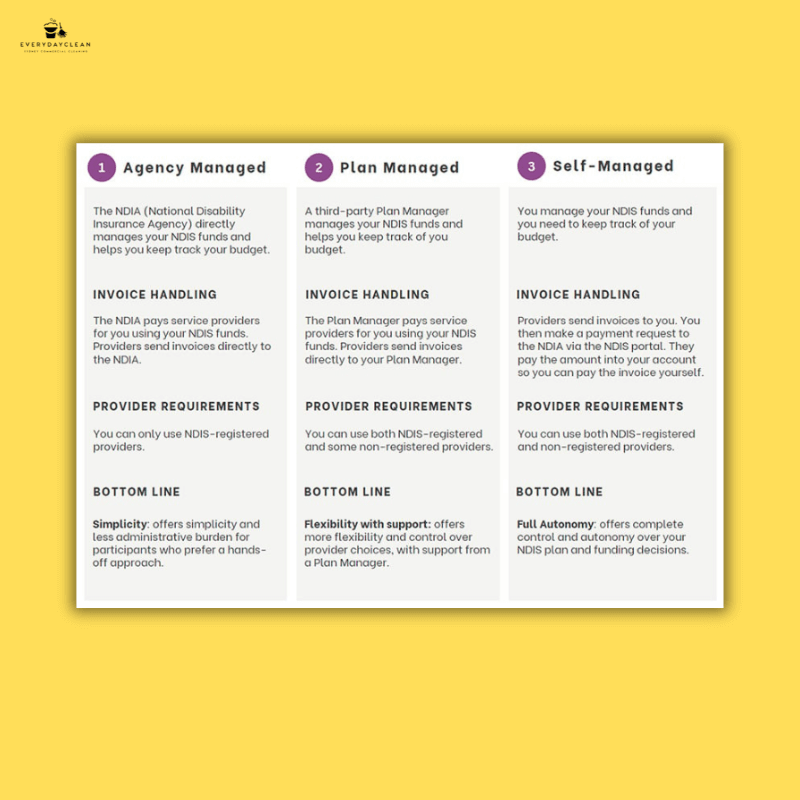
When NDIS cleaning costs exceed allocated budgets, participants should first review their plan to identify whether they can reallocate unused funds from other Core Supports categories to cover cleaning shortfalls. Core Supports budgets offer flexibility for participants to shift funds between subcategories without requiring formal plan variations. Plan-managed participants can work with their plan managers to monitor spending patterns and request plan reviews if cleaning needs consistently exceed original allocations. Agency-managed participants facing budget shortfalls should contact their Local Area Coordinator or NDIA planner to discuss plan variations addressing changed circumstances or increased disability impacts.
Are there cheaper alternatives to NDIS-registered cleaning providers that still meet quality standards?
NDIS participants seeking lower-cost alternatives to registered providers can engage unregistered cleaners under plan management or self-management arrangements, though this approach involves trade-offs affecting service quality and participant protections. Unregistered providers charge $40-55 per hour compared to registered providers' $60-75 rates, creating potential savings of 20-30% on identical cleaning work. However, unregistered providers don't undergo NDIS Commission quality audits, worker screening requirements, or complaint resolution processes that protect participants. Self-managed participants have complete freedom in selecting providers at any price point, but must verify public liability insurance coverage, worker compensation insurance, and professional references before engaging services.
How do NDIS cleaning prices compare to standard commercial cleaning rates in Australia?
NDIS cleaning prices range 40-90% higher than standard commercial cleaning rates due to additional compliance costs, disability support requirements, and NDIA pricing frameworks that providers must navigate. Standard commercial cleaners charge $25-50 per hour for residential cleaning without disability-specific training or NDIS registration obligations. The price premium covers NDIS Worker Screening Checks ($90-140 per worker), disability awareness training, NDIS Commission registration fees, enhanced public liability insurance, quality audits, and administrative overhead for NDIS invoicing systems. Commercial cleaners focus purely on task completion, while NDIS providers deliver person-centred support, incorporating participant engagement and coordination with other support workers or healthcare professionals.
What should participants include in cleaning service agreements with NDIS providers?
NDIS participants should ensure cleaning service agreements include itemised hourly rates, travel time charges, consumable costs, minimum booking requirements, cancellation policies, and service scope specifications. Quality agreements detail exactly which rooms and tasks are covered, whether cleaning products are included, how scheduling changes are managed, and what happens if services don't meet participant expectations. Agreements should specify worker qualifications, insurance coverage details, invoicing procedures, and dispute resolution processes. Participants should request written confirmation of NDIS registration status, public liability insurance levels ($10-20 million coverage), and worker screening compliance before signing any service agreements with providers.
Can NDIS cleaning services help participants develop independent living skills?
NDIS cleaning services can incorporate skill-building components when funded under Capacity Building budgets rather than standard Core Supports allocations. Participants working toward independent living goals can book supported cleaning sessions where workers coach cleaning techniques, demonstrate proper equipment use, and provide physical prompting while completing tasks together. These sessions cost $75-90 per hour, reflecting the additional training and participant engagement required beyond standard cleaning. Occupational therapists often develop cleaning skill programs that NDIS providers implement through structured sessions, building participant confidence and competence. Participants seeking greater independence may also benefit from exploring cleaning tools designed for people with disabilities, which complement skill-building programs.
Everyday Clean delivers transparent NDIS-registered cleaning services across Australian metropolitan and regional areas, supporting participants with reliable, professional household maintenance aligned with disability support goals and plan budgets.
You might also like
Blog