Safe Cleaning Products for Childcare Centres Guide
Cleaning products for childcare facilities usually include a neutral detergent for general surfaces, a bathroom cleaner, a suitable floor cleaner, a sanitiser or disinfectant for higher-risk situations, and laundry products for fabric items, plus supplies like colour-coded cloths, gloves and clearly labelled spray bottles. Product choice has to be cautious in this setting because young children touch, mouth, and sit on surfaces, so anything left as residue matters more than it would in an office or home.
The aim is not to stock the strongest possible chemicals. It is to match the right product to each task, use it as the label directs, and keep everything stored safely away from children. This guide organises products by where they are used, explains the difference between cleaning, sanitising and disinfecting, and sets out the safety checks that help any product work as intended.
What Cleaning Products a Childcare Facility Usually Needs
Most centres can cover daily cleaning with a small, well-chosen range rather than a cupboard full of specialist chemicals. A practical core kit looks like this:
- General-purpose neutral detergent for tables, benches, shelves and most hard surfaces
- Bathroom cleaner suited to toilets, basins and nappy-change areas
- Floor cleaner matched to the floor type in each room
- Sanitiser or disinfectant for high-touch points and higher-risk situations, used only when needed
- Laundry detergent for soft toys, linen, dress-ups and cloth items
- Dishwashing detergent for kitchen and food-preparation areas
- Supplies such as microfibre cloths, colour-coded cloths, gloves, mop and bucket sets, and labelled spray bottles
Keeping the range small makes it easier to train staff, store products safely, and avoid mixing incompatible chemicals. For choosing between options, it helps to weigh up suitability for early learning settings rather than picking the cheapest or strongest product, and centres often review guidance on child-safe disinfectants before adding anything stronger than a neutral detergent.
Cleaning, Sanitising and Disinfecting Explained
These three steps do different jobs, and choosing products is easier once the difference is clear.
- Cleaning uses detergent and water to remove dirt, food and many germs from a surface. This is the foundation and comes first.
- Sanitising reduces germs on a cleaned surface, usually through heat or a sanitising product, according to the method or product directions.
- Disinfecting uses a chemical to reduce a higher proportion of remaining germs, but only works properly on a surface that is already clean.
The key point for product buying: a disinfectant sprayed onto a dirty surface will not perform as intended. Clean first, then sanitise or disinfect only where the task calls for it. No product removes every germ, so cautious wording and consistent routines matter more than any single label claim.
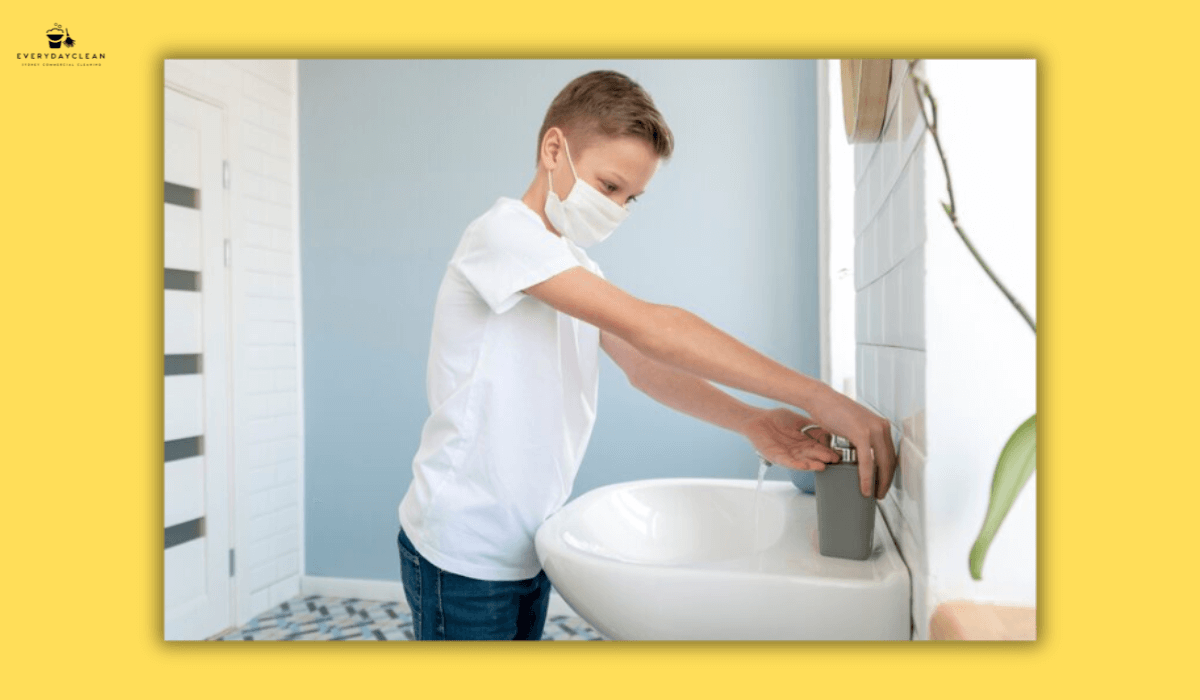
How to Choose Products by Use Case
Matching the product to the task keeps chemical use appropriate and avoids over-treating surfaces that only need detergent.
What products suit general surfaces and tables?
General surfaces such as tables, shelves and low benches usually need only a neutral detergent and clean cloths. Tables used for eating should be cleaned before and after meals, and sanitised where your service policy directs. A neutral pH detergent is gentler on surfaces and leaves less residue than a heavy-duty cleaner.
What products suit bathrooms and nappy-change areas?
Bathrooms, toilets and nappy-change areas are higher-risk, so they benefit from a dedicated bathroom cleaner and a sanitiser or disinfectant used after cleaning. Keep separate, colour-coded cloths for these areas to avoid cross-contamination with tables and play spaces. Follow the product's contact time so the sanitising or disinfecting step actually works.
What products suit floors?
Floor products should match the floor type, since vinyl, timber, tile and carpet have different needs. A neutral floor cleaner suits most hard floors in early learning rooms, while carpeted areas need vacuuming and periodic deeper cleaning. Avoid leaving floors slippery, and let them dry before children return to the area.
What products suit toys and play areas?
Toys and play equipment are mostly cleaned with warm soapy water, with disinfection reserved for after illness or soiling. Because young children mouth toys, rinsing matters where the product directs it. Toy hygiene has its own routine, covered in more detail in the guide to toy cleaning in childcare, so this article keeps the focus on the products themselves rather than the full method.
What products suit kitchens and food areas?
Food-preparation areas need food-safe cleaning, a dishwashing detergent, and a surface sanitiser suitable for food contact where required. Keep kitchen products separate from general cleaning chemicals, and follow any rinsing directions for food-contact surfaces. Check that a sanitiser is intended for food-contact use before relying on it in this space.
What products suit laundry and fabric items?
Soft toys, dress-ups, linen and cloth items are cleaned with a standard laundry detergent, ideally a lower-fragrance option for sensitive children. Check care labels for temperature limits and dry items fully before returning them to rooms, since damp fabric can harbour mould over time. A gentle detergent reduces the chance of skin irritation.
What products suit high-touch points?
High-touch points such as door handles, taps, light switches and gate latches benefit from regular cleaning and, where appropriate, sanitising. These spots are cleaned more often than general surfaces because many hands contact them through the day. A quick wipe with the right product on a set schedule keeps this manageable.
Safety Checks Before Buying and Using Products
A few checks protect children and staff and help every product work as intended:
- Read the product label and follow dilution and usage directions exactly
- Keep the Safety Data Sheet (SDS) on file for each chemical and know where it is stored
- Dilute correctly, since stronger is not safer and can leave more residue
- Observe contact time, the minutes a sanitiser or disinfectant must stay wet to work
- Rinse where required, especially for food-contact surfaces and items children mouth
- Dry surfaces and items before children use them, to avoid slips and mould
- Choose lower-fragrance options where children have sensitivities or allergies
- Store all chemicals locked away and out of reach, never in unlabelled bottles
- Use PPE such as gloves as the label directs, and ventilate where needed
- Follow manufacturer instructions, and never mix products, as some combinations release harmful fumes
When dilution, contact time or rinsing instructions are unclear, treat the label as the authority and contact the manufacturer before using the product around children.
Choosing Disinfectants Cautiously
Disinfectants have a place in childcare, but they are not a default for every clean. Reserve them for higher-risk situations such as after illness, soiling, or contact with bodily fluids, and use a neutral detergent for everyday cleaning. No product should be described as child-safe unless its own label or manufacturer guidance supports that use.
When selecting a disinfectant, check that the product label supports the intended use, and where relevant in Australia, confirm any applicable disinfectant registration or claim before relying on it, confirm the required contact time, and note whether rinsing is needed after use on surfaces or items children handle. Store it securely, keep the SDS accessible, and train staff on correct dilution so the product is neither too weak to work nor strong enough to leave unnecessary residue.
A Compact Childcare Cleaning Products Checklist
This short list can be adapted to your rooms and reviewed against your service policy.
- Neutral general-purpose detergent
- Dedicated bathroom cleaner
- Floor cleaner matched to floor types
- Sanitiser or disinfectant for high-risk use
- Food-safe kitchen cleaner and dishwashing detergent
- Lower-fragrance laundry detergent
- Microfibre and colour-coded cloths
- Gloves and any label-directed PPE
- Labelled spray bottles and measured dilution tools
- Lockable storage for all chemicals
When Professional Cleaning Support Helps
Day-to-day product use stays with educators, since surfaces, tables and toys are cleaned throughout the day as part of normal care. Professional cleaning becomes useful for the broader environment: floors, bathrooms, deeper periodic cleans and general hygiene that supports a healthy centre but sits outside daily in-room routines. If your service wants dependable, scheduled cleaning that fits around childcare hours, Everyday Clean's
scheduled cleaning support for early learning centres can be arranged to suit your rooms and complement your in-house product routine.
Frequently Asked Questions
What cleaning products do childcare facilities need?
Most childcare facilities need a neutral general-purpose detergent, a bathroom cleaner, a floor cleaner matched to the floor type, a sanitiser or disinfectant for higher-risk situations, laundry detergent for fabric items, and a dishwashing detergent for food areas. Supplies like colour-coded cloths, gloves and labelled spray bottles round out a practical kit.
Are childcare cleaning products safe for children?
They can be when chosen and used correctly, but no product should be assumed child-safe without checking its label or manufacturer guidance. Use neutral detergents for everyday cleaning, reserve disinfectants for higher-risk situations, follow dilution and contact-time directions, rinse where required, and store all chemicals locked away and out of reach.
Do childcare centres need disinfectant for daily cleaning?
Not for most tasks. Everyday cleaning is usually handled with a neutral detergent and water, which removes dirt and many germs. Disinfectant is reserved for higher-risk situations, such as after illness or contact with bodily fluids, or where a service policy directs. Using disinfectant for every surface may add unnecessary chemical exposure where routine cleaning is enough.
How should childcare cleaning products be stored?
All cleaning chemicals should be stored locked away and out of children's reach, in their original labelled containers or clearly labelled decanted bottles. Keep the Safety Data Sheet for each product accessible, keep kitchen and bathroom products separate, and never store products where fumes could build up or where children could access them.
What is the difference between sanitising and disinfecting in childcare?
Sanitising reduces germs on a cleaned surface, usually through heat or a sanitising product, according to the directions. Disinfecting uses a chemical to reduce a higher proportion of remaining germs, but only works on an already-clean surface. Both steps follow cleaning, and both depend on correct contact time to work as intended.
Blog