NDIS Household Tasks: What Cleaning Services Are Covered?
NDIS Household Tasks: What They Include and How Cleaning Fits In
NDIS household tasks generally refer to everyday domestic activities a participant needs help with because of their disability, such as cleaning, laundry, dishes and keeping living areas hygienic and safe. Whether that support is funded depends on the individual plan, the goals recorded in it and how the plan is managed, so two participants with similar needs can end up with quite different arrangements.
This guide explains what household task support commonly covers, where professional cleaning sits within it, what usually falls outside it, and what to confirm before booking a provider. It is general information only. Always check current NDIS guidance and speak with a support coordinator, plan manager or the NDIA about your own plan.
Household tasks cover the day-to-day upkeep of a home
Household task support exists so a participant can live in a clean, safe and functional home when disability-related barriers make those tasks difficult, unsafe or impossible to complete independently.
Common examples that often sit under household task support include:
- General house cleaning, including floors, surfaces and living areas
- Bathroom and toilet cleaning
- Kitchen cleaning, including benches, sinks and stovetops
- Washing, drying, folding and putting away laundry
- Washing dishes or loading and unloading a dishwasher
- Tidying meal preparation areas before and after cooking
- Changing bed linen and making beds
- Taking out rubbish and recycling, and putting bins out for collection
- Basic home hygiene tasks that support health and safety
Support may be delivered as a regular scheduled visit, an occasional service, or as part of a broader support worker arrangement. The mix depends on what the plan funds and what the participant actually needs help with.
How is household task support different from personal care?
Household tasks relate to the home itself. Personal care relates to the participant's body and daily routine, covering things like showering, dressing, grooming and medication prompting. Some support workers deliver both, but they are recorded and funded differently, so it is worth being clear about which one is being requested when arranging support.
Eligibility depends on the plan, not the task
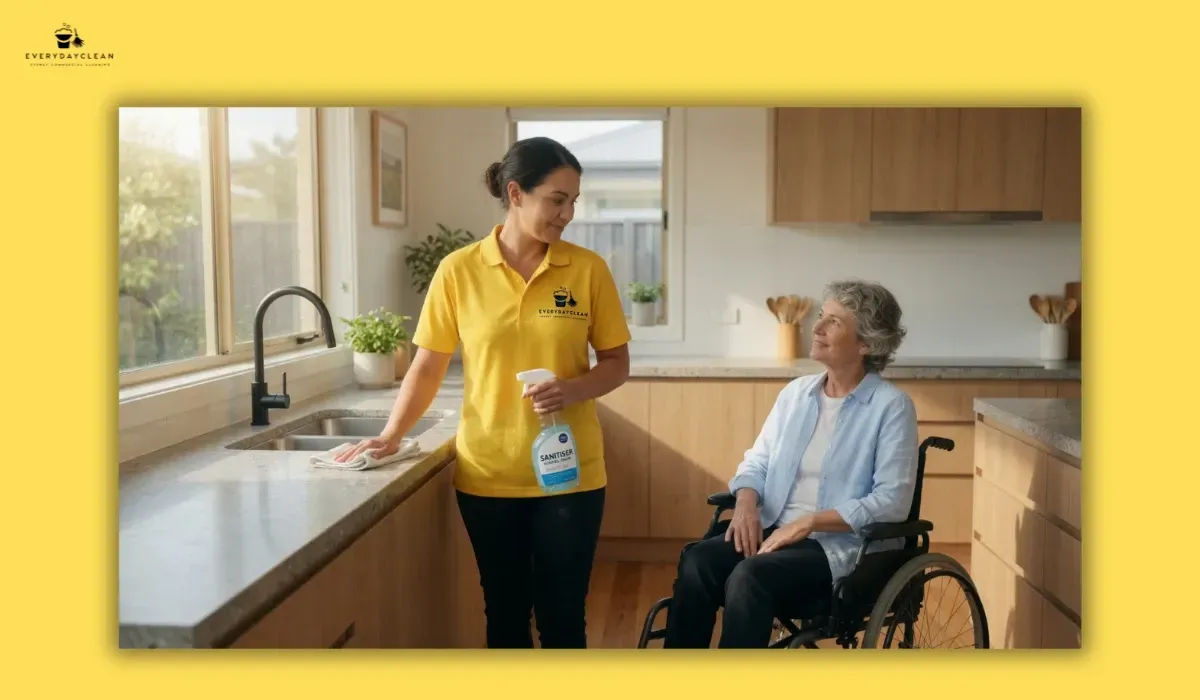
There is no fixed list of tasks that are automatically funded for everyone. Support is considered on the basis of individual need, and generally needs to connect to the participant's disability and the goals recorded in their plan.
Factors that typically influence what is available include:
- The goals in the plan. Support tends to be linked to goals around independence, daily living and maintaining a home.
- The support category and budget. Household tasks usually sit within core supports, though how the budget is allocated and used can vary.
- Whether the need is disability related. Support is intended to address barriers created by disability, not general household preference.
- Household circumstances. The presence of other adults in the home may be taken into account when assessing what support is reasonable.
- How the plan is managed. Self-managed, plan-managed and NDIA-managed plans have different rules about which providers can be engaged.
- Provider availability and arrangement. A provider needs to be able to deliver the specific task, at the frequency required, in that location.
Because these factors interact, the most reliable answer for any individual comes from their plan documents, their support coordinator or plan manager, or the NDIA directly.
Confirm the funding is available and the task is covered before a service starts. If a service is delivered and then found not to be claimable, the participant may be left responsible for the cost.
Where professional cleaning fits within household task support
Cleaning is a common household task participants ask about, and it is often the practical starting point for participants arranging support for the first time.
In most arrangements, cleaning under household tasks means routine maintenance of the home: regular cleaning of bathrooms, kitchens, floors and living areas at a frequency that keeps the property in a reasonable state. It is not usually intended to cover restoration work, one-off transformations, or specialist trade services.
A cleaning provider delivering this type of support will typically:
- Work to an agreed task list rather than an open-ended scope
- Attend on a set schedule, often weekly or fortnightly
- Keep the scope focused on hygiene and everyday liveability
- Record what was completed for the participant's own records
Everyday Clean provides NDIS cleaning service in Sydney for participants across Sydney, with the task list agreed in advance so the scope matches what has been arranged. If you are budgeting for how many hours of support a schedule will use, current NDIS cleaning rates give a clearer picture of what to plan for.
How often should cleaning support be scheduled?
Frequency should match the participant's actual needs and the funding available, not a default template. Fortnightly is a common starting point for a maintained home, since it keeps each visit within a predictable timeframe. Weekly is often more appropriate where there are higher hygiene needs, pets, mobility equipment in use, or more people living in the home.
A useful test is whether the home is drifting into a state where each visit needs deep cleaning rather than maintenance. If so, the frequency is probably too low for the circumstances.
Does plan management type affect provider choice?
It can. Self-managed participants generally have the widest choice of providers, plan-managed participants can usually engage both registered and unregistered providers through their plan manager, and NDIA-managed plans are typically limited to registered providers. This means not every cleaning provider can be used under every plan management type. Check the provider's registration status and confirm with the plan manager or support coordinator before arranging a service, so invoicing is not held up later.
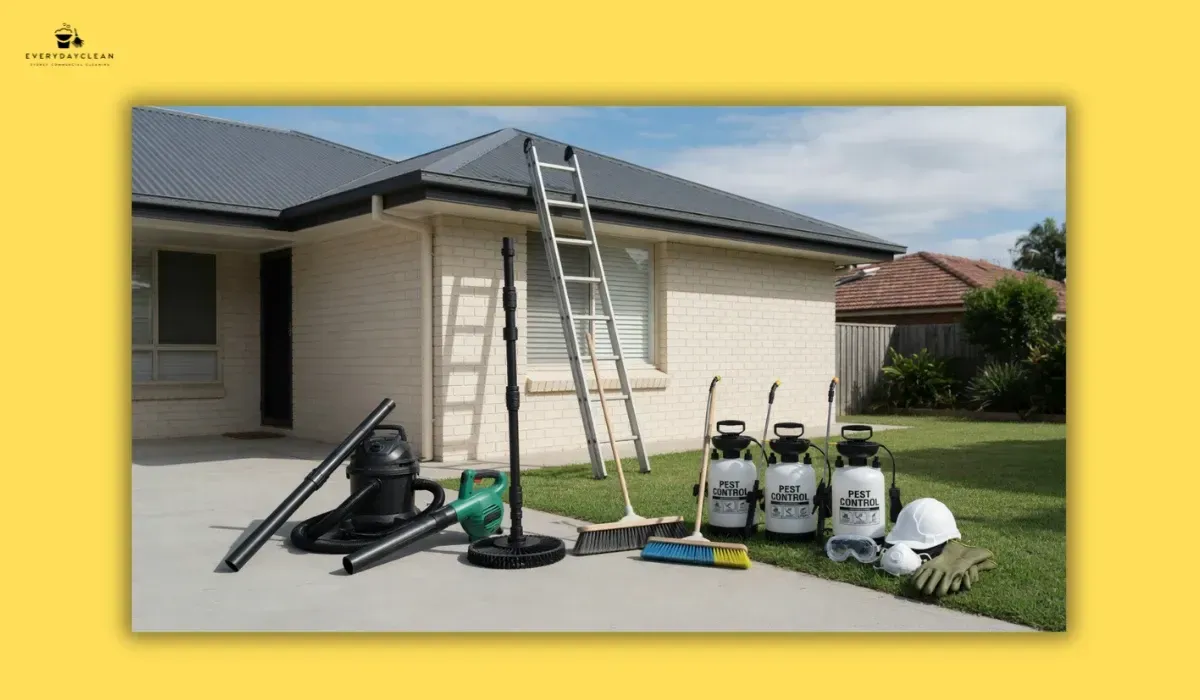
Some tasks usually fall outside household task support
Understanding what is generally not included avoids awkward conversations later. Household task support is not intended to function as a general home services budget.
Tasks that commonly sit outside it include. The table below is a practical guide, not a funding decision.
| Type of work | Why it usually falls outside |
|---|---|
| Property repairs and maintenance | Considered building upkeep rather than disability support |
| Gutter cleaning, roof work, pressure washing | Specialist and often licensed or height-related work |
| Major renovation or restoration cleaning | Outside routine domestic scope |
| Pest control and mould remediation | Specialist services with their own regulations |
| Garden and lawn maintenance | Depends heavily on the individual plan and assessed need |
| Tasks unrelated to disability need | Support is tied to disability-related barriers |
| Care for other household members | Support is for the participant, not the whole household |
Some of these may still be arranged privately, and in certain circumstances some may be funded through other parts of a plan. That is a question for the participant's plan manager or support coordinator rather than an assumption to make in advance.
What to confirm before booking household task support
Working through these points before the first visit prevents most of the common problems participants encounter.
About the plan:
- Which support category and budget the household tasks will be claimed from
- How much funding is available and over what period
- Whether the plan is self-managed, plan-managed or NDIA-managed
- Whether the intended provider can be engaged under that management type
About the provider:
- Whether they have experience working with NDIS participants
- What is included in the agreed task list, room by room
- Whether cleaning products and equipment are supplied
- How visits are scheduled, and what happens if a visit is missed
- How invoicing works, and whether it is sent to the participant or plan manager
- What the cancellation policy is, and how it affects the budget
- Whether the same worker or team attends each time, where consistency matters
About the arrangement:
- What is written in the service agreement
- How to raise a concern or request a change to the task list
- What access arrangements apply, including keys, entry and pets
- Whether any tasks discussed are outside the agreed scope
Getting the task list in writing is the single most useful step. It gives both sides the same reference point and makes it easy to adjust the arrangement as needs change.
What should a service agreement include?
At minimum, the tasks being delivered, the frequency, the duration of each visit, the rate being charged, the invoicing arrangement and the cancellation terms. Participants are entitled to read it properly and ask questions before signing, and to request changes if something does not match what was discussed.

Frequently asked questions
What household tasks can NDIS support cover?
Household task support commonly covers cleaning, laundry, dishes, tidying meal preparation areas, changing linen, taking out rubbish and other routine domestic activities. What is actually funded depends on the individual plan, the recorded goals, the available budget and whether the need relates to the participant's disability. Check plan documents or speak with a plan manager to confirm.
Does every NDIS plan include cleaning support?
No. Cleaning support is not automatically included in every plan. It is generally considered where a disability-related barrier makes the task difficult or unsafe to complete independently, and where it aligns with the goals in the plan. Participants should confirm with their support coordinator, plan manager or the NDIA before arranging a service.
Is household task support the same as domestic assistance?
The terms overlap in everyday use. Domestic assistance is a broader term used across aged care and disability services for help with routine household activities. Within the NDIS, this type of support is generally described as household tasks. What matters more than the label is how the support is recorded in the plan and the service agreement.
Who decides what household tasks are funded?
Funding decisions rest with the NDIA, based on the participant's assessed needs, goals and circumstances. Support coordinators and plan managers help interpret and manage the plan, and providers deliver the agreed services, but neither determines what is funded. Questions about eligibility or the scope of a plan should go to the NDIA or a support coordinator.
Can household task support be changed if needs change?
Yes. Arrangements with a provider can usually be adjusted by discussing the task list, frequency or duration, subject to available funding. If the change is significant and requires more funding than the plan allows, it may need to be raised at a plan review. Keep a record of what has changed and why, since this supports the conversation.
Setting up support that actually matches the need
The most workable household task arrangements start with a clear picture of what the participant genuinely struggles with, then match a task list and frequency to that. Vague arrangements tend to cause friction, because expectations drift on both sides.
Take the time to write the task list down, confirm the funding position first, and check the service agreement reflects what was discussed. Where the situation is complex or the plan is difficult to interpret, a support coordinator or plan manager is the right person to involve early rather than after a service has already been delivered.
About Everyday Clean
Everyday Clean is a Sydney-based residential and commercial cleaning provider working across homes, offices, strata properties and specialist sites, including cleaning support arranged for NDIS participants.
Blog