How to Remove Black Mould from Walls Without Scrubbing
Small patches of surface mould on walls can often be cleaned by ventilating the room, wearing basic protective gear, testing a mild cleaning solution on a hidden spot, wiping the area gently, drying it fully, and then fixing the moisture that caused it. Cleaning the visible mould on its own is rarely enough, because it tends to return if the damp behind it is not addressed.
In Australia, "mould" is the usual spelling, though some people search for "mold", and both mean the same thing here. This guide focuses on painted walls and drywall or plasterboard, covering what causes wall mould, how to clean small patches safely, how to tell when mould may be inside the wall, and when the problem is better left to a professional.
What Causes Mould On Walls
Wall mould is a moisture problem first and a cleaning problem second. Mould grows where there is damp and limited airflow, so walls in bathrooms, behind furniture, on cold external walls and in poorly ventilated rooms are common places to find it.
Frequent causes include condensation on cool wall surfaces, steam from bathrooms and kitchens, plumbing or roof leaks tracking into walls, rising damp, and furniture pushed hard against walls where air cannot circulate. Working out the likely source matters, because the same patch will keep returning if the moisture stays. Black mould on walls is often just surface mould, but where it is linked to a leak or damp inside the wall, cleaning the surface alone will not solve it.
Safety Checks Before You Start
A few checks before cleaning reduce the risk to you and to the wall.
- PPE: wear gloves, eye protection and a suitable mask or respirator for the task, since disturbing mould can release spores
- Ventilation: open windows and doors so the room is not enclosed while you work
- Chemical safety: never mix cleaning products, particularly bleach with ammonia or other cleaners, as this can create dangerous fumes
- Surface check: press gently to check the wall is firm. Soft, bubbling or crumbling areas suggest moisture damage inside the wall that needs assessment, not just cleaning
- Electrical care: keep moisture away from power points and switches on the wall
If cleaning starts to cause irritation, or the wall feels soft or damaged, stop and reconsider whether DIY is appropriate.
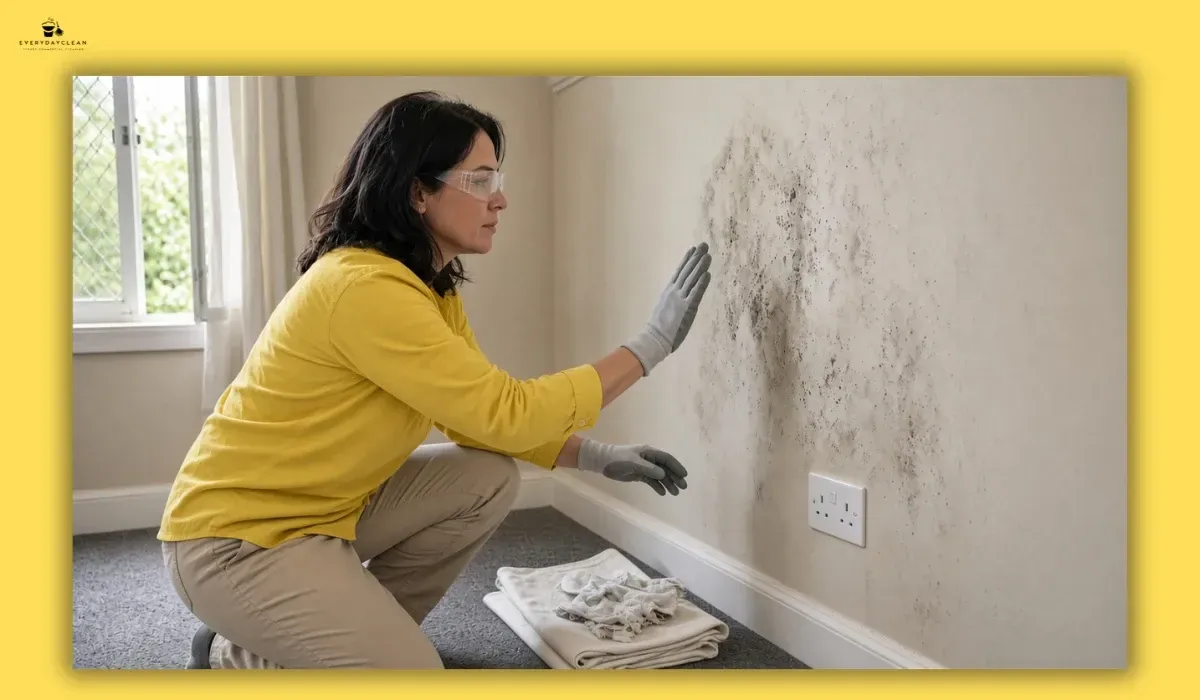
How To Clean Small Surface Mould On Walls
For a small patch on a sound, painted wall, a gentle method usually works and limits damage.
- Ventilate the room and put on gloves, eye protection and a mask
- Lay a drop sheet along the base of the wall to catch drips
- Mix a mild solution, such as a little dishwashing liquid in warm water, or a diluted product suited to mould
- Test the solution on a small hidden area first to check the paint does not lift or mark
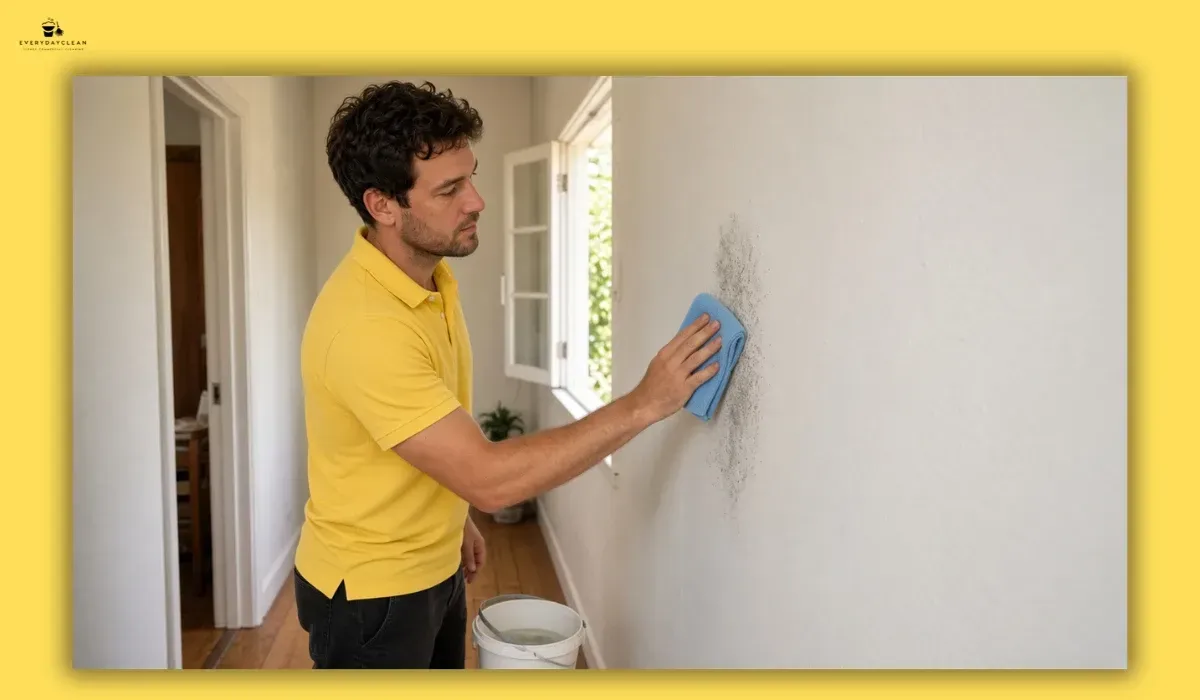
- Wipe the mould gently with a damp, not soaking, cloth, without heavy scrubbing
- Rinse the cloth often and go over the area again if needed rather than scrubbing hard
- Dry the wall thoroughly and keep the room ventilated until it is fully dry
Avoid over-wetting, since too much moisture can damage paint and plasterboard and add to the damp problem. Wall and ceiling mould share the same causes and gentle approach, so if mould has also appeared overhead, treating the ceiling mould at the same time and improving airflow helps stop it moving between surfaces.
Painted Walls And Drywall Need Different Care
How a wall is finished affects how it handles cleaning. Painted, sealed walls are more forgiving, because the sealed surface resists moisture and can usually be wiped. Even so, harsh scrubbing or strong undiluted chemicals can strip paint, so a gentle, tested approach is best.
Drywall and plasterboard are more vulnerable, because the material is porous and absorbs moisture readily. Surface mould on painted plasterboard can often be wiped, but if mould has penetrated into unsealed or damaged plasterboard, cleaning the surface will not remove it, and the affected section may need professional assessment or replacement. Over-wetting plasterboard can also cause it to soften or swell, so keep moisture to a minimum.
Signs Mould May Be Inside The Wall
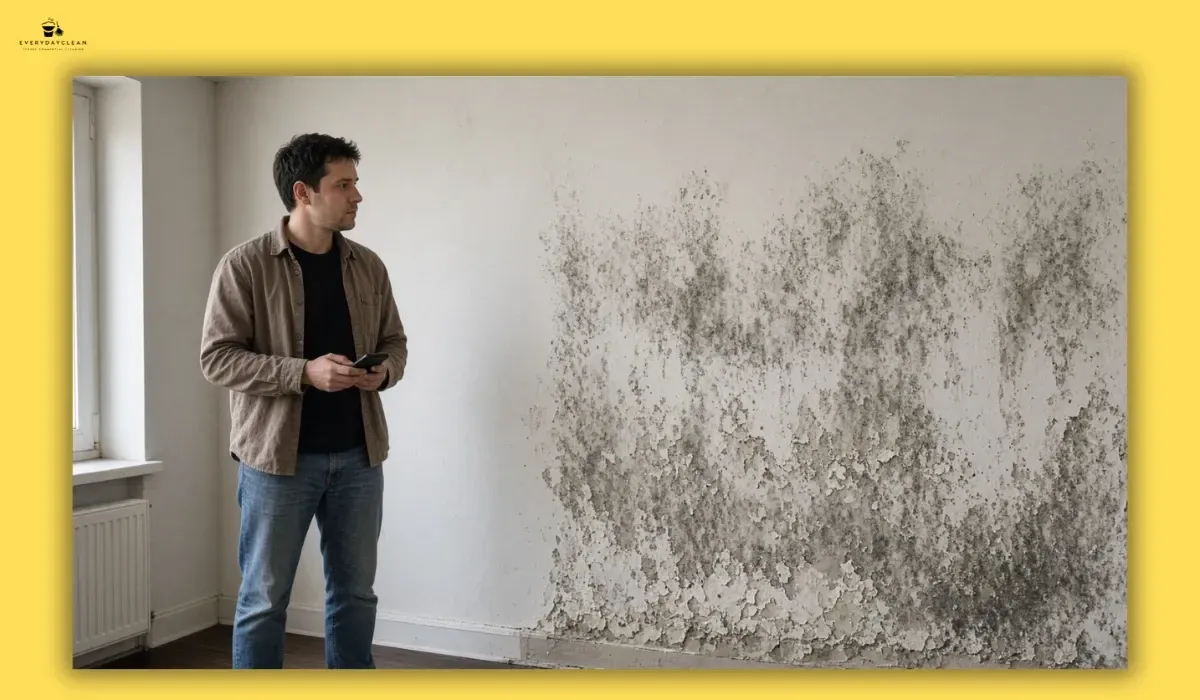
Sometimes the visible patch is only part of the problem. A few signs suggest mould or moisture may be inside the wall rather than just on the surface: mould that keeps returning quickly after cleaning, bubbling or peeling paint, soft or swollen plasterboard, a persistent musty smell, or staining that spreads outward over time.
Where these appear, cleaning the surface is unlikely to fix the issue, and the wall may need to be assessed for leaks, internal damp or damaged material. This is generally the point to seek advice rather than keep cleaning.
Cleaning Alone Is Not Enough If Moisture Remains
It is worth stressing that removing visible mould does not fix the cause. If the damp source stays, whether condensation, a leak or poor ventilation, the mould will usually grow back in the same spot.
After cleaning, address the moisture: improve airflow, fix leaks, move furniture slightly off external walls, and reduce condensation. In damp-prone rooms like bathrooms, ventilation habits make a real difference, and this guidance on preventing bathroom moisture covers steps that help keep wall mould from returning.
Repainting After Mould
Once mould is cleaned and the wall is fully dry, repainting can help restore the finish, but preparation matters. Painting over a wall that is still damp, or still has mould in or under the surface, generally leads to the mould returning through the new paint.
The wall should be fully dry, cleaned of mould, and the moisture source resolved before repainting. Some people use mould-resistant paints or primers in damp-prone areas, following the product label. If mould keeps coming through fresh paint, that is a strong sign the moisture problem has not been solved and needs addressing before any further painting.
Comparing Wall Mould Situations
| Situation | Practical Approach |
|---|---|
| Small patch, sound painted wall | Gentle DIY clean, then fix moisture |
| Surface mould on painted plasterboard | Wipe gently, avoid over-wetting |
| Bubbling paint or soft plasterboard | Stop, assess for damp inside the wall |
| Large, spreading or recurring mould | Professional assessment may be safer |
When Not To DIY Wall Mould
DIY suits small surface patches on sound walls, but some situations need professional help. Stop and seek advice if the mould covers a large area, keeps returning after cleaning, is linked to a leak, appears with soft or bubbling paint or damaged plasterboard, or if the room is poorly ventilated in a way that makes cleaning risky.
For commercial or shared spaces, a broader professional cleaning service may help with cleaning planning, while leaks, damaged plasterboard or widespread mould may need specialist assessment. Persistent or widespread wall mould is often a sign of a bigger moisture problem that surface cleaning will not resolve.
Keep Wall Mould Away By Fixing The Moisture Source
The lasting fix for wall mould is controlling moisture, not just cleaning the surface. Clean only small surface patches yourself, dry the wall fully afterwards, and then deal with the cause by improving ventilation, fixing any leaks, and reducing condensation in the room.
If the mould is large, keeps returning after cleaning, or shows signs of being inside the wall such as bubbling paint or soft plasterboard, stop DIY and seek assessment. Treating the damp is what keeps mould from coming back, so a clean without a moisture fix is usually only a temporary result.
Frequently Asked Questions About Removing Mould From Walls
What Is The Best Way To Remove Mould From Walls?
For small surface patches on a sound painted wall, ventilate the room, wear gloves, eye protection and a mask, test a mild solution on a hidden spot, then wipe gently without heavy scrubbing and dry fully. Fixing the moisture source afterwards is essential, or the mould tends to return.
How Do You Remove Black Mould From Walls?
Black mould on walls is often surface mould and can be treated with the same gentle method: PPE, ventilation, a tested mild solution, gentle wiping and thorough drying. If it keeps returning, is widespread, or is linked to a leak or damp inside the wall, it should be assessed professionally rather than repeatedly cleaned.
Can You Just Paint Over Mould On Walls?
No. Painting over mould or a damp wall generally leads to the mould returning through the new paint. The wall should be cleaned, fully dried and the moisture source resolved first. Mould-resistant paint may help in damp-prone areas, but it does not replace fixing the underlying damp.
How Do You Know If Mould Is Inside The Wall?
Signs include mould that returns quickly after cleaning, bubbling or peeling paint, soft or swollen plasterboard, a persistent musty smell, or staining that spreads over time. These suggest moisture or mould inside the wall, which usually needs assessment rather than surface cleaning.
Blog