How to Clean Awning Windows From Inside
How to Clean Awning Windows From Inside: A Practical Method
Cleaning an awning window from inside works by opening the sash to its widest safe position, reaching through the gap with a short-handle microfibre pad, and cleaning the exterior face in overlapping sections from the top edge down. The method is straightforward. The difficulty is that the opening angle gives you far less room to work than a sliding or casement window does.
Most people get frustrated with awning windows because they try to use the same tools that work elsewhere in the house. A standard squeegee and a full bucket are the wrong approach here. The right approach is smaller tools, more sections, and accepting that the top outer corner is the hardest part of every pane.
Why awning windows resist normal cleaning methods
- Understanding the constraints makes the method obvious.
- The opening angle is limited. Awning sashes hinge at the top and swing outward from the bottom, usually opening to somewhere between 30 and 45 degrees. That gap is enough to pass a hand and a flat tool through, and not much more.
- The hinges sit at the top. This is exactly where the sash is closest to the frame, so the top edge of the exterior glass is the least accessible part of the window. It is also where dust and grime accumulate.
- Flyscreens sit on the inside. Unlike most window types, awning windows carry the screen on the interior face, so it must come off before you can reach through at all. Some clip out easily, others are fixed with screws.
- Frame depth restricts wrist movement. Deep reveals and thick frames limit the angle at which your hand can turn once it is through the opening.
- Water runs onto the sill. Anything applied to the exterior face drains down the glass and back toward the opening, which means the interior sill and floor need protecting.
Are all awning windows worth cleaning this way?
Some ground-floor or low-level awning windows over a stable interior floor may be reasonable to clean this way. Windows above that, windows over stairwells, and windows where you cannot stand square in front of the opening are not. The method depends on being able to work with both feet planted and your body inside the room.
What you need before starting
Keep the kit small. Bulky tools do not fit through the opening.
- A short-handle microfibre pad or a flat sponge on a compact handle
- A small squeegee, ideally 15cm to 20cm, or a pivoting head if you have one
- A spray bottle with water and a very small amount of mild detergent
- Two microfibre cloths, one for drying and one for detailing
- A towel or drop cloth for the sill and floor
- A screwdriver if the flyscreen is fixed rather than clipped
Notice what is not on the list: a bucket, a full-size squeegee and an extension pole. None of these work well through an awning opening. If you want the broader picture on what belongs in a household kit, home window cleaning tools cover the general set.
Step-by-step method
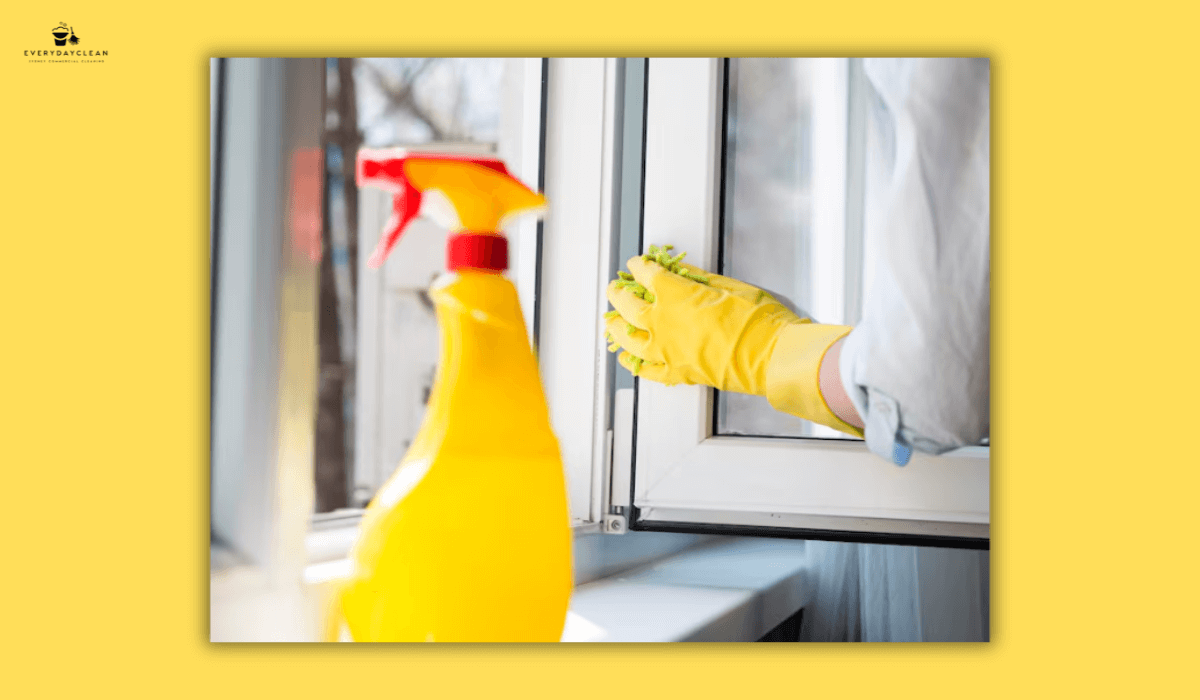
1. Protect the interior first. Lay a towel or drop cloth along the sill and on the floor below. Water will run back toward you, and this step saves cleaning up twice.
2. Remove the flyscreen. Many clip out from the interior side. If yours is screwed in place, remove the screws and set the screen aside somewhere it will not be stepped on. Clean the screen separately with a soft brush or a rinse outside if you can do so safely.
3. Clean the interior face of the glass first. Spray lightly, wipe with microfibre, and dry. Doing this first means any streaks you see afterward are definitely on the outside face, which removes the guesswork later.
4. Open the sash to its widest safe position. Do not force it past its stay or hinge limit. If the mechanism resists, that is the limit.
5. Wet the exterior glass in sections. Spray directly onto the pad rather than through the opening, which keeps overspray off the wall and window surrounds. Work in sections roughly the width of your pad.
6. Clean from the top edge down. Start with the top outer corner, since it is the hardest to reach and easiest to run out of patience for. Use flat pressure with the pad and work across before moving down.
7. Squeegee or wipe each section dry before moving on. With a small squeegee, pull down in overlapping passes and wipe the blade on a cloth after each one. If the opening is too tight for a squeegee, a dry microfibre pad works, though it takes more passes.
8. Detail the edges last. The frame edges and the bottom rail hold water. Wipe them with a dry cloth once the pane is done.
9. Check from outside if you safely can. Stepping outside for a moment on a ground floor shows what you missed. Upper floors, skip this step.
10. Refit the flyscreen and remove the drop cloth. Dry the sill fully before replacing the screen, since trapped moisture in the track leads to problems over time.
Do not lean out of an awning window, stand on furniture or a chair to reach one, or remove a flyscreen on an upper floor while working near an open window. If the exterior glass cannot be reached with both feet on the floor and your body inside the room, it needs proper access from outside rather than a longer reach from inside.
Tools that do not suit awning windows
Several popular inside-window devices simply do not fit this window type, and buying one for an awning window usually ends in disappointment.
- Magnetic window cleaners need both pads to travel across a continuous glass surface. An awning sash that opens outward at an angle makes it difficult to place and control the outer pad, and there is a real risk of it dropping when the sash geometry breaks the magnetic contact.
- Window cleaning robots need to mount on a flat, accessible pane. Reaching an angled outward-swinging sash to attach a robot generally means reaching further out than is safe, which defeats the purpose.
- Long telescopic poles cannot achieve a useful angle through a 30 to 45 degree opening. The pole ends up pressed against the frame rather than the glass, and control over pressure is lost entirely.
- Full-size squeegees are too wide for the opening on most residential awning windows.
If your home has a mix of window types, the trade-offs across all of them are covered in devices for cleaning outside windows from inside.
When to leave it to someone else
The method above assumes a reachable window over a stable floor. Several situations fall outside that.
Upper-storey awning windows with no safe way to work square to the opening are not a DIY job. Neither are awning windows above stairwells or voids, windows where the flyscreen cannot be removed without working at height, or high-set windows in apartments where the exterior face has never been cleaned and carries bonded mineral deposits.
For these, professional window cleaning reaches the exterior face from outside using water-fed poles or appropriate access equipment, which cleans the whole pane, including the top corner that is always the compromise when working from inside.
Frequently asked questions
How do you clean the outside of awning windows from inside?
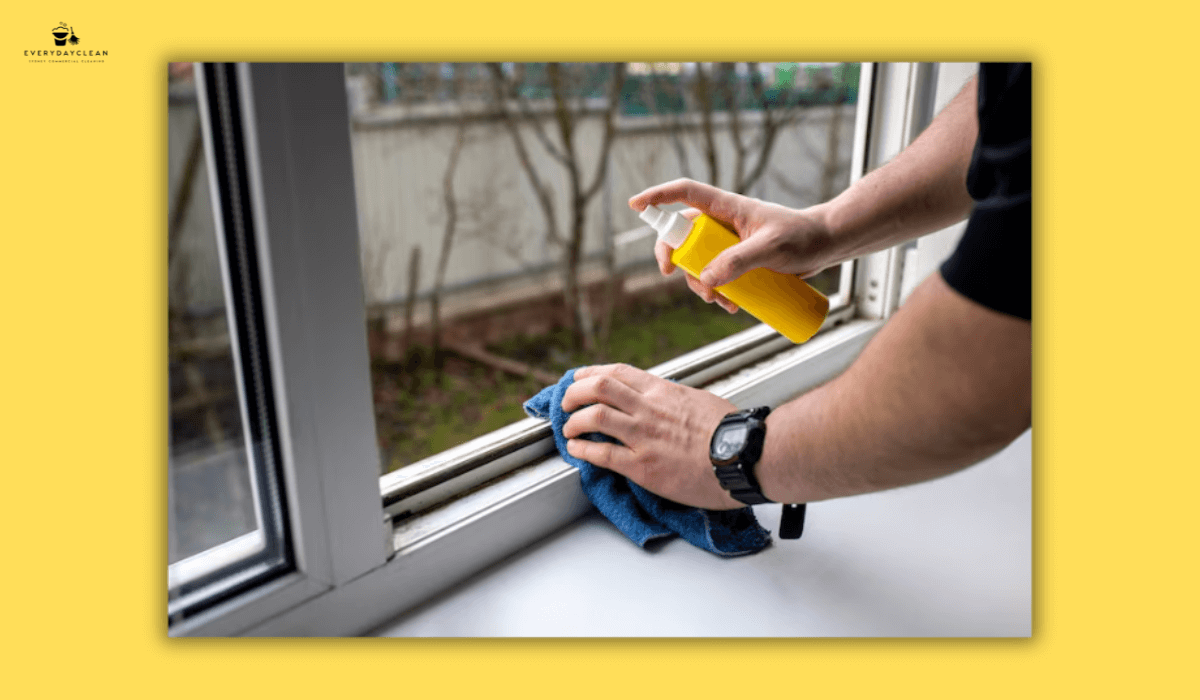
Open the sash to its widest safe position, remove the interior flyscreen, then reach through with a short-handle microfibre pad and clean the exterior face in overlapping sections from the top edge down. Dry each section before moving on. Protect the sill and floor first, since water runs back toward the opening.
Can awning windows be cleaned without removing the flyscreen?
In most cases, no. Awning windows carry the screen on the interior side, so it physically blocks access to the opening. Most screens clip out with light pressure, though some are fixed with screws. Removing the screen on an upper-floor window is only advisable where it can be done without leaning outward.
What is the best tool for cleaning awning windows from inside?
A short-handle microfibre pad or flat sponge is the most practical, since it fits through the restricted opening and lets you apply flat pressure to the glass. A small squeegee of around 15cm to 20cm helps with drying. Larger squeegees, telescopic poles and magnetic cleaners do not suit the opening geometry.
Why is the top of an awning window so hard to clean?
The hinges sit at the top of the sash, which is where the window is closest to the frame when opened. That leaves the smallest gap exactly where the most reach is needed. Working the top corner first, before your arm tires, gives a better result than leaving it until last.
How often should awning windows be cleaned?
Twice a year suits most homes, with more frequent cleaning where windows face a busy road, the coast, or a garden with sprinklers. Because access is awkward, many households clean the interior face more often and arrange exterior cleaning for the whole house periodically instead.
Working with the constraints rather than against them
Awning windows will never be as quick to clean as a sliding window, and no tool changes that. What makes the job manageable is a small kit, a section-by-section approach, and starting at the corner you least want to deal with.
Where the window sits too high or the opening cannot be worked comfortably, that is not a technique problem. It is a sign the exterior face needs cleaning from outside, which is a different job with different equipment.
Blog