Daycare Cleaning Requirements: Australia Guide
Daycare cleaning requirements generally mean keeping premises, furniture and equipment safe, clean and in good repair, supported by documented cleaning routines, appropriate and safely stored products, infection-control practices, and regular review against official guidance. Because obligations sit across national law, quality standards and health advice, services should confirm the current, specific requirements with the relevant regulator or their own approved service policy rather than relying on any single summary.
This guide sets out the requirement areas a service is expected to consider, what each one involves, and where to check the authoritative source. It focuses on what must be considered rather than the daily task list, since the practical execution of frequencies and tasks belongs in a separate checklist.
What the Requirements Cover
Cleaning in early childhood settings is shaped by several sources rather than one rulebook. In broad terms, the Education and Care Services National Regulations expect premises, furniture and equipment to be safe, clean and in good repair. The National Quality Standard, administered under the National Quality Framework by ACECQA, sets expectations around health, safety and the physical environment. NHMRC's Staying Healthy: Preventing infectious diseases in early childhood education and care services (6th edition) provides widely referenced practical guidance on hygiene and infection control. State or territory health and education bodies may add further guidance.
None of these replaces the others, and the exact obligations can change, so a service should read cleaning as a standing responsibility to maintain a safe, hygienic environment and to document how it does so, then verify the current detail with the regulator. The requirement areas below map to what centres are commonly expected to consider.
| Requirement area | What a service is generally expected to consider |
|---|---|
| Premises and equipment | Kept safe, clean and in good repair, with damaged items removed or fixed |
| Bathrooms and nappy change | Cleaning and hygiene routines, hand hygiene, safe handling of soiling |
| Kitchen and food areas | Food-safe cleaning of preparation and contact surfaces |
| Toys, bedding, soft furnishings | Regular cleaning, with laundering and higher-risk handling as needed |
| Cleaning products | Suitable products, SDS on file, correct dilution, safe locked storage |
| Illness and outbreaks | Higher-risk cleaning and response aligned to health guidance |
| Records and responsibilities | Documented routines, assigned duties and periodic review |
Premises, Furniture and Equipment
The baseline expectation is that the physical environment is safe, clean and in good repair. In practice this means routine cleaning of floors, surfaces and shared equipment, prompt attention to spills and soiling, and removing or repairing anything damaged that could pose a hazard. Records that show cleaning happens on a regular, planned basis help demonstrate the environment is being maintained. The order and frequency of these tasks is where a practical daycare cleaning checklist turns the requirement into a daily and weekly routine.
Bathrooms, Nappy-Change Areas and Hand Hygiene
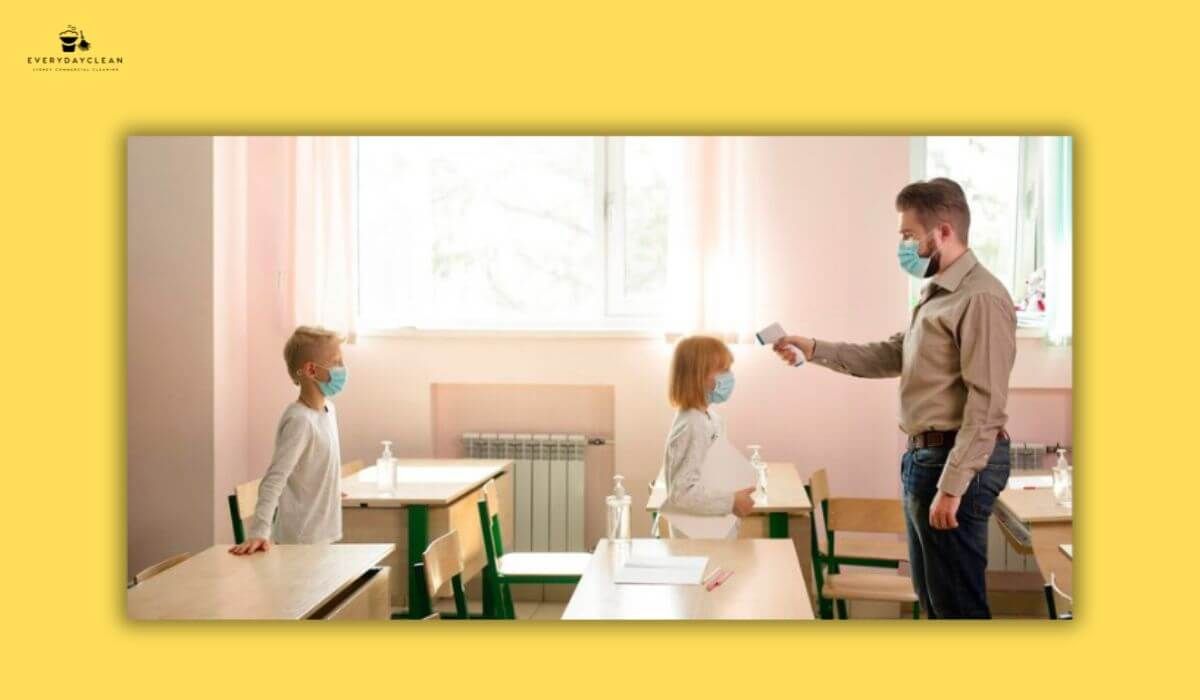
Bathrooms and nappy-change areas are among the highest-risk spaces in a service and are a strong focus of hygiene guidance. A requirements-focused routine covers regular cleaning of toilets, basins and change surfaces, safe handling and disposal of soiled materials, and supporting hand hygiene for both children and staff. NHMRC Staying Healthy is the commonly referenced source for these routines, and services should align their own procedures to the current edition and any state or territory advice.
Kitchens and Food-Contact Surfaces
Where a service prepares or serves food, food-contact surfaces need food-safe cleaning, and kitchen hygiene sits alongside broader food safety obligations. Keep kitchen cleaning separate from general cleaning, follow any rinsing directions for food-contact surfaces, and confirm that any sanitiser used is intended for food-contact use. Food safety requirements may involve additional rules beyond cleaning, which a service should confirm with the relevant food authority.
Toys, Bedding and Soft Furnishings
Toys, cots, bedding and soft furnishings need regular cleaning, with laundering for fabric items and more careful handling for mouthed or shared toys. Everyday cleaning with detergent and water covers most needs, with disinfection reserved for higher-risk situations. The detail of routines and material-specific handling is covered in the guide to toy cleaning in childcare, which a service can adapt to its own rooms and policy.
Cleaning Products, SDS and Safe Storage
Product choice and handling are part of meeting cleaning and work health and safety expectations. A service should use products suited to early learning settings, keep a Safety Data Sheet on file for each chemical, follow dilution and contact-time directions, and store all products locked away and out of children's reach. No product should be treated as child-safe unless its own label supports that use. Guidance on selecting suitable products for these settings is set out in the pages on cleaning products for childcare facilities and child-safe disinfectants, and any disinfectant should be confirmed against its label and any applicable Australian registration before use.
Illness, Outbreaks and Higher-Risk Cleaning
Requirements-aware cleaning includes a planned response to illness. During gastro or other outbreaks, or after contact with blood, vomit or faeces, cleaning and disinfection are escalated in line with health guidance, and NHMRC Staying Healthy and state or territory health advice are the usual reference points. A service should have a documented approach so staff know when to escalate cleaning, which items to remove, and how to record what was done.
Records, Responsibilities and Review
Documentation is part of demonstrating that requirements are being met. This generally means written cleaning routines, clear allocation of who does what, and periodic review of whether the routines still match the service's needs and current guidance. Assigning responsibility and keeping simple records supports both day-to-day consistency and any assessment against the National Quality Standard.
What to Confirm With Your Regulator or Service Policy
Because obligations vary and change, treat the areas above as a framework to check rather than a fixed legal statement. A service should confirm current requirements with:
- ACECQA and the National Quality Framework for quality standard expectations
- the Education and Care Services National Regulations for premises, equipment and safety obligations
- NHMRC Staying Healthy (6th edition) for infection-control and hygiene practice
- the relevant state or territory health and education authority for local requirements
- the relevant food authority where food is prepared or served
- the service's own approved policies and procedures
These sources are named in plain text so a service can locate the current version, since specific obligations should always be verified against the authoritative source rather than a summary.
When Professional Cleaning Support Helps
Many services combine in-room hygiene handled by educators with scheduled professional cleaning for floors, bathrooms and deeper periodic cleans. Professional cleaning supports the maintenance of a safe, clean environment but does not, on its own, guarantee compliance, which remains the service's responsibility to demonstrate. Services wanting a dependable, scheduled clean around operating hours can arrange
scheduled cleaning support for early learning centres to complement their own routines and records.
Frequently Asked Questions
What are the cleaning requirements for daycare centres in Australia?
Daycare cleaning is shaped by the Education and Care Services National Regulations (premises and equipment kept safe, clean and in good repair), the National Quality Standard under the ACECQA-administered National Quality Framework, and NHMRC Staying Healthy for infection control. In practice this means documented routines, safe products and storage, higher-risk cleaning during illness, and records. Services should confirm current requirements with the relevant regulator.
Is there a legal standard for childcare cleaning?
Cleaning obligations sit across national law, quality standards and health guidance rather than a single cleaning rulebook. The National Regulations set safety and good-repair expectations, the National Quality Standard covers health and the physical environment, and NHMRC Staying Healthy provides practical hygiene guidance. Because the specific detail can change, a service should verify its obligations with the regulator and follow its own approved policies.
What does NHMRC Staying Healthy cover for childcare cleaning?
NHMRC Staying Healthy: Preventing infectious diseases in early childhood education and care services (6th edition) is a widely referenced guide covering hygiene, cleaning and infection control in early learning settings, including hand hygiene, nappy-change routines and outbreak response. It is guidance rather than a substitute for regulation, so services use it alongside the National Regulations, the National Quality Standard and any state or territory advice.
How often should a daycare be cleaned to meet requirements?
Requirements focus on keeping the environment safe, clean and in good repair rather than prescribing a single universal frequency, so services set routines suited to their rooms, age groups and risk areas, with higher-risk spaces cleaned more often. Bathrooms, nappy-change areas and food surfaces typically need the most frequent attention. A practical checklist translates these expectations into daily and weekly tasks a service can follow and record.
Blog