Warehouse Cleaning Checklist, Schedule and SOP
A warehouse cleaning checklist should cover the main zones of the site, the tasks in each, how often they are done, who is responsible, the safety checks involved, and a sign-off to confirm the work is complete. Built this way, one checklist can double as a schedule and a standard operating procedure rather than needing three separate documents.
The guide below sets out the zones to include, a daily, weekly and monthly schedule, an SOP-style process for carrying out the work, and the safety points that run through all of it. It is a practical planning guide and should be adapted to the specific site and read alongside current Australian WHS requirements and the organisation's own policies, which take priority.
What A Warehouse Cleaning Checklist Should Cover
A workable checklist ties each task to a zone, a frequency, a responsible person and a way to record that it was done. Keeping those four elements consistent makes the checklist easy to follow on the floor and easy to audit later.
The core elements are the cleaning zones, the task list within each zone, the frequency (daily, weekly or monthly), the person or role responsible, the safety checks that apply, and a sign-off field. A checklist that captures all of these is more useful than a long list of tasks with no owner or timing attached. This can be copied into a printable warehouse cleaning checklist template or converted into a PDF for team sign-off.
Warehouse Zones To Include
Warehouses have distinct zones with different cleaning needs, and a good checklist works through each rather than treating the site as one space.
- Loading docks: high-traffic, prone to debris, spills and vehicle movement
- Aisles and walkways: need to stay clear for safe movement and forklift access
- Racking and storage: dust build-up and debris at various heights
- Floors: the largest surface and a key safety area for slips and trips
- Packing and dispatch areas: packaging waste, tape, offcuts and general mess
- Staff rooms and kitchens: food areas needing regular hygiene attention
- Bathrooms: frequent cleaning and restocking
- Offices: general cleaning and touchpoints
- Waste and recycling areas: bins, compaction points and spill risk
- Equipment zones: around forklifts, chargers and machinery
- Exterior entry points: doorways, roller doors and immediate outdoor areas
Not every warehouse has all of these, and some have additional specialised zones, so the list should be trimmed or expanded to match the site.
Daily, Weekly, and Monthly Cleaning Schedule
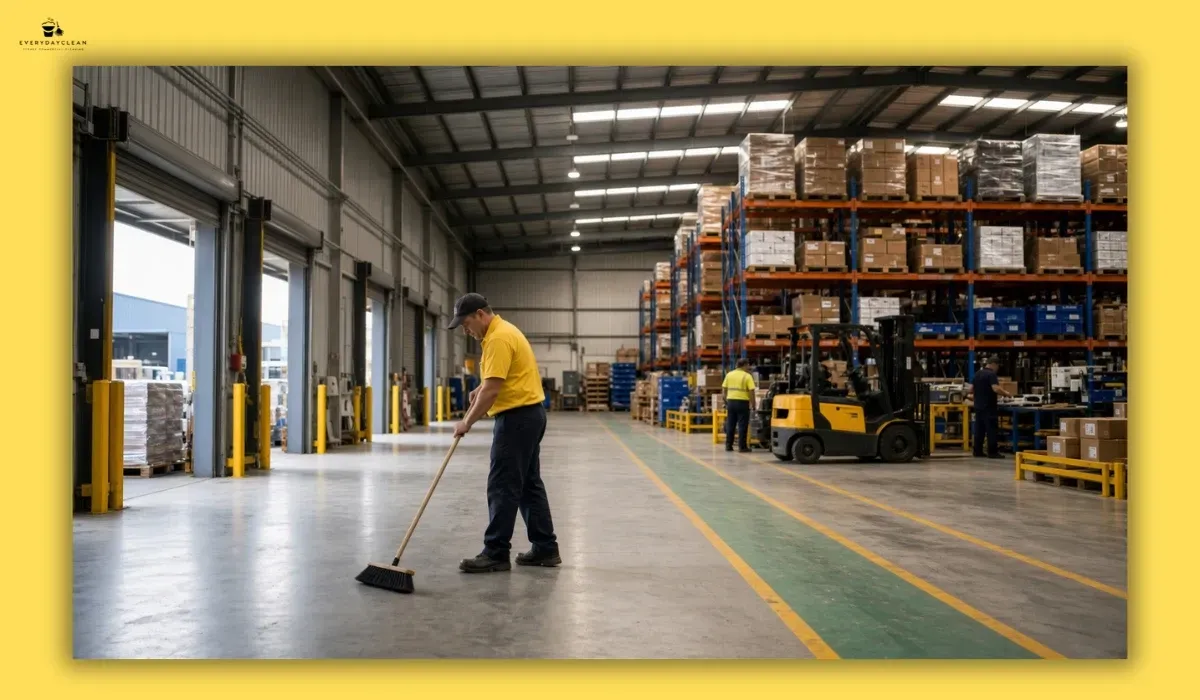
Splitting tasks by frequency keeps daily work manageable while making sure less frequent tasks are not forgotten. The schedule below is a general structure to adapt.
| Frequency | Typical Tasks |
|---|---|
| Daily | Clear aisles and walkways, sweep or scrub main floors, clean loading dock debris, empty bins, clean bathrooms and staff kitchen, wipe touchpoints, deal with spills promptly |
| Weekly | Detail high-traffic floors, clean racking at accessible heights, tidy packing areas, clean office areas, clean waste area surfaces, check and clean equipment zones |
| Monthly | Higher-level racking dusting, deeper floor treatment where needed, exterior entry points, less-used storage zones, review and restock cleaning supplies |
Daily tasks focus on safety and hygiene in the busiest areas, weekly tasks handle detail and mid-level zones, and monthly tasks cover the deeper or higher work that does not need frequent attention. Frequencies should be adjusted to the site's traffic, stock type, and any specific requirements.
Warehouse Cleaning SOP Process
A consistent process helps cleaning happen safely and thoroughly each time. The following SOP-style sequence can be applied across most zones.
- Prepare the area: confirm what needs cleaning, gather equipment and products, and check Safety Data Sheets for any chemicals used
- Isolate hazards: cordon off wet or hazardous areas, use signage, and confirm access arrangements around forklift and vehicle zones
- Remove debris: clear larger debris, packaging and obstructions before detailed cleaning
- Clean floors and surfaces: sweep, scrub or mop floors and wipe relevant surfaces, working to keep a safe path clear
- Manage waste: separate and dispose of waste and recycling per site procedure, and handle spills according to the relevant product and site guidance
- Check equipment: inspect cleaning equipment for damage and confirm powered items are safe to use
- Record issues: note any hazards, damage or maintenance needs found during cleaning
- Sign off: confirm the tasks are complete and recorded, with the responsible person signing the checklist
Recording issues and signing off matters as much as the cleaning itself, since it creates a clear trail of what was done and flags problems early.
Safety Runs Through The Whole Checklist
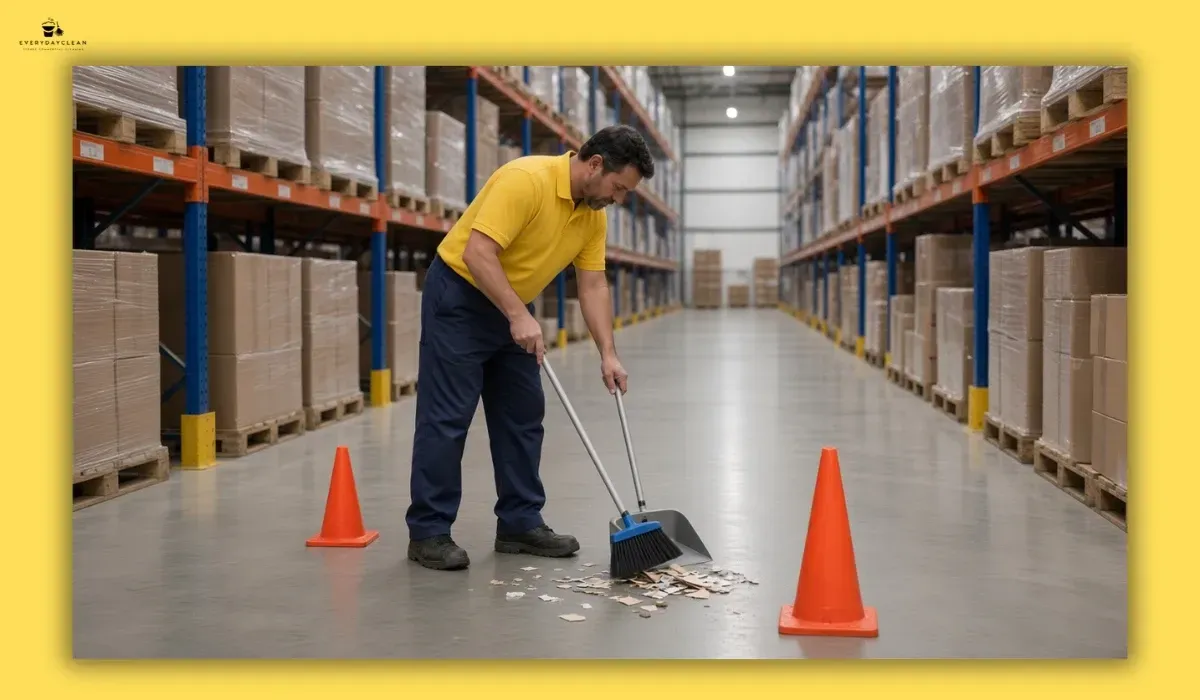
Warehouse cleaning involves working around moving vehicles, machinery and industrial hazards, so safety is not a separate section but part of every task. Key risks to build into the checklist include slips and trips from wet floors and debris, forklift and vehicle movement, dust, spills, chemical use, waste handling, and access to restricted or hazardous zones.
Controls commonly include wet-floor and hazard signage, keeping walkways clear, coordinating cleaning around forklift activity, following correct chemical dilution and storage with accessible Safety Data Sheets, safe waste handling, and using appropriate PPE such as gloves, high-visibility clothing and suitable footwear. These reduce risk but do not remove it entirely, and the specific controls should follow the site's own WHS arrangements. This checklist supports safe practice but does not by itself guarantee WHS or legal compliance.
In-House Or Professional Warehouse Cleaning
Many warehouses handle daily cleaning in-house and bring in professional support for deeper or scheduled cleaning, larger floor areas, or consistent coverage across shifts. Scheduled warehouse cleaning support can sit alongside an in-house checklist rather than replacing the team's day-to-day routines. For sites that also manage offices, amenities or mixed facilities, broader commercial cleaning support can cover those areas under one arrangement. Whichever approach a site takes, keeping ownership of its own checklist and safety arrangements helps standards stay consistent.

Warehouse Cleaning Checklist Frequently Asked Questions
What Should A Warehouse Cleaning Checklist Include?
It should cover the site's cleaning zones, the tasks within each, how often they are done, who is responsible, the safety checks that apply, and a sign-off. Tying tasks to a frequency and an owner makes the checklist practical to follow and easy to audit.
How Often Should A Warehouse Be Cleaned?
It depends on traffic, stock type and the zone. High-traffic areas like aisles, floors and loading docks generally need daily attention, mid-level detail is often weekly, and higher racking or deeper tasks may be monthly. The schedule should be adjusted to the specific site.
What Is The Difference Between A Warehouse Cleaning Checklist And An SOP?
A checklist lists what to clean, how often and by whom, while an SOP sets out the step-by-step process for doing it safely and consistently. They work well combined, so one document can cover the tasks, timing and the method rather than keeping them separate.
What Safety Points Matter Most In Warehouse Cleaning?
Slips and trips, forklift and vehicle movement, dust, spills, chemical use and waste handling are the main risks. Controls include signage, clear walkways, coordinating with forklift activity, correct chemical handling and appropriate PPE, all following the site's own WHS arrangements.
Can This Be Used As A Warehouse Cleaning Checklist Template?
Yes. The zones, tasks, frequency, responsible person and sign-off fields can be copied into an internal form or PDF and adapted to the site. Adjusting the zones and frequencies to match the specific warehouse makes it a practical working template rather than a generic list.
Blog