Strata Window Cleaning Responsibility: Who Pays?
Strata window cleaning responsibility usually depends on where a window sits and how it is classified in the strata plan. Inside glass that a resident can reach is generally the lot owner or tenant's job; external glass that forms part of common property is often arranged and paid for by the owners corporation; and windows on the lot boundary can fall either way depending on the plan and by-laws. There is no single rule that covers every building, which is why the strata plan, by-laws and the owners corporation are the reference points rather than a general assumption.
In New South Wales, the broad framework sits under the Strata Schemes Management Act 2015, which generally requires the owners corporation to maintain common property in good condition. Whether a particular window counts as common property is the question that decides who cleans it, and that answer comes from the registered strata plan, not from where the glass happens to face.
Window Location Usually Decides Strata Cleaning Responsibility
The most reliable way to work out responsibility is to look at each pane by location and classification rather than treating all windows the same.
- Internal window glass: The inside face of an apartment's windows is usually the lot owner or tenant's responsibility, because it sits within the airspace of the lot and is reachable during normal use. Most model by-laws and strata guidance in NSW treat routine cleaning of internal glass as an owner or occupier task.
- External-facing windows: The outside face of external windows is more often linked to common property, particularly in schemes registered after 1974 where external windows are commonly classified as common property. Where that applies, arranging and funding the external clean often falls to the owners corporation as part of maintaining shared property. This is not automatic, so the classification still needs checking against the plan.
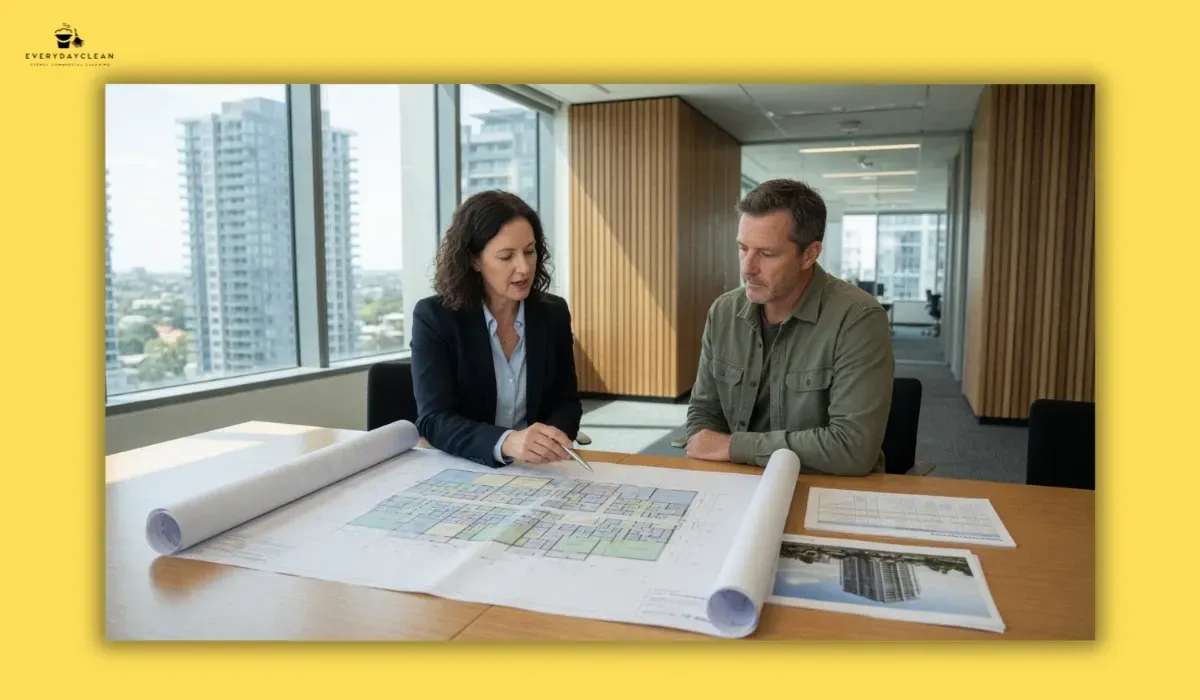
- Windows forming part of common property: Where a window, its frame or its glass is shown as common property on the strata plan, cleaning and upkeep generally sit with the owners corporation. A thick line on the plan usually indicates common property, while a thin, dotted or absent line can indicate a lot boundary, though interpretation of the plan is a job for the strata manager rather than a resident guessing.
- Balcony doors and accessible windows: Balcony glass and low-level accessible windows sit in a grey area. The lot owner often handles day-to-day cleaning of glass they can safely reach as part of their exclusive use of the space, while structural elements and major work remain with the owners corporation. By-laws sometimes classify balcony balustrade glass differently again.
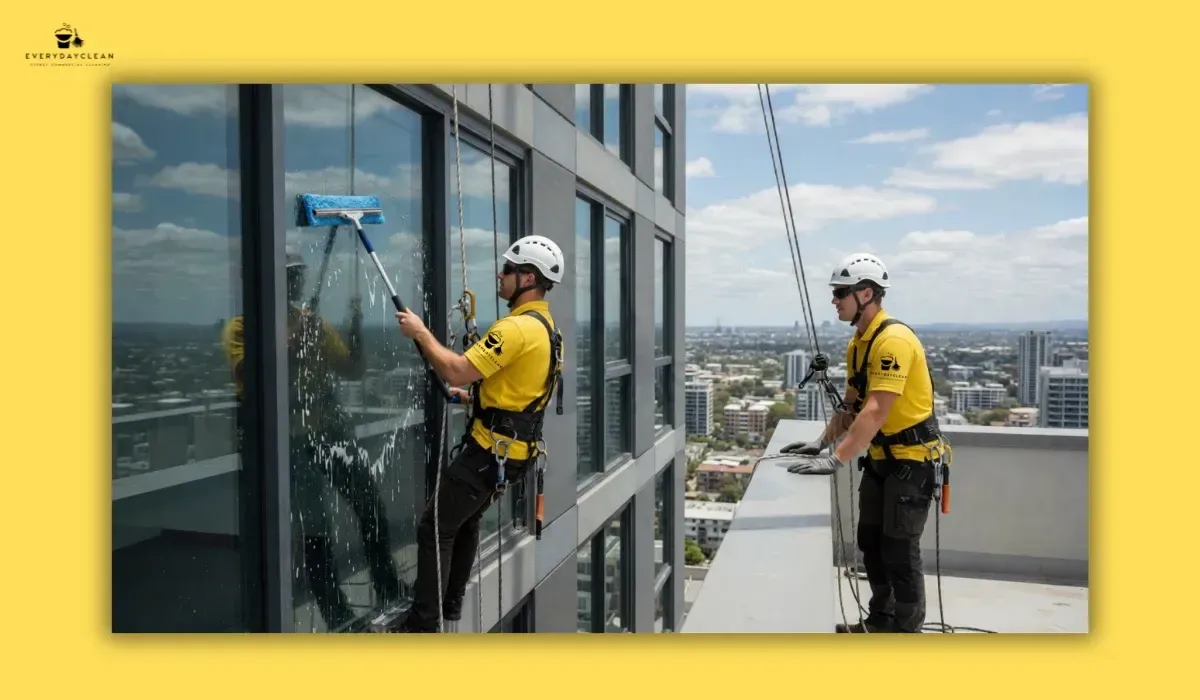
- High-rise or difficult-access windows: External glass that can only be reached by abseil, swing stage or elevated work platform is commonly cleaned as a common property maintenance task, coordinated and funded by the owners corporation through the administrative fund. Individual owners are rarely expected to arrange access equipment for glass they cannot safely reach.
- Shopping centre or mixed-use strata premises: In mixed-use and commercial strata, lease terms and building management agreements add another layer. A retail tenant's lease may pass shopfront glass cleaning to the tenant, while common mall glazing stays with building management or the owners corporation. These arrangements are usually spelled out in the lease and the building management statement rather than the residential model by-laws.
Does the owners corporation always pay for external window cleaning?
Not always. External glass classified as common property often falls to the owners corporation, but classification varies by building and registration date, and by-laws can shift responsibility. A window that faces outward is not automatically common property. Confirming the classification on the strata plan is the only way to be sure, since two similar-looking buildings can have different arrangements.
Who May Pay for Strata Window Cleaning
Payment tends to follow responsibility, and four parties are usually in the picture.
The lot owner generally covers cleaning of internal glass and often day-to-day cleaning of accessible balcony or courtyard glass tied to their exclusive use.
The tenant may be responsible where a residential or commercial lease assigns window cleaning to the occupier. Renters should check the lease and speak to the landlord or agent rather than assuming, since lease terms vary.
The owners corporation or body corporate typically funds cleaning of external common property glass and difficult-access windows, drawing on the administrative fund that all owners contribute to through levies. This is where most high-rise external window cleaning sits.
Building management often coordinates window cleaning in larger or mixed-use schemes, engaging contractors on behalf of the owners corporation and managing access, scheduling and safety. Cost still usually flows back to the owners corporation or is apportioned under the building management statement.
Because these lines shift between buildings, the safest approach is to confirm the specific arrangement before booking anything.
If renting, who is responsible for window cleaning in a strata unit?
It usually depends on the lease. Some leases make routine internal window cleaning the tenant's responsibility, while external common property glass remains an owners corporation matter arranged through the strata manager. Tenants should read the lease first and raise anything unclear with the landlord or managing agent, rather than contacting the strata cleaner directly.
What to Confirm Before Booking Strata Window Cleaning
Working through a short list before arranging a clean prevents most disputes and double-ups.
- Check the strata plan to see whether the windows are shown as common property or lot property
- Read the by-laws for any notation that shifts responsibility away from the standard position
- If renting, check the lease terms for who handles internal and external glass
- For common property glass, contact the strata manager or owners corporation before arranging your own contractor
- Confirm whether external cleaning is already scheduled in the building's maintenance plan
- Clarify access requirements and whether specialist equipment is needed
- For mixed-use premises, check the lease and building management statement
Where common property glass is involved, arranging cleaning independently can mean paying for something the owners corporation would otherwise cover, or duplicating a scheduled clean. A quick check with the strata manager usually settles it. Buildings coordinating this as part of broader shared-area upkeep often fold external glazing into their strata cleaning arrangements rather than treating it as a one-off.
Safety Comes Before Responsibility on Difficult-Access Windows
No question of who pays justifies an unsafe clean. High-rise external glass, windows over stairwells or voids, and any pane that cannot be reached safely from inside should never be attempted with ladders, leaning out of openings, or improvised access.
External cleaning at height in Australia is height-safety work governed by work health and safety requirements, and it is carried out by trained operators using abseil systems, swing stages or elevated work platforms with the correct fall protection. This is a core reason external high-rise glass usually sits with the owners corporation: it is a coordinated maintenance task, not something individual residents are expected to organise or attempt.
Owners and tenants should limit themselves to glass they can clean safely with both feet on a stable, guarded surface, and leave anything beyond that to professional window cleaning for difficult-access areas. Reaching an unsafe window is not worth the risk regardless of who is technically responsible for it.

Frequently Asked Questions
Who is responsible for cleaning windows in a NSW strata building?
It usually depends on classification and location. Internal glass is generally the lot owner or tenant's responsibility, while external glass that forms part of common property often sits with the owners corporation under its duty to maintain common property. The strata plan and by-laws decide the specific position, so both should be checked before assuming who is responsible.
Who pays for external window cleaning in a strata scheme?
External common property glass is often funded by the owners corporation through the administrative fund, which all owners contribute to via levies. This commonly applies to high-rise and difficult-access windows. The arrangement varies by building though, so confirming with the strata manager before booking is the safest step, particularly if a maintenance clean may already be scheduled.
Who usually covers cleaning of common property windows?
Cleaning of glass classified as common property is generally handled as an owners corporation function rather than an individual owner cost, though by-laws can vary the standard position, so checking the plan and by-laws matters. Where a resident's window was dirtied by building works arranged by the owners corporation, that often points back to the corporation. Anything unclear is best raised with the strata manager.
Is it safe to clean high-rise strata windows yourself?
No. External glass that requires access equipment should only be cleaned by trained operators using proper height-safety systems. Attempting it with ladders or by leaning out of windows is dangerous and outside what residents should take on. This is one reason high-rise external cleaning is usually coordinated by the owners corporation or building management as a professional maintenance task.
Where can responsibility be confirmed if it is unclear?
Start with the registered strata plan and the scheme's by-laws, then speak to the strata manager or owners corporation. Tenants should also check their lease and raise questions with the landlord or agent. Because responsibility genuinely varies between buildings, these documents and contacts are more reliable than any general rule.
Confirming the Right Party Before the Glass Gets Cleaned
Strata window cleaning responsibility is rarely a single answer. It turns on where the window sits, how the strata plan classifies it, what the by-laws say, and, for renters, what the lease assigns. Internal glass usually falls to owners or tenants, external common property glass often sits with the owners corporation, and difficult-access windows are a coordinated maintenance task for safety reasons alone. Checking the plan, by-laws, lease and strata manager before arranging a clean is what keeps both the responsibility and the cost with the right party.
This article provides general information only and does not constitute legal advice. Responsibility for window cleaning varies between buildings, so any position here should be checked against your specific strata plan, by-laws and lease, and confirmed with your strata manager or owners corporation.
Blog