Retail Shopping Centre Cleaning: Areas and Schedule
Retail Shopping Centre Cleaning: A Practical Guide
Retail shopping centre cleaning keeps shop floors, entrances, food courts, bathrooms, escalators, lifts and back-of-house areas presentable and safe while trade continues. The work sits across public spaces used by shoppers, staff and delivery teams, so timing, safety and clear scope matter as much as the cleaning itself.
Retail shopping centre cleaning covers shared, tenanted and back-of-house areas
Retail shopping centre cleaning covers shop floors, entrances, common walkways, food court areas, public bathrooms, parent rooms, escalators, lifts, back-of-house spaces, bins, glass and high-touch points, with scheduled cleaning planned around trading hours. In smaller retail sites the same tasks apply on a reduced scale, usually handled outside opening times.
The scope shifts with the size and type of the property. A single shopfront might need one cleaner for an hour a day, while a multi-level centre needs a rostered team working through the day and after close.
Retail store cleaning and shopping centre cleaning differ in scale and responsibility
The main difference is scope and who owns each area. Retail store cleaning covers one tenancy, while shopping centre cleaning covers shared spaces used by many tenants and the public.
What does retail store cleaning usually include?
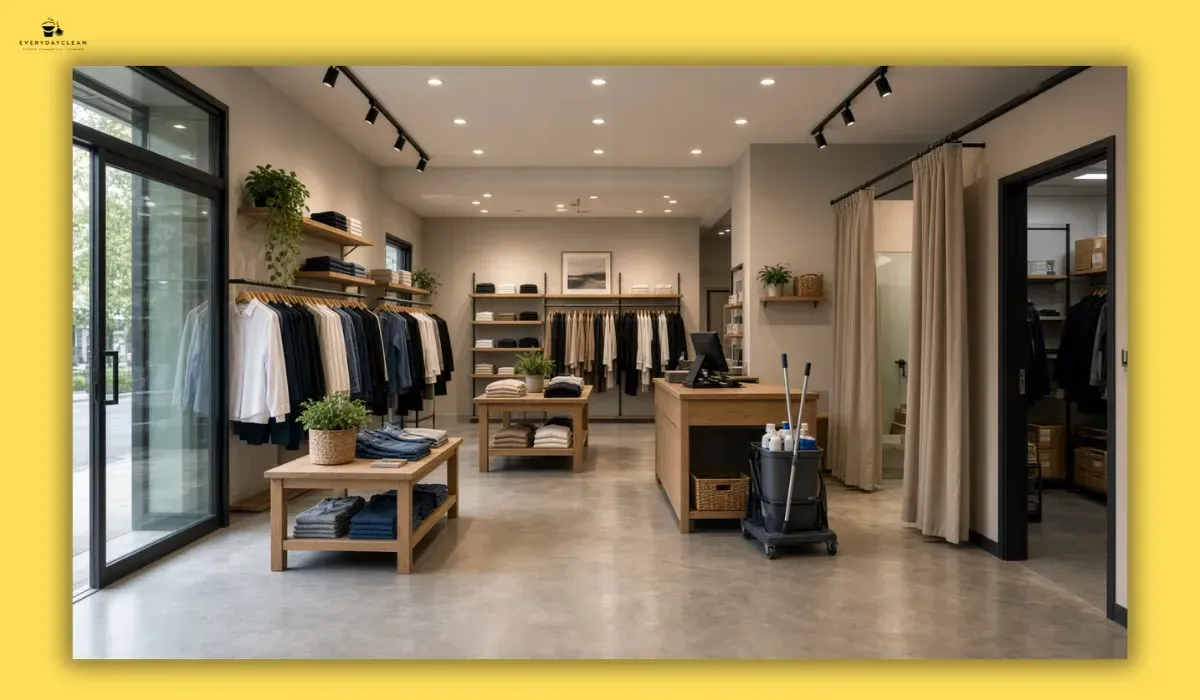
Retail store cleaning focuses on a single shop: the sales floor, fitting rooms, the counter and till area, internal glass, stockroom, staff areas and the shopfront entrance. It is usually the retailer's responsibility and often scheduled before opening or after close so shelves and displays stay undisturbed.
What does shopping centre cleaning add on top?
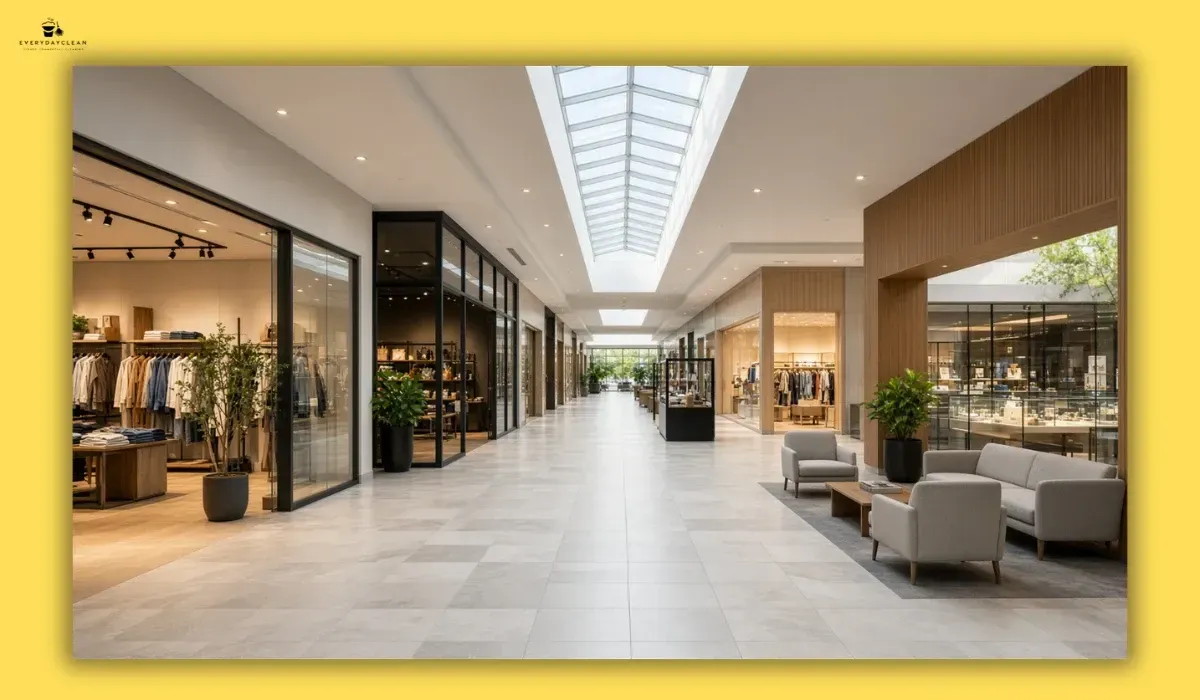
Shopping centre cleaning adds the common areas that tenants share: entrances, malls and walkways, food courts, public bathrooms, parent rooms, lifts, escalators, car park entries and waste areas. This is typically managed by the centre or its facilities team rather than any single retailer. Coordinating the two layers matters, since a spotless shop still looks poor next to a dirty walkway. Larger sites often bundle this into broader commercial cleaning services that can scale a team up or down as the centre needs.
Key retail centre areas each need a clear cleaning routine
Every high-use area in a retail centre needs its own routine, because foot traffic, spill risk and visibility differ from space to space.
Which public-facing areas carry the most load?
- Entrances: glass doors, entry matting, floors and the immediate approach, cleaned often as this sets the first impression
- Common walkways and malls: floors, seating, planters, directory boards and rubbish points
- Food court areas: tables, chairs, floors and shared condiment or tray stations, which need attention through trading and a deeper clean at close
- Public bathrooms: pans, basins, mirrors, floors, dispensers and stock, checked and cleaned multiple times a day
- Parent rooms: change tables, seating, sinks and floors, where hygiene expectations are high
How are individual tenancies and glass handled?
Individual tenancies are usually the retailer's own responsibility, but centre cleaning still covers shared glass, balustrades, handrails and internal windows in common zones. Clear boundary lines in the contract prevent gaps where nobody cleans a space.
What about lifts, escalators and vertical circulation?
Lifts and escalators combine constant use with pinch-point safety, so handrails, buttons, tracks, glass panels and floors need regular attention. Handrails are high-touch surfaces and benefit from wiping through the day, not only at close.
Which back-of-house and external areas are easy to miss?
- Stockrooms and loading docks: floors, spill clean-up and general tidiness
- Waste and bin areas: bin washing where practical, floor cleaning and odour control
- Car park entries and travelators: sweeping, litter removal and periodic pressure cleaning
- Service corridors used by staff and deliveries
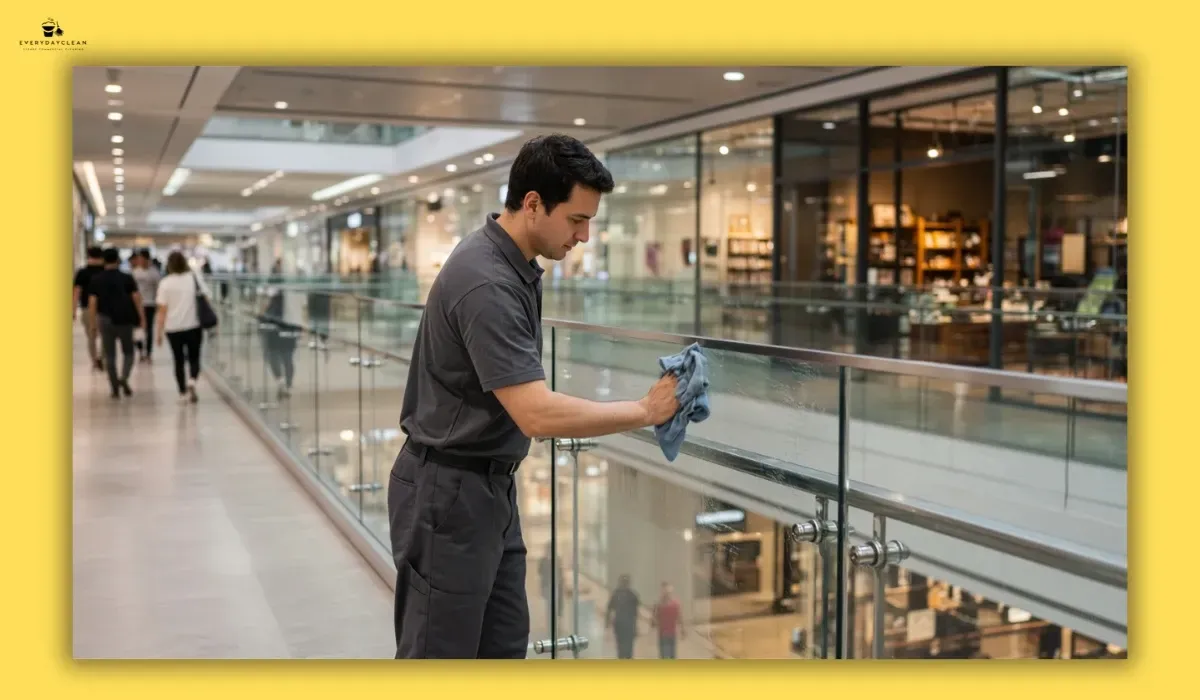
Retail cleaning schedules split into daily, weekly and periodic tasks
Retail cleaning works best on a layered schedule, so daily tasks keep the site presentable, weekly tasks catch build-up, and periodic tasks handle heavier restoration.
| Cleaning task | Suggested frequency | Checked by |
|---|---|---|
| Entrance floors, glass doors and bins | Daily, often several times | Day cleaner or site supervisor |
| Common walkway and mall floors | Daily | Day cleaner or site supervisor |
| Public bathrooms | Multiple times daily | Logged bathroom check |
| Food court tables and floors | Through trade, plus a deep clean at close | Day cleaner or centre staff |
| Lift and escalator handrails and buttons | Daily, with high-touch wipe-downs during trade | Day cleaner |
| Signage, ledges and light fittings | Weekly | Site supervisor |
| Internal glass and balustrades | Weekly | Site supervisor |
| Floor stripping, sealing or polishing | Periodic | Contractor or site supervisor |
| Car park sweeping or pressure cleaning | Periodic | Contractor or facilities team |
| High-level dusting and vents | Periodic | Contractor or facilities team |
Frequencies depend on foot traffic, weather, the tenant mix and events. A centre with a busy food court or a wet-season entrance will need more frequent attention than a quiet strip of specialty stores.
Trading-hours cleaning and after-hours cleaning serve different needs
Both are usually needed. Trading-hours cleaning keeps the site safe and presentable while shoppers are present, and after-hours cleaning handles the heavier work that would disrupt trade.
Trading-hours cleaning tends to cover spot mopping, bathroom checks, food court table clearing, litter runs, spill response and high-touch wiping. It has to be low-disruption, well signed and worked around customer flow.
After-hours cleaning covers full floor cleaning, machine scrubbing, detailed bathroom work, glass, back-of-house areas and any task involving equipment, chemicals or wet floors that would be unsafe in a crowd. Many centres run a rostered day team plus an overnight or early-morning crew so the site opens clean and stays that way.
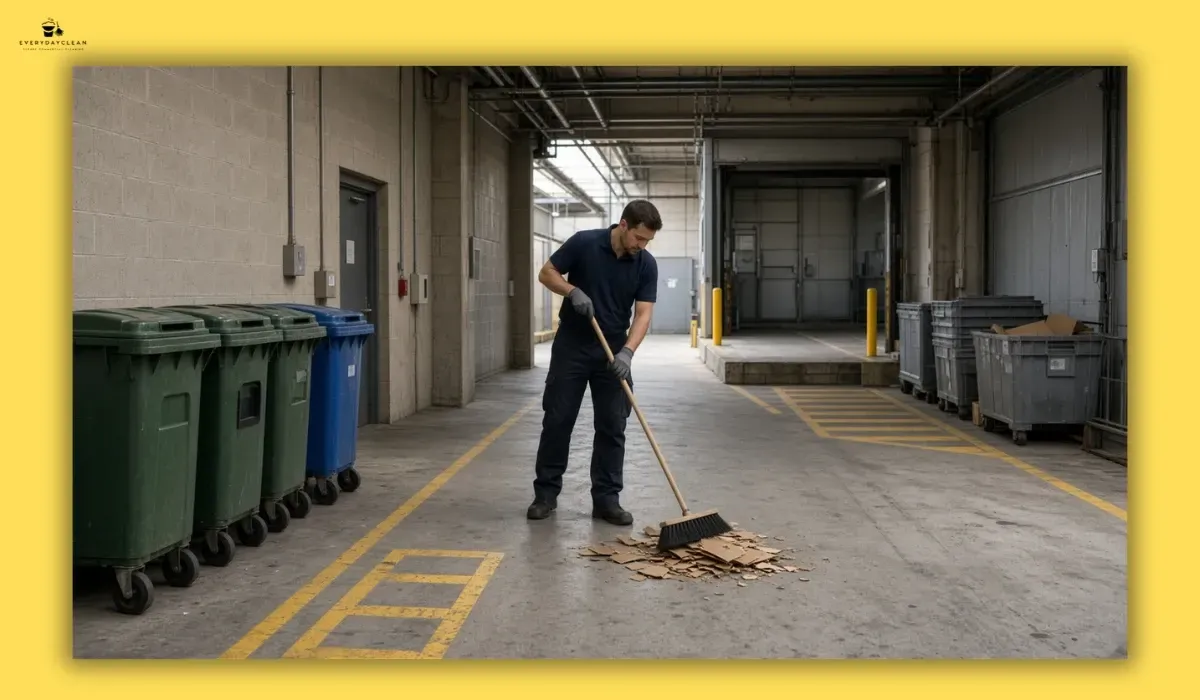
Safety planning protects shoppers, staff and cleaners in busy retail spaces
Safety is a core part of retail cleaning because the work happens around the public. A wet floor in a busy mall is a genuine slip risk, so controls need to be planned, not improvised.
Practical safety measures include:
- Wet floor signs placed before and during any wet task, and removed once the floor is dry
- A clear spill response so liquids, food and breakages are contained and cleaned quickly
- Working with foot traffic in mind, cleaning in sections and keeping walkways open
- Regular attention to high-touch surfaces such as handrails, lift buttons, door handles and bathroom fittings, which can help reduce the transfer of germs when done consistently
- Safe storage and labelling of cleaning products, kept away from public reach
- Cordoning or scheduling higher-risk tasks, such as escalator or machine cleaning, for quieter periods or after hours
Regular cleaning supports a safer, more presentable centre, but it cannot remove every risk on its own. Signage, prompt spill response and sensible scheduling do much of the protective work.
Centre and retail managers should confirm scope before booking cleaners
Before booking, managers should confirm exactly what is covered, when it happens and who is responsible for each area. Clear scope prevents disputes and missed spaces later.
Points worth confirming:
- Which areas are in scope: common areas only, or specific tenancies and back-of-house spaces as well
- Daily, weekly and periodic task lists, so nothing important is assumed
- Trading-hours versus after-hours split, and how many staff are rostered to each
- Safety expectations: signage, spill response times and how public areas are managed during cleaning
- Who supplies consumables such as bathroom stock, bin liners and hand soap
- How food court and bathroom peaks are handled on busy days and during events
- Reporting and communication: how issues, damage or restocking needs are flagged
- Insurance, inductions and site access arrangements, which should be checked and documented
For centres weighing options, it helps to compare providers on how they handle retail and shopping centre cleaning specifically, rather than general cleaning, since the trading-hours coordination is where most of the difficulty sits.
Building a retail cleaning plan that holds up during trade
A retail cleaning plan works when it matches the centre's trading pattern, tenant mix and foot traffic rather than following a generic template. The strongest plans set clear area boundaries, layer daily, weekly and periodic tasks, split the work sensibly between trading hours and after-hours, and treat public safety as part of the schedule.
Getting the scope and timing right upfront saves rework, keeps shoppers safe and keeps tenants confident that shared spaces reflect well on their stores. Where the site is large, multi-level or high-traffic, professional cleaning support with retail experience is usually worth the coordination it removes.
Retail shopping centre cleaning: common questions
How often should shopping centre bathrooms be cleaned?
Public bathrooms in a shopping centre usually need cleaning and restocking several times a day, with checks scheduled around peak periods such as lunchtimes and weekends. Frequency depends on foot traffic and the number of amenities. A logged check system helps confirm bathrooms are serviced consistently rather than only at open and close.
Can retail cleaning be done during trading hours?
Yes, and most centres use a mix. Trading-hours cleaning handles low-disruption tasks such as spot mopping, bathroom checks, food court clearing and spill response, always with wet floor signage and attention to shopper flow. Heavier tasks involving machines, chemicals or wet floors are generally left for after-hours to keep the public safe.
Who is responsible for cleaning inside individual shops?
Cleaning inside a tenancy is normally the retailer's responsibility, while the centre or its facilities team handles shared areas such as malls, food courts, bathrooms and car parks. The exact split should be set out in lease and cleaning agreements. Confirming these boundaries early prevents areas being missed or double-handled.
What affects the cost of retail shopping centre cleaning?
Cost depends on the size of the site, the number of areas in scope, foot traffic, trading hours, how many staff are rostered and how much periodic work is included. Consumables, event cleaning and after-hours rates can also affect the total. A site walkthrough and a clear task list give the most accurate quote.
How is high-touch cleaning handled in retail spaces?
High-touch cleaning targets surfaces many people contact, such as handrails, lift buttons, door handles, bathroom fittings and food court tables. In a retail centre these are wiped through the day rather than once at close. Consistent, frequent attention can help reduce the transfer of germs, though it works alongside general cleaning rather than replacing it.
Everyday Clean is a Sydney-based cleaning company that supports retail and shopping centre sites alongside broader commercial and facility cleaning needs.
Blog