How to Get Water Stains Off Glass Shower Screens
To get water stains off glass, dissolve the mineral build-up rather than scrubbing at it. A mild acid such as white vinegar or a purpose-made limescale remover breaks down the deposits left by hard water, so they wipe away instead of clinging to the surface. Rinse and dry straight after, and the marks lift without scratching the glass.
The steps below work for shower screens, shower doors, glass panels and mirrors. Start with the gentlest method, test any product on a small hidden spot first, and repeat a pass rather than scrubbing harder if the build-up is heavy.
What causes hard water stains on glass?
Hard water stains are the chalky white or cloudy marks left when water high in minerals dries on the surface. As each droplet evaporates, it leaves behind calcium and magnesium deposits, which build into limescale over time. Regular glass cleaner does little because it is not designed to dissolve minerals, which is why an acid-based method works better.
Areas with harder water see this faster, and shower glass is a common spot because it gets wet several times a day and rarely dries fully.
What you need to remove hard water stains from glass
Gather these before you start so you can work while the glass is still damp:
- White vinegar, or lemon juice for light marks
- A spray bottle
- Bicarb soda for a gentle paste on stubborn spots
- A soft microfibre cloth and a non-scratch pad
- A squeegee
- Rubber gloves
- A commercial limescale or hard water stain remover made for glass, for heavier build-up
How to get hard water stains off glass shower screens
For everyday build-up, this method lifts most water marks off glass without harsh scrubbing:
- Rinse the glass with warm water to loosen loose residue.
- Spray on equal parts white vinegar and warm water. For heavier marks, use neat white vinegar. Let it sit for 5 to 10 minutes so the acid can dissolve the deposits, and do not let it dry on the glass.
- For stubborn spots, make a paste of bicarb soda and a little water, then work it gently over the marks with a non-scratch pad in small circles.
- Wipe the glass over with a soft microfibre cloth or the non-scratch pad.
- Rinse thoroughly with clean water so no residue is left behind.
- Dry with a squeegee, then a dry microfibre cloth, to stop new marks forming.
If some cloudiness remains, repeat the process rather than pressing harder. A second pass is usually safer and more effective than scrubbing.
How to get limescale and heavy water spots off shower doors
For thicker limescale or water spots that a single vinegar pass will not shift, you need longer contact time or a stronger product:
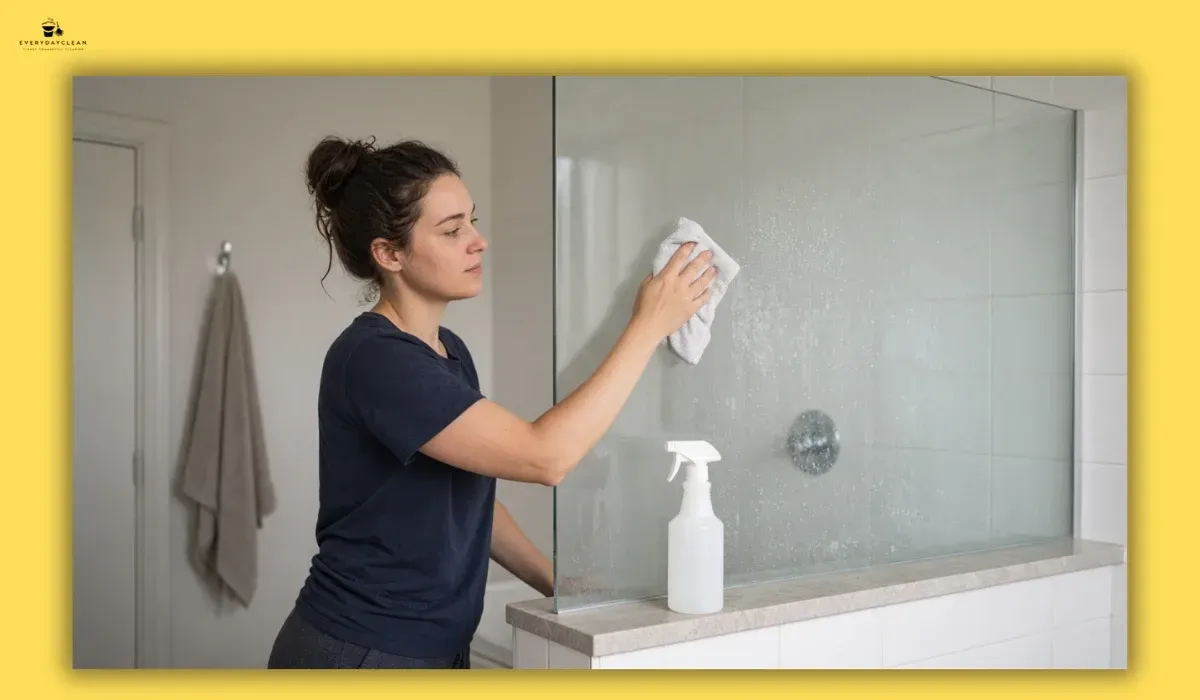
- Because spray runs straight off vertical glass, soak a cloth or paper towel in white vinegar and lay it flat against the shower door so the acid stays in contact. Leave it for 15 to 30 minutes, then work the area and rinse.
- For very stubborn limescale, use a commercial limescale or hard water stain remover made for glass, and follow the label for dwell time and rinsing.
- A cut lemon rubbed over the glass can help with lighter spots, as the acid works the same way.
- Repeat the treatment for heavy build-up instead of switching to an abrasive scourer.
What not to use on a glass shower screen
Some methods remove stains but risk permanent damage, so avoid these:
- Metal scrapers, steel wool, and harsh abrasive pads, which scratch glass.
- Acids or abrasives on coated glass without checking first. Some shower screens have a protective coating, so confirm with the manufacturer before using vinegar or a limescale remover.
- Mixing vinegar or any acid with bleach or other cleaners, which can create harmful fumes. Ventilate the room and wear gloves.
Always test any product on a small, hidden area before treating the whole panel. If the glass stays cloudy after cleaning and the marks will not budge, the surface may be etched, which is a permanent change to the glass that cleaning cannot reverse.
How to stop water stains coming back on glass
Prevention is easier than removal once you have clear glass:
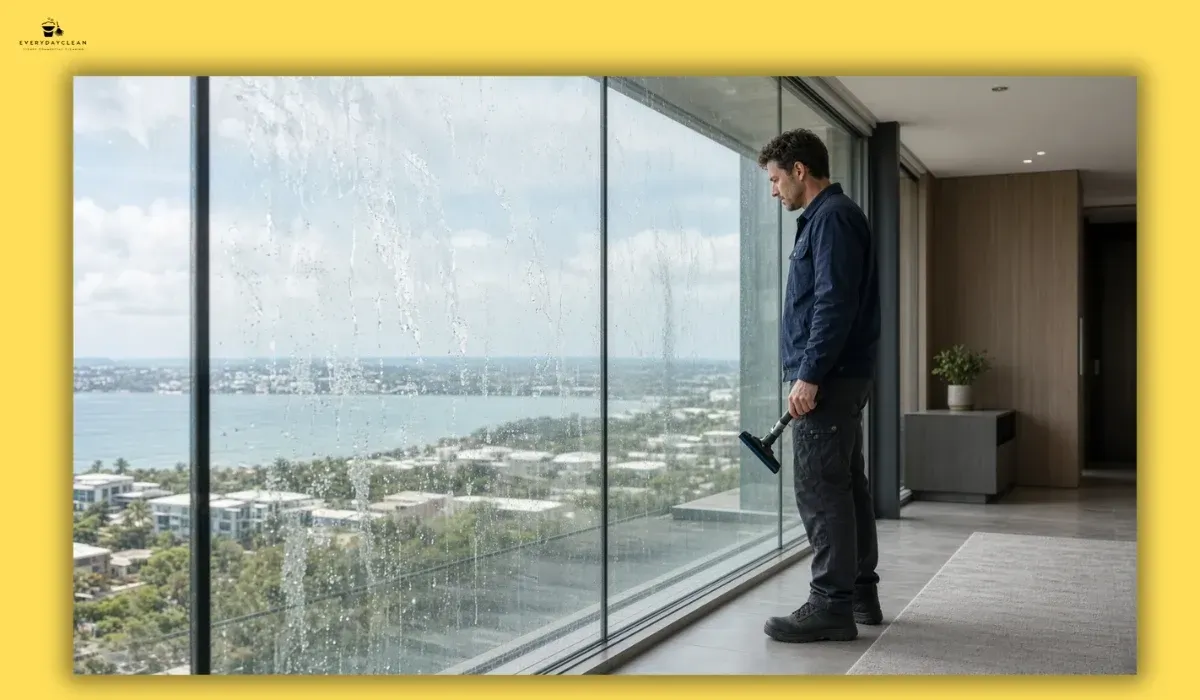
- Squeegee the screen after each shower to clear water before it dries.
- Keep a spray of diluted vinegar or a daily shower spray on hand and mist the glass after use.
- Dry panels and mirrors with a microfibre cloth for a clear finish.
- Wipe up splashes on windows and glass before they have a chance to dry.
For a clear, mark-free finish on household windows more generally, our streak-free window cleaning guidance covers the technique.
When Hard Water Stains on Glass Need Professional Help
DIY handles most shower screens, but some jobs are worth handing over. Large glass panels, high or hard-to-reach windows, and build-up that will not shift after a couple of treatments are all cases where professional help saves time and reduces the risk of scratching. For outdoor and upper-level glass in particular, see our exterior window cleaning support, or arrange professional window cleaning for a full clean.
Frequently asked questions
How do you get hard water stains off glass?
Dissolve the mineral build-up with white vinegar or a limescale remover made for glass, give it time to work, then wipe, rinse and dry. Start gentle, test on a small area first, and repeat a pass rather than scrubbing if the build-up is heavy.
How do you get water marks off glass?
Spray the glass with equal parts white vinegar and warm water, leave it for 5 to 10 minutes, then wipe, rinse and dry. The acid dissolves the mineral deposits so the marks lift without scrubbing.
How do you get hard water spots off shower doors?
Because spray runs off vertical glass, lay a vinegar-soaked cloth against the shower door so the acid stays in contact for 15 to 30 minutes, then work the area and rinse. For heavy spots, use a limescale remover made for glass and follow the label.
How do you get limescale off shower glass?
Use white vinegar with longer contact time, or a commercial limescale remover designed for glass. Keep the product in contact with the build-up, rinse thoroughly, then dry the panel to stop it returning.
Does vinegar remove hard water stains from glass?
White vinegar can dissolve most light to moderate hard water stains because it is mildly acidic. Heavier limescale may need longer contact time or a stronger limescale remover, and coated glass should be checked with the manufacturer first.
Why won't the hard water stains come off my glass?
If stains stay after repeated cleaning, the minerals may have etched the surface. Etching is a permanent change to the glass rather than a stain sitting on top, so cleaning cannot reverse it, and the panel may need replacing if the cloudiness is severe.
What should you not use on glass shower screens?
Avoid metal scrapers, steel wool and abrasive pads that scratch, and do not mix acids with bleach. Check coated glass with the manufacturer before using vinegar or limescale removers, and always test on a small area first.
Keeping your shower glass clear for longer
Dissolve the build-up with white vinegar or a limescale remover, rinse well, and dry the glass to finish. Then squeegee after each shower and mist the panel with a light vinegar spray to slow new marks forming. A few seconds of drying each day does more to keep shower glass clear than any single deep clean.
Blog