How to Remove Blood Stains from Carpet Safely Fast
To take blood out of carpet, use cold water only, blot the stain rather than rubbing it, and work from the outside of the stain inward so it does not spread. Avoid hot water, since heat can set the stain, and always test any cleaning product on a hidden spot first. Once treated, dry the area properly to reduce the risk of marks, odour or moisture problems.
Fresh blood is much easier to lift than dried blood, so acting quickly helps. The steps below cover fresh and dried blood separately, explain why cold water matters, note a few other common stains for context, and set out when a stain is better left to a professional.
Why Blood Stains Need Cold Water
Blood is a protein-based stain, and heat causes proteins to bind more firmly to carpet fibres. Hot water can effectively cook the stain into the fibre, making it far harder to remove. Cold water keeps the blood from setting and helps lift it away instead.
For the same reason, avoid steam or warm cleaning solutions on blood until the stain is fully gone. Stick to cold water throughout, and only consider other methods once the visible blood has lifted.
Blot, Do Not Rub, And Work From The Outside In
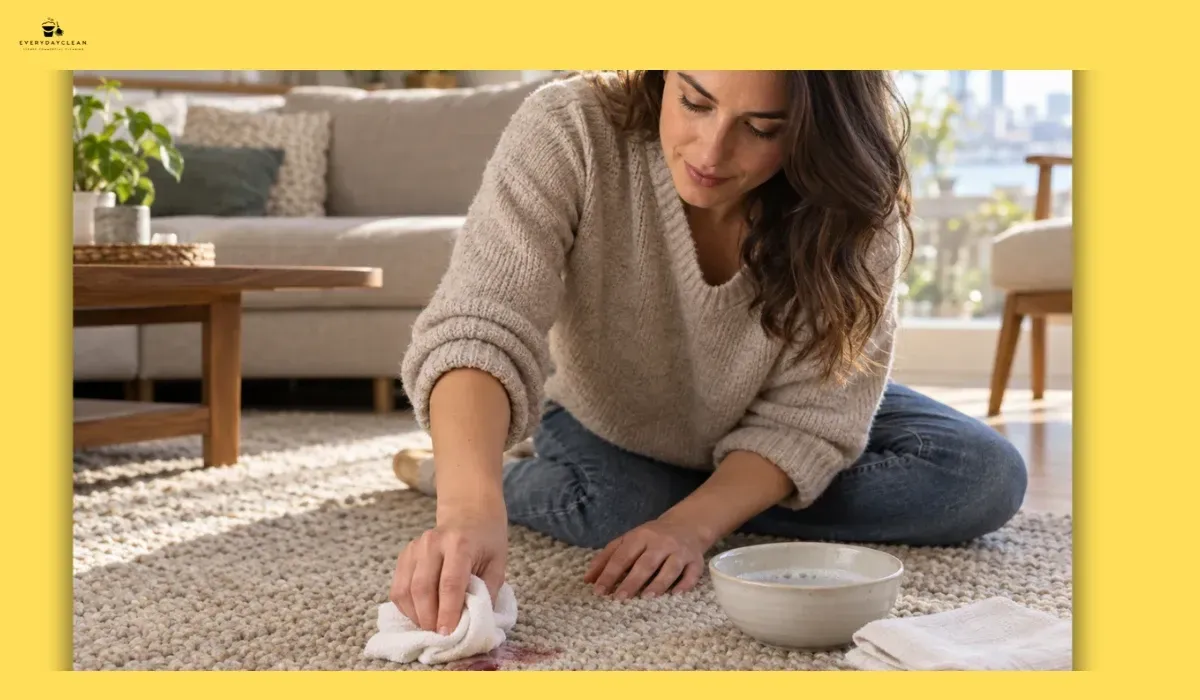
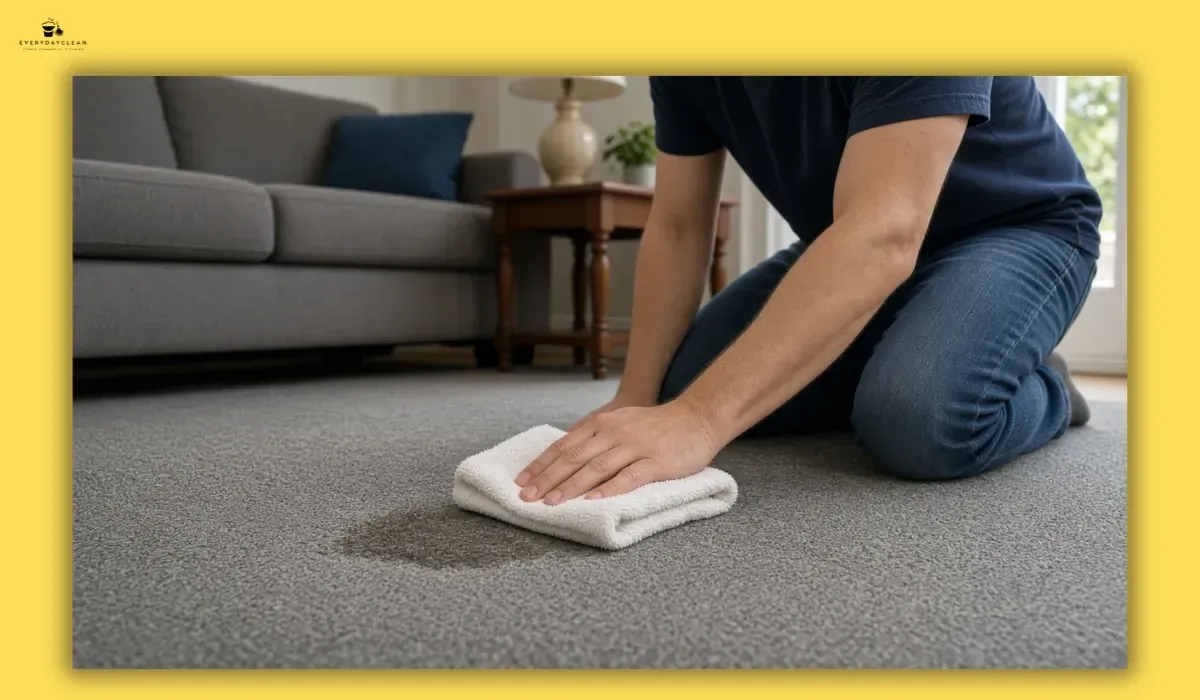
Rubbing pushes blood deeper into the pile and spreads it across a wider area. Blotting, by pressing a clean cloth onto the stain and lifting it away, draws the blood up out of the fibres instead. Use a fresh section of cloth each time so you are lifting the stain rather than reapplying it.
Working from the outer edge of the stain toward the centre stops it spreading outward as you clean. These two habits, blotting and working inward, do more to protect the carpet than any particular product.
Removing Fresh Blood Stains Step By Step
Fresh blood responds well to prompt, gentle treatment with cold water.
- Blot up as much blood as possible with a clean, dry cloth or paper towel, pressing rather than wiping
- Dampen a fresh cloth with cold water and blot the stain, working from the outside in
- If needed, mix a small amount of mild dishwashing liquid into cold water and blot with that solution
- Rinse by blotting with a cloth dampened in plain cold water to lift any residue
- Blot the area dry, then place a dry towel over it and press to draw out remaining moisture
- Let the area air dry fully, ideally with airflow from a fan or open window
If a faint mark remains after drying, repeat the process rather than scrubbing harder. Patience with gentle repetition is safer for the carpet than aggressive treatment.
Removing Dried Blood Stains Step By Step
Dried blood is more stubborn but can often still be improved with a gentle approach.
- Loosen the dried surface gently with a soft brush or blunt edge, and vacuum up any loosened bits
- Dampen the stain with cold water and let it sit briefly to soften, without soaking the carpet
- Blot with a cold water and mild dishwashing liquid solution, working from the outside in
- For persistent stains, a small amount of hydrogen peroxide may help, but it can lighten some carpets, so test it on a hidden area first and use sparingly
- Rinse by blotting with plain cold water to remove any cleaning residue
- Blot dry, press with a dry towel, and allow the area to air dry fully
Dried and older stains do not always lift completely with DIY methods, so it is worth knowing when to stop, which is covered further below.
Other Common Carpet Stains Need Different Treatment
Blood is not the only stain carpets pick up, and different stains respond to different methods. This section is brief context, since the treatment for blood does not necessarily suit other stains.
Coffee stains, for example, are tannin-based rather than protein-based and are handled differently to blood. Paint depends heavily on whether it is water-based or oil-based, and the wrong solvent can spread or set it, so identifying the paint type first matters. General spots and spills are usually best blotted promptly with cold water before they set. Pet urine is a separate issue again, since it involves both a stain and an odour that need their own approach rather than the blood-stain method here.
Cautions For Wool, Delicate Fibres And Colours
Some carpets need extra care, and the wrong approach can cause damage that is harder to fix than the original stain.
- Wool and delicate natural fibres are sensitive to alkaline products and over-wetting, so use gentle, minimal solutions and test first
- Colour bleeding can occur on some carpets, so always test any product on a hidden area before applying it to the stain
- Over-wetting can lead to marks, longer drying and mould, so use as little moisture as the job needs
- Bleach should be avoided, as it can strip colour and damage fibres
- Harsh scrubbing frays and distorts the pile, so blotting is safer than scrubbing throughout
When the carpet type or fibre is unknown, treat it as delicate and keep the treatment as gentle as possible.
Fresh vs Dried Blood And Other Stains At A Glance
| Stain Type | Key Approach | Watch Out For |
|---|---|---|
| Fresh blood | Cold water, blot from outside in | Do not use heat or rub |
| Dried blood | Soften with cold water, gentle peroxide if tested | Peroxide can lighten some carpets |
| Coffee | Different, tannin-based method | Wrong method can set the stain |
| General spots | Blot promptly with cold water | Letting it dry makes it harder |
When To Stop DIY
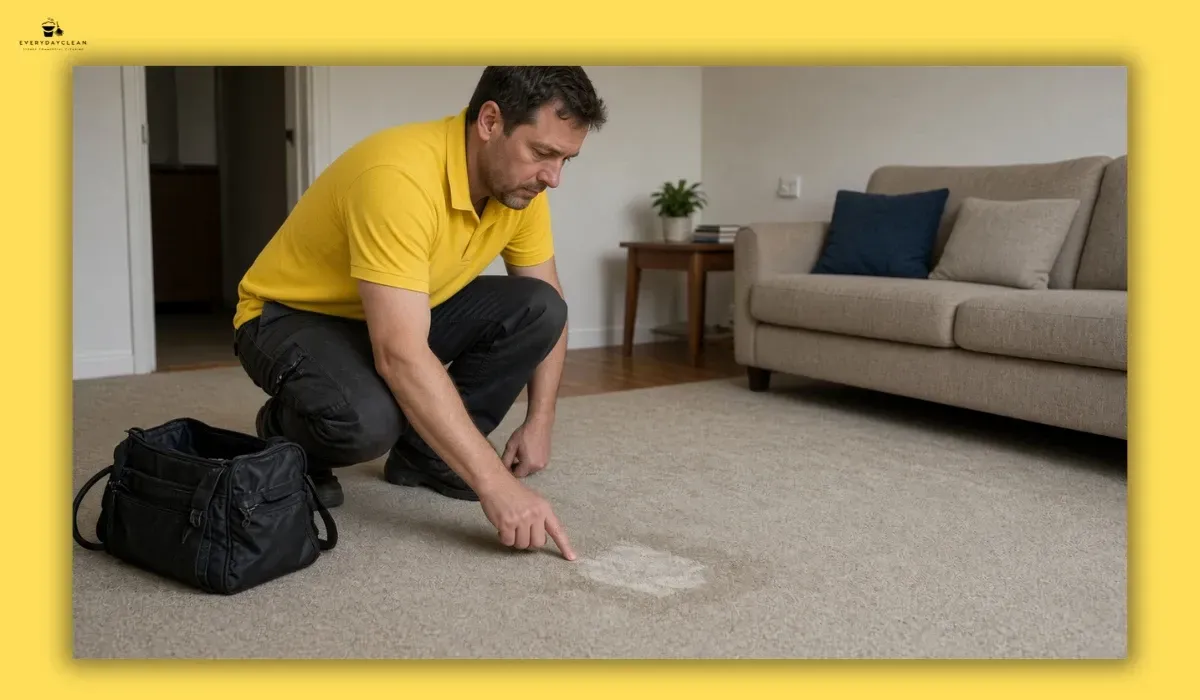
DIY treatment suits small, fresh blood stains on standard carpet, but some situations are better handled by a professional. It is worth stopping if the stain is large, old or set in, if the carpet is wool or an unknown fibre type, if colours start to bleed during testing, or if the stain returns after the area dries.
In these cases, professional carpet cleaning in Sydney may be better suited to different fibres and stubborn stains, which is often safer than repeated DIY attempts that risk damaging the carpet. Knowing when to step back can save a carpet that harsh home treatment might otherwise ruin.
Frequently Asked Questions About Removing Blood From Carpet
Does Cold Or Hot Water Remove Blood From Carpet?
Cold water. Blood is a protein-based stain, and hot water can set it by binding the proteins to the fibres, making removal much harder. Use cold water throughout, and avoid steam or warm solutions until the stain has fully lifted.
How Do You Get Dried Blood Out Of Carpet?
Gently loosen the dried surface and vacuum, dampen with cold water to soften, then blot with a mild dishwashing liquid solution from the outside in. For stubborn marks, a little hydrogen peroxide may help, but test it on a hidden area first as it can lighten some carpets.
Should You Rub A Blood Stain On Carpet?
No. Rubbing pushes blood deeper into the pile and spreads it wider. Blot instead, pressing a clean cloth onto the stain and lifting it away, using a fresh part of the cloth each time and working from the outside of the stain inward.
Can All Blood Stains Be Removed From Carpet?
Not always. Fresh stains on standard carpet usually respond well, but large, old or set-in stains, wool or delicate carpets, and stains that return after drying may not fully lift with DIY methods. In those cases professional help is generally the safer option.
Blog