Office Cleaning Risk Assessment Example
An office cleaning risk assessment identifies the hazards involved in cleaning work, who may be harmed by each one, the control measures and PPE that reduce the risk, the person responsible, and when the assessment should be reviewed. The example below shows how those elements fit together for a general office setting.
This is a practical guide rather than legal or workplace health and safety advice, and it does not guarantee compliance. Each workplace differs, so any risk assessment should be adapted to the specific site and reviewed against current Australian WHS requirements and the organisation's own policies.
What An Office Cleaning Risk Assessment Includes
A useful risk assessment generally works through a consistent set of columns for each hazard: the hazard itself, who may be harmed and how, existing controls, any further action needed, the responsible person, and a review date. Working through hazards in this structured way helps make sure nothing significant is missed and that responsibility is clear.
The aim is not to eliminate every risk, which is rarely possible, but to reduce risks so far as is reasonably practicable through sensible, workable controls.
Common Office Cleaning Hazards To Assess
Office cleaning involves a fairly predictable set of hazards, though the detail varies by site. The common ones worth assessing include slips, trips and wet floors, chemical exposure, manual handling, electrical items, sharps and waste, dust, bathroom cleaning, and the arrangements around after-hours access and working alone.
Slips, Trips And Wet Floors
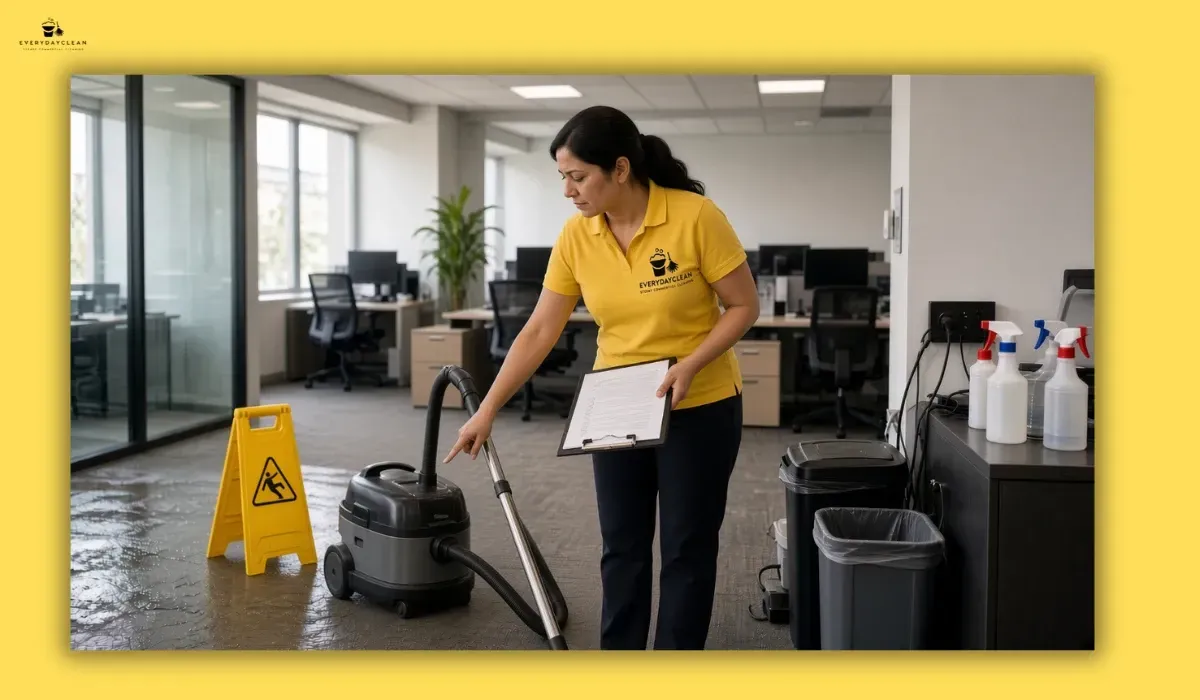
Wet or recently mopped floors are one of the most frequent causes of slips in cleaning work. Trailing vacuum cords, cleaning equipment left in walkways and uneven or cluttered floors add to the risk. Controls usually include wet-floor signage, mopping in sections to leave a dry path, keeping cords and equipment clear of walkways, and cleaning higher-traffic areas outside busy periods where possible.
Chemical Exposure
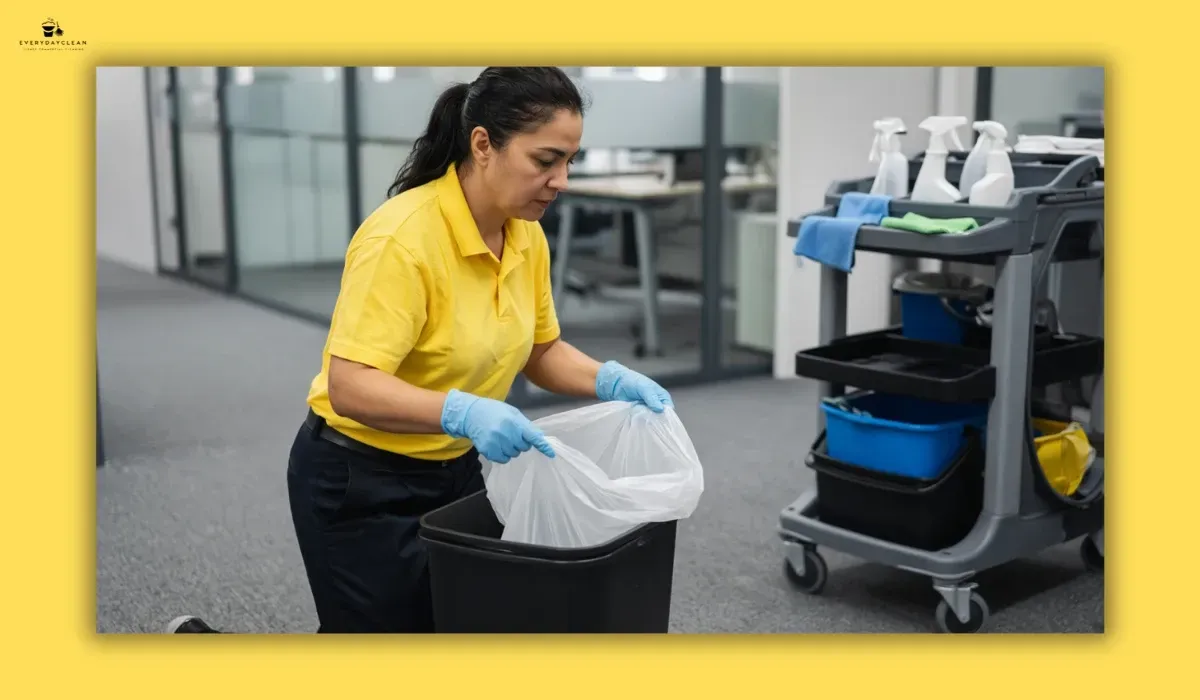
Cleaning chemicals can cause skin, eye or respiratory irritation if used incorrectly. Controls generally include keeping products in labelled original containers, storing an accessible Safety Data Sheet for each product, following the correct dilution rates, using PPE as directed, and ensuring adequate ventilation. Chemicals should never be mixed unless the label confirms it is safe to do so.
Manual Handling
Lifting equipment, moving furniture, carrying supplies and repetitive movements can lead to strains and injuries. Controls include training in safe lifting technique, using trolleys or equipment aids, breaking loads into smaller amounts, and not moving heavy furniture alone.
Electrical Items
Vacuum cleaners, buffers and other powered equipment carry a risk of electric shock if damaged. Controls usually include visual checks before use, taking damaged leads or plugs out of service, keeping cords away from water, and following any workplace testing and tagging arrangements.
Sharps And Waste
Cleaners may encounter broken glass, discarded sharps or general waste that poses a risk. Controls include not compressing bin bags by hand, using appropriate tools to handle broken glass, following the site's procedure for any sharps found, and wearing suitable gloves.
Dust And Bathrooms
Dusting and vacuuming can disturb dust and allergens, and bathroom cleaning involves contact with frequently used surfaces that need careful hygiene procedures. Controls include using equipment such as HEPA-filter vacuums where available, adequate ventilation, colour-coded cloths to separate bathroom and general cleaning, and hand hygiene after tasks.
After-Hours Access And Working Alone
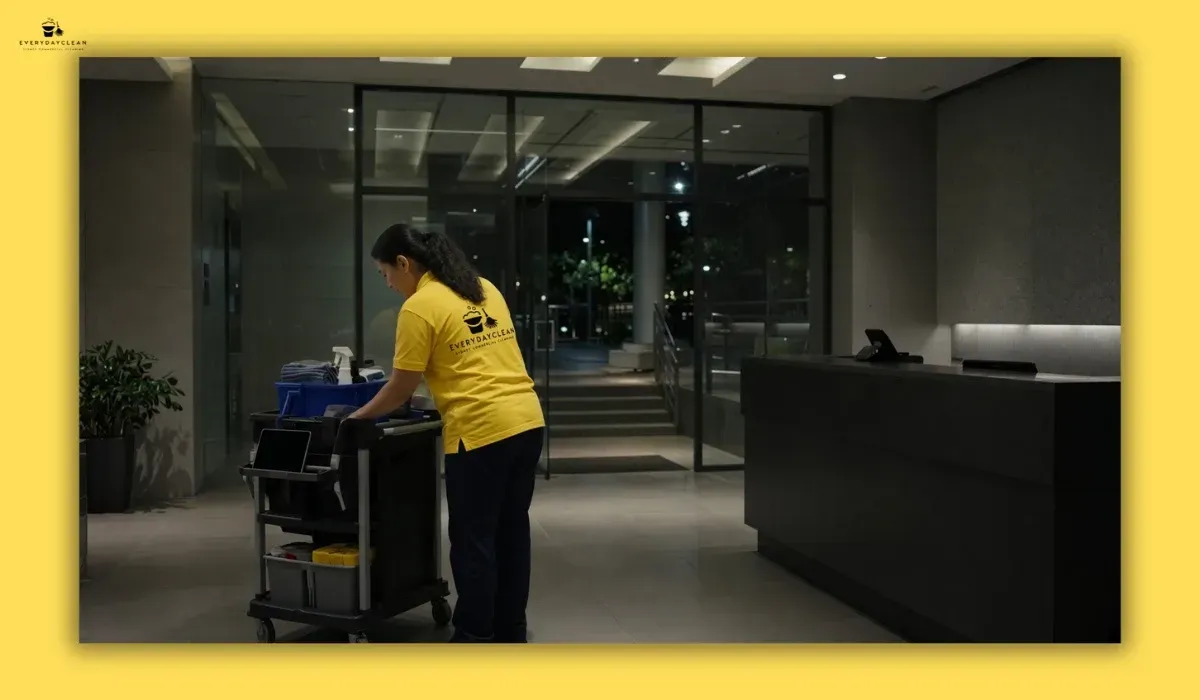
Cleaning is often done after hours, which can mean working alone in an empty building. Controls may include a check-in procedure, a means of communication, clear access and security arrangements, and consideration of lighting and safe entry and exit. Lone-working arrangements should follow the organisation's own policy.
Office Cleaning Risk Assessment Example Template
The following is a simplified example. A real assessment would be expanded to reflect the specific site, tasks and products in use. For a live workplace document, add columns for further action, responsible person and review date.
| Hazard | Who May Be Harmed | Control Measures | PPE |
|---|---|---|---|
| Wet floors, slips and trips | Cleaners, staff, visitors | Wet-floor signage, mop in sections, keep cords clear | Non-slip footwear |
| Chemical exposure | Cleaners | Labelled products, SDS available, correct dilution, ventilation | Gloves, eye protection |
| Manual handling | Cleaners | Safe lifting training, use trolleys, split loads | As required |
| Electrical equipment | Cleaners | Pre-use checks, remove damaged items, keep cords dry | As required |
| Sharps and waste | Cleaners | Do not hand-compress bags, follow sharps procedure | Suitable gloves |
| Dust and allergens | Cleaners, staff | HEPA vacuum where available, ventilation | Mask if needed |
| Bathroom surfaces | Cleaners | Colour-coded cloths, clean then disinfect, hand hygiene | Gloves |
| Working alone after hours | Cleaners | Check-in procedure, communication, safe access | As required |
Control Measures That Support The Assessment
Beyond the controls listed for each hazard, some measures apply across the whole cleaning operation. These commonly include clear signage, safe and secure chemical storage, keeping SDS and labels accessible, correct product dilution, appropriate PPE, adequate ventilation, staff training, a straightforward incident reporting process, and supervision to check controls are being followed.
Controls work best when they are practical and actually used, so training and supervision matter as much as the written document. For teams wanting the day-to-day cleaning managed alongside these safety practices, managed office cleaning support can carry out the routine work while the site keeps oversight of its own risk assessment. Broader guidance on safe practices is covered in these office cleaning safety tips.
How Often To Review An Office Cleaning Risk Assessment
A risk assessment is not a one-off document. It should generally be reviewed after any incident or near miss, when new chemicals or equipment are introduced, when the cleaning scope or site layout changes, and at a scheduled interval such as annually. Reviewing after changes helps make sure the controls still match the actual work being done.
Recording the review date and keeping the assessment current also supports the organisation's wider WHS obligations, though the specific requirements should be checked against current Australian regulations.
Office Cleaning Risk Assessment Frequently Asked Questions
What Should An Office Cleaning Risk Assessment Include?
It should identify each hazard, who may be harmed and how, the control measures and PPE in place, any further action needed, the responsible person, and a review date. Structuring it this way helps make sure hazards are managed consistently and responsibility is clear.
How Often Should The Risk Assessment Be Reviewed?
Generally after an incident or near miss, when new chemicals or equipment are added, when the scope or site changes, and at a scheduled interval such as annually. Reviewing after any significant change helps keep the controls relevant to the current work.
Does A Risk Assessment Guarantee Compliance?
No. A risk assessment is a tool to identify and reduce risks, but it does not by itself guarantee compliance. WHS requirements vary and change over time, so assessments should be adapted to the site and checked against current Australian regulations and the organisation's own policies.
Who Is Responsible For The Office Cleaning Risk Assessment?
Responsibility usually sits with the employer or the person managing the cleaning arrangement, though tasks may be delegated to a supervisor or coordinator. The assessment should name a responsible person so it is clear who maintains, communicates and reviews it.
Blog