How to Clean Toileting Areas in Childcare
Cleaning toileting areas in childcare generally follows a set sequence: isolate the area and keep children away, put on appropriate PPE, remove visible matter, clean surfaces first, then disinfect according to the product label, dispose of waste safely, and wash hands thoroughly. Documenting or reporting spills may also be required depending on the centre's policy and the type of spill involved.
This order matters because cleaning before disinfecting removes the organic matter that can otherwise reduce how well a disinfectant works. The guidance below is general and should be read alongside the centre's own policies and current Australian childcare and health guidance, which take priority in any specific situation.
Clean First, Then Disinfect
Cleaning and disinfecting are two separate steps, not one. Cleaning with detergent and water physically removes dirt, organic matter and many germs from a surface, while disinfecting is intended to reduce remaining germs further. Applying disinfectant to a visibly soiled surface is generally less effective, because organic matter can interfere with the product.
The usual approach is to clean the surface first, then apply a disinfectant and allow it the full contact time stated on the product label. Contact time varies between products, so checking the label rather than assuming is important. Australian childcare services often refer to resources such as the NHMRC Staying Healthy guidance and relevant state or territory health advice when setting cleaning procedures.
Personal Protective Equipment Reduces Contact Risk
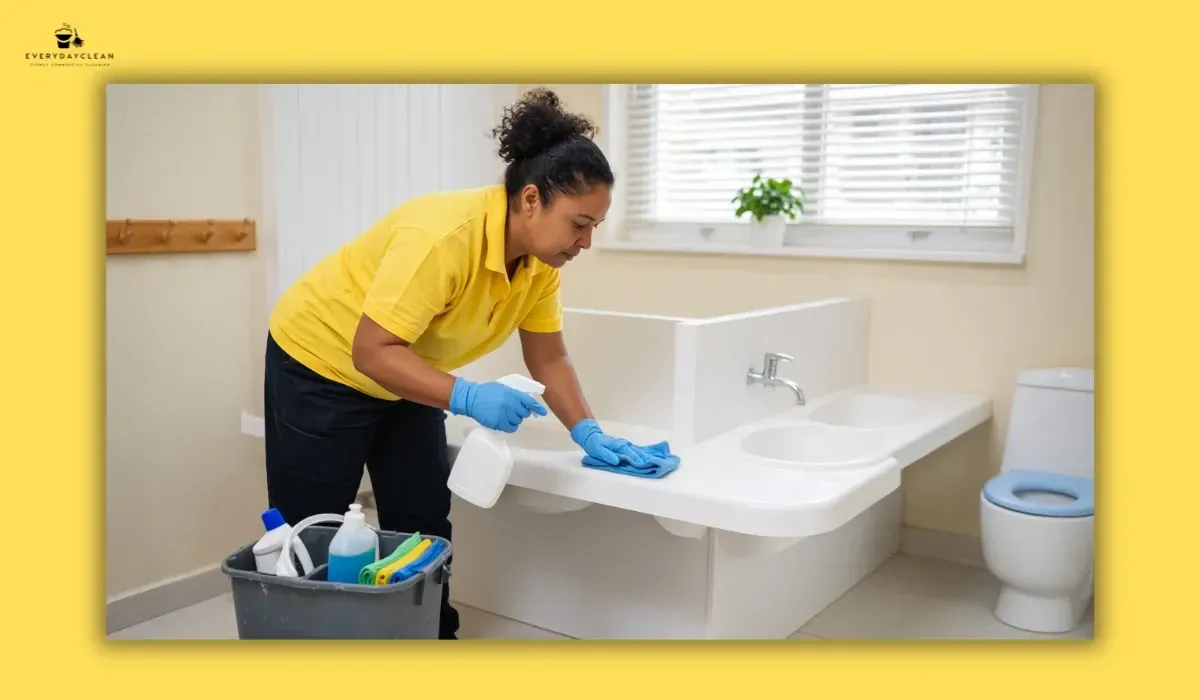
Appropriate PPE for toileting-area cleaning and spills usually includes disposable gloves, and depending on the situation and centre policy, an apron and eye protection. PPE should be put on before starting and removed carefully afterwards to avoid spreading contamination.
Gloves are single-use for the task and should be removed and discarded before touching other surfaces, then hands washed. The specific PPE expected can vary by centre and by the type of spill, so the centre's policy and the relevant Safety Data Sheet for the products used should guide the choice.
Keep Children Away And Ventilate The Area
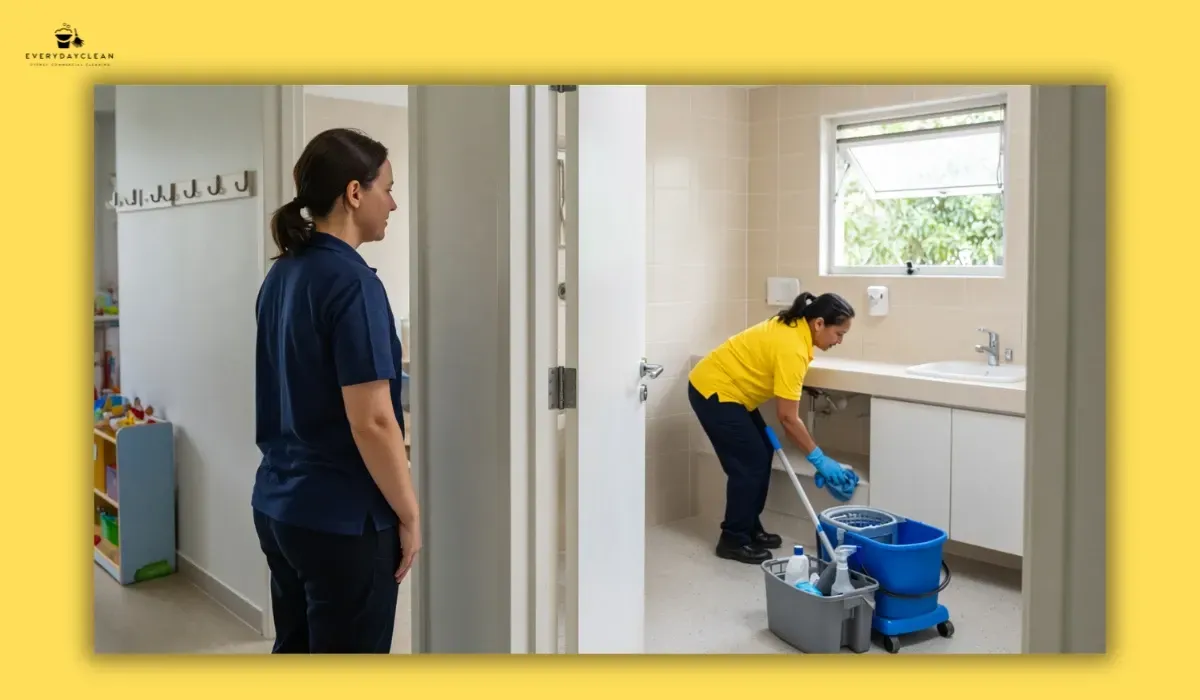
Before cleaning begins, children should be moved away from the area and kept clear until cleaning and disinfecting are complete and surfaces are dry. This reduces the chance of contact with contaminated surfaces or cleaning products.
Where possible, ventilating the space by opening a window or door can help disperse product fumes, particularly when using disinfectants. Cleaning products should always be stored securely and out of reach of children, in line with childcare requirements.
Cleaning Toilets, Nappy-Change Areas And Handwashing Sinks
Toilets are generally cleaned with detergent first, then disinfected, paying attention to the seat, flush button or handle, and the surrounding floor. High-use fittings tend to need more frequent attention than a once-daily wipe.
Nappy-change areas are a particular focus because of the risk of spreading germs. The change surface is usually cleaned and disinfected after each use, and a barrier such as disposable paper may be used depending on centre practice. Handwashing sinks, taps and soap dispensers are touched frequently, so these touchpoints often need regular cleaning throughout the day, not only at the end of a session.
Managing Toileting Accidents And Spills
Toileting accidents and bodily-fluid spills should be dealt with promptly to reduce the risk of spread. The general steps are similar across spill types, with extra caution for blood and unknown fluids.
- Isolate the area and keep children away
- Put on gloves and any other PPE required by centre policy
- Remove visible matter using disposable paper towel or a designated method
- Clean the area with detergent and water
- Disinfect according to the product label and allow full contact time
- Place waste and used materials in a suitable bin or bag as required
- Remove PPE carefully and wash hands thoroughly
- Document or report the spill where centre policy requires
Urine, Faeces And Vomit
These spills are generally cleaned by removing the matter first, then cleaning and disinfecting the surface. Vomit and faeces can carry a higher risk of certain germs, so prompt removal and thorough cleaning are important. Contaminated paper towels and materials are disposed of as the centre's policy directs.
Blood And Unknown Bodily Fluids
Blood spills and any fluid of unknown origin should be treated with extra caution and handled strictly according to the centre's policy and current health guidance, rather than a generic method. These situations may involve specific PPE, disinfection and disposal requirements, and in some cases reporting. If there is any uncertainty about how to manage a blood or unknown-fluid spill safely, the centre's policy and relevant health authority guidance should be followed before proceeding.
Waste Disposal, Hand Hygiene And Touchpoints
Used gloves, paper towel and other contaminated materials should be disposed of in line with the centre's waste procedures, which may specify particular bins or bags for certain waste types. Bins in toileting areas are usually emptied regularly and cleaned as part of the routine.
Hand hygiene is one of the most important steps. Hands should be washed with soap and running water after removing PPE and completing cleaning, following the centre's hand-hygiene procedure. Frequently touched points such as door handles, tap fittings, flush buttons and light switches in and around toileting areas often need regular cleaning, since these can transfer germs between users.
Quick Reference Procedure
| Step | Action |
|---|---|
| 1. Isolate | Move children away and keep the area clear |
| 2. Protect | Put on gloves and any PPE required by policy |
| 3. Remove | Take away visible matter with disposable materials |
| 4. Clean | Wash the surface with detergent and water |
| 5. Disinfect | Apply disinfectant per label and allow contact time |
| 6. Dispose | Bag or bin waste as centre policy requires |
| 7. Wash | Remove PPE and wash hands thoroughly |
| 8. Record | Document or report where required |
When To Bring In Professional Support
Day-to-day toileting-area cleaning is generally handled by centre staff following their own routines and policies. Professional cleaning support can help with deeper periodic cleaning, consistent overnight cleaning routines, or maintaining hygiene standards across a busy centre. For centres looking for that ongoing support, scheduled childcare cleaning support can sit alongside the daily routines educators carry out. Choosing suitable products also matters, and guidance on child-safe disinfectants can help centres match products to their needs and check label instructions before use.
Childcare Toileting-Area Cleaning Frequently Asked Questions
Should You Clean Or Disinfect First In A Childcare Toilet?
Clean first, then disinfect. Cleaning with detergent removes dirt and organic matter that can reduce how well a disinfectant works. Applying disinfectant to a visibly soiled surface is generally less effective, so the two steps should happen in that order.
How Often Should Nappy-Change Areas Be Cleaned?
Nappy-change surfaces are generally cleaned and disinfected after each use, since they carry a higher risk of spreading germs. Centres usually set their own frequency in line with childcare and health guidance, so the centre's policy should be followed.
How Should Blood Spills Be Handled In Childcare?
Blood spills should be treated with extra caution and managed according to the centre's policy and current health guidance, which may set specific PPE, disinfection and disposal steps. If there is any uncertainty, the centre's policy and relevant health authority guidance should be followed before cleaning.
What PPE Is Needed To Clean Toileting Areas?
Disposable gloves are generally the minimum, with an apron or eye protection added depending on the spill and centre policy. PPE should be put on before starting, removed carefully afterwards, and followed by thorough handwashing. The relevant product Safety Data Sheet can also guide PPE choice.
How Should Toileting Spills Be Cleaned In Childcare?
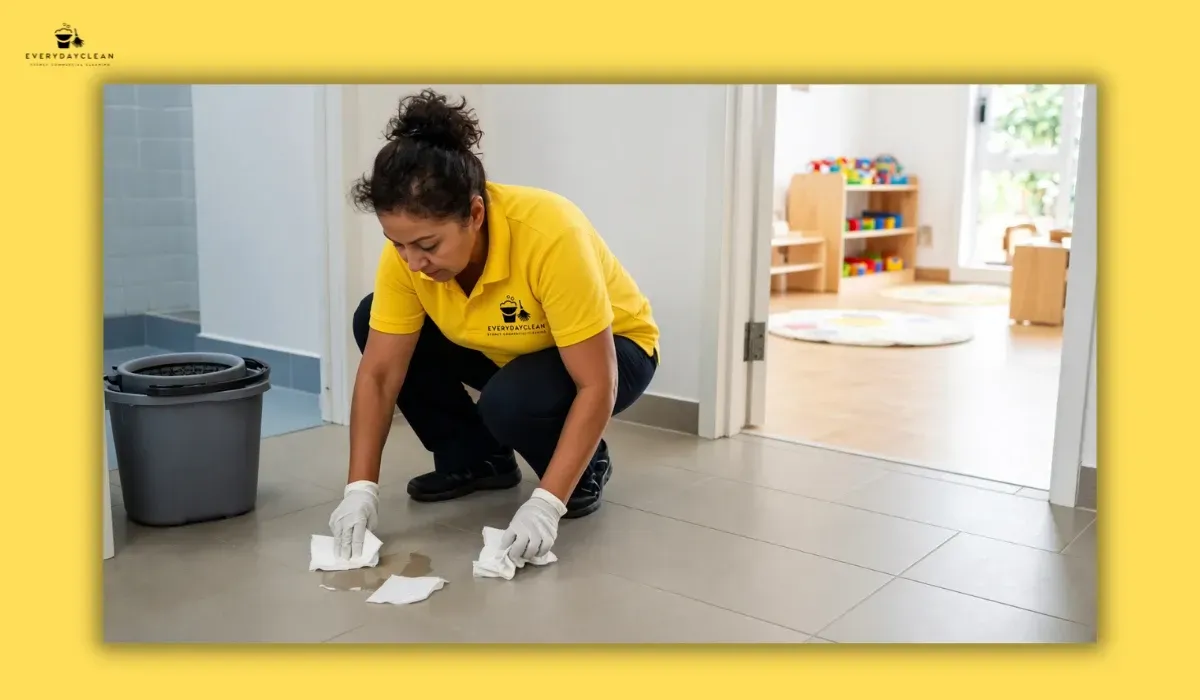
Isolate the area and keep children away, put on gloves and any required PPE, remove visible matter with disposable materials, then clean with detergent and water. Disinfect according to the product label and allow full contact time, dispose of waste safely, wash hands thoroughly, and report the spill if centre policy requires.
Blog