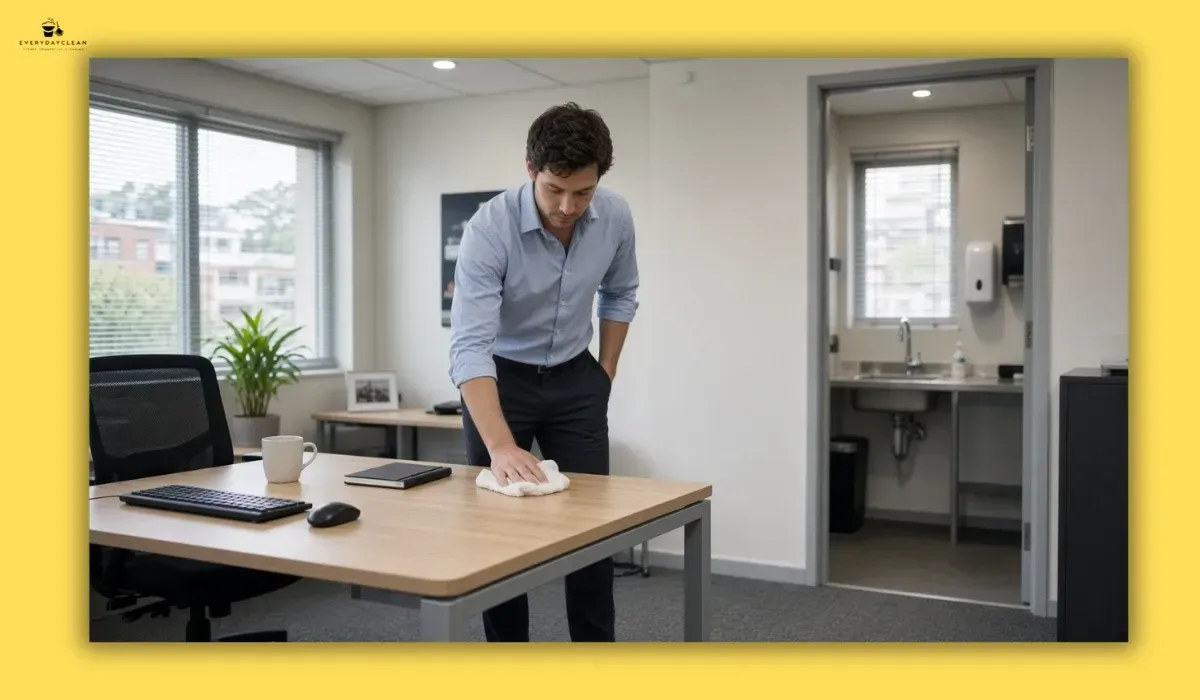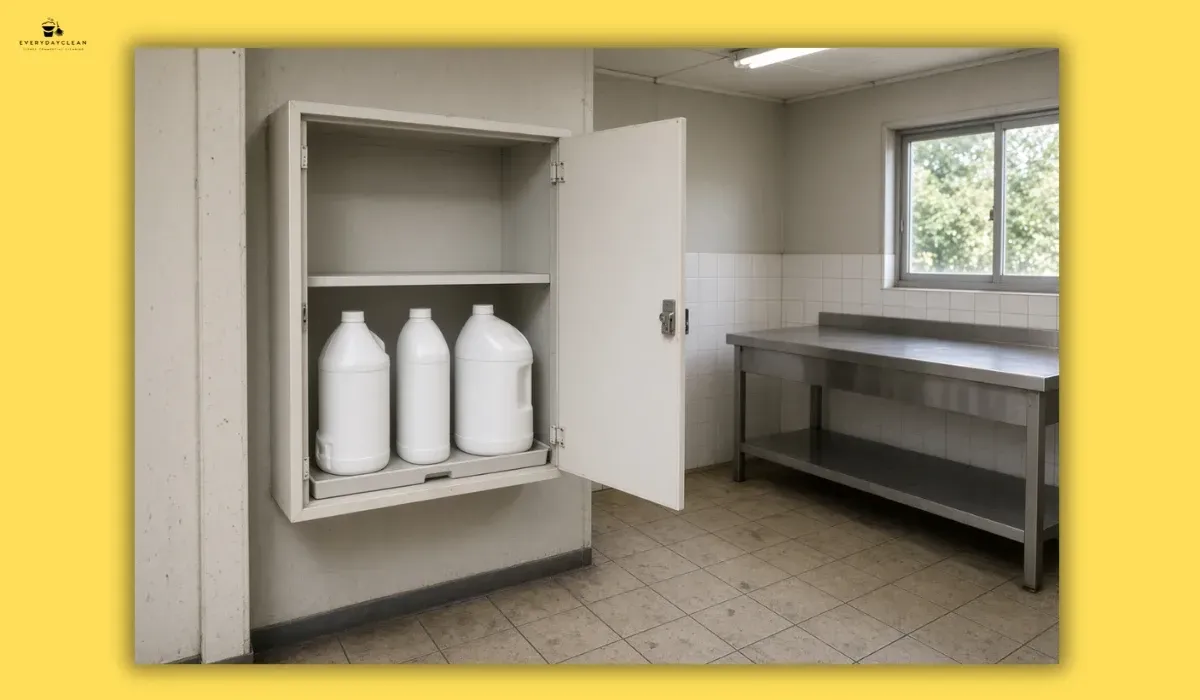
How to Clean Office Floors: Methods by Floor Type
How to Clean Office Floors and Keep Them That Way
Many office floors that look dull are still being mopped regularly. The problem is usually what happens before the mop comes out. Grit, dust and paper fibres left on the surface turn to slurry as soon as they get wet, and the mop spreads them into edges, grout lines and door thresholds instead of removing them.
Get the dry stage right and the rest is straightforward: spot-treat marks, damp mop with a neutral cleaner at the labelled dilution, and let the floor dry properly before anyone walks on it. Floor type then decides how much water and what chemistry the surface will actually tolerate.
Start with dry soil removal
Most of what makes an office floor look dirty is dry, and it comes in on shoes. Removing it before any water goes down is the step that changes the result.
The dry stage covers:
- Vacuuming with a commercial vacuum, or dust mopping larger open areas
- Working edges, corners and under furniture where grit accumulates
- Clearing entry areas, which carry the highest soil load in any building
- Checking entry mats and vacuuming or replacing them as needed
Entry matting matters more than it looks. A mat system long enough for several footsteps captures a meaningful share of tracked-in soil before it reaches the floor, which reduces both cleaning time and abrasion wear. Short mats do very little.
Vacuum or dust mop?
Vacuuming captures fine dust rather than lifting it into the air, so it suits floors near occupied workstations. Dust mopping is faster across lobbies and corridors, particularly with a treated head that holds fine dust. Many sites use both.
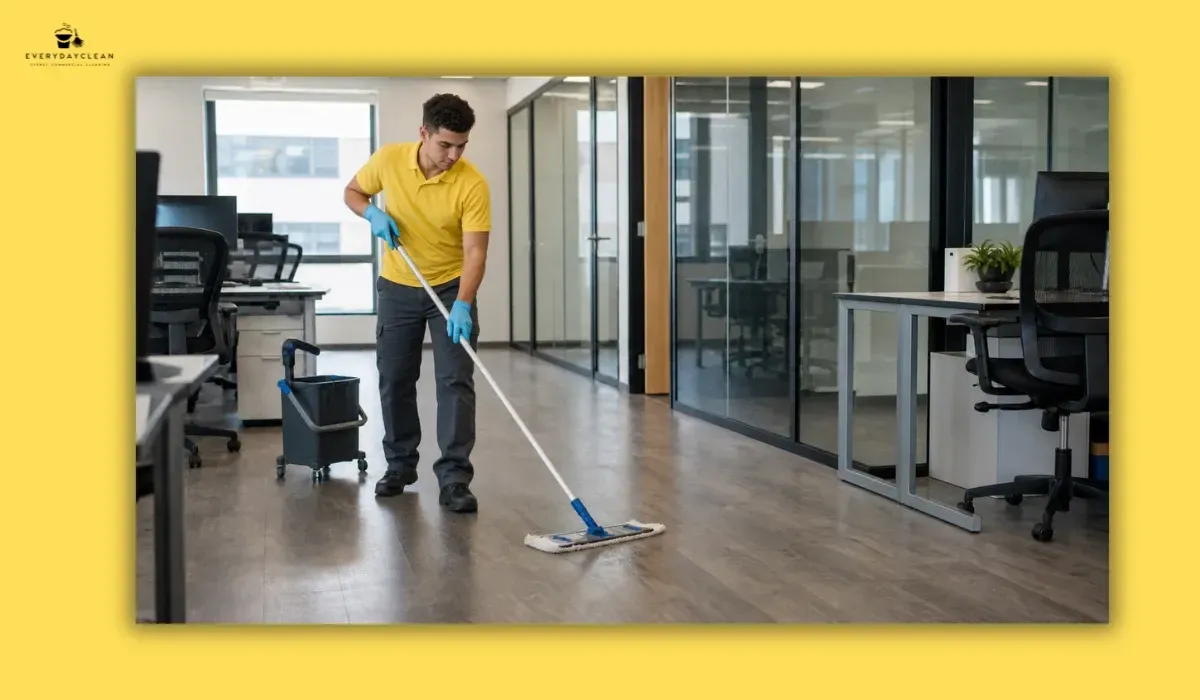
The first 10 minutes of an office floor clean
The order of work matters more than the products. A typical start looks like this.
Minutes 1 to 2. Walk the area. Note spills, scuffs, adhesive residue and anything needing spot treatment, and check for damage or hazards to report.
Minutes 2 to 3. Put out wet floor signage before touching anything, not after the floor is wet.
Minutes 3 to 4. Clear and check entry matting. Vacuum or lift and shake it, so soil is not walked back over the floor you are about to clean.
Minutes 4 to 7. Dry soil removal across the area, working from the far end back toward the exit, including edges and under accessible furniture.
Minutes 7 to 9. Spot-treat the marks noted at the start, individually, before any general mopping.
Minute 9 onward. Mix cleaner at the labelled dilution, wring the mop properly, and mop backward in sections so you are never walking across finished floor.
Skipping the walk-through is what causes rework, because a spill found halfway through a mop pass means going back over floor that has already dried.
Damp mopping is about control, not volume
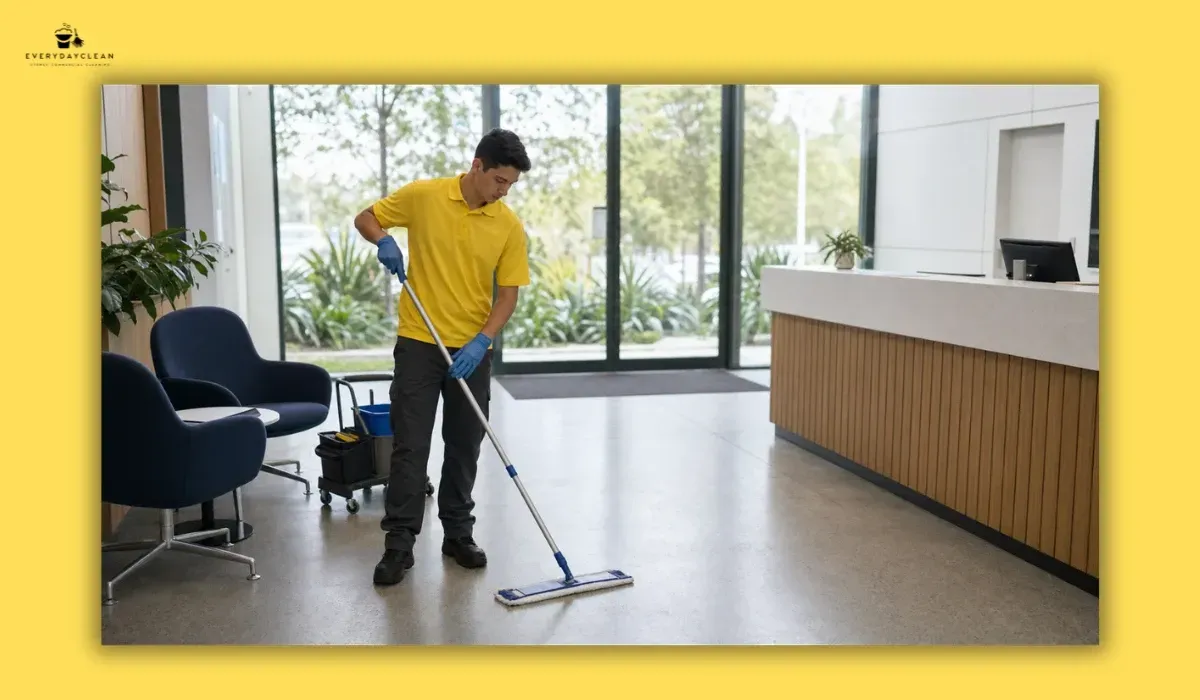
Once the floor is dry-cleaned, damp mopping removes the residual film that dry methods cannot. The word that matters is damp.
- Mix a neutral pH cleaner at the labelled dilution. More product leaves residue that attracts soil and dulls the finish
- Wring the mop properly, so the floor dries within a couple of minutes with no visible pooling
- Work in sections, mopping backward
- Change the water when it discolours, since mopping with soiled solution deposits soil rather than removing it
- Use a flat mop system where practical, with a fresh pad per zone
- Let the floor dry fully, with air movement if available
Floor type changes what the surface will tolerate
The sequence stays the same. The tolerances do not.
Low water tolerance, damp mop only
- Laminate: standing water reaches the core through seams and causes swelling
- Timber and timber-look: minimal moisture, and the product must suit the finish rather than the timber itself
Moderate water tolerance
- Vinyl and vinyl plank: neutral cleaner only, avoiding solvents and high-alkaline products that can degrade the surface
- Safety and slip-resistant vinyl: the textured surface holds soil, so it needs more mechanical agitation than smooth vinyl
- Sealed concrete: tolerance depends entirely on the sealer, and harsh chemistry can strip it
Higher water tolerance
- Ceramic and porcelain tile: the grout is the weak point and needs periodic dedicated attention
Before introducing any new cleaner, check the flooring manufacturer's cleaning instructions alongside the product label and Safety Data Sheet. Warranty conditions on commercial flooring often specify what may and may not be used, and a product that suits one floor type can damage another. Where a floor carries a factory or applied finish, the finish is what is being cleaned rather than the material underneath, so strip and reseal cycles sit in periodic work rather than routine cleaning.
Carpeted areas sit outside all of this. Carpet needs regular vacuuming, prompt spot treatment and periodic extraction, and none of the wet-mopping methods above apply. Offices with mixed flooring should list the two separately in the schedule.
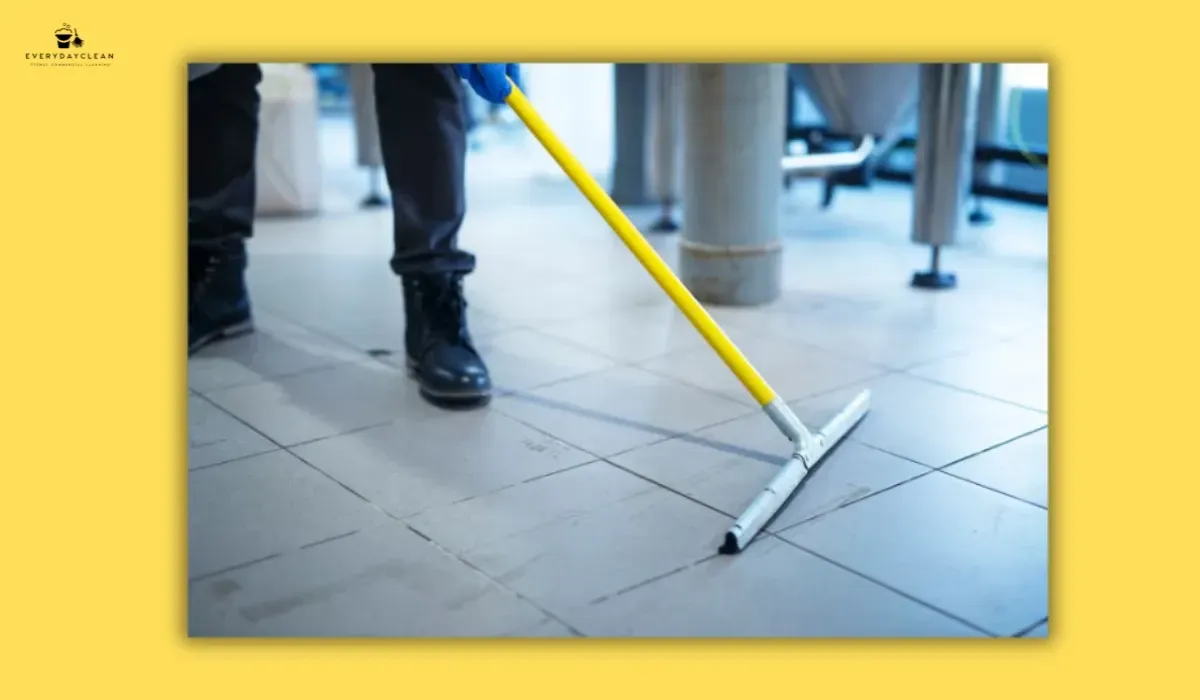
A workable schedule
Frequency follows traffic, not room labels. Entries and main corridors carry far more soil than a meeting room used twice a week.
- Daily: vacuum or dust mop main traffic areas, entries and corridors; check entry matting; spot-clean spills and scuffs; damp mop high-traffic hard floors; manage wet floor signage.
- Weekly: damp mop lower-traffic areas; detail edges, corners and skirtings; clean under and around furniture where accessible; clear accumulated scuff marks.
- Monthly to quarterly: machine scrub or deep clean depending on traffic; clean grout in tiled areas; inspect chair-castor wear paths; check floor condition near entries and lifts.
- Annual or as required: strip and reseal where the floor type and finish require it; replace or professionally clean entry matting; review the schedule against actual traffic patterns.
- Where floors form part of a wider site scope, office cleaning Sydney typically covers daily and weekly work, with machine scrubbing and resealing quoted separately because they need different equipment and out-of-hours access.
Mistakes that shorten floor life
- Too much water. One of the most damaging mistakes on laminate and timber-look flooring, and a slip hazard on everything else.
- The wrong chemical. High-alkaline degreasers and acidic cleaners strip finish, etch grout or dull vinyl. Neutral pH is the default unless the manufacturer specifies otherwise.
- Dirty mop water. Soiled solution deposits a film that dulls the floor and attracts more soil. Change water by area, not by shift.
- No entry matting, or matting that is too small. Grit under foot traffic is abrasive, and matting is the cheapest way to reduce it.
- Ignoring chair castors. Worn or hardened castors cut wear paths into vinyl and laminate at every workstation. Replacing castors is usually far cheaper than repairing or replacing worn flooring.
- Letting scuffs accumulate. Fresh marks lift easily. A month of build-up needs machine work.
- Walking on wet floors. Beyond the slip risk, footprints on a drying floor mean redoing the section.
Frequently asked questions
What is the correct way to clean office floors?
Remove dry soil first by vacuuming or dust mopping, spot-treat marks and spills, then damp mop with a neutral pH cleaner at the labelled dilution. Use wet floor signage, change the water when it discolours, and allow the floor to dry fully before traffic returns. Check the flooring manufacturer's instructions before using any new product.
How often should office floors be cleaned?
High-traffic areas such as entries, corridors and lobbies generally need daily vacuuming or dust mopping with damp mopping as required. Lower-traffic rooms are often weekly. Machine scrubbing or deep cleaning is typically monthly to quarterly depending on traffic, with stripping and resealing annually or as the floor finish requires.
Why do office floors look dull after cleaning?
The usual causes are too much detergent leaving residue, mopping with dirty water, skipping dry soil removal, or using a product unsuited to the floor finish. Abrasive wear from tracked-in grit also dulls floors over time, which is why matting and vacuuming affect appearance as much as mopping does.
Building a routine the floor can live with
Good office floor care is mostly unglamorous consistency: matting at the doors, dry soil removed before anything gets wet, the right cleaner at the right dilution, and clean water in the bucket.
Set the schedule around where traffic actually goes rather than around room labels on a plan, and review it once the building's patterns are clear. Floors show wear where people walk, not where the schedule says they should.
Blog