Commercial Window Cleaning Equipment: Full Guide
Commercial Window Cleaning Equipment: What the Job Actually Requires
Commercial window cleaning runs on a compact kit: a quality squeegee with fresh rubber, a scrubber or applicator, a bucket and detergent, microfibre or scrim cloths, a scraper for stubborn residue, extension poles for reach, and a water-fed pole system for anything above ground level. Everything else is refinement.
The equipment list is short because glass is unforgiving. Poor rubber, contaminated water or a cloth that sheds fibres will show on every pane regardless of how much was spent on the rest of the kit. Tool selection matters, but condition and technique matter more.
Core commercial window cleaning equipment
Each item in a professional kit does one job. Understanding what that job is makes it obvious when a tool is the wrong choice.
- Squeegee. The primary tool for removing water and detergent in a single controlled pass. A commercial handle takes interchangeable channels, typically from around 250mm for tight panes up to 450mm or more for large glass. The rubber matters far more than the handle: soft rubber suits cold conditions, hard rubber suits heat, and any rubber with a nick or flat spot leaves a line.
- Scrubber or applicator. A T-bar with a washable sleeve applies detergent and lifts soil off the glass before the squeegee pass. Sleeve choice varies between smooth microfibre for light soiling and abrasive-edged sleeves for heavier build-up.
- Extension poles. Aluminium, fibreglass or carbon fibre, in fixed or telescopic form. Carbon fibre costs more but reduces fatigue significantly on longer sessions. Poles extend the reach of squeegees, scrubbers and water-fed brushes.
- Water-fed pole system. Purified water delivered through a brush head on a telescopic pole, allowing exterior glass to be cleaned from ground level. Because purified water leaves no mineral residue, the glass dries without spotting and no squeegee pass is needed.
- Pure water system. The filtration behind a water-fed pole, usually deionisation, reverse osmosis, or both in combination. A TDS meter confirms the output is low enough to dry clean. Mains water fed straight through a pole will spot every pane.
- Microfibre cloths and scrim. For detailing edges, frames and any missed spots. Scrim is traditional linen and handles moisture well. Microfibre is more common now, but needs laundering separately from other cleaning cloths so it does not pick up softener residue, which causes smearing.
- Scraper. A holder for a fresh blade, used to remove paint, adhesive, silicone and hardened debris. Only ever used on wet glass, with a fresh blade, and never on coated, toughened or tinted glass without confirming compatibility first.
- Buckets and sleeves. A commercial bucket sized to the scrubber, often with a sieve or squeegee holder. Water changes matter: dirty solution redeposits soil.
- Glass-safe detergent. A small amount of dedicated glass cleaning detergent or a mild dish soap in water is standard. Products leaving surfactant residue cause streaking, and strongly alkaline or abrasive products risk damaging frames, seals and coated glass.
- Safety equipment. Depends entirely on access method, covering everything from gloves and eye protection through to harnesses, anchor points and formal height safety systems.
Why does rubber condition matter more than squeegee brand?
The rubber edge is the only part of the tool that touches the glass. A blade that is rounded, nicked or contaminated cannot maintain contact across the full pass, and each fault leaves a visible line. Professional operators rotate or replace rubber frequently rather than pushing a blade until it obviously fails, because by the time the failure is obvious, the work has already been affected.
Equipment needs change with the job type
The same building can require three different kits depending on which glass is being cleaned.
| Job type | Typical equipment | Main consideration |
|---|---|---|
| Internal glass and partitions | Squeegee, scrubber, microfibre, small bucket, drop sheets | Protecting floors and furniture from drips |
| Shopfronts and ground-floor exterior | Squeegee, scrubber, scraper, bucket, extension pole | Pedestrian safety and working around trading hours |
| First and second-floor exterior | Water-fed pole, pure water system, hose reel | Ground-level access removes most height risk |
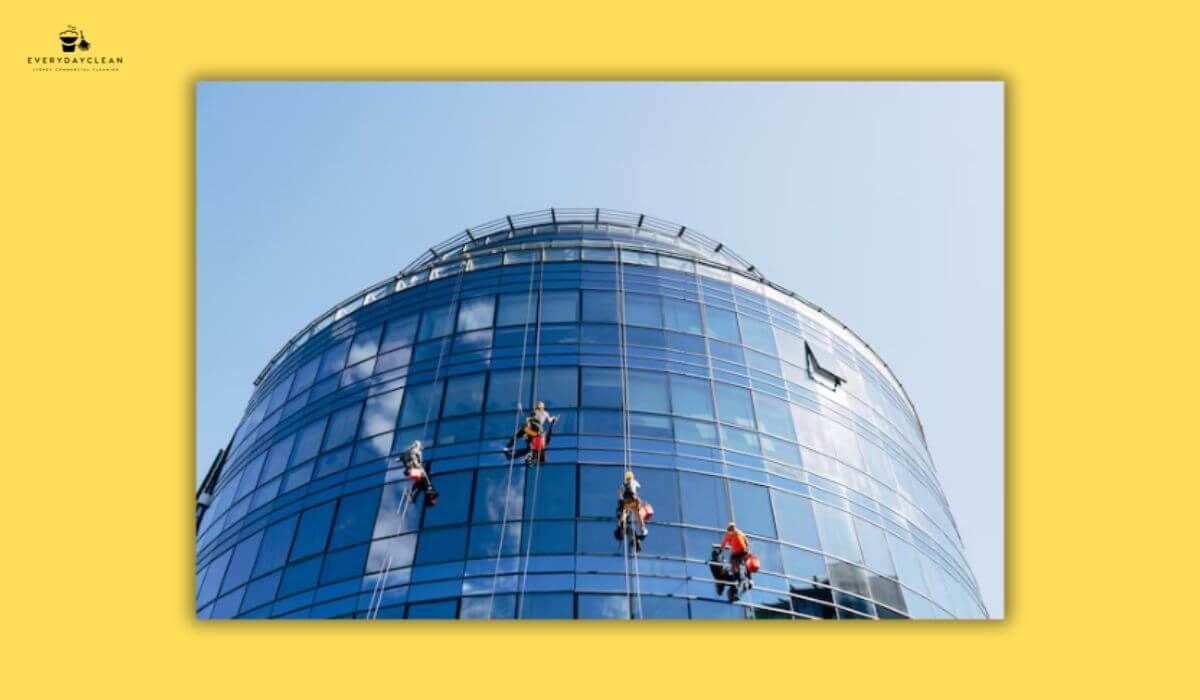
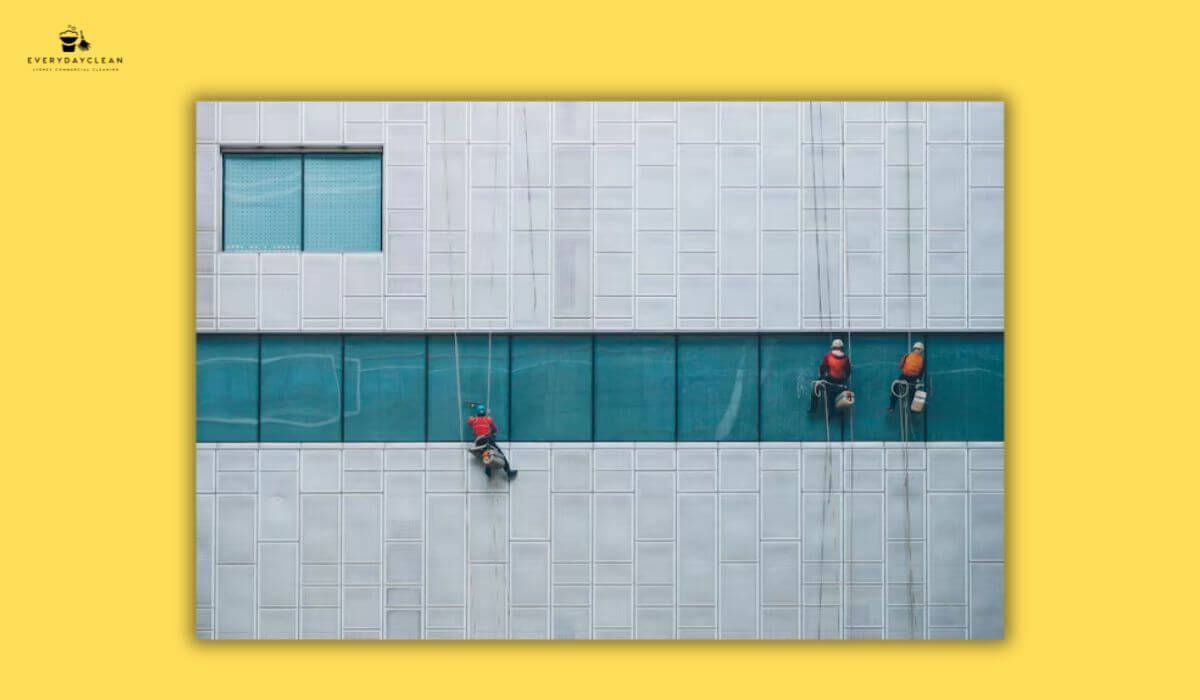
| Multi-storey exterior | Water-fed pole to reach limit, then rope access or EWP | Requires trained, licensed operators and formal planning |
| High-access and atrium glass | Specialist access equipment, height safety systems | Not appropriate for general cleaning staff |
| Maintenance and regular cleans | Reduced kit, water-fed pole, spot detailing | Lower build-up means faster, lighter work |
Many low-to-mid access commercial windows can be handled with a water-fed pole system, which is why these have become standard. Beyond that reach, the work moves into specialist territory with its own licensing, training and planning requirements.
At what point does the job stop being an in-house task?
Internal glass and accessible ground-floor exterior glass are reasonable for trained in-house staff with the right kit. Anything requiring ladders above a low working height, roof anchor points, rope access or elevated work platforms is specialist work. That transition point comes earlier than most people expect, and getting it wrong carries consequences well beyond a poor finish.

Working at height is subject to WHS obligations in every Australian state and territory. Ladders, elevated work platforms, rope access and roof anchor systems each carry specific requirements around training, inspection and risk assessment. Check current Safe Work Australia guidance and your state regulator before any work above ground level.
Working at height needs planning, not just equipment
Buying a longer pole does not make a job safe. The access method should be decided before any equipment is selected.
Practical points for commercial sites:
- Ladders are the highest-risk option, and are generally treated as a last resort for short-duration, low-height tasks rather than a standard method
- Water-fed poles remove most height risk by keeping the operator on the ground, which is the main reason they dominate commercial exterior work
- Pole length has practical limits. Longer poles become heavy and unstable, and control over brush pressure drops as reach increases
- Overhead powerlines are a serious hazard with carbon fibre and aluminium poles, and clearance distances must be checked before work starts
- Wet ground and pedestrian traffic need managing with signage and, where relevant, exclusion zones
- Elevated work platforms may require licensed operators, depending on the equipment, height and local requirements, along with appropriate site planning
- Rope access and anchor-based work requires certified operators and inspected, compliant anchor systems
For most businesses, the practical answer is straightforward: handle internal and low-level glass in-house if you want to, and engage professional window cleaning for anything requiring height access.
Streak-free results come from technique and condition, not the tool
The most common assumption in window cleaning is that better equipment produces better results. In practice, the finish depends on five factors that have little to do with what the tools cost.
Water quality. Mineral content is the main cause of spotting on exterior glass. Purified water dries clean, mains water does not. This is why pure water systems exist, and why a TDS meter is a genuine diagnostic tool rather than an accessory.
Rubber condition. Covered above, and it is one of the most common causes of lines on otherwise well-cleaned glass.
Detergent quantity. More is not better. Excess detergent leaves surfactant residue that streaks as it dries. A small amount in a full bucket is the standard approach.
Cloth choice and laundering. Cloths washed with fabric softener will smear. Cloths that shed will leave lint on the glass. Window cloths should be laundered separately, without softener, and kept away from cloths used with other cleaning products.
Technique and sequence. Consistent overlapping passes, wiping the blade between passes, and detailing edges last. Working in direct sun causes solution to dry before it can be removed, which is why exterior work is often scheduled early or on overcast days.
Glass condition also has a ceiling. Hard water etching, mineral scale bonded to the surface and scratched glass will not clean up to a like-new finish regardless of method. Setting that expectation before a job starts avoids disappointment afterwards.
How often does equipment need replacing?
Rubber is consumable and replaced frequently. Scrubber sleeves and microfibre cloths are laundered until they lose effectiveness, then replaced. Scraper blades are single-use per job at most, since a blunt or chipped blade scratches glass. Poles, handles and filtration housings last for years with reasonable care, though filtration media in a pure water system is replaced on a schedule based on output readings rather than time.

Building the kit for a commercial site
Start with what the site actually has: the glass types, the heights, the access points and how often it needs cleaning. That determines the equipment, not the other way around.
A site with mostly internal partitions and a shopfront needs a modest kit that in-house staff can manage. A multi-storey building with atrium glass needs an access plan first and equipment second, and that plan usually points toward a contractor with the training, licensing and insurance for height work.
Where equipment is being purchased, spend on the parts that touch the glass and the water that dries on it. A mid-range handle with fresh rubber and properly filtered water will outperform an expensive kit running tired blades and mains water every time.
Frequently asked questions
What equipment do professional window cleaners use?
A standard professional kit includes a squeegee with interchangeable channels and fresh rubber, a T-bar scrubber with washable sleeves, a bucket and glass-safe detergent, microfibre or scrim cloths, a scraper with fresh blades, and extension poles. For exterior work above ground level, a water-fed pole connected to a pure water filtration system is the common approach.
What is a water-fed pole and why is it used?
A water-fed pole delivers purified water through a brush head on a telescopic pole, letting an operator clean exterior glass from the ground. Because purified water contains no dissolved minerals, the glass dries without spotting and needs no squeegee pass. It is used mainly because it removes the height risk associated with ladders on commercial buildings.
Why do windows still streak after cleaning?
The usual causes are worn or nicked squeegee rubber, too much detergent, mains water drying on exterior glass, cloths washed with fabric softener, or working in direct sun so the solution dries before removal. Equipment quality is rarely the problem. Checking rubber condition and reducing detergent solves most streaking issues.
Can a business clean its own commercial windows?
Internal glass and accessible ground-level exterior glass can reasonably be handled in-house with the right equipment and training. Anything requiring ladders at height, elevated work platforms, rope access or roof anchor points falls under work at height obligations and should be handled by trained, licensed operators with appropriate insurance.
Is a pure water system necessary for commercial window cleaning?
For exterior glass, it makes a substantial difference, since mains water leaves mineral spotting as it dries. For internal glass cleaned with a squeegee and detailed with cloths, it is not required. Whether the investment makes sense depends on how much exterior glass is being cleaned and how often.
Matching the kit to the building
Commercial window cleaning equipment is less about accumulating tools and more about selecting the right ones for the glass, the height and the frequency involved. A short, well-maintained kit consistently produces a better finish than an extensive one in poor condition.
Before purchasing, work out the access method for every window on the site. That single exercise tends to answer most equipment questions, and it flags early where the work needs specialist training rather than a bigger kit.
Everyday Clean is a Sydney-based commercial and residential cleaning provider working across offices, retail sites, strata properties and other commercial buildings.
Blog