How to Clean Commercial Tile Floors
To clean commercial tile floors, remove loose soil first with a dust mop or vacuum, then mop or auto-scrub with a suitable neutral solution, dry the floor safely with signage in place, and schedule periodic grout and detail cleaning on top of the daily routine. In a commercial setting the priority is a consistent, safe process that holds up under traffic, not a one-off deep clean.
This is a B2B floor-care guide for offices, retail, hospitality and similar sites, covering a daily standard operating procedure, periodic deep cleaning, frequency by traffic level, equipment, safety and common mistakes. It is aimed at maintained commercial floors rather than one-off residential tile and grout cleaning, which works differently.
Daily Commercial Tile Floor SOP
A repeatable daily process keeps commercial tile floors safe and presentable. The exact steps adapt to the site, but the sequence is generally consistent.
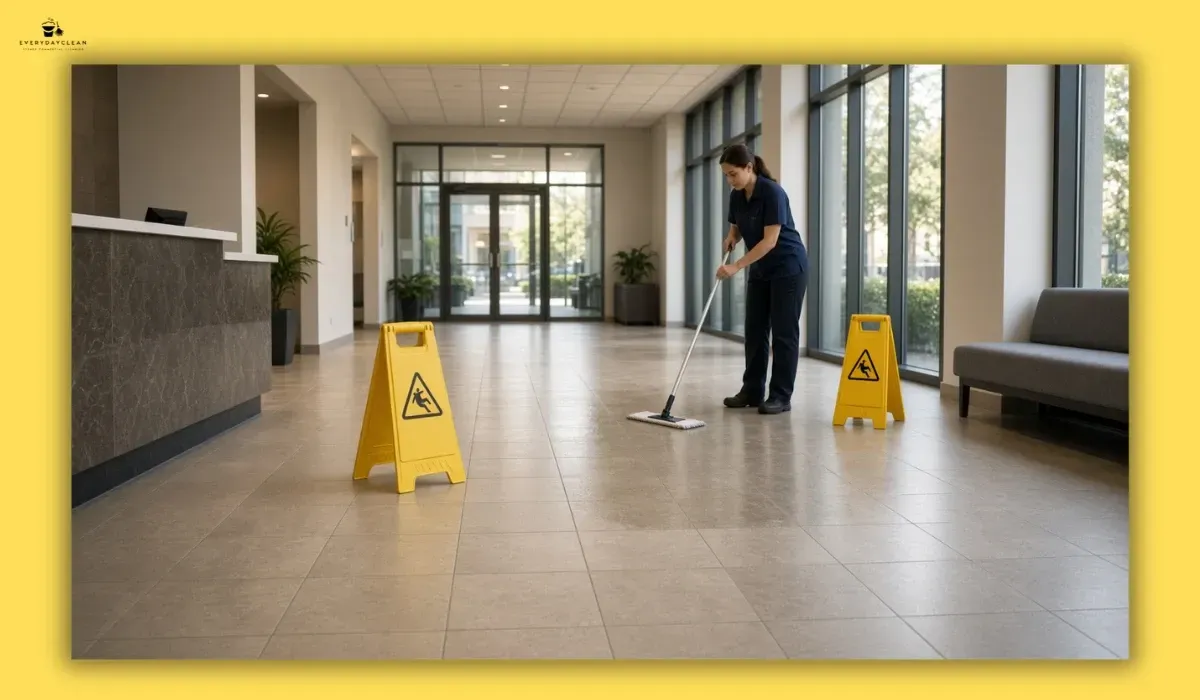
- Set out wet floor signs and confirm the area is safe to work in, ideally during quieter periods
- Dust mop or vacuum to remove loose soil, grit and debris before adding any water
- Spot-treat any spills or marks so they are not spread across the floor
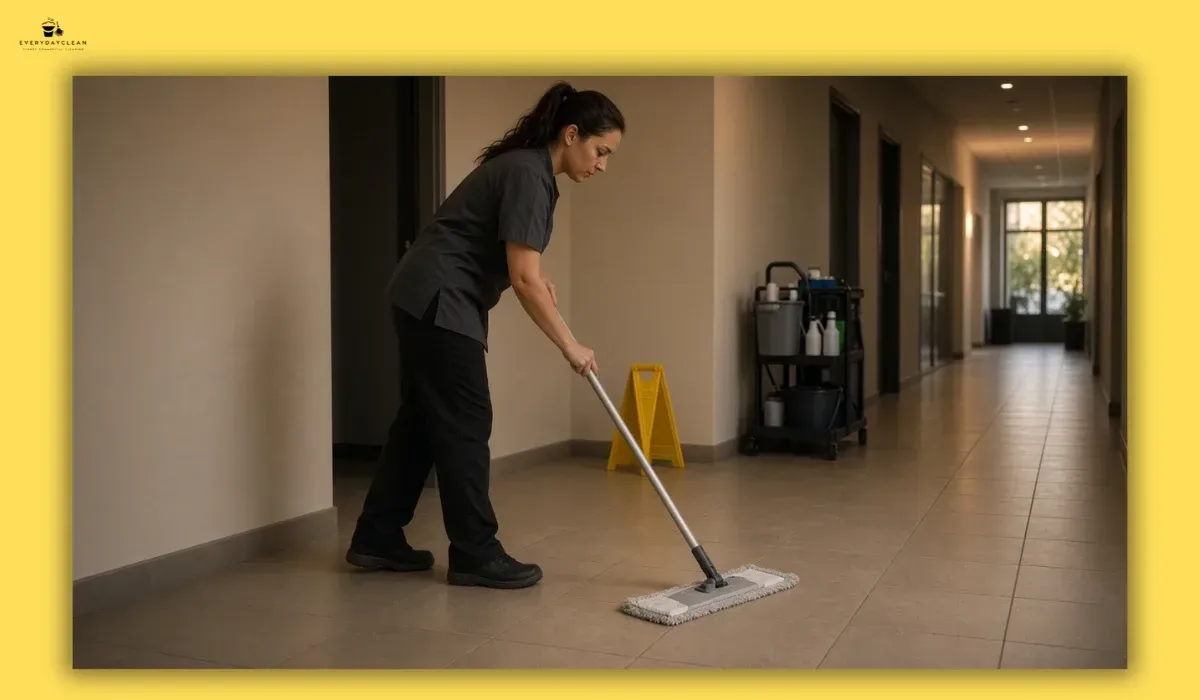
- Mop with a clean neutral cleaner solution, or run an auto-scrubber where the floor and space suit one
- Change mop water before it becomes dirty, since dirty water just redistributes soil
- Allow the floor to dry, keeping signage up and directing foot traffic away until dry
Removing loose soil before mopping is the step most often rushed, yet it makes the biggest difference, because mopping over grit grinds it into the floor and grout.
Periodic Deep Cleaning
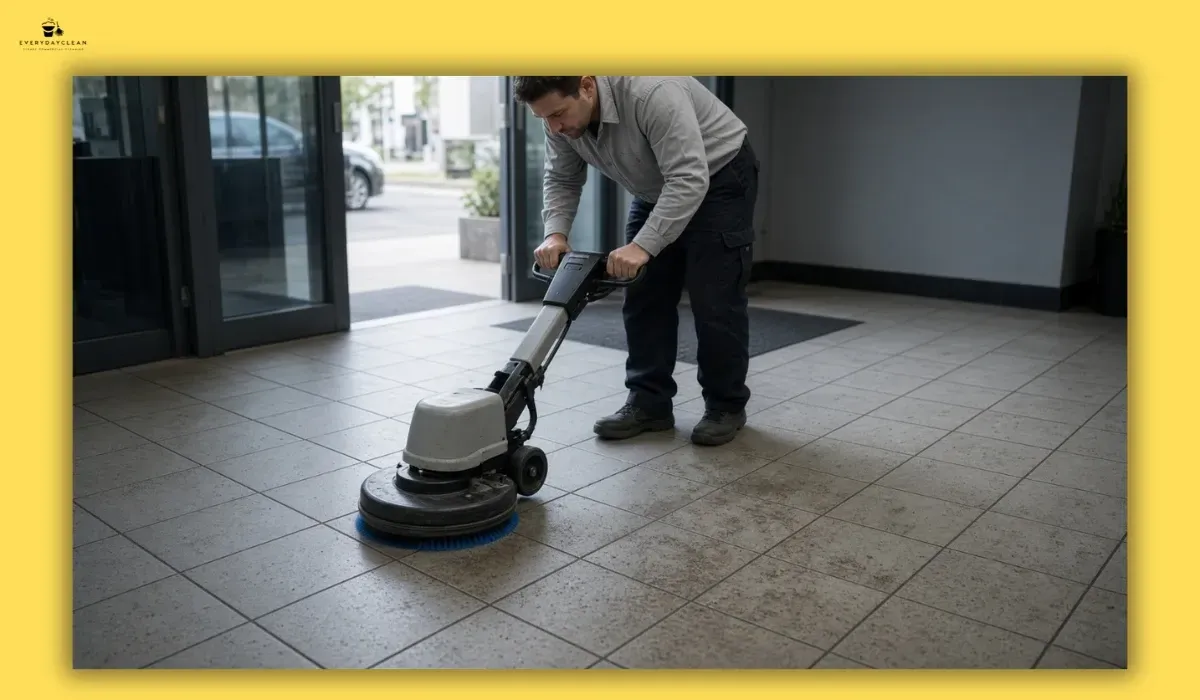
Daily cleaning keeps the surface presentable, but soil still builds up in grout lines and low spots over time, so periodic deep cleaning is needed on top of the routine. This typically involves a more thorough scrub of the tile and grout, often with a scrub brush or machine, and attention to edges, corners and grout that daily mopping does not fully reach.
Grout is porous and holds soil, so it usually needs this periodic attention rather than daily scrubbing. How often depends on traffic and soiling, and sites with heavy footfall or food service generally need deep cleaning more frequently. Sealing grout after a deep clean, where appropriate for the floor, can help it resist soil between services.
Cleaning Frequency By Traffic Level
There is no single schedule that fits every commercial floor, since traffic and soiling drive how often cleaning is needed. The table below is a general guide to adapt to the site.
| Traffic Level | Daily Routine | Periodic Deep Clean |
|---|---|---|
| Low (quiet office) | Dust mop and spot clean, mop as needed | Less frequent grout and detail clean |
| Medium (retail, busy office) | Daily dust mop and mop | Regular scheduled deep clean |
| High (hospitality, entries, food service) | Multiple cleans per day, prompt spills | More frequent deep clean and grout care |
High-traffic entry areas and food-service floors soil fastest and carry the most slip risk, so they usually justify more frequent attention than the site average.
Equipment For Commercial Tile Floors
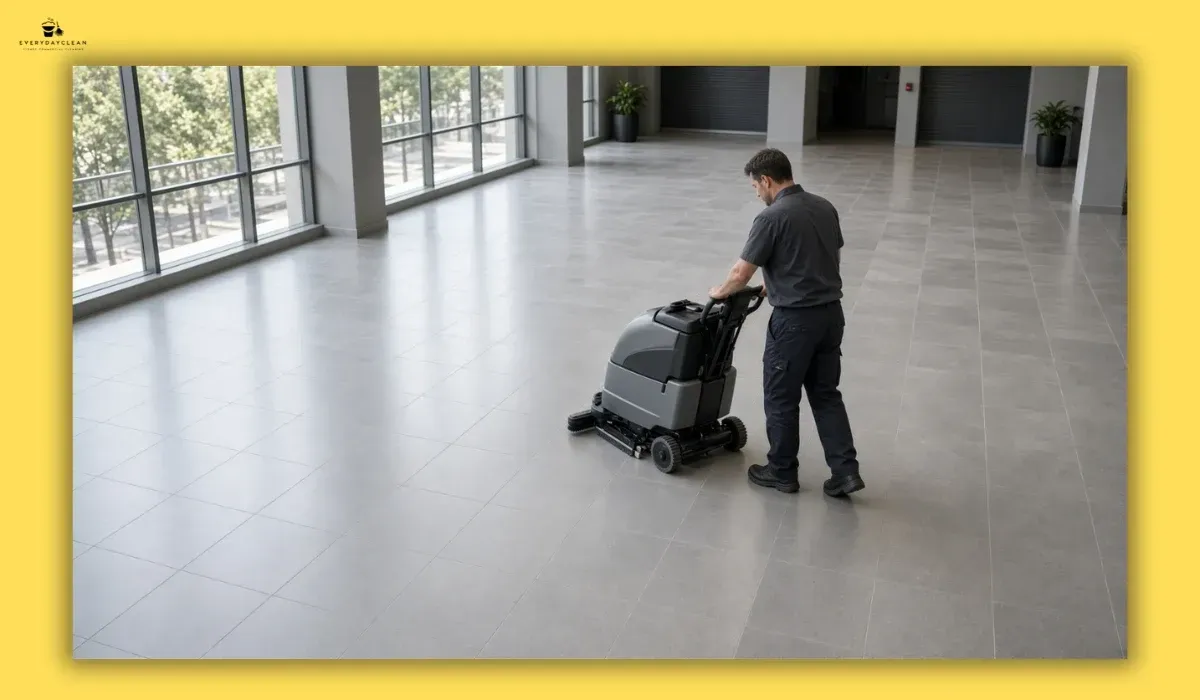
The right equipment makes the routine faster and safer. A practical commercial kit generally includes a dust mop for dry soil removal, a microfibre mop for wet cleaning, wet floor signs, a neutral floor cleaner, a scrub brush for grout and detail work, and an auto-scrubber where the floor type and space make one suitable.
Neutral cleaners are generally preferred for regular tile cleaning because harsh or wrong-pH products can damage some tile and grout over time and can leave residue that attracts soil. Auto-scrubbers suit larger open areas and can clean and dry in one pass, but they are not always practical for small or cluttered spaces, so the choice depends on the site.
Safety On Commercial Floors
Wet tile floors are a leading slip hazard in commercial settings, so safety is part of the process rather than an afterthought. Key measures include placing wet floor signs before and during cleaning, managing drying time and keeping people off wet areas, using appropriate PPE, and scheduling cleaning after hours or during quiet periods where possible.
Cleaning when the space is empty or quiet reduces both slip risk and disruption, which is why much commercial floor cleaning happens after hours. Drying the floor properly, rather than leaving it wet to air dry in a busy area, matters as much as the cleaning itself. These measures reduce risk but do not remove it, and cleaning should follow the site's own safety arrangements.
Common Mistakes To Avoid
A few recurring mistakes undermine otherwise good floor care.
- Using excess detergent, which leaves a residue that attracts soil and can make floors sticky or slippery
- Working with dirty mop water, which spreads soil instead of removing it
- Skipping grout, so soil builds up in the lines even when the tile looks clean
- Leaving floors wet without signage or drying, creating a slip hazard
- Using the wrong chemical for the tile type, which can damage the surface or grout
Most of these come down to process discipline rather than equipment, so consistent routines and trained staff make the difference.
How This Differs From Residential Tile Cleaning
Commercial tile floor care is not just a bigger version of home cleaning. The focus is on a repeatable, safe process across large or high-traffic areas, often with machines, scheduled around occupancy and worked to a standard operating procedure. Slip safety, signage and after-hours timing carry more weight because of public and staff foot traffic.
Residential tile and grout cleaning is usually a smaller, less frequent task focused on a single home, without the same scale, machinery or scheduling needs. Confusing the two can lead to under-resourcing commercial floors or over-complicating a home clean. For sites that want the routine handled consistently, commercial floor cleaning support can cover daily and periodic cleaning as part of a wider maintenance plan.
Building A Reliable Commercial Floor Routine
The most reliable commercial tile floors come from a consistent routine, not occasional deep cleans: remove loose soil first, clean with a suitable neutral solution, keep mop water and equipment clean, dry safely with signage, and schedule periodic grout and detail cleaning on top. Matching the frequency to the site's traffic keeps standards steady without wasted effort.
Process discipline, the right neutral products, and attention to slip safety are what hold a commercial floor to standard over time. Pairing a solid daily SOP with a periodic deep clean, and adjusting both to how the space is actually used, is what makes commercial floor maintenance keep tile floors clean, safe and presentable.
Frequently Asked Questions About Commercial Tile Floor Cleaning
What Is The Best Way To Clean Commercial Tile Floors?
Remove loose soil with a dust mop or vacuum first, then mop or auto-scrub with a neutral cleaner, keeping mop water clean. Dry the floor safely with wet floor signs in place, and schedule periodic grout and detail cleaning on top of the daily routine. Consistency matters more than any single deep clean.
How Often Should Commercial Tile Floors Be Cleaned?
It depends on traffic. Low-traffic offices may need daily dust mopping and mopping as required, while high-traffic hospitality, entries and food-service floors often need multiple cleans a day plus more frequent deep cleaning. Match the schedule to how heavily the floor is used.
What Cleaner Is Best For Commercial Tile Floors?
A neutral floor cleaner is generally preferred for routine cleaning, since harsh or wrong-pH products can damage some tile and grout and leave residue that attracts soil. The specific product should suit the tile type, so checking suitability and the label is important.
Do Commercial Tile Floors Need Grout Cleaning Too?
Yes. Grout is porous and holds soil, so daily mopping does not fully clean it. Periodic deep cleaning of the grout, with a brush or machine, keeps the lines from building up and darkening even when the tile surface looks clean.
Blog