Best Vacuum for Office Cleaning: How to Choose
The best vacuum for office cleaning depends on the carpet area, noise limits during working hours, filtration needs and how often cleaning happens. It also comes down to available storage, whether a corded or cordless machine suits the space, and whether a backpack or upright style is a better fit for the layout. There is no single best vacuum for every office, so matching the machine to the site tends to matter more than chasing a top model.
A small quiet office cleaned during the day has very different needs to a large open-plan floor cleaned after hours, and the right choice reflects that. The guidance below works through the main vacuum types and the selection factors that separate them.
Office Vacuum Types And What They Suit
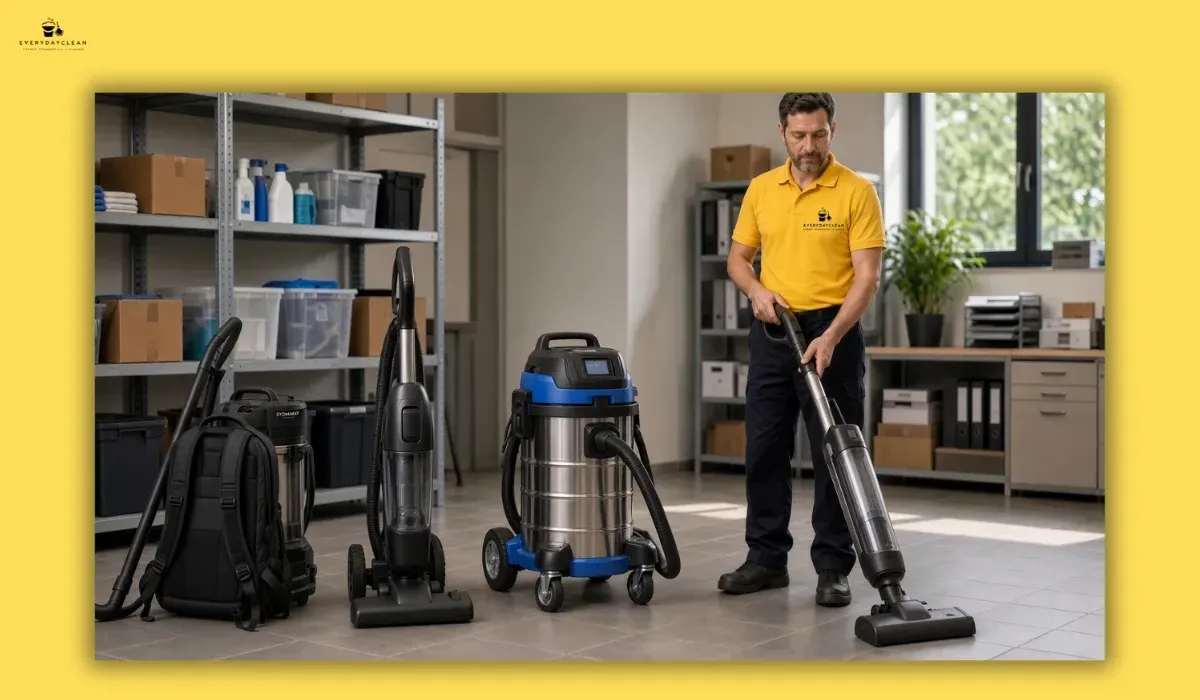
Most office cleaning is handled by one of a few vacuum styles, each with different strengths. Understanding the type first makes the individual selection factors easier to weigh up.
Backpack Vacuums
Backpack vacuums are worn on the operator's back and are popular in commercial cleaning because they let a cleaner move quickly through open areas, under desks and along corridors without dragging a heavy body behind them. They generally suit larger offices cleaned by a professional or trained cleaner, where speed and coverage matter. The trade-off is the weight carried on the back, so fit, harness comfort and load matter for anyone using one for long periods.
Upright Vacuums
Upright vacuums are a familiar all-in-one style that can work well for offices with a lot of carpet. They are generally straightforward to use and often good on carpeted floors, though they can be less convenient for stairs, tight spaces or mixed floor types. Weight and manoeuvrability vary between models.
Canister And Barrel Vacuums
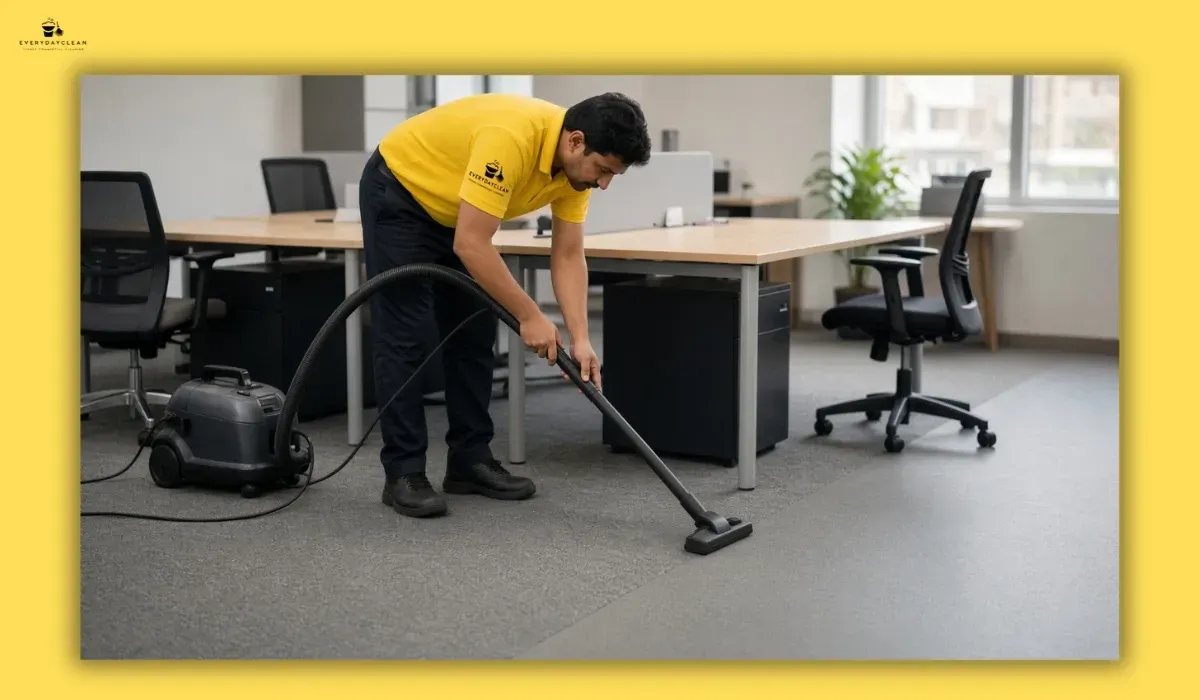
Canister or barrel vacuums separate the motor and body from the cleaning head, connected by a hose. This can make them versatile across carpet and hard floors and easier to use around furniture and under desks. They can be a practical option for offices with mixed flooring, though the trailing body needs to be moved around as you work.
Cordless Vacuums
Cordless vacuums remove the cord entirely, which can speed up cleaning in areas with limited power points and reduce trip hazards from trailing leads. Battery run time and suction on carpet vary, so they can suit smaller offices, top-ups between deeper cleans, or spaces where cord management is a genuine problem. For large areas, battery life and charging can be a limiting factor.
HEPA-Filter Vacuums
HEPA-filter vacuums use a high-efficiency filter designed to capture very fine particles rather than recirculating them into the air. These are covered in more detail below, since filtration is often a priority in shared office environments.
Selection Factors That Separate Good Choices
Once the type is clear, a handful of practical factors usually decide which machine fits a particular office.
- Carpet vs hard floors: carpet-heavy offices favour strong carpet performance, while mixed floors suit adjustable or canister-style machines
- Office size: larger areas favour coverage, capacity and often backpack or upright styles
- Noise level: daytime cleaning in occupied offices favours quieter machines
- Filtration: shared spaces may benefit from HEPA or sealed filtration
- Ergonomics: weight, harness fit, and manoeuvrability affect operator comfort and fatigue
- Cord length or battery: fewer power points or trip-hazard concerns may favour cordless or long-cord machines
- Durability and maintenance: commercial-grade machines are generally built for frequent use and easier servicing
- Storage: available cupboard or store-room space can rule some machines in or out
- Budget: balance upfront cost against expected use, lifespan and running costs
Weighing these together, rather than fixing on one feature, usually leads to a machine that actually suits the day-to-day routine.
Quiet Vacuums Suit Offices Cleaned During Work Hours
Noise is a common concern in offices cleaned while people are working. A quieter vacuum reduces disruption during the day, which can be the deciding factor when cleaning cannot always happen after hours. Noise output is often listed in decibels in product specifications, so comparing that figure between machines gives a useful starting point.
Quieter operation can come with trade-offs in suction or airflow on some models, so it helps to balance noise against cleaning performance for the floor types in the office. Where cleaning happens entirely after hours in an empty building, noise usually becomes a lower priority.
HEPA Vacuums Support Cleaner Air In Shared Spaces
HEPA-filter vacuums are designed to trap very fine dust and allergens rather than passing them back into the air, which can be useful in offices where staff spend long hours in shared spaces or where dust sensitivity is a concern. A sealed filtration system, where air is directed through the filter rather than leaking around it, generally makes the filter more effective in practice.
HEPA filtration may help reduce airborne dust when correctly sealed and maintained and when the vacuum is used correctly, though it is one part of overall indoor air quality rather than a complete solution. Filters need cleaning or replacing per the manufacturer's guidance to keep working as intended, so ongoing maintenance is part of the decision.
Office Vacuum Comparison At A Glance
| Vacuum Type | Often Suits | Points To Weigh |
|---|---|---|
| Backpack | Large offices, fast coverage | Weight carried, harness comfort |
| Upright | Carpet-heavy offices | Less handy on stairs and tight spots |
| Canister/barrel | Mixed carpet and hard floors | Body trails as you move |
| Cordless | Small offices, limited power points | Battery run time and charging |
| HEPA-filter | Shared spaces, dust sensitivity | Filter upkeep and cost |
What To Avoid When Choosing An Office Vacuum
A few common missteps can lead to a machine that does not hold up to the work or the setting.
- Choosing a domestic vacuum for heavy commercial use, where it may wear out quickly
- Ignoring noise level for offices cleaned during working hours
- Choosing a cordless model without checking battery run time against the area to be cleaned
- Buying HEPA filtration but not maintaining the filters, which reduces its benefit
Matching The Vacuum To The Cleaning Routine
The right vacuum also depends on how the office is cleaned overall, including frequency, who does the cleaning and whether it is in-house or outsourced. A machine that suits a daily professional clean may be more than a small office cleaned weekly needs.
For offices where cleaning is handled by a provider, the choice of equipment is usually part of the office cleaning in Sydney arrangement, so it is worth checking what machines and filtration are used. For teams equipping their own space, a wider look at supplies is covered in this office cleaning supplies guide.
Best Office Vacuum Frequently Asked Questions
What Is The Best Type Of Vacuum For An Office?
It depends on the office. Backpack vacuums suit large areas cleaned by professionals, uprights suit carpet-heavy spaces, canisters handle mixed floors well, and cordless models suit smaller offices. Matching the type to carpet area, noise limits, and cleaning frequency matters more than any single model.
Are Quiet Vacuums Worth It For Offices?
They can be, particularly where cleaning happens during working hours, and noise would disrupt staff. Comparing decibel ratings between machines helps, though quieter models can sometimes trade off suction, so balance noise against performance for the floor types involved.
Do Offices Need A HEPA Vacuum?
Not always, but HEPA filtration can help in shared spaces or where dust sensitivity is a concern, since it is designed to trap fine particles rather than recirculate them. Filters need regular upkeep to keep working, and HEPA is one part of air quality rather than a complete fix.
Is A Cordless Vacuum Suitable For Office Cleaning?
Cordless vacuums can suit smaller offices, spaces with few power points, or top-up cleaning between deeper cleans, since they reduce trip hazards from cords. For larger areas, battery run time and charging can be a limitation, so they are best matched to the size of the space.
Blog