Best Mop to Clean Rubber Gym Floor: Rubber-Safe Picks
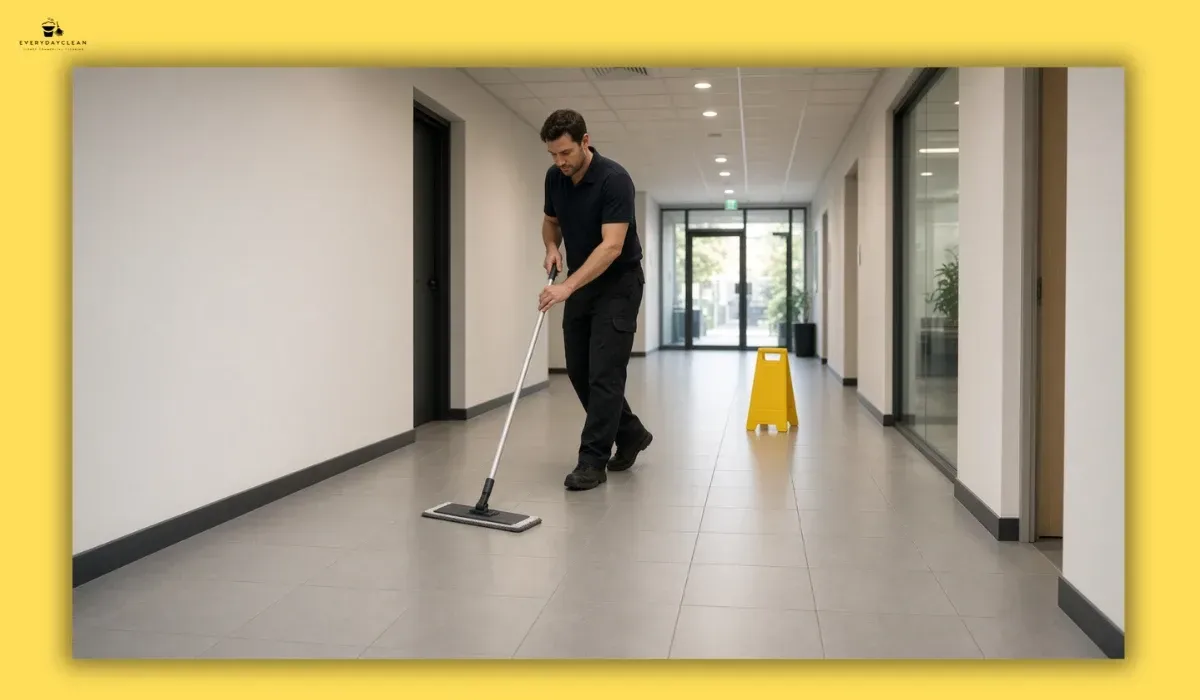
Best mop to clean rubber gym floor is a flat-head microfibre mop paired with a pH-neutral, low-moisture cleaning solution. Rubber gym flooring absorbs moisture and reacts to harsh solvents, so the wrong mop or chemical can dull the surface, leave residue, or break down the rubber compound over time. The right combination protects the floor while removing sweat, dust, and bacteria buildup after each session.
Key Takeaways
- A flat microfibre mop with a low-moisture setting is the safest choice for rubber gym floors.
- Ammonia, bleach, and solvent-based cleaners degrade rubber compounds and should never be used.
- String mops and sponge mops leave excess water behind, which increases slip risk on rubber matting.
- A neutral pH cleaner (around pH 7) removes sweat and bacteria without breaking down the rubber surface.
- Daily damp mopping combined with weekly deep cleaning keeps rubber gym floors hygienic and slip-resistant.
About EverydayClean
EverydayClean provides professional commercial and specialist cleaning services across Sydney. The team focuses on office, gym, medical, childcare, NDIS, Airbnb, construction, strata, warehouse, and hospital cleaning, supported by scheduled workplace cleaning, surface disinfection, floor care, restroom and kitchen cleaning, waste management, and site-specific cleaning checklists.
Looking for a team that already follows this process? Explore gym cleaning services in Sydney to see how routine floor care is handled on-site.
Mop Types That Are Safe for Rubber Gym Floors
Flat-head microfibre mops are the safest option for rubber gym flooring. The flat design distributes pressure evenly across the surface, and microfibre pads lift sweat, dust, and bacteria without leaving lint or excess moisture behind.
Why does a flat microfibre mop outperform a string mop on rubber flooring?
A flat microfibre mop uses a washable pad that can be wrung to a near-dry state, so it removes grime without soaking the rubber. String mops and sponge mops hold far more water, and that trapped moisture seeps into seams between rubber tiles, creating a slip hazard and encouraging mould growth underneath matting.
- Flat microfibre mop - even pressure, low-moisture pass, machine-washable pads.
- Spray mop with microfibre pad - useful for spot cleaning between full mops, controls exact liquid volume.
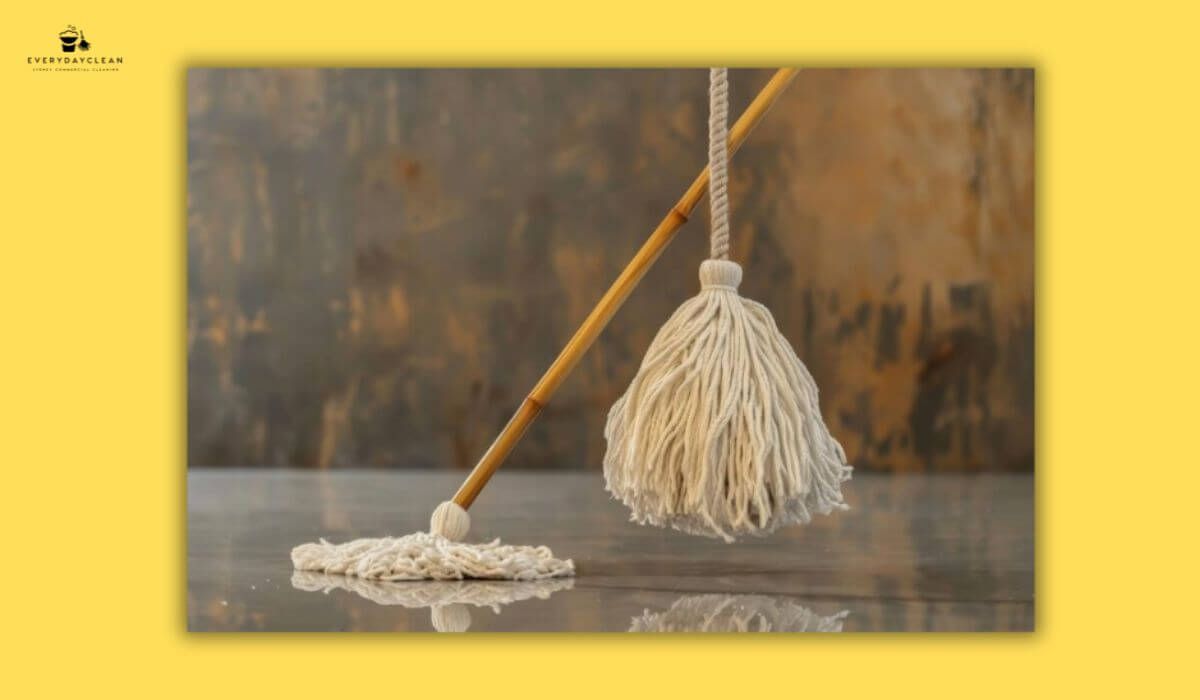
- String mop - not recommended; retains too much water for rubber surfaces.
- Sponge mop - not recommended; traps moisture in the sponge and spreads it unevenly.
Mopping Method That Prevents Damage to Rubber Gym Flooring
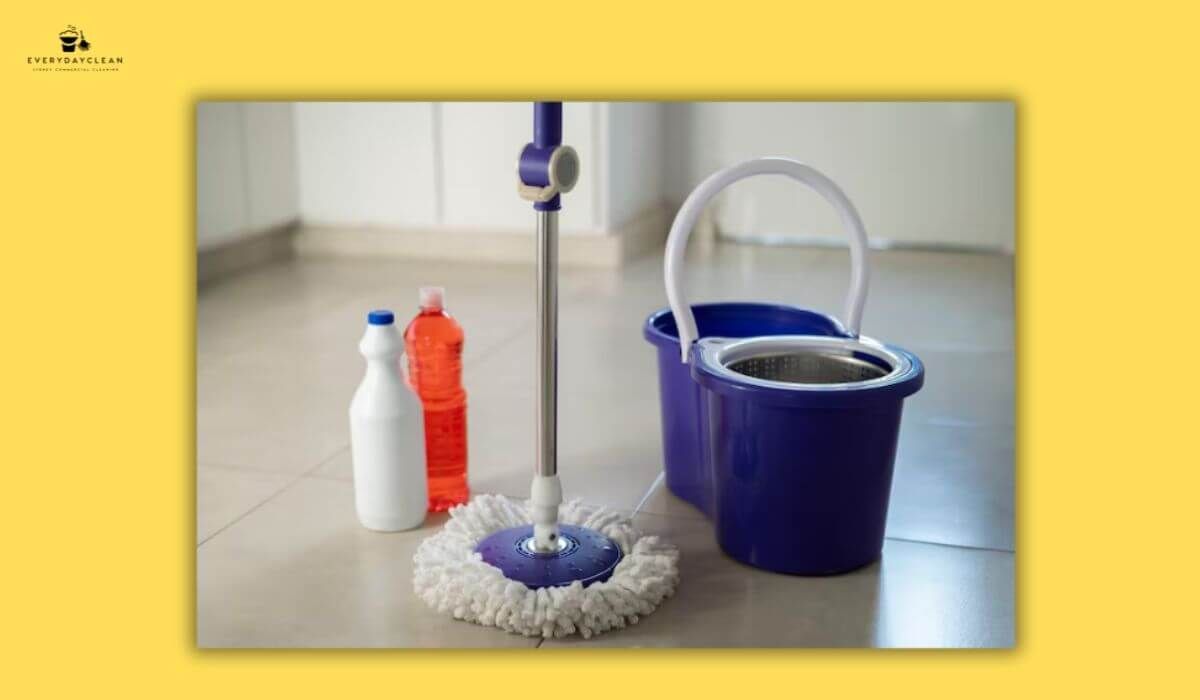
The correct mopping method for rubber gym floors combines a wrung-out microfibre mop with a pH-neutral cleaning solution applied in light, even passes.
What is the correct way to mop a rubber gym floor without damaging it?
Sweep or vacuum loose dust and debris first, since dragging a wet mop over grit can scratch the rubber surface. Dilute a pH-neutral cleaner according to the product label, wring the mop until it is barely damp, and mop in straight, overlapping passes rather than circular scrubbing. Allow the floor to air-dry before equipment or foot traffic returns, since standing water left on rubber flooring can seep into tile seams.
- Sweep or vacuum first - removes grit that causes scratching during mopping.
- Use a barely damp mop - excess water pools in seams and increases slip risk.
- Mop in straight passes - reduces streaking compared with circular motions.
- Air-dry before reopening the area - prevents new sweat and dust from binding to a wet surface.
Need this done on a schedule rather than as a one-off? Book a gym floor cleaning service to keep mopping consistent between classes.
Equipment That Pairs Well With a Rubber-Safe Mop
A mop alone does not clear everything rubber gym flooring collects during a training session. Pairing it with the right supporting equipment covers sweat, hair, and fine dust that mopping alone will miss.
What other equipment should be used alongside a mop on rubber gym floors?
A soft-bristle push broom or a vacuum fitted with a hard-floor attachment clears loose debris before mopping begins, which keeps the mop pad from doubling as a dust collector. A pH-neutral floor cleaner formulated for rubber or vinyl surfaces avoids the residue that all-purpose cleaners can leave behind. Microfibre cloths handle spot wipes on equipment mats and high-traffic zones between full mopping sessions.
- Soft-bristle push broom - clears loose dust and hair before mopping.
- Vacuum with hard-floor attachment - lifts fine debris microfibre alone can miss.
- pH-neutral rubber-safe cleaner - avoids residue buildup and rubber degradation.
- Spare microfibre cloths - handle spot cleaning on mats and equipment zones.
Each of these mop types supports the unique needs of gym cleaning while preserving rubber flooring.
Non-Slip Considerations When Choosing a Mop for Rubber Floors
Rubber gym flooring is chosen for its grip, and the wrong mop or excess moisture can undo that safety benefit. A mop that leaves the surface barely damp rather than wet keeps the floor's non-slip properties intact.
Does mopping reduce the non-slip grip of rubber gym flooring?
Mopping does not reduce grip when the mop is properly wrung and the cleaner is rinsed rather than left to dry as a film. Excess cleaning solution left on the surface can create a slippery residue, particularly with products that are not formulated for rubber. Rinsing with a clean, barely damp mop pass after the cleaning pass removes this residue and restores full traction before the area reopens.
Maintenance That Extends the Life of Rubber Gym Flooring
Consistent mop maintenance protects both the mop and the floor. A pad left dirty between uses redistributes grime instead of lifting it, and a floor cleaned with the wrong routine wears faster than one maintained correctly.
Microfibre mop pads should be laundered after each use, without fabric softener, which clogs the fibres that trap dust and bacteria. Rubber flooring benefits from a daily light mop to manage sweat and dust, paired with a weekly deeper clean using a rubber-safe degreaser to lift buildup that daily mopping does not fully remove.
| Task | Frequency | Purpose |
|---|---|---|
| Sweep or vacuum | Daily | Removes loose dust and debris before mopping |
| Light mop with pH-neutral cleaner | Daily | Clears sweat and surface bacteria |
| Deep clean with rubber-safe degreaser | Weekly | Removes buildup that daily mopping misses |
| Launder microfibre mop pads | After each use | Keeps pads absorbent and free of trapped grime |
Use this table as a baseline schedule and adjust frequency upward for high-traffic gym floors or facilities running back-to-back classes.
Frequently Asked Questions
These questions come up most often when gym operators are choosing or switching mop systems for rubber flooring.
What is the best mop for a rubber gym floor?
The best mop for a rubber gym floor is a flat-head microfibre mop used with a pH-neutral cleaning solution. The flat design applies even pressure across the surface, and microfibre lifts sweat, dust, and bacteria without leaving the excess moisture that string or sponge mops trap in floor seams. Wringing the pad to a barely damp state before each pass further reduces the risk of water pooling, which protects both the rubber compound and the floor's slip resistance. This combination is the standard recommendation across commercial gym cleaning because it balances hygiene with the low-moisture requirement rubber flooring needs to stay intact over years of daily use.
Can rubber gym flooring be mopped with a steam mop?
Steam mops are not recommended for most rubber gym flooring because the heat and moisture combination can soften adhesives and cause tiles or rolled rubber sheeting to lift at the seams over time. Manufacturers of rubber gym flooring typically specify a cool or room-temperature cleaning method rather than steam, since prolonged heat exposure accelerates wear on the rubber compound. A flat microfibre mop with a pH-neutral cleaner achieves the same hygiene result without the seam and adhesive risk that steam introduces, making it the safer default for daily and weekly cleaning routines on this flooring type.
How often should a rubber gym floor be mopped?
A rubber gym floor should be mopped lightly at least once daily in facilities with regular foot traffic, with a deeper clean using a rubber-safe degreaser weekly to remove buildup that daily mopping does not fully clear. Gyms running multiple classes per day or handling high sweat volumes may need two light mopping passes daily to manage bacteria and odour between sessions. The exact frequency depends on session volume and flooring type, but skipping daily mopping allows sweat residue and dust to compact into the rubber surface, making the weekly deep clean noticeably harder and less effective.
What cleaning products should never be used on rubber gym flooring?
Ammonia-based cleaners, chlorine bleach, and solvent-based degreasers should never be used on rubber gym flooring because they break down the rubber compound, leading to cracking, discolouration, and reduced grip over time. These products are common in general-purpose cleaning but are formulated for surfaces like tile or concrete, not rubber. A pH-neutral cleaner labelled safe for rubber or vinyl flooring removes sweat, dust, and bacteria without this degrading effect, and checking the product label for rubber compatibility before use avoids costly damage that often is not visible until months after repeated use.
Choosing the Right Mop Protects the Floor and the Budget
Best mop to clean rubber gym floor comes down to two consistent choices: a flat-head microfibre mop and a pH-neutral cleaning solution, applied in light, well-wrung passes rather than heavy, wet ones. Getting this combination right protects the rubber compound from cracking, keeps the surface's non-slip grip intact, and avoids the premature wear that harsh chemicals or excess moisture cause.
Gyms that build this into a daily and weekly routine spend less on floor replacement and fewer hours managing damage than facilities that treat mopping as an afterthought. A consistent schedule, the right equipment, and rubber-safe products are what keep the floor performing the way it was installed to perform.
Ready to hand this off to a team that already runs this process?
Get a gym cleaning quote from EverydayClean and keep rubber flooring maintained on a schedule that fits your class timetable.
Blog